Genesys Alternatives in 2026: 7 Platforms Compared

- 1
 Five9Cloud contact centerVisit
- 2
 TalkdeskAI contact centerVisit
- 3
 NICE CXoneEnterprise omnichannelVisit
- 4
 RingCentral Contact CenterPhone plus contact centerVisit
- 5
 8x8Integrated communicationsVisit
- Five9 and Talkdesk suit companies that want cloud contact centers with strong voice and AI tools.
- NICE CXone suits enterprises that need a full omnichannel platform with workforce tools.
- RingCentral Contact Center and 8x8 suit companies that want contact center plus business phone in one vendor.
- Dialpad suits teams that want AI-powered voice and messaging with a modern interface.
- Zendesk suits support teams that want contact center features inside a helpdesk they already use.
Quick comparison
| Product | Ideal for | Price from | Free version | |
|---|---|---|---|---|
| Five9 | Cloud contact center | See website | No | Visit |
| Talkdesk | AI contact center | See website | No | Visit |
| NICE CXone | Enterprise omnichannel | See website | No | Visit |
| RingCentral Contact Center | Phone plus contact center | See website | Free trial | Visit |
| 8x8 | Integrated communications | See website | Free trial | Visit |
 Dialpad | AI voice and messaging | See website | Free trial | Visit |
 Zendesk | Helpdesk plus contact center | See website | Free trial | Visit |
The best Genesys alternatives
We compared official feature pages, pricing pages, and public reviews for seven Genesys alternatives. Our pick for most companies is Five9 for its contact center depth, with Talkdesk close behind for AI-driven teams.
Five9
Ideal for: Cloud contact center
Five9 is a cloud contact center platform with voice, chat, email, and social channels, plus AI tools for agent help, automation, and analytics. It integrates with major CRMs, so agents see customer context without switching systems. That depth suits mid-size and large support and sales teams that handle high call volumes.
Pricing is enterprise level, and implementation needs planning for routing, IVR, and integrations. Smaller teams may find Dialpad or Zendesk simpler. For companies that need a full cloud contact center, Five9 is a leading Genesys alternative.
- Strong voice and omnichannel
- AI and automation
- CRM integrations
- Enterprise pricing
- Implementation takes planning
Talkdesk
Ideal for: AI contact center
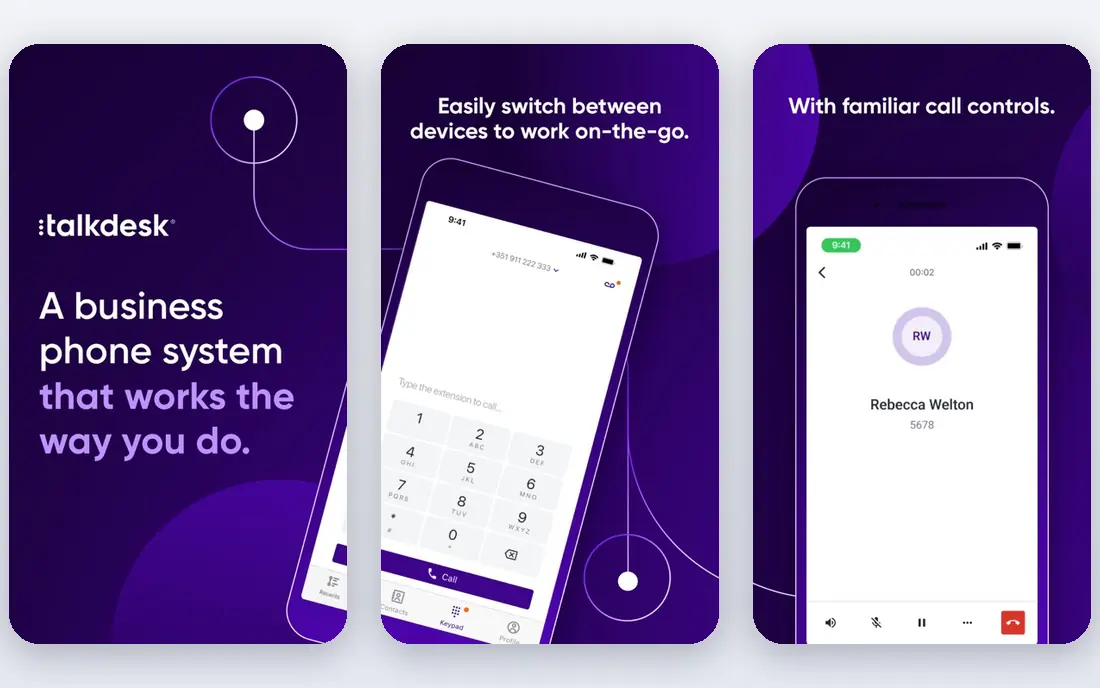
Talkdesk offers a cloud contact center with AI-powered routing, agent assistance, and analytics across voice and digital channels. Its AI tools help agents with summaries, suggestions, and after-call work, which can cut handle time. The platform suits companies that want modern AI features without building them in-house.
Pricing and setup suit mid-size and large teams rather than small support desks. For companies that prioritize AI in the contact center, Talkdesk is a strong Genesys alternative.
- AI-powered routing and assistance
- Omnichannel
- Analytics
- Enterprise pricing
- Setup complexity
NICE CXone
Ideal for: Enterprise omnichannel
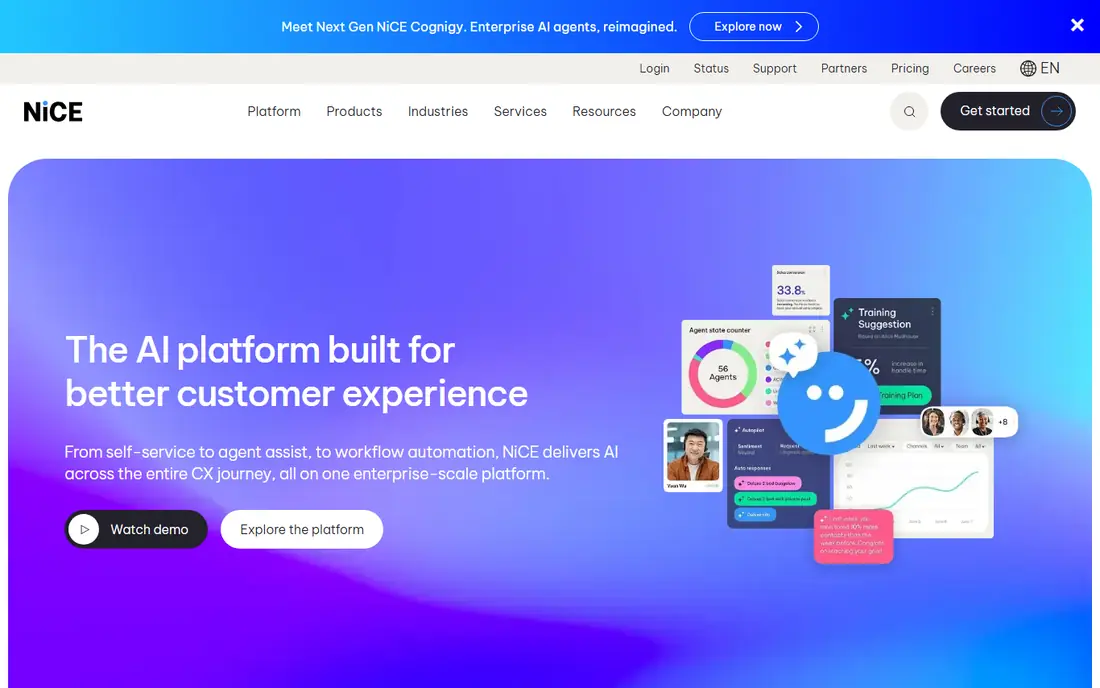
NICE CXone is an enterprise contact center platform covering voice, chat, email, social, and self-service, with workforce management and analytics built in. Large companies use it to run complex routing, quality management, and forecasting across many teams. That breadth suits enterprises with varied channels and large agent groups.
Implementation is complex, and pricing is enterprise level. Smaller companies will find Five9 or Dialpad more approachable. For large enterprises that need a complete omnichannel suite, NICE CXone is a top alternative.
- Full omnichannel suite
- Workforce management
- Analytics
- Enterprise pricing
- Complex implementation
RingCentral Contact Center
Ideal for: Phone plus contact center
RingCentral Contact Center builds on RingCentral business phone, adding omnichannel routing, analytics, and agent tools. Companies that already use RingCentral for phones can add contact center features without a second vendor. That continuity suits mid-size companies that want voice, video, messaging, and contact center in one system.
Contact center depth varies by plan, so check routing and AI features on the tier you buy. For companies that want unified communications plus contact center, RingCentral is a practical choice.
- Business phone plus contact center
- Omnichannel
- Integrations
- Contact center depth varies by plan
- Pricing rises with features
8x8
Ideal for: Integrated communications
8x8 combines business phone, video, team chat, and contact center in one platform with global coverage. Agents can handle voice and digital channels, while managers get analytics and quality tools. That integration suits companies with distributed teams that want one vendor for communications.
The interface can feel busy, and contact center depth varies by plan. For companies that want global communications plus contact center, 8x8 is a solid alternative.
- Phone, video, chat, and contact center
- Global coverage
- Integrations
- Interface can feel busy
- Contact center features vary by plan
Dialpad
Ideal for: AI voice and messaging
Dialpad offers AI-powered business phone, messaging, and contact center tools, with real-time transcription, summaries, and coaching insights. Its modern interface suits teams that want a fresh, easy-to-use system rather than a legacy contact center. Small and mid-size teams often adopt Dialpad fast.
Contact center depth is lighter than Five9 or NICE, especially for very large, complex operations. For teams that want AI voice tools with a modern feel, Dialpad is an excellent choice.
- AI transcription and summaries
- Modern interface
- Phone and messaging
- Contact center depth is lighter than Five9
- Pricing rises with AI features
Zendesk
Ideal for: Helpdesk plus contact center
Zendesk is a customer service platform with ticketing, chat, and voice tools that can serve as a contact center for many teams. Support agents handle tickets, chats, and calls in one workspace, with a large app ecosystem for CRM and phone integrations. That unity suits support teams that already use Zendesk for helpdesk work.
Voice and advanced contact center features often need add-ons, and very large call centers may need Five9 or NICE instead. For support-led teams that want contact center inside their helpdesk, Zendesk is a practical alternative.
- Helpdesk plus voice and chat
- Ticketing workflow
- Large app ecosystem
- Voice features are add-ons
- Large contact centers may need more
How we picked these
We compared official feature pages, pricing pages, and public reviews for each tool, and we favored tools that still work in October 2026 and cover real contact center jobs: voice, digital channels, routing, and analytics. We did not claim hands-on testing, and we weighed channel breadth, AI features, ease of use, and price. Where pricing was quoted rather than listed we wrote "See website" rather than guessing.
What to check before you choose
Start with channels and volume. A voice-heavy call center needs different tools than a chat-first support team, so map your contact mix before buying. Check CRM integrations, since agents need customer context without switching screens. Test routing, IVR, and reporting with real call flows, not just demos.
Next, check AI claims carefully. Transcription, summaries, and routing help only if they work with your accents, languages, and call types. Ask about data handling for recordings and transcripts. Finally, plan migration: number porting, IVR rebuilds, and agent training take time, so run a pilot with one team before full rollout.
Also plan the agent experience, since contact center tools fail when agents fight the system on every call. Agents need customer history, order details, and knowledge articles in one view, without copying data between screens. Test the agent desktop with real call types, including angry customers, complex orders, and multi-step fixes, not just happy-path demos. Measure after-call work time, since a tool that saves talk time but adds form-filling may not save anything overall. Give agents a fast way to flag bad knowledge articles, broken routing, and confusing scripts, and fix those issues weekly at first. Training should cover real calls with coaching, not just feature tours, since confidence on live calls comes from practice.
Data and quality management complete the picture. Record calls and chats where lawful, review a sample each week, and coach from real examples rather than scores alone. Track first-contact resolution alongside handle time, since fast calls that need a callback cost more than slightly longer calls that solve the problem. Check reporting by team, queue, and channel, and watch for patterns like repeat contacts that signal a product or process problem upstream. Plan for outages too: a backup routing plan and clear customer messaging will protect trust when a platform has a bad day. Finally, review AI features with real transcripts, since transcription and summary quality varies by accent, language, and call type, and poor AI help can slow agents rather than speed them up.
One more factor in contact center choice is language and accessibility support. Customers who speak different languages, use screen readers, or prefer chat over voice need channels that work for them, not just for the average caller. Check language routing, translation help, and accessibility of chat widgets and IVR menus before committing, since retrofitting those features later is costly. Test the customer journey in each language you serve, including hold messages and callback options, and confirm that transcripts and summaries handle those languages well. A contact center that serves every customer group fairly will earn loyalty that a fast but narrow system cannot match, and it will reduce complaints that stem from access barriers rather than product problems.
Frequently asked questions
What are the best genesys alternatives?
Five9 is our pick for full cloud contact center depth, while Talkdesk suits AI-driven teams and NICE CXone suits large enterprises. Dialpad suits modern AI voice teams, and Zendesk suits support-led teams. Match the platform to your channel mix and size.
Is Five9 better than Genesys?
Five9 suits companies that want a cloud contact center with strong voice and AI tools and a simpler vendor path than Genesys in some cases. Genesys suits very large enterprises with complex needs. Compare routing, AI, integrations, and total cost for your call flows before switching.
Can small businesses use contact center software?
Yes. Dialpad, Zendesk, and RingCentral offer plans that suit small and mid-size teams, with trial options. Start with your main channel, such as voice or chat, and expand as volume grows. Avoid enterprise platforms until your team size justifies them.
What is omnichannel contact center software?
Omnichannel software lets agents handle voice, chat, email, and social in one workspace with shared customer context. That beats multichannel tools where each channel sits apart. Check that history and context truly carry across channels in a trial.
How much does contact center software cost?
Most platforms use per-agent monthly pricing, often quoted for larger teams, plus costs for AI features, minutes, and add-ons. Get a written quote that lists agents, channels, minutes, and AI features. Trial costs with real call volume before committing.