Best Ghost Inspector Alternatives in 2026: 8 Products Compared

- 1
 CypressDeveloper-friendly browser testsVisit
- 2
 PlaywrightFree cross-browser automationVisit
- 3
 SeleniumClassic browser automationVisit
- 4
 TestCafeSimple Node test runnerVisit
- 5
 Rainforest QAHuman plus automated testingVisit
- Cypress is our pick for most people, thanks to its balance of features, documentation, and price.
- Playwright is a strong second choice if you want a different strength, especially for free cross-browser automation.
- If cost is the main concern, check the free options first, including Selenium and any free tier listed in the table below.
- For larger teams or stricter requirements, TestCafe and Rainforest QA are worth a closer look, since they cover scale and control in more depth.
- Always confirm current pricing on the vendor site before you buy, since plans and free tiers change during the year.
Quick comparison
| Product | Ideal for | Price from | Free version | |
|---|---|---|---|---|
| Cypress | Developer-friendly browser tests | See website | Yes | Visit |
| Playwright | Free cross-browser automation | Free | Yes | Visit |
| Selenium | Classic browser automation | Free | Yes | Visit |
| TestCafe | Simple Node test runner | Free | Yes | Visit |
| Rainforest QA | Human plus automated testing | See website | No | Visit |
 mabl | AI-assisted test automation | See website | Free trial | Visit |
 Testim | AI-powered test authoring | See website | Free trial | Visit |
 Leapwork | No-code visual automation | See website | Free trial | Visit |
The best ghost inspector alternatives
We compared official feature pages, pricing pages, app store listings, privacy policies, and public reviews to build this list. The options below cover the well-known leaders and smaller tools that earned a place on merit, and each one works in October 2026. Read the short notes, then use the buying guide at the end to narrow the list to one or two finalists for a trial.
Cypress
Ideal for: Developer-friendly browser tests
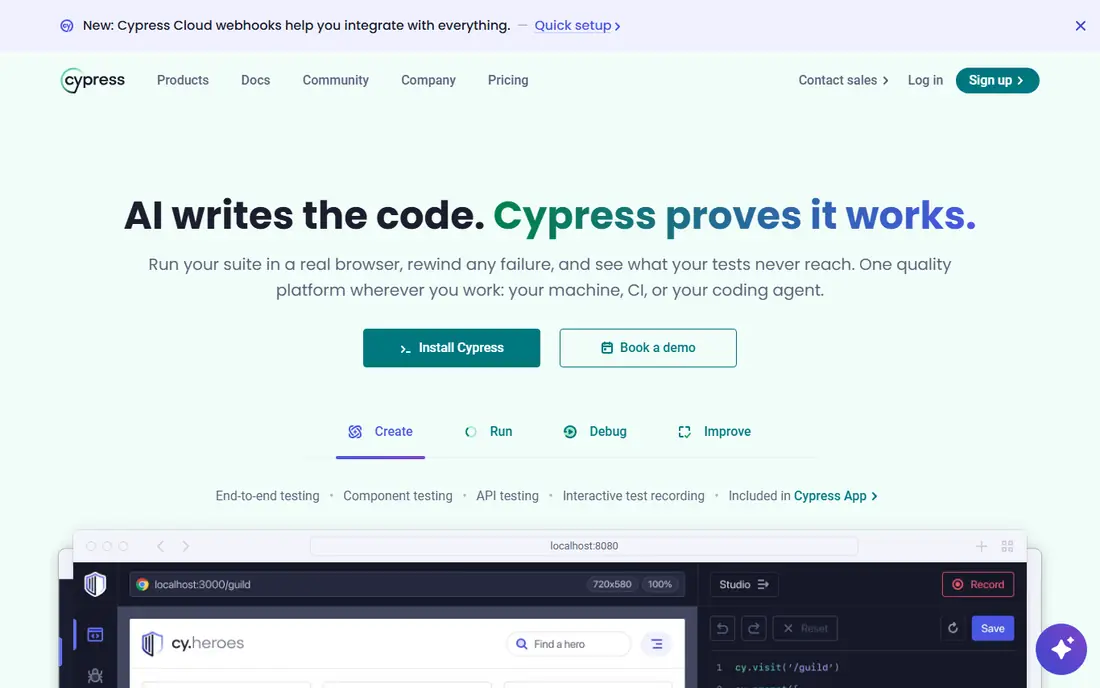
Cypress is a developer-friendly browser testing tool with fast runs and great debugging. Its community is huge, and its dashboard helps teams track runs. JavaScript teams adopt it quickly.
Browser coverage has limits compared with cross-browser clouds, and it is JavaScript focused. Teams needing every browser may add a cloud tool.
- Fast tests
- Great debugging
- Huge community
- Browser limits
- JavaScript focus
Playwright
Ideal for: Free cross-browser automation

Playwright is a free, open source automation framework from Microsoft covering all major browsers. Its speed and reliability have made it a favorite for engineers. It handles modern web apps well.
It is code-based, so non-developers need help. Teams wanting no-code recording should choose another tool.
- Free and open
- All major browsers
- Microsoft backing
- Code-based
- Needs developers
Selenium
Ideal for: Classic browser automation
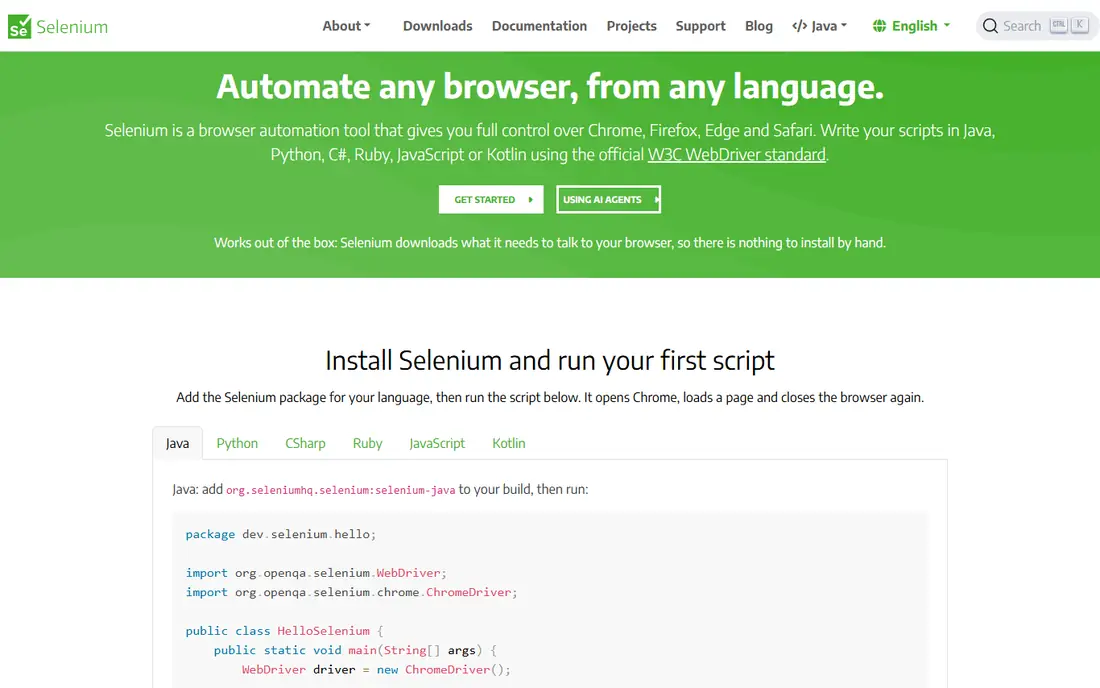
Selenium is the classic browser automation standard, free and open, with every browser and a huge ecosystem. Its longevity means answers exist for most problems. Teams with existing Selenium suites keep using it.
Setup takes effort, and flaky tests need care. Modern tools offer better debugging out of the box.
- Free and open
- Every browser
- Huge ecosystem
- Setup effort
- Flaky tests need care
TestCafe
Ideal for: Simple Node test runner
TestCafe is a free, open source Node test runner with easy setup and no browser plugins needed. Its simplicity suits teams that want tests running fast. The API is clean.
The community is smaller than Cypress or Playwright, and cloud options are fewer. Large teams may want bigger support.
- Free and open
- Easy setup
- No plugins needed
- Smaller community
- Fewer cloud options
Rainforest QA
Ideal for: Human plus automated testing
Rainforest QA combines human testers with automation for no-code testing. Teams without QA engineers get real human checks quickly. Its results include screenshots and steps.
It is a service with service pricing, and code control is less. Engineering-heavy teams may prefer a framework.
- Human testers
- No-code tests
- Fast results
- Service pricing
- Less code control
mabl
Ideal for: AI-assisted test automation
mabl offers AI-assisted test automation with low-code authoring and auto-healing tests. Its maintenance features reduce the chore of fixing brittle tests. QA teams with changing UIs benefit most.
Pricing is by quote, and new users face a learning curve. A trial on your real app is essential.
- AI test maintenance
- Low-code
- Insights
- Pricing by quote
- Learning curve
Testim
Ideal for: AI-powered test authoring
Testim provides AI-powered test authoring with smart locators and fast recording. Its tests adapt to UI changes better than brittle scripts. Teams with frequent UI updates will value it.
Pricing is by quote, and ownership changes at Tricentis mean buyers should confirm the current plan. Trial it on a changing page.
- AI locators
- Fast authoring
- CI links
- Pricing by quote
- Tricentis ownership changes
Leapwork
Ideal for: No-code visual automation
Leapwork offers no-code visual automation for desktop and web apps, aimed at enterprises. Business users can build tests without code. Its visual flows are clear.
Pricing is enterprise level, and its focus leans Windows. Web-only teams may find lighter tools enough.
- Visual no-code
- Desktop and web
- Enterprise
- Enterprise pricing
- Windows focus
How we picked these
We started from the products that genuinely fit this topic and removed any that were discontinued, that did not serve US users, or that failed to match the core job. For each survivor, we checked the vendor official site for features and pricing, read app store listings where they exist, and looked at privacy policies and public reviews for known problems. We did not claim hands-on testing we did not do, and we left prices as See website wherever the vendor does not publish a clear figure.
Finally, we checked for known problems in public reviews and privacy policies, and we noted them where they matter, rather than hiding them. A product with a past privacy issue or a confusing renewal price still appears here if it is otherwise strong, but the write-up says so plainly, so you can weigh that risk yourself before you sign up.
We also weighed fit over fame. A famous product that only partly covers this topic lost out to a smaller tool that covers it well. That is why the list mixes leaders with strong smaller options, and why each write-up names one honest weakness alongside its strengths.
How to choose the right option for you
Start with the job, not the brand
Write down the one task you need done every week, then check which products do that task well without extra tools. Cypress covers the common case for most buyers, while mabl suits a narrower need. If a product needs three add-ons to do your core job, it is probably the wrong pick, however popular it is.
Check the true cost
Compare the plan you will actually use, not the headline price. Count seats, usage, and any add-ons, and check renewal pricing as well as the first-year price. Free tiers help for testing, but they often cap the exact feature you will need later, so read the limits before you commit a team to one.
Run a short trial with real work
Pick two finalists and run each on a real task for a week, not a demo script. Watch setup time, support replies, and how it handles your edge cases. Playwright and Selenium are good trial candidates for many buyers, since they show their strengths quickly. The product your team actually uses beats the one with the longest feature list.
Match the tool to your team size
A tool built for a thousand users can slow a team of five with setup, approvals, and training, while a tool built for solo users can break when a whole department adopts it. Check seat limits, permission controls, and admin features against your real headcount, not your hoped-for headcount. If you plan to grow, ask whether the next tier up keeps your data and settings intact, or forces a migration. The cheapest plan that fits today is often the right start, as long as the upgrade path is clear.
Check support, privacy, and exit options
Read the privacy policy for how your data is used, especially for tools that handle customer data, health data, or financial data. Check support hours and response channels too, since a cheap tool with slow support costs more in lost time than a pricier one with fast help. Finally, confirm you can export your data in a usable format. A tool that locks your work inside its own format makes switching painful later, and that exit cost should count in your decision just like the monthly price.
Frequently asked questions
What are ghost inspector alternatives?
Ghost Inspector Alternatives are tools and services that do the same core job as the original, with different prices, features, and trade-offs. The list above covers the strongest options we found that work in October 2026, from well-known leaders to smaller tools worth a look.
Which of these ghost inspector alternatives is best for most people?
For most buyers, Cypress is the safest starting point, thanks to its balance of features and price. If your main need is free cross-browser automation, start with Playwright instead, and run a trial before you commit.
Are there free ghost inspector alternatives?
Yes, several options on this list offer a free tier or a free and open version, and the comparison table shows which ones. Free tiers usually cap usage or features, so check the limits against your real workload before you rely on one.
How much do ghost inspector alternatives cost?
Prices range from free to enterprise quotes, and the table lists the starting price we could verify for each product. Where a vendor does not publish a clear price, we wrote See website, and you should ask for a quote based on your seats and usage.
What should I check before I pay for one of these ghost inspector alternatives?
Check the plan limits, the renewal price, and the cancellation terms on the vendor site, and confirm the features you need are in the plan you will buy, not a higher tier. Read the privacy policy if the tool will hold customer or personal data, and test support with a real question during the trial. A short trial answers more than any sales page.
How hard is it to switch to a new option?
Switching effort depends on how much data and workflow you have built up. Export your data first, run the new tool alongside the old one for a short period, and move one team or project at a time. Most vendors on this list offer import tools or migration help.