Best Gigapixel AI Alternatives in 2026: 8 Tools Compared

- 1
 Topaz Photo AIPhoto enhancement in one toolVisit
- 2
 Adobe LightroomPhotographers on Adobe plansVisit
- 3
 ON1 Resize AIPrint size enlargementsVisit
- 4
 DxO PhotoLabRaw photo qualityVisit
- 5
 Luminar NeoCreative photo editingVisit
- Our pick for most people is Topaz Photo AI, because it balances breadth, support and a clear fit for the core job in this gigapixel ai alternatives comparison.
- Price and free plans vary widely across gigapixel ai alternatives, so check the vendor pricing page before you commit, and treat any plan labelled See website as a prompt to confirm the current price.
- The best choice depends on your current stack, team size and privacy needs, not on brand size alone, so shortlist two or three options and trial them with real work.
- Security, data handling and support matter as much as features, especially when the tool will hold customer, employee or financial data.
Quick comparison
| Product | Ideal for | Price from | Free version | |
|---|---|---|---|---|
| Topaz Photo AI | Photo enhancement in one tool | See website | Free trial | Visit |
| Adobe Lightroom | Photographers on Adobe plans | See website | Free trial | Visit |
| ON1 Resize AI | Print size enlargements | See website | Free trial | Visit |
| DxO PhotoLab | Raw photo quality | See website | Free trial | Visit |
| Luminar Neo | Creative photo editing | See website | Free trial | Visit |
 Upscayl | Free open source upscaling | See website | Yes | Visit |
 Magnific AI | High detail AI upscaling | See website | Free trial | Visit |
 VanceAI | Online image enhancement | See website | Free trial | Visit |
The best gigapixel ai alternatives
We compared official feature pages, pricing pages, app store listings, privacy policies and public reviews to build this gigapixel ai alternatives list. The products below cover well known leaders and smaller options that fit the same job, and each write-up names a real strength and a real limit. Use the comparison table to narrow the list, then trial the top two with your own data and workflow before you pay for a year. When we judged gigapixel ai alternatives, we looked at fit first, including platform, budget and skills in house.
Topaz Photo AI
Ideal for: Photo enhancement in one tool
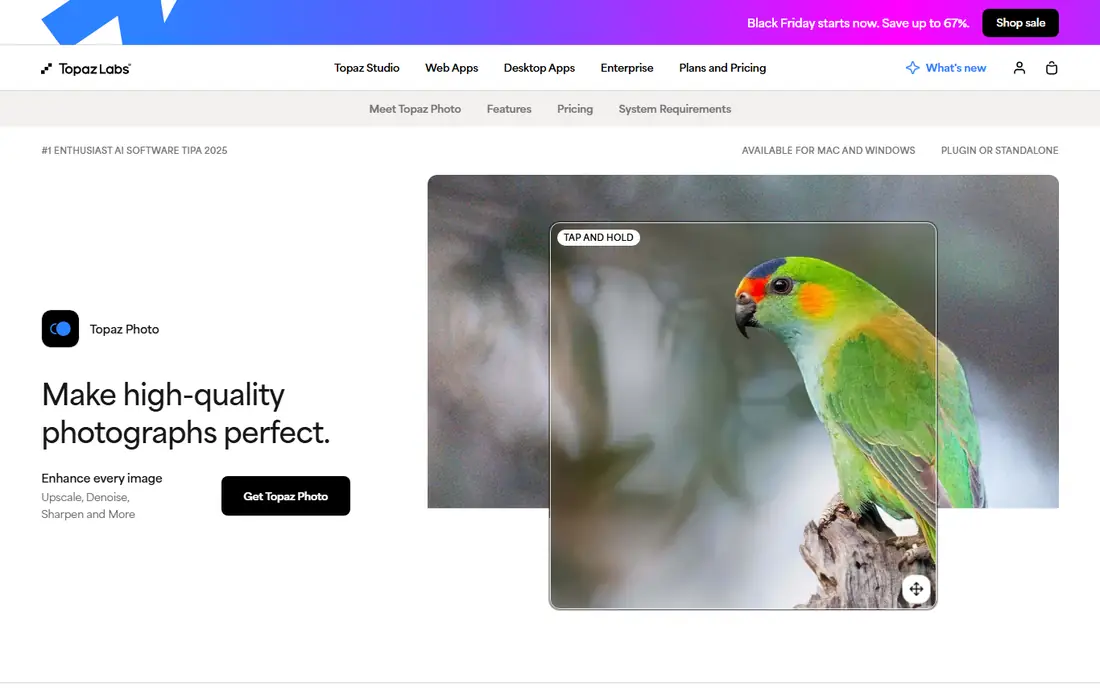
Topaz Photo AI fits teams looking for photo enhancement in one tool. Its main strength is upscaling with denoise and sharpening, and that matters because buyers in this gigapixel ai alternatives search usually want a tool that works on day one without a long rebuild. We put it here because it matches the core job, not because it tries to cover every adjacent use case. If your team already uses a similar stack, check integrations first, since a good fit on paper can still fail if data has to move by hand. In practice, Topaz Photo AI works best when you give it a clear job and a small trial group. Start with one workflow, one team and a short list of must have features, then test the parts that matter most, such as setup, permissions, reporting and export. The honest catch is that desktop processing can be slow on older machines, so weigh that against the strength above before you sign up. For many buyers, that trade-off is acceptable. For others, it is a reason to pick a different entry on this list.
- Upscaling with denoise and sharpening
- Clear fit for photo enhancement in one tool
- Documented product with an official homepage
- Desktop processing can be slow on older machines
- Pricing details need checking on the vendor site
Adobe Lightroom
Ideal for: Photographers on Adobe plans
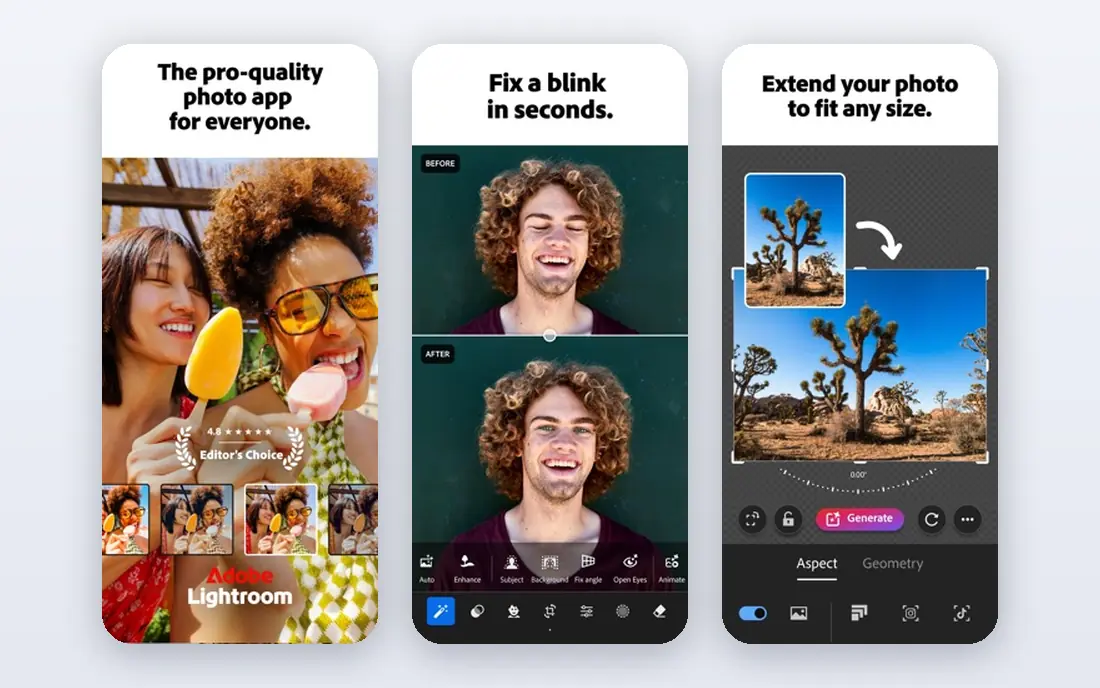
Adobe Lightroom fits teams looking for photographers on adobe plans. Its main strength is super resolution inside a full photo workflow, and that matters because buyers in this gigapixel ai alternatives search usually want a tool that works on day one without a long rebuild. We put it here because it matches the core job, not because it tries to cover every adjacent use case. If your team already uses a similar stack, check integrations first, since a good fit on paper can still fail if data has to move by hand. In practice, Adobe Lightroom works best when you give it a clear job and a small trial group. Start with one workflow, one team and a short list of must have features, then test the parts that matter most, such as setup, permissions, reporting and export. The honest catch is that subscription cost for the full plan, so weigh that against the strength above before you sign up. For many buyers, that trade-off is acceptable. For others, it is a reason to pick a different entry on this list.
- Super Resolution inside a full photo workflow
- Clear fit for photographers on adobe plans
- Documented product with an official homepage
- Subscription cost for the full plan
- Pricing details need checking on the vendor site
ON1 Resize AI
Ideal for: Print size enlargements
ON1 Resize AI fits teams looking for print size enlargements. Its main strength is print focused resizing with ai detail, and that matters because buyers in this gigapixel ai alternatives search usually want a tool that works on day one without a long rebuild. We put it here because it matches the core job, not because it tries to cover every adjacent use case. If your team already uses a similar stack, check integrations first, since a good fit on paper can still fail if data has to move by hand. In practice, ON1 Resize AI works best when you give it a clear job and a small trial group. Start with one workflow, one team and a short list of must have features, then test the parts that matter most, such as setup, permissions, reporting and export. The honest catch is that standalone tool rather than a full editor, so weigh that against the strength above before you sign up. For many buyers, that trade-off is acceptable. For others, it is a reason to pick a different entry on this list.
- Print focused resizing with AI detail
- Clear fit for print size enlargements
- Documented product with an official homepage
- Standalone tool rather than a full editor
- Pricing details need checking on the vendor site
DxO PhotoLab
Ideal for: Raw photo quality
DxO PhotoLab fits teams looking for raw photo quality. Its main strength is strong raw processing and lens corrections, and that matters because buyers in this gigapixel ai alternatives search usually want a tool that works on day one without a long rebuild. We put it here because it matches the core job, not because it tries to cover every adjacent use case. If your team already uses a similar stack, check integrations first, since a good fit on paper can still fail if data has to move by hand. In practice, DxO PhotoLab works best when you give it a clear job and a small trial group. Start with one workflow, one team and a short list of must have features, then test the parts that matter most, such as setup, permissions, reporting and export. The honest catch is that upscaling is part of a larger editor, so weigh that against the strength above before you sign up. For many buyers, that trade-off is acceptable. For others, it is a reason to pick a different entry on this list.
- Strong raw processing and lens corrections
- Clear fit for raw photo quality
- Documented product with an official homepage
- Upscaling is part of a larger editor
- Pricing details need checking on the vendor site
Luminar Neo
Ideal for: Creative photo editing
Luminar Neo fits teams looking for creative photo editing. Its main strength is ai editing tools with upscaling options, and that matters because buyers in this gigapixel ai alternatives search usually want a tool that works on day one without a long rebuild. We put it here because it matches the core job, not because it tries to cover every adjacent use case. If your team already uses a similar stack, check integrations first, since a good fit on paper can still fail if data has to move by hand. In practice, Luminar Neo works best when you give it a clear job and a small trial group. Start with one workflow, one team and a short list of must have features, then test the parts that matter most, such as setup, permissions, reporting and export. The honest catch is that upscaling is not its main focus, so weigh that against the strength above before you sign up. For many buyers, that trade-off is acceptable. For others, it is a reason to pick a different entry on this list.
- AI editing tools with upscaling options
- Clear fit for creative photo editing
- Documented product with an official homepage
- Upscaling is not its main focus
- Pricing details need checking on the vendor site
Upscayl
Ideal for: Free open source upscaling
Upscayl fits teams looking for free open source upscaling. Its main strength is free and open source upscaling on desktop, and that matters because buyers in this gigapixel ai alternatives search usually want a tool that works on day one without a long rebuild. We put it here because it matches the core job, not because it tries to cover every adjacent use case. If your team already uses a similar stack, check integrations first, since a good fit on paper can still fail if data has to move by hand. In practice, Upscayl works best when you give it a clear job and a small trial group. Start with one workflow, one team and a short list of must have features, then test the parts that matter most, such as setup, permissions, reporting and export. The honest catch is that needs a capable graphics setup for speed, so weigh that against the strength above before you sign up. For many buyers, that trade-off is acceptable. For others, it is a reason to pick a different entry on this list.
- Free and open source upscaling on desktop
- Clear fit for free open source upscaling
- Documented product with an official homepage
- Needs a capable graphics setup for speed
- Pricing details need checking on the vendor site
Magnific AI
Ideal for: High detail AI upscaling
Magnific AI fits teams looking for high detail ai upscaling. Its main strength is high detail results for creative images, and that matters because buyers in this gigapixel ai alternatives search usually want a tool that works on day one without a long rebuild. We put it here because it matches the core job, not because it tries to cover every adjacent use case. If your team already uses a similar stack, check integrations first, since a good fit on paper can still fail if data has to move by hand. In practice, Magnific AI works best when you give it a clear job and a small trial group. Start with one workflow, one team and a short list of must have features, then test the parts that matter most, such as setup, permissions, reporting and export. The honest catch is that credit based pricing needs care, so weigh that against the strength above before you sign up. For many buyers, that trade-off is acceptable. For others, it is a reason to pick a different entry on this list.
- High detail results for creative images
- Clear fit for high detail ai upscaling
- Documented product with an official homepage
- Credit based pricing needs care
- Pricing details need checking on the vendor site
VanceAI
Ideal for: Online image enhancement
VanceAI fits teams looking for online image enhancement. Its main strength is web based upscaling and enhancement, and that matters because buyers in this gigapixel ai alternatives search usually want a tool that works on day one without a long rebuild. We put it here because it matches the core job, not because it tries to cover every adjacent use case. If your team already uses a similar stack, check integrations first, since a good fit on paper can still fail if data has to move by hand. In practice, VanceAI works best when you give it a clear job and a small trial group. Start with one workflow, one team and a short list of must have features, then test the parts that matter most, such as setup, permissions, reporting and export. The honest catch is that web processing limits for very large files, so weigh that against the strength above before you sign up. For many buyers, that trade-off is acceptable. For others, it is a reason to pick a different entry on this list.
- Web based upscaling and enhancement
- Clear fit for online image enhancement
- Documented product with an official homepage
- Web processing limits for very large files
- Pricing details need checking on the vendor site
How we picked these
We picked these gigapixel ai alternatives options by checking that each product exists, works in October 2026 and truly fits the topic. We compared official feature pages, pricing pages, app store listings, privacy policies and public reviews, and we did not add Ainotely to the list. Where we could not verify a current price, we wrote See website rather than inventing a number. We did not claim hands-on testing that did not happen. We also favoured products with clear documentation and support, and we noted honest limits for each one.
What to check before you choose
Start with the job, not the brand. Write down the three tasks the tool must handle every week, the team who will use it, and the systems it must connect to. Then check trial terms and data export.
Pricing and total cost
Check per user pricing, add on fees, contract length and renewal terms. A free plan can be enough for a trial, but it may limit users, history or support. Ask for the total yearly cost for your real team size, not the headline price for one user.
Security and privacy
Read the privacy policy and security page. Check who can access your data, where it is stored, how long it is kept, and how you delete it. For tools that handle customer or employee data, ask about access controls, audit logs and incident handling before you sign up.
Migration and support
Ask how long migration takes, what help the vendor gives, and what support hours apply. Test support during the trial with a real question. If answers are slow or vague during a trial, expect the same pattern after you pay.
Frequently asked questions
Which of these gigapixel ai alternatives is best for most people?
For most people, start with Topaz Photo AI and one other option from the top of this list. The right pick depends on team size, budget and current tools, so use a short trial with real work before you commit.
Are there free options for gigapixel ai alternatives?
Some products on this list offer a free plan or a free trial, and the comparison table shows the position for each one. Free plans often limit users or features, so check the vendor pricing page for the current limits before you rely on a free tier.
How hard is it to switch between these tools?
Switching effort depends on how much data you hold and how many integrations you use. Export your data early, test the new tool with a small group, and keep the old tool running until the new workflow is stable.
Do I need a paid plan for gigapixel ai alternatives?
Not always. A free plan or trial can cover a small team or a short project. Paid plans usually add users, history, support and admin controls, so upgrade when those limits start to block daily work.