Github Alternatives in 2026: 8 Options Compared

- Our pick for most people is GitLab, because it balances price, features, and ease of use for the widest range of readers.
- Free options exist in this list, including GitLab, so you can start without paying before you commit to a paid plan.
- Prices and free plans vary a lot across these github alternatives, so check the starting price and free plan column for each product before you shortlist.
- The best choice depends on your main use, not on the longest feature list, and the product notes below spell out who each option fits.
Quick comparison
| Product | Ideal for | Price from | Free version | |
|---|---|---|---|---|
 GitLab | complete DevOps platform | Free | Yes | Visit |
 Bitbucket | teams in Atlassian tools | Free | Yes | Visit |
 SourceForge | open source project hosting | Free | Yes | Visit |
 Codeberg | nonprofit open source hosting | Free | Yes | Visit |
 Gitea | self hosted lightweight Git | Free | Yes | Visit |
 Azure DevOps | Microsoft ecosystem teams | Free | Yes | Visit |
 SourceHut | minimalist open source hosting | Free | Yes | Visit |
 Radicle | peer to peer code hosting | Free | Yes | Visit |
The best github alternatives
We compared official feature pages, pricing pages, app store listings, privacy policies, and public reviews to build this list. The products below cover the well known leaders and strong smaller options, and each one is still available in October 2026. Use the table above to shortlist, then read the notes for the options that match your budget and main use.
GitLab
Ideal for: complete DevOps platform

For many readers, this is the first option worth a close look. GitLab covers code, CI, and deployment in one platform, which suits teams that want fewer separate tools. The honest catch is interface can feel busy. That trade off matters most if complete DevOps platform is not your main need, so weigh it against the strengths above before you commit. If complete DevOps platform is your priority, this option deserves a place on your shortlist, and a trial or free plan is the safest way to check the fit. Check the current pricing page before you buy, since plans and limits change.
- Free tier
- CI and CD built in
- Self host option
- Interface can feel busy
- Some features need paid plans
Bitbucket
Ideal for: teams in Atlassian tools
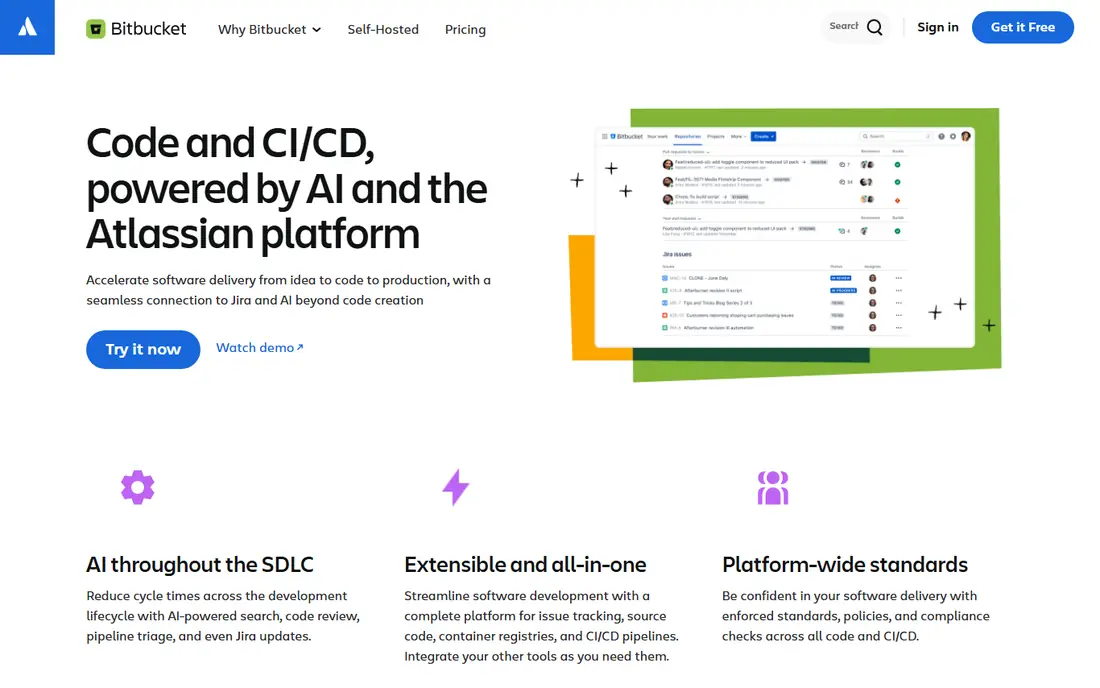
This one earns its place for a specific kind of buyer. Bitbucket suits teams already using Jira and Confluence, since code links straight into tickets. The honest catch is smaller community than github. That trade off matters most if teams in Atlassian tools is not your main need, so weigh it against the strengths above before you commit. If teams in Atlassian tools is your priority, this option deserves a place on your shortlist, and a trial or free plan is the safest way to check the fit. Check the current pricing page before you buy, since plans and limits change.
- Free for small teams
- Jira links
- Pipelines
- Smaller community than GitHub
- Some features are basic
SourceForge
Ideal for: open source project hosting
If your main concern is value, start here. SourceForge remains a free home for open source projects, with downloads and project pages built in. The honest catch is interface feels dated. That trade off matters most if open source project hosting is not your main need, so weigh it against the strengths above before you commit. If open source project hosting is your priority, this option deserves a place on your shortlist, and a trial or free plan is the safest way to check the fit. Check the current pricing page before you buy, since plans and limits change.
- Free hosting
- Download stats
- Project pages
- Interface feels dated
- Discovery is weaker than rivals
Codeberg
Ideal for: nonprofit open source hosting
This option suits teams that want more control over the details. Codeberg is a nonprofit host for open source, which suits projects that want community owned infrastructure. The honest catch is smaller community. That trade off matters most if nonprofit open source hosting is not your main need, so weigh it against the strengths above before you commit. If nonprofit open source hosting is your priority, this option deserves a place on your shortlist, and a trial or free plan is the safest way to check the fit. Check the current pricing page before you buy, since plans and limits change.
- Nonprofit hosting
- Privacy focus
- Forgejo based
- Smaller community
- CI is lighter than large hosts
Gitea
Ideal for: self hosted lightweight Git
For beginners, this is one of the easier places to start. Gitea is a lightweight self hosted option, ideal for small teams or personal servers with limited resources. The honest catch is you run the server. That trade off matters most if self hosted lightweight Git is not your main need, so weigh it against the strengths above before you commit. If self hosted lightweight Git is your priority, this option deserves a place on your shortlist, and a trial or free plan is the safest way to check the fit. Check the current pricing page before you buy, since plans and limits change.
- Lightweight self hosting
- Fast setup
- Low resource use
- You run the server
- Features are simpler than large hosts
Azure DevOps
Ideal for: Microsoft ecosystem teams
This pick stands out for one clear reason. Azure DevOps suits Microsoft focused teams, with repos, boards, and pipelines in one service. The honest catch is setup is heavier. That trade off matters most if Microsoft ecosystem teams is not your main need, so weigh it against the strengths above before you commit. If Microsoft ecosystem teams is your priority, this option deserves a place on your shortlist, and a trial or free plan is the safest way to check the fit. Check the current pricing page before you buy, since plans and limits change.
- Repos plus boards and pipelines
- Azure links
- Free tier
- Setup is heavier
- Best inside Microsoft shops
SourceHut
Ideal for: minimalist open source hosting
If you plan to grow, this option is worth weighing early. SourceHut takes a minimalist, email based approach, which suits developers who prefer simple tools over web heavy workflows. The honest catch is workflow differs from github. That trade off matters most if minimalist open source hosting is not your main need, so weigh it against the strengths above before you commit. If minimalist open source hosting is your priority, this option deserves a place on your shortlist, and a trial or free plan is the safest way to check the fit. Check the current pricing page before you buy, since plans and limits change.
- Minimal design
- Email based workflow
- Privacy focus
- Workflow differs from GitHub
- Smaller community
Radicle
Ideal for: peer to peer code hosting
This is the quieter choice that still covers the basics well. Radicle removes the central host, letting developers share code peer to peer, which suits teams that value independence. The honest catch is smaller network. That trade off matters most if peer to peer code hosting is not your main need, so weigh it against the strengths above before you commit. If peer to peer code hosting is your priority, this option deserves a place on your shortlist, and a trial or free plan is the safest way to check the fit. Check the current pricing page before you buy, since plans and limits change.
- Peer to peer hosting
- No central server
- Open source
- Smaller network
- Tooling is newer
How we picked these
We started from the topic itself and looked for products that truly fit it, not just popular names from a nearby category. For each product we checked its official homepage, its pricing page where one was published, its free plan or trial terms, and public reviews for common complaints. We dropped products whose homepage could not be verified, and we used See website where a price could not be confirmed from the vendor. We also weighed who each product fits, not just what it claims to do. A low price helps only if the limits fit your use, and a deep feature set helps only if you will use it. That is why each product note below names a best fit and an honest weakness, so you can rule options out as fast as you shortlist them.
Choosing a code host beyond GitHub
Start with your main use and your budget, then check limits before features. Free plans and trials are useful here, but read what they cap, whether that is users, volume, exports, or support, because the cap is often what forces an upgrade. Compare the total monthly cost at your real team size or usage, not just the headline entry price. Next, check the parts that cause trouble later, such as data export, contract terms, support hours, and how easy it is to cancel or move your work. A product that lets you export your data and leave is worth more than a slightly cheaper one that locks you in. Shortlist two or three options, try the free plan or trial for each, and pick the one your team actually uses after a week, not the one with the longest feature page. Finally, read recent public reviews for the specific plan you plan to buy, since entry plans and top plans can feel like different products. Ask about renewal pricing too, since intro prices and yearly billing can change the real cost. If a vendor will not publish a price, ask for a written quote and compare it with the published prices in the table above.
Frequently asked questions
What should I look for first when choosing github alternatives?
Start with your main use, then check price, limits, and the free plan. GitLab is a good first shortlist pick for most people, but the best fit depends on whether you need low cost, depth, or simplicity. Try a free plan or trial before you pay, and check export and cancellation terms.
Is there a free option among these github alternatives?
Yes. GitLab offers a free plan, and several others offer free trials. Free plans usually cap users, volume, or features, so check the limits against your real use before you rely on one long term.
How much should I expect to pay for github alternatives?
Prices range from free plans to quote based enterprise pricing, and the table above shows the starting price for each product. Where a price could not be confirmed from the vendor, we wrote See website rather than guessing. Always check the vendor pricing page for your team size and billing term.
Can I change to a different option later?
In most cases yes, but the effort varies. Check data export before you sign up, and avoid long contracts until you know the tool fits. Starting with a free plan or a monthly plan, rather than a yearly plan, keeps switching costs low.
Which option from this list is our pick for most people?
Our pick for most people is GitLab, because it balances price, features, and ease of use. If your main need is different, read the best for line for each product and shortlist the one that matches that need, then test it with a trial.