Best Gumroad Alternatives in 2026: 7 Platforms Compared

- Lemon Squeezy is the closest simple Gumroad replacement, with tax handling included.
- Payhip suits creators who want a free start and low fees on digital sales.
- Shopify suits creators building a full store with many products and apps.
- Podia and Stan Store suit creators selling courses, memberships and link-in-bio offers.
Quick comparison
| Product | Ideal for | Price from | Free version | |
|---|---|---|---|---|
 Shopify | Full online stores | See website | Free trial | Visit |
 Lemon Squeezy | Simple selling with tax handled | Free | Yes | Visit |
 Sellfy | Simple storefronts for creators | See website | Free trial | Visit |
 Payhip | Free start for digital sales | Free | Yes | Visit |
 Podia | Courses and memberships | See website | Free trial | Visit |
 Stan Store | Link-in-bio selling for creators | See website | Free trial | Visit |
 Fourthwall | Merch and digital products for creators | Free | Yes | Visit |
The best Gumroad alternatives
Gumroad is simple for selling digital products, but its fees, branding limits and payout rules push some creators elsewhere. The alternatives below range from full storefronts to simple payment links, and they differ in fees, customization and audience tools. We compared them on what a creator keeps per sale, how the storefront looks, and how payouts work.
Shopify
Ideal for: Full online stores

Shopify is the full-store alternative: a customizable storefront, many payment options, discount codes, email tools and a huge app library. Creators with many products, physical goods or a growing brand get room to expand, and its checkout is trusted by buyers. It suits sellers who have outgrown a single product page.
The monthly cost plus transaction fees makes it pricier than simple sellers for low volume, and setup takes more time than Gumroad. Creators selling one ebook may not need it. For a real store with growth plans, Shopify is the standard.
For readers focused on full online stores, Shopify is worth a trial before deciding, since the free tier or trial shows its real feel fast. Check the current plan details on the vendor site, since prices and limits change, and confirm that the version you need works on your devices.
- Full storefront with apps
- Many payment options
- Strong checkout
- Monthly cost plus transaction fees
- More setup than Gumroad
Lemon Squeezy
Ideal for: Simple selling with tax handled

Lemon Squeezy is the closest simple Gumroad replacement, with a clean checkout for digital products, subscriptions and software licenses. As merchant of record, it handles sales tax for you, which removes a major headache for international sales. Its storefront is simple and fast to set up.
Per-sale fees apply, and customization is lighter than Shopify, so brands wanting a fully custom store may feel limited. For creators who want Gumroad simplicity with tax handled, Lemon Squeezy is the best pick.
We would shortlist Lemon Squeezy for simple selling with tax handled, and compare it directly with the two options nearest it in price before paying. Check the current plan details on the vendor site, since prices and limits change, and confirm that the version you need works on your devices.
- Merchant-of-record tax handling
- Clean checkout
- Subscriptions and licenses
- Per-sale fees
- Customization is lighter than Shopify
Sellfy
Ideal for: Simple storefronts for creators
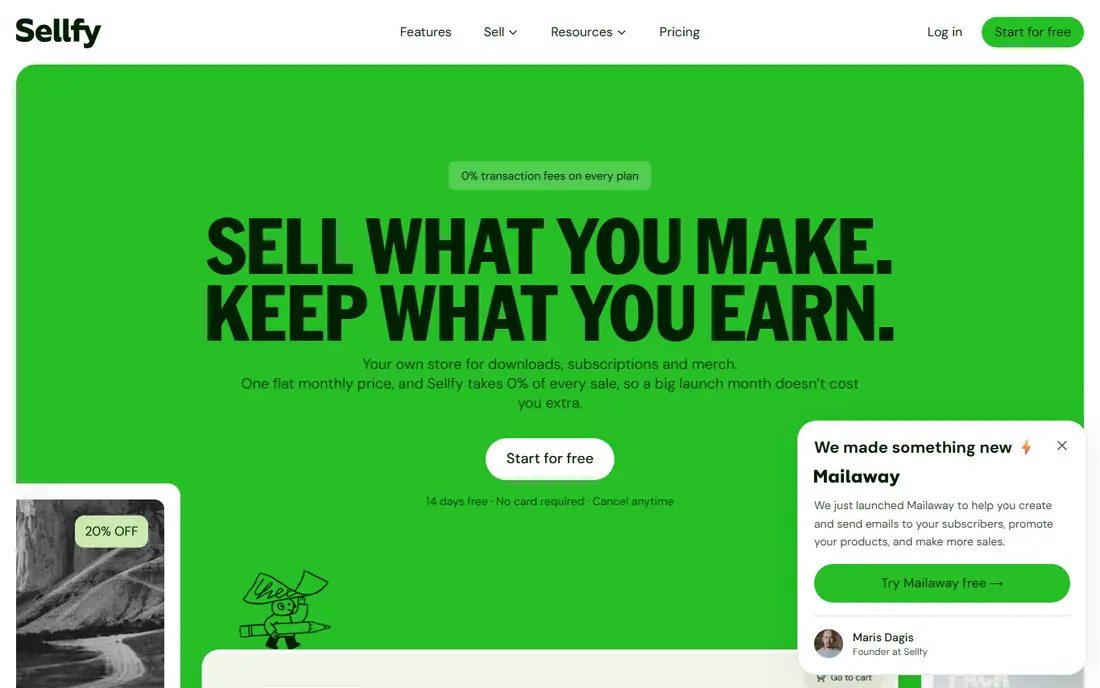
Sellfy gives creators a simple storefront for digital products, subscriptions and physical goods, with built-in marketing tools such as discounts and email. Setup needs no coding, and its dashboard keeps sales, products and customers in one place. It suits creators who want a store without Shopify complexity.
The monthly cost applies even at low volume, and its app ecosystem is smaller than Shopify. Creators with very simple needs may prefer Payhip free tier. For a tidy creator store with marketing built in, Sellfy is a good middle option.
If simple storefronts for creators is your main need, Sellfy deserves a place on a shortlist, provided you test the catch described above first. Check the current plan details on the vendor site, since prices and limits change, and confirm that the version you need works on your devices.
- Storefront with digital and physical products
- Marketing tools
- No coding
- Monthly cost
- Smaller app ecosystem than Shopify
Payhip
Ideal for: Free start for digital sales
Payhip lets creators start selling digital products free, with a small transaction fee on the free plan and VAT handling for EU sales. It supports downloads, courses, memberships and coaching, with a simple storefront and discount tools. Beginners can list a product in minutes.
The free plan takes a percentage per sale, and advanced features such as custom domains and affiliate tools need paid plans. High-volume sellers may do better on a subscription plan elsewhere. For a free, low-risk start, Payhip is excellent.
Our view is that Payhip earns its place here for free start for digital sales, even with the limits noted above. Check the current plan details on the vendor site, since prices and limits change, and confirm that the version you need works on your devices.
- Free plan with low transaction fee
- Digital downloads and courses
- VAT handling
- Free plan takes a percentage
- Advanced features need paid plans
Podia
Ideal for: Courses and memberships
Podia is built for creators selling courses, memberships and digital downloads, with email marketing included and no transaction fees on paid plans. Its course builder, community features and checkout suit teachers and coaches who sell learning products. The all-in-one approach replaces several tools.
The monthly cost applies even before sales, and storefront customization is moderate compared with Shopify. Creators selling only single downloads may prefer Lemon Squeezy. For course and membership creators, Podia is a strong all-rounder.
For readers focused on courses and memberships, Podia is worth a trial before deciding, since the free tier or trial shows its real feel fast. Check the current plan details on the vendor site, since prices and limits change, and confirm that the version you need works on your devices.
- Courses, memberships and digital downloads
- Email tools
- No transaction fees on paid plans
- Monthly cost
- Storefront customization is moderate
Stan Store
Ideal for: Link-in-bio selling for creators
Stan Store turns a link in bio into a storefront for digital products, courses, bookings and memberships, aimed at creators whose audience lives on social platforms. Setup is fast, checkout is mobile-friendly, and analytics show which links convert. It suits creators who sell from Instagram or TikTok.
The monthly cost applies, and it is limited for large product catalogs or complex stores. Creators with many products need Shopify or Podia. For social-first creators selling a few offers, Stan Store is efficient.
We would shortlist Stan Store for link-in-bio selling for creators, and compare it directly with the two options nearest it in price before paying. Check the current plan details on the vendor site, since prices and limits change, and confirm that the version you need works on your devices.
- Link-in-bio storefront
- Digital products and bookings
- Fast setup
- Monthly cost
- Limited for large catalogs
Fourthwall
Ideal for: Merch and digital products for creators
Fourthwall combines print-on-demand merch with digital product sales in a creator storefront, with no monthly fee. Creators can sell shirts, posters and digital downloads from one shop, and its integrations suit YouTube and Twitch audiences. It is a good fit for creators whose fans want merch.
Its merch focus means digital-only features trail Lemon Squeezy and Payhip, and product costs affect margins. Digital-first creators may prefer a specialist. For creators mixing merch and digital goods, Fourthwall is a handy single shop.
If merch and digital products for creators is your main need, Fourthwall deserves a place on a shortlist, provided you test the catch described above first. Check the current plan details on the vendor site, since prices and limits change, and confirm that the version you need works on your devices.
- Print-on-demand merch plus digital sales
- Creator storefronts
- No monthly fee
- Merch focus
- Digital features trail specialists
How we picked these
We compared official feature pages, pricing pages, app store listings, privacy policies and public reviews for each option below. We checked that each product is still available and that its stated plans match what the vendor publishes. We did not run hands-on tests, so our picks rest on documented features, pricing and the fit for the reader described in each section, not on lab results. Where a price could not be confirmed on the vendor site at the time of writing, we wrote See website rather than guessing. We also looked at how each option handles the everyday details that decide whether a tool gets used: setup time, device support, what happens when you cancel or downgrade, and whether help is available when something breaks. A product that looks strong on a feature list but is hard to set up, hard to leave, or poorly supported will cost more in time than it saves, so we weighed those practical points alongside price and features. Where reviewers or users reported a recurring problem, we noted it in the honest catch for that product, rather than leaving it out because the vendor page did not mention it.
How to choose a Gumroad alternative
Start with fees per sale, including payment processing and platform cuts, because a small percentage difference matters on many sales. Check tax handling: some platforms collect and remit sales tax for you, which saves real admin work. Look at the storefront: can you use your own domain and branding, or does every product page look the same? Finally, check payouts and audience tools, since email lists and discount codes decide whether you can sell a second product to the same buyer.
A final check before you commit
Run a short trial on a real task before you pay for a year or move a whole team. Use the free plan or trial to complete one full job, from setup to export or delivery, and note where you got stuck. Check the cancellation path too: can you leave and keep your data, or does leaving mean starting over? Read the pricing page for renewal rates, not just the first-year offer, and confirm what support you get on the plan you will actually buy. Finally, ask one current user about the worst part of the product, since that answer tells you more than any feature list. If the trial feels good on a real task and the exit path is clear, the choice is much safer.
Frequently asked questions
What is the best Gumroad alternative?
Lemon Squeezy is the closest simple replacement, with tax handling and a clean checkout. Payhip is best for a free start, Shopify suits full stores, and Podia leads for courses and memberships.
Why do creators leave Gumroad?
Common reasons include fees, limited storefront customization, payout timing and a desire for better course, membership or email tools. The right alternative depends on which of those matters most to you.
What fees do Gumroad alternatives charge?
Fees vary: some charge a percentage per sale plus payment processing, others charge a monthly subscription with lower per-sale fees, and Payhip offers a free plan with a small transaction fee. Compare total cost at your sales volume.
Can I sell courses on these platforms?
Yes. Podia, Teachable-style features on Shopify apps, and Stan Store all support courses and memberships, while Lemon Squeezy and Payhip focus more on digital downloads and simple products.
Do these platforms handle sales tax?
Lemon Squeezy handles sales tax as a merchant of record, which is a major advantage. Other platforms vary, so check tax handling for your location and customer countries before choosing.