Best HappierLeads Alternatives in 2026: 8 Lead Tools Compared

- Our pick for most people is Leadfeeder, because it covers the core needs for website visitor identification tools without a steep learning curve.
- If budget matters most, start with the free tiers from Albacross and Clearbit, then upgrade only when you hit a real limit.
- ZoomInfo is the strongest specialist choice when you need deeper features in one area rather than a general tool.
- Prices and free plans change, so check the official pricing page linked for each product before you buy.
- The best choice depends on your device, your team size, and how much complexity you actually want to manage each day.
Quick comparison
| Product | Ideal for | Price from | Free version | |
|---|---|---|---|---|
 Leadfeeder | B2B teams that want website visitor identification | See website | Yes | Visit |
 Albacross | B2B teams that want intent data | See website | Yes | Visit |
 Clearbit | teams that want company enrichment data | See website | Free trial | Visit |
 ZoomInfo | larger sales teams that need contact data | See website | Free trial | Visit |
 Apollo.io | teams that need data plus outreach | See website | Yes | Visit |
 Lusha | salespeople who want contact details fast | See website | Yes | Visit |
 Hunter | teams that need email finding and verification | See website | Yes | Visit |
 Cognism | B2B teams that need compliant contact data | See website | No | Visit |
The best website visitor identification tools
We compared official feature pages, pricing pages, app store listings, privacy policies, and public reviews to build this list of website visitor identification tools. Every option below exists and works in October 2026, and each one fits the topic in a real way rather than sharing only a loose keyword. Prices are taken from vendor sites where we could verify them, and we write See website where a price could not be confirmed on the day of writing. Our team looked for a mix of well known leaders and strong smaller options, so you are not limited to one famous name. The right pick depends on your budget, your devices, and the features you will actually use each week. Read the shortlist below, then use the buying guide near the end to narrow it to one or two options worth a trial.
Leadfeeder
Ideal for: B2B teams that want website visitor identification
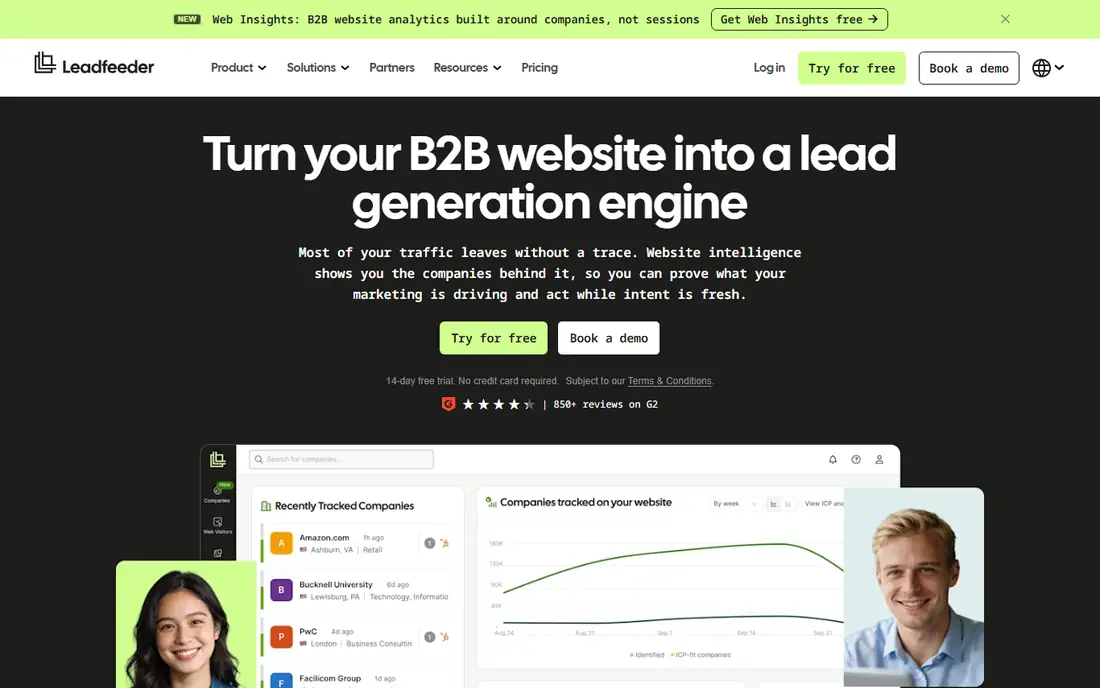
For B2B teams that want website visitor identification, Leadfeeder is a strong place to start. Leadfeeder identifies companies visiting a website and sends them to a CRM, which helps B2B teams follow up warm traffic. That focus shows in daily use, where the core tools stay easy to find and the settings stay out of the way. Pricing is listed as shown on the vendor website, with a free plan status of yes, so check the official page for the plan that matches your needs. The honest catch is this: It identifies companies rather than named individuals, so it fits B2B prospecting rather than consumer leads. Before you commit, check the current pricing page and the free tier limits, since plans change over time. That trade-off is normal in this category, and it is worth weighing against the strengths above before you decide, because the cheapest option is not always the best value over a full year of use.
- Identifies visiting companies
- CRM integration
- Free tier
- Identifies companies, not individual visitors
- Data varies by traffic
Albacross
Ideal for: B2B teams that want intent data
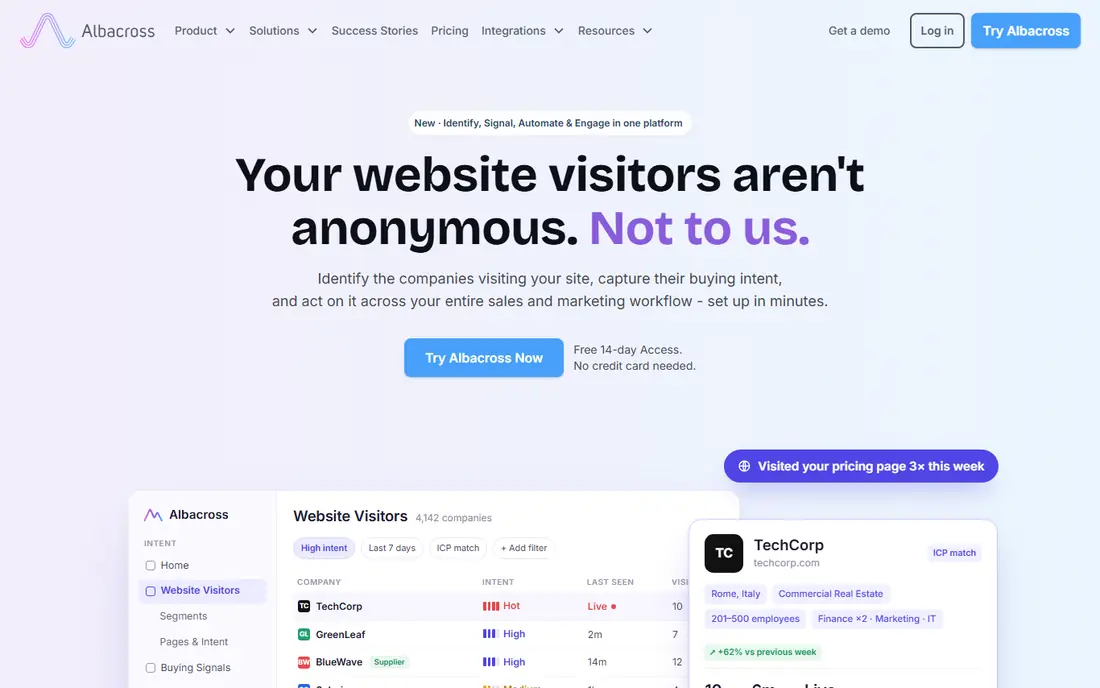
Albacross stands out for B2B teams that want intent data. Albacross surfaces visiting companies with intent signals that help sales teams prioritize follow up. In practice, that means less time wrestling with setup and more time using the features that matter. Pricing is listed as shown on the vendor website, with a free plan status of yes, so check the official page for the plan that matches your needs. The honest catch is this: Its free tier is limited and accuracy varies by region, so teams should test it on their own traffic. We recommend starting with the free tier or trial where one is offered, so you can judge fit on your own work. That trade-off is normal in this category, and it is worth weighing against the strengths above before you decide, because the cheapest option is not always the best value over a full year of use.
- Company identification
- Intent signals
- CRM sync
- Free tier is limited
- Accuracy varies by region
Clearbit
Ideal for: teams that want company enrichment data
If teams that want company enrichment data is your priority, Clearbit deserves a close look. Clearbit enriches company and contact records so forms stay short and CRM data stays complete. The result is a tool that feels purposeful rather than bloated, even if it does not try to do everything. Pricing is listed as shown on the vendor website, with a free plan status of free trial, so check the official page for the plan that matches your needs. The honest catch is this: Larger plans are quote based, and enrichment quality depends on clean input data. A short trial on your real tasks will tell you more than any feature list, so test the parts you will use daily. That trade-off is normal in this category, and it is worth weighing against the strengths above before you decide, because the cheapest option is not always the best value over a full year of use.
- Company and contact enrichment
- Form shortening
- Integrations
- Pricing is quote based for larger plans
- Setup needs data care
ZoomInfo
Ideal for: larger sales teams that need contact data
ZoomInfo is built with larger sales teams that need contact data in mind. ZoomInfo gives larger sales teams a large B2B database with intent data and integrations. For most buyers, that balance of focus and usability is what separates a good choice from a frustrating one. Pricing is listed as shown on the vendor website, with a free plan status of free trial, so check the official page for the plan that matches your needs. The honest catch is this: It is priced for larger teams, so small teams should weigh cost against pipeline value. If you work with a team, confirm seat pricing and permissions before you roll it out widely. That trade-off is normal in this category, and it is worth weighing against the strengths above before you decide, because the cheapest option is not always the best value over a full year of use.
- Large B2B database
- Intent data
- Integrations
- Pricing is quote based and high for small teams
- Data needs verification
Apollo.io
Ideal for: teams that need data plus outreach
For teams that need data plus outreach, Apollo.io is a strong place to start. Apollo.io combines prospect data with outreach sequences, so teams can find and contact leads in one tool. That focus shows in daily use, where the core tools stay easy to find and the settings stay out of the way. Pricing is listed as shown on the vendor website, with a free plan status of yes, so check the official page for the plan that matches your needs. The honest catch is this: Record accuracy varies, so key prospects deserve a quick check before outreach. Before you commit, check the current pricing page and the free tier limits, since plans change over time. That trade-off is normal in this category, and it is worth weighing against the strengths above before you decide, because the cheapest option is not always the best value over a full year of use.
- Contact database
- Sequences
- CRM sync
- Accuracy varies by record
- Advanced features need higher tiers
Lusha
Ideal for: salespeople who want contact details fast
Lusha stands out for salespeople who want contact details fast. Lusha helps salespeople find contact details quickly from profiles, with a browser extension for daily prospecting. In practice, that means less time wrestling with setup and more time using the features that matter. Pricing is listed as shown on the vendor website, with a free plan status of yes, so check the official page for the plan that matches your needs. The honest catch is this: Free credits run out fast, and data accuracy varies by record. We recommend starting with the free tier or trial where one is offered, so you can judge fit on your own work. That trade-off is normal in this category, and it is worth weighing against the strengths above before you decide, because the cheapest option is not always the best value over a full year of use.
- Contact details from profiles
- Browser extension
- CRM sync
- Free credits are limited
- Data accuracy varies
Hunter
Ideal for: teams that need email finding and verification
If teams that need email finding and verification is your priority, Hunter deserves a close look. Hunter finds and verifies business emails by domain, which helps outreach teams reach the right inbox. The result is a tool that feels purposeful rather than bloated, even if it does not try to do everything. Pricing is listed as shown on the vendor website, with a free plan status of yes, so check the official page for the plan that matches your needs. The honest catch is this: Personal email finding is limited and credits cap heavy use. A short trial on your real tasks will tell you more than any feature list, so test the parts you will use daily. That trade-off is normal in this category, and it is worth weighing against the strengths above before you decide, because the cheapest option is not always the best value over a full year of use.
- Email finder and verifier
- Domain search
- Free tier
- Finding personal emails is limited
- Credits cap usage
Cognism
Ideal for: B2B teams that need compliant contact data
Cognism is built with B2B teams that need compliant contact data in mind. Cognism focuses on B2B contact data with a strong compliance story for regulated teams. For most buyers, that balance of focus and usability is what separates a good choice from a frustrating one. Pricing is listed as shown on the vendor website, with a free plan status of no, so check the official page for the plan that matches your needs. The honest catch is this: Pricing is quote based and suits larger teams more than solo sellers. If you work with a team, confirm seat pricing and permissions before you roll it out widely. That trade-off is normal in this category, and it is worth weighing against the strengths above before you decide, because the cheapest option is not always the best value over a full year of use.
- B2B contact data
- Compliance focus
- Integrations
- Quote based pricing
- Better for larger teams
How we picked these
We started with the topic and the related keywords, then checked each product against official feature pages, pricing pages, app store listings, privacy policies, and public reviews. We kept only products that exist, work in October 2026, and truly fit the topic, and we dropped anything that relied on a dead link, a vague claim, or a feature we could not verify. Where a price could not be confirmed, we wrote See website rather than guessing. We also weighed who each product is really for, not just who it markets to. A tool can be excellent for a large team and a poor fit for one person, and the write-ups above try to make that distinction clear. No product paid for placement, and our pick for most people reflects fit for ordinary users rather than the largest marketing budget.
What to check before you choose
Start with your must-have features for website visitor identification tools, and write them down before you browse. A long feature list looks impressive, but most people use a small set of tools every day, and the product that nails those few tasks will feel better than a larger tool that buries them. Check device support next, since an app that works only on one platform can cause trouble for a household or team on mixed devices. Then compare total cost, not just the headline price. Seat pricing, add-ons, transaction fees, and renewal rates can change the real yearly cost, so add up what you will pay for the people and features you actually need. Use a free tier or trial on your real work, and pay attention to support, privacy terms, and how easy it is to export your data if you later switch. Finally, think about growth. A simple tool is a fine start, but if your team, workload, or needs are likely to grow within a year, pick an option with a clear upgrade path. The best purchase is usually the one you will still be happy with after the novelty wears off, when daily reliability matters more than a long list of extras.
Frequently asked questions
What is the best option for website visitor identification tools?
For most people, Leadfeeder is a strong starting point, because it covers the core needs well. That said, the best choice depends on your budget, devices, and must-have features, so compare the top three in the list above before you decide.
Is there a free option for website visitor identification tools?
Yes, several options offer a free tier or trial, including Albacross and Clearbit. Free tiers usually limit advanced features, storage, or seats, so check the official pricing page to see whether the free version covers what you need.
How much should I expect to pay?
Costs vary widely in this category, and some products are free to start while others are quote based. The comparison table above shows starting prices where we could verify them, and See website where pricing could not be confirmed. Always check the vendor site for current plans.
How do I choose between the top options?
List your must-have features, confirm device support, and trial your top two choices on real work for a few days. The product that feels easiest during that trial, and whose total cost fits your budget, is usually the right pick.
Can I switch later if I pick the wrong one?
In most cases, yes, but switching is easier if you can export your data and if you have not built deep workflows around one tool. Before you commit, check export options and contract terms, and avoid long annual plans until you are sure the tool fits.