Best Identity Guard Alternatives in 2026: 9 Options Compared

- 1
 AuraAll-in-one family protectionVisit
- 2
 Norton LifeLockEstablished identity protectionVisit
- 3
 IdentityForceCredit and identity monitoringVisit
- 4
 Experian IdentityWorksCredit bureau monitoringVisit
- 5
 McAfee Identity ProtectionIdentity plus device securityVisit
- Aura suits families wanting identity, credit, device and VPN protection in one plan.
- Norton LifeLock suits households already using Norton security products.
- IdentityForce and Experian IdentityWorks suit users focused on credit and identity monitoring.
- Check what insurance and recovery help is actually included, since headline cover amounts differ in scope.
Quick comparison
| Product | Ideal for | Price from | Free version | |
|---|---|---|---|---|
| Aura | All-in-one family protection | See website | Free trial | Visit |
| Norton LifeLock | Established identity protection | See website | Free trial | Visit |
| IdentityForce | Credit and identity monitoring | See website | Free trial | Visit |
| Experian IdentityWorks | Credit bureau monitoring | See website | Free trial | Visit |
| McAfee Identity Protection | Identity plus device security | See website | Free trial | Visit |
 IDShield | Identity plus legal help | See website | Free trial | Visit |
 PrivacyGuard | Credit monitoring at lower cost | See website | Free trial | Visit |
 Zander Insurance Identity Theft Protection | Budget identity protection | See website | No | Visit |
 ID Watchdog | Identity monitoring with resolution | See website | Free trial | Visit |
The best identity guard alternatives
We compared identity protection services on monitoring, alerts, insurance and price. Our pick for most households is Aura for all-in-one protection, with Norton LifeLock as the established alternative. No service can prevent all identity theft, so treat these as monitoring and recovery help, not a guarantee.
No identity protection service can prevent all identity theft. These services monitor, alert and help with recovery, but freezing credit and using strong passwords remain essential steps.
Aura
Ideal for: All-in-one family protection

Our first look at Aura starts with who it serves best. It is the all-in-one pick for families. Aura combines identity monitoring, credit alerts, antivirus and VPN in one subscription.
The catch is plan variation: family pricing depends on members and features. It fits families wanting one subscription for identity and device protection. Check the current pricing page before you commit, since plans in this category change often, and use the free plan or trial to confirm the fit with your own work.
Before you pay for Aura, run one real task through it, such as a full document, a full trip plan or a full project, and judge it on that result rather than on the marketing page.
- Identity, credit, device and VPN protection in one plan
- Family plans
- Fast alerts
- Pricing varies by plan and family size
- Some features are US-focused
Norton LifeLock
Ideal for: Established identity protection
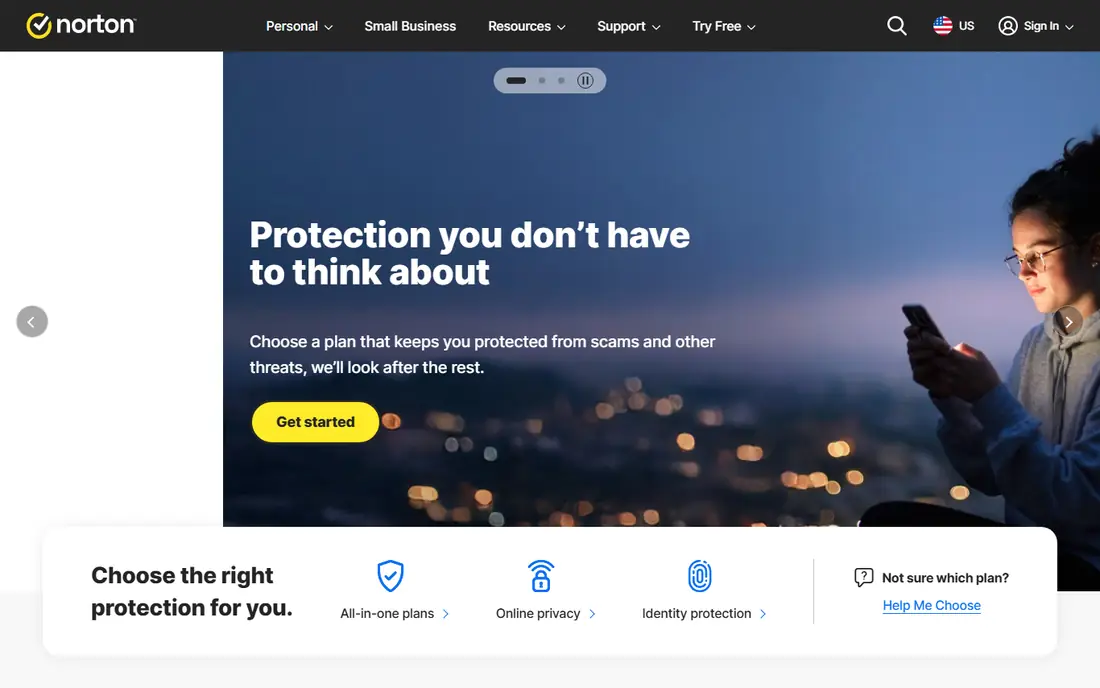
For many readers, Norton LifeLock will be the most practical choice on this list. It is the established name in identity protection. LifeLock monitors identity and credit, with insurance and dedicated recovery help.
The catch is tier pricing: the full feature set sits on higher plans. It fits households already using Norton security products. Check the current pricing page before you commit, since plans in this category change often, and use the free plan or trial to confirm the fit with your own work.
A useful test for Norton LifeLock is to try the exact workflow you will repeat weekly, then check how long it takes and whether the output needs heavy fixing before it is usable.
- Established brand with credit and identity monitoring
- Identity theft insurance
- Recovery help
- Pricing grows with tiers
- Best value for Norton security users
IdentityForce
Ideal for: Credit and identity monitoring

Next up is IdentityForce, which takes a different approach to the same job. It is the monitoring-focused alternative. IdentityForce focuses on credit, identity and dark-web monitoring with clear alerts.
The catch is extras: it is not a device-security bundle like Aura. It fits users who mainly want monitoring and alerts. Check the current pricing page before you commit, since plans in this category change often, and use the free plan or trial to confirm the fit with your own work.
When you trial IdentityForce, note what is missing as well as what works, since the missing piece often decides whether a tool survives past the first month.
- Strong credit and identity monitoring
- Alerts and reports
- Family options
- Fewer device and VPN extras than Aura
- Interface is functional
Experian IdentityWorks
Ideal for: Credit bureau monitoring
Experian IdentityWorks earns its place here for a specific kind of user. It is the credit-bureau-native option. IdentityWorks monitors Experian credit data directly, with score access and alerts.
The catch is bureau scope: other bureaus need separate attention. It fits users focused on Experian credit monitoring. Check the current pricing page before you commit, since plans in this category change often, and use the free plan or trial to confirm the fit with your own work.
We would also check support and documentation for Experian IdentityWorks during the trial, since a tool you cannot get help with becomes expensive in staff time even when the subscription looks cheap.
- Direct Experian credit monitoring
- FICO score access
- Identity alerts
- Best value for Experian credit users
- Full features need paid tiers
McAfee Identity Protection
Ideal for: Identity plus device security
If the options so far have not fit, McAfee Identity Protection is worth a closer look. It is the McAfee bundle for identity and devices. McAfee pairs identity monitoring with its security suite and VPN.
The catch is depth: identity features vary by tier. It fits McAfee security households adding identity cover. Check the current pricing page before you commit, since plans in this category change often, and use the free plan or trial to confirm the fit with your own work.
Before you pay for McAfee Identity Protection, run one real task through it, such as a full document, a full trip plan or a full project, and judge it on that result rather than on the marketing page.
- Identity monitoring with McAfee device security
- VPN included on many plans
- Family options
- Identity depth varies by plan
- Best for McAfee users
IDShield
Ideal for: Identity plus legal help
IDShield is the option we point to when a reader has a clear priority in mind. It is the identity-plus-legal option. IDShield pairs monitoring with access to legal help for identity issues.
The catch is legal scope, which varies by plan and state. It fits users who want legal support alongside monitoring. Check the current pricing page before you commit, since plans in this category change often, and use the free plan or trial to confirm the fit with your own work.
A useful test for IDShield is to try the exact workflow you will repeat weekly, then check how long it takes and whether the output needs heavy fixing before it is usable.
- Identity monitoring plus legal consultation
- Family plans
- Recovery help
- Legal help scope varies by plan and state
- Smaller brand than Aura
PrivacyGuard
Ideal for: Credit monitoring at lower cost
Another strong contender is PrivacyGuard, and it stands out for one clear reason. It is the lower-cost credit monitoring option. PrivacyGuard monitors credit and identity at a lower price than all-in-one bundles.
The catch is breadth: device and VPN extras are thinner. It fits budget users focused on credit monitoring. Check the current pricing page before you commit, since plans in this category change often, and use the free plan or trial to confirm the fit with your own work.
When you trial PrivacyGuard, note what is missing as well as what works, since the missing piece often decides whether a tool survives past the first month.
- Credit monitoring and scores
- Identity alerts
- Lower-cost plans
- Fewer all-in-one extras than Aura
- Brand is smaller
Zander Insurance Identity Theft Protection
Ideal for: Budget identity protection
We round out the list with Zander Insurance Identity Theft Protection, which fills a gap the others leave open. It is the budget identity protection pick. Zander offers identity monitoring and recovery help at a low monthly cost.
The catch is features: it is simpler than all-in-one rivals. It fits budget households wanting basic monitoring and recovery. Check the current pricing page before you commit, since plans in this category change often, and use the free plan or trial to confirm the fit with your own work.
We would also check support and documentation for Zander Insurance Identity Theft Protection during the trial, since a tool you cannot get help with becomes expensive in staff time even when the subscription looks cheap.
- Low-cost identity monitoring and recovery help
- Simple plans
- Family options
- Fewer premium features
- Smaller feature set than Aura
ID Watchdog
Ideal for: Identity monitoring with resolution
ID Watchdog rounds out our shortlist with a focused set of strengths. It is another solid monitoring option with resolution help. ID Watchdog monitors identity and helps resolve theft cases.
The catch is prominence: it is less widely reviewed than leaders. It fits users comparing monitoring options beyond the biggest brands. Check the current pricing page before you commit, since plans in this category change often, and use the free plan or trial to confirm the fit with your own work.
Before you pay for ID Watchdog, run one real task through it, such as a full document, a full trip plan or a full project, and judge it on that result rather than on the marketing page.
- Identity monitoring with resolution support
- Credit alerts
- Family plans
- Brand and features are less prominent than Aura or LifeLock
How we picked these
We compared official feature pages, pricing pages, app store listings, privacy policies and public reviews for each product, and kept only products that exist, work today and truly fit the topic. We favoured clear pricing, a usable free plan or trial, and honest limits over long feature lists. Where a price could not be verified on the vendor site, we wrote See website rather than guessing.
We did not claim hands-on testing we did not do. Instead, we weighed what each vendor documents, what reviewers report in practice, and where each product falls short, so the trade-offs below are stated plainly.
How to choose identity protection without overpaying
Start with a free credit freeze, which is the strongest single step, then add monitoring only for risks you cannot cover yourself. Compare monitoring breadth, alert speed, family cover and recovery help, not just the insurance headline.
Frequently asked questions
What is the best Identity Guard alternative?
Aura suits most families for all-in-one protection, while Norton LifeLock suits Norton users. IdentityForce suits credit-focused monitoring.
Is identity protection worth paying for?
It helps with monitoring and recovery, but a credit freeze is free and often more powerful. Paid services suit people who want alerts, family cover and recovery help in one place.
What does identity theft insurance cover?
It typically covers recovery costs such as legal fees and lost wages up to a limit, not the stolen money itself in most cases. Read the policy wording for exclusions.
Can identity protection prevent theft?
No service can prevent all theft. Monitoring finds misuse faster and recovery help reduces the damage, but freezes, strong passwords and careful sharing matter more.
Should I freeze my credit instead?
A credit freeze is free, powerful and recommended alongside or instead of paid monitoring. It blocks new credit in your name until you lift it.