6 Strong Informatica Integration Alternatives (2026)

- 1
 TalendEnterprise hybrid integrationVisit
- 2
 Azure Data FactoryMicrosoft ecosystem pipelinesVisit
- 3
 FivetranAutomatic SaaS ingestionVisit
- 4
 Integrate.ioFlat-fee low-code pipelinesVisit
- 5
 AirbyteOpen-source ELT with controlVisit
- Talend takes the first slot, best suited to enterprise hybrid integration.
- Matillion is the one to check for warehouse-native ELT.
- Integrate.io comes with a trade-off: higher entry than free tools.
- 3 of 6 tools offer a free plan: Talend, Fivetran, Airbyte.
Direct answer
Start with Talend if you need enterprise hybrid integration. Azure Data Factory is the stronger choice for Microsoft ecosystem pipelines, while Fivetran suits automatic SaaS ingestion. The other 3 tools in the list cover narrower or pricier cases.
Quick comparison
| Product | Ideal for | Price from | Free version | |
|---|---|---|---|---|
| Talend | Enterprise hybrid integration | Free | Yes | Visit |
| Azure Data Factory | Microsoft ecosystem pipelines | See website | No | Visit |
| Fivetran | Automatic SaaS ingestion | Free | Yes | Visit |
| Integrate.io | Flat-fee low-code pipelines | $1,999 per month | No | Visit |
| Airbyte | Open-source ELT with control | Free | Yes | Visit |
 Matillion | Warehouse-native ELT | See website | No | Visit |
The full Informatica Integration list
If you are comparing Informatica Integration, this page covers 6 tools in one place: what each is best for, what it costs to start, whether it has a free plan, and the main limit to know about.
Talend
Ideal for: Enterprise hybrid integration
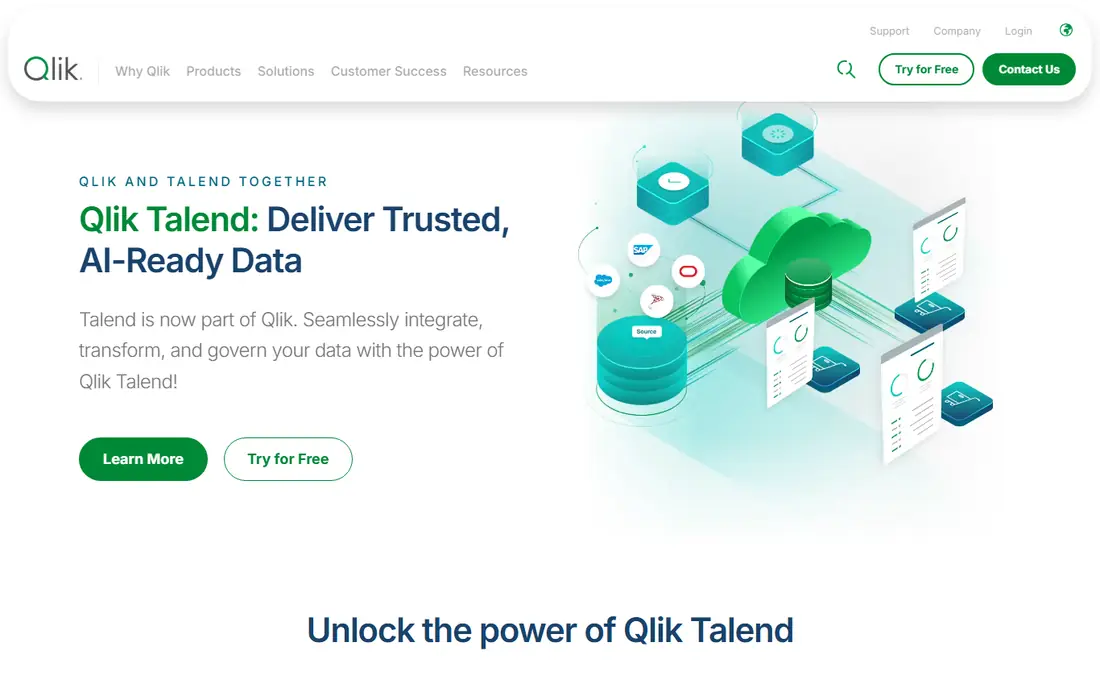
Talend targets enterprise hybrid integration. Pick Talend when enterprise governance and hybrid deployment matter. Also, small teams will find Talend heavy.
Watch-outs: Java-heavy toolchain needs specialists.
Per-user licensing on enterprise levels keeps costs tied to team size instead of row volume. Beyond that, pick a cloud-native tool when speed and simplicity lead. The governance strength is the draw for regulated teams: data quality rules, lineage, and stewardship sit alongside pipelines, which fits banks, insurers, and healthcare organizations. Price to start with Talend: Free. Talend offers a free plan.
- Data quality and governance strengths
- Visual ETL and ELT designer
- Complexity for small teams
Azure Data Factory
Ideal for: Microsoft ecosystem pipelines
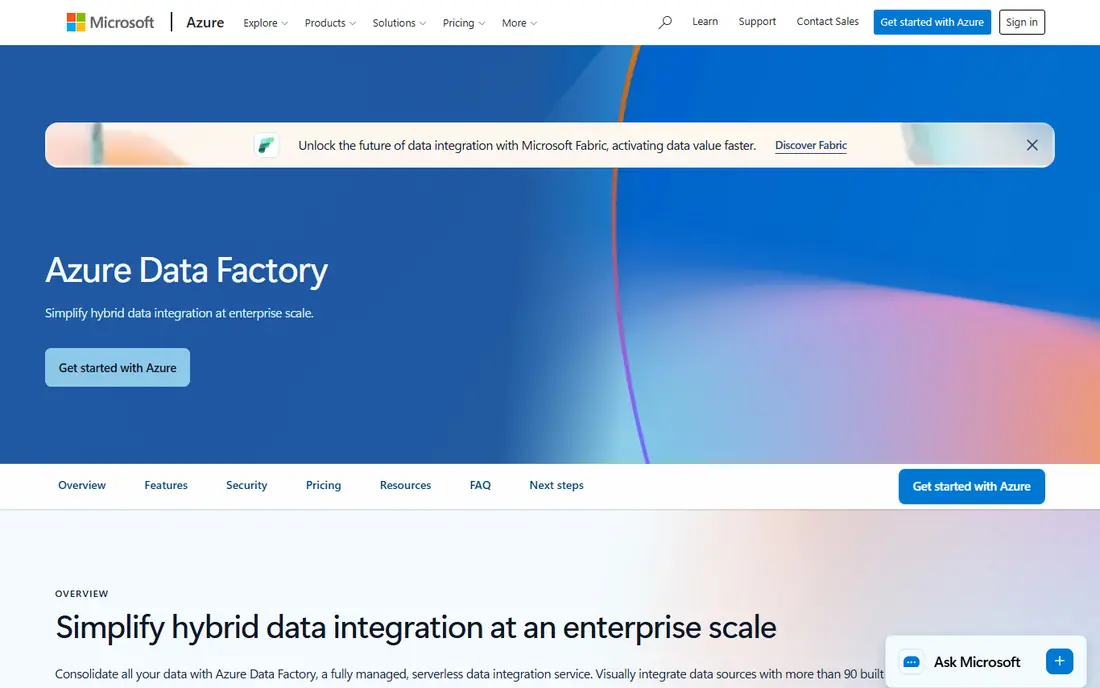
Azure Data Factory makes the most sense for Microsoft ecosystem pipelines. Pick a cloud-neutral tool when multi-cloud or SaaS breadth matters. Azure Data Factory orchestrates data movement inside Microsoft's cloud, with visual pipelines, optional code, and pay-as-you-go pricing by activities and compute.
It spans more than 90 connectors, with hybrid support for on-premises sources through integration runtimes. From a buyer's view, SaaS connector breadth also trails the ELT specialists. Pick Azure Data Factory when Azure is the core system. Azure-only deployment is the limit, and CDC support is thinner than Fivetran's. Pricing for Azure Data Factory is not stated here, so ask the vendor for current figures. No free plan comes with Azure Data Factory.
The main drawbacks: Less SaaS connector breadth than Fivetran.
- Visual pipelines with optional code
- Pay-as-you-go by activity and compute
- CDC support is restricted
Fivetran
Ideal for: Automatic SaaS ingestion
Fivetran makes the most sense for automatic SaaS ingestion. With more than 700 connectors including SaaS apps and databases, it fits analytics teams that want data flowing with minimal engineering attention. That model rewards teams with stable row counts and punishes teams with volatile or expanding volumes, so model costs at peak volume.
Worth adding: pick Fivetran when hands-off ingestion matters most. Beyond that, pick Airbyte when control and cost matter more. Starting cost for Fivetran: Free. A free plan is available with Fivetran.
Trade-offs to know: Usage-based MAR billing climbs at scale.
- Minimal maintenance
- 700 plus managed connectors
- Less control than open source
Integrate.io
Ideal for: Flat-fee low-code pipelines
Where Integrate.io fits: flat-fee low-code pipelines. The entry price exceeds free tools, and connector counts trail Fivetran's 700-plus. The low-code interface provides more than 220 built-in transformations, and production pipelines can run in days, with a 30-day onboarding program that gets teams self-sufficient fast.
What users get: ETL, ELT, CDC.
Pick Integrate.io when predictable cost and low-code speed matter most. Integrate.io is a cloud-native pipeline product with a flat $1,999 monthly fee including ETL, ELT, CDC, reverse ETL, and API management, with no row limits, pipeline caps, or consumption meters. Price to start with Integrate.io: $1,999 per month. Integrate.io has no free plan.
Drawbacks to consider: Smaller ecosystem than Talend.
- 220 plus transformations
- Flat $1,999 monthly fee
- Fewer connectors than Fivetran
Airbyte
Ideal for: Open-source ELT with control
Airbyte was built for open-source ELT with control. Airbyte is the open-source ELT standard, with more than 700 connectors and a custom connector builder for sources nobody else spans. Teams self-host at no cost or use the managed cloud, which charges by usage credits or capacity levels.
Downsides: Self-hosting needs engineering.
Worth adding: pick Fivetran when completely managed simplicity matters more. More specifically, self-hosting needs engineering time for upgrades, monitoring, and scaling, whereas the cloud level removes that burden at a usage cost. In daily use, the open-source model provides engineers control over pipelines, deployment, and data residency. Price to start with Airbyte: Free. Free access exists with Airbyte.
- Custom connector builder
- Self-host or cloud
- ELT only, no built-in transformation
Matillion
Ideal for: Warehouse-native ELT
Matillion is built with warehouse-native ELT in mind. Matillion builds ELT pipelines that run inside the cloud warehouse, using SQL transformations that data teams already know. That warehouse-native design is efficient: transformations run where the data lives, avoiding a separate processing layer.
What to check first: Cloud-warehouse only.
Worth adding: for a team standardized on one warehouse, Matillion feels like a natural extension of the warehouse itself. Matillion is also warehouse-only, with less app integration depth than Boomi or MuleSoft. Pick an iPaaS when app integration leads. On top of that, pick Matillion when warehouse-native ELT leads. Matillion shows no starting price here, so confirm the cost on the vendor site. There is no free plan with Matillion.
- Capable Snowflake, BigQuery
- Warehouse-native transformations in SQL
- Usage credits amplify warehouse compute costs
How we built this list
For each of the 6 tools we noted price, free plan or trial, fit for Informatica Integration and the main limit, using vendor pages and documentation. Prices and plan limits come from vendor pages and can change, so confirm them on the vendor site before you buy. The order reflects how well each tool fits the most common buying scenario for Informatica Integration, then price clarity, then free plan access. It is a starting point, not a verdict.
What to confirm before you sign up
- Ask Azure Data Factory and Matillion for a written quote, since no starting price is shown.
- Look at free plan limits closely: Talend, Fivetran and Airbyte have one, and the caps decide whether it is usable for real work.
- Read the limits listed for Talend first: Java-heavy toolchain needs specialists.
- Involve the people who will use Matillion daily; a short pilot beats a long feature checklist.
- Check whether Integrate.io bills monthly or annually, and what cancelling early costs.
Frequently asked questions
How are the tools for Informatica Integration ordered?
Talend sits first and Matillion last because the order follows typical fit for Informatica Integration, then price clarity and free access. It is a judgement call, so read each profile for fit and limits.
How quick can I migrate off Informatica?
Low-code cloud tools like Integrate.io report production pipelines in days, whereas enterprise migrations to Talend or Boomi take weeks to months based on pipeline count and complexity. Run a pilot on your five most critical pipelines before committing to a full migration.
Which options for Informatica Integration have a free plan?
On this list, Talend, Fivetran and Airbyte include a free plan. Caps on seats, usage or features are common, so test the free plan against your real workload.
Can I try these tools before paying?
Often, yes. Talend, Fivetran and Airbyte have a free plan. Use your own data and a real task during the test, and check what the free tier or trial limits before you rely on it.
Is Talend the right pick for everyone comparing Informatica Integration?
No single tool suits every team. Talend comes first because it fits enterprise hybrid integration, while Azure Data Factory suits Microsoft ecosystem pipelines and Fivetran suits automated SaaS ingestion. Match the tool to your own size, budget and workflow before deciding.