Best Ivig Alternatives in 2026: 8 Options Compared

- Subcutaneous immunoglobulin lets many patients receive immunoglobulin at home instead of by vein.
- Plasma exchange is a hospital procedure used for certain acute autoimmune conditions.
- Rituximab and other immune suppressing treatments are used for specific autoimmune conditions, not as a general IVIG swap.
- No option here suits every condition IVIG treats, so the right choice depends on diagnosis and medical history.
Quick comparison
| Product | Ideal for | Price from | Free version | |
|---|---|---|---|---|
 Hizentra | Subcutaneous immunoglobulin at home | See website | No | Visit |
 HyQvia | Less frequent subcutaneous immunoglobulin | See website | No | Visit |
 Gammagard | Intravenous immunoglobulin option | See website | No | Visit |
 Privigen | Intravenous immunoglobulin option | See website | No | Visit |
 Plasma Exchange | Hospital procedure for acute conditions | See website | No | Visit |
 Rituximab | Immune suppressing treatment | See website | No | Visit |
 Corticosteroids | Immune suppressing medicines | See website | No | Visit |
 Mycophenolate | Long term immune suppression | See website | No | Visit |
The best ivig alternatives
We worked through the options below in detail, comparing what each one does well, where it falls short, and who it suits best. Our pick for most people depends on your budget and your main job, so read the shortlist with your own use case in mind. The order below starts with the strongest all round options and then moves to more specialised picks.
Hizentra
Ideal for: Subcutaneous immunoglobulin at home
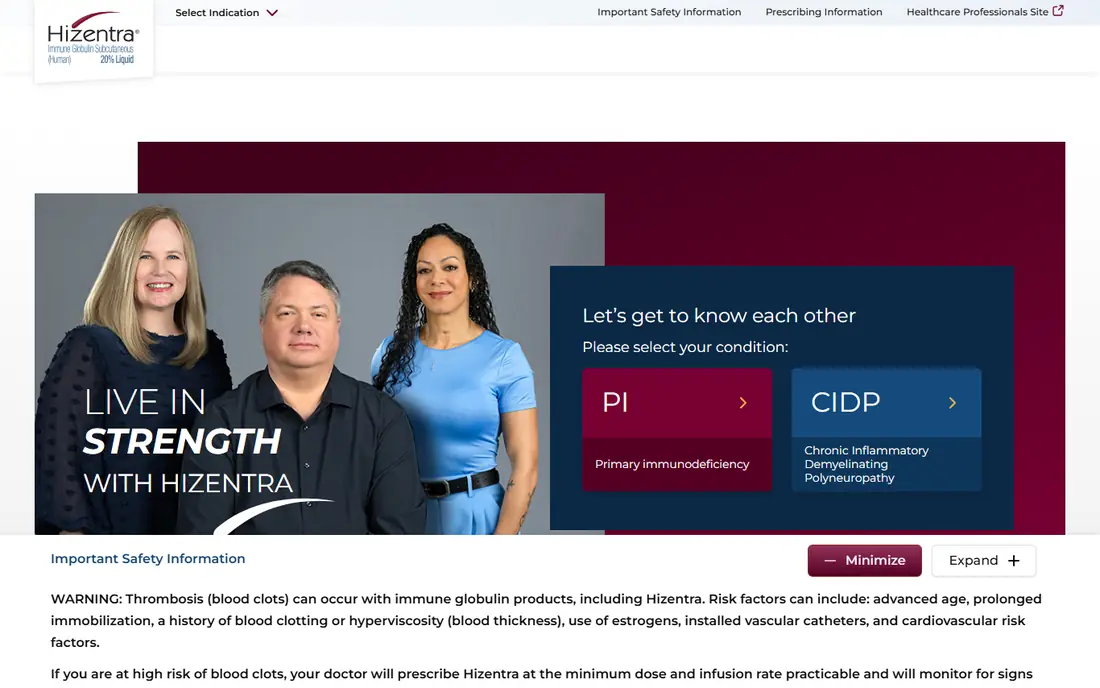
For patients with primary immune deficiency who want home treatment, Hizentra is a strong choice. Its subcutaneous route lets trained patients treat at home, which removes regular infusion centre visits. When we compared official feature pages, the difference showed up in everyday use, not in marketing claims, since the tools that look similar on a homepage often behave very differently once you set them up for a real task.
The frequent injection schedule and site reactions suit some patients far less than monthly infusions. Try it with a real task from your own work before committing, since a short trial reveals friction that no feature list can show. That trade off is worth weighing against your main job, since the best tool on paper is not always the best tool for your team or your budget.
- Home administration after training
- Steadier immunoglobulin levels
- No venous access needed
- Frequent injections
- Local site reactions are common
- Training required
HyQvia
Ideal for: Less frequent subcutaneous immunoglobulin
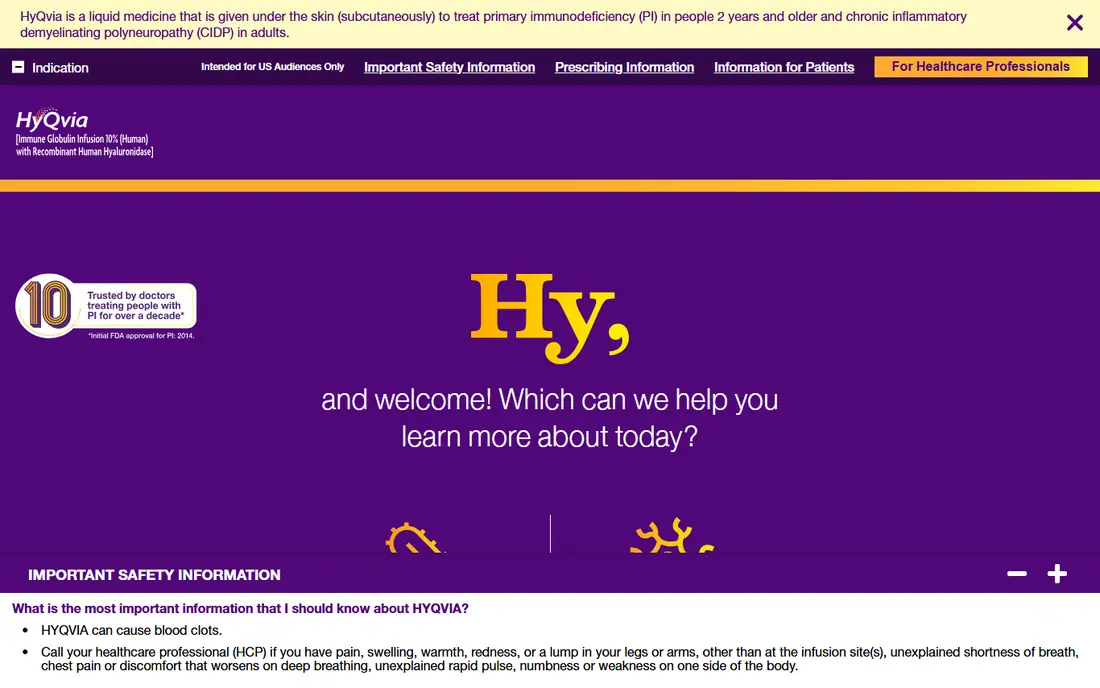
For patients who want home immunoglobulin with fewer injection days, HyQvia is a strong choice. Its facilitated route allows larger, less frequent doses than standard subcutaneous immunoglobulin. We also checked what each vendor says about its own limits, because a tool that is honest about its weak spots is easier to plan around than one that hides them behind a long feature list.
Patients must still learn the technique and manage local reactions, so it is not effort free. Read the current pricing and terms on the vendor site before you buy, since plans and limits change, and the plan you read about last year may not be the plan on sale today. That trade off is worth weighing against your main job, since the best tool on paper is not always the best tool for your team or your budget.
- Less frequent dosing than weekly subcutaneous options
- Home administration
- Requires training
- Local reactions possible
- Not suitable for every patient
Gammagard
Ideal for: Intravenous immunoglobulin option
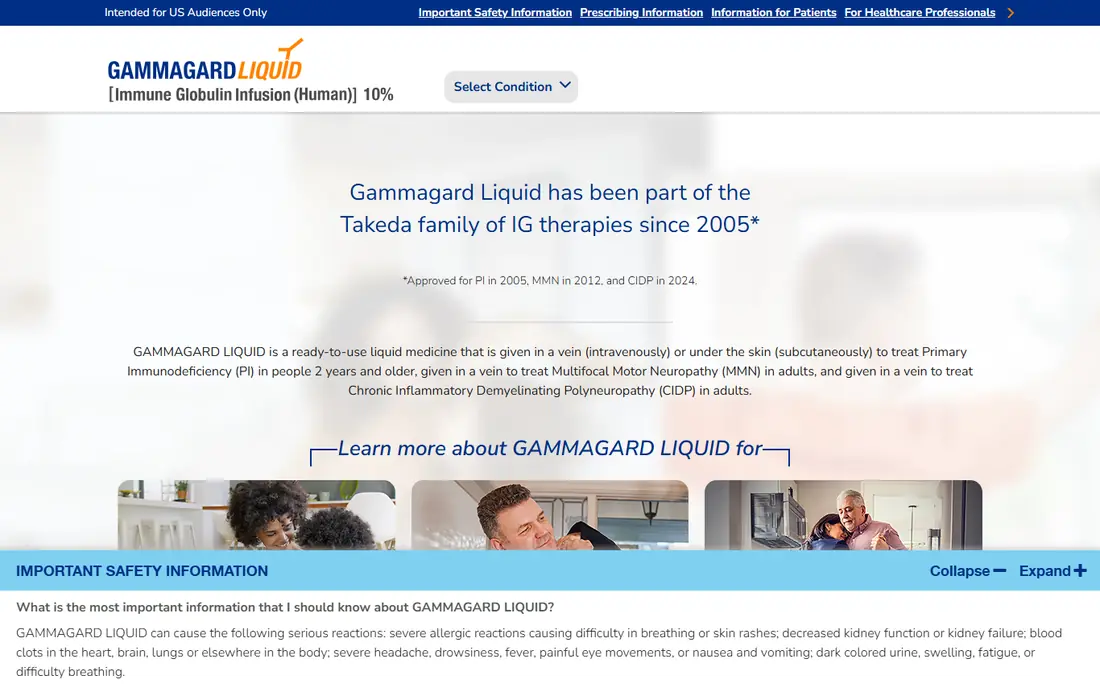
For patients whose clinician prescribes intravenous immunoglobulin, Gammagard is a strong choice. As an intravenous product it follows the familiar infusion pattern many patients already know. In practice, the deciding factor is often fit with tools you already use, so check integrations and export options before you fall for a feature you may rarely touch.
It does not solve the access or vein problems that lead some patients to seek alternatives. Ask the vendor a direct question during the trial, since the speed and clarity of the answer tell you a lot about the support you will get later. That trade off is worth weighing against your main job, since the best tool on paper is not always the best tool for your team or your budget.
- Established intravenous immunoglobulin product
- Used for immune deficiency and certain autoimmune conditions
- Hospital or infusion centre visits
- Infusion reactions possible
- Supply can vary
Privigen
Ideal for: Intravenous immunoglobulin option
For patients whose clinician prescribes intravenous immunoglobulin, Privigen is a strong choice. Its long clinical use means clinicians know its profile well across several conditions. Our comparison also weighed how easy each option is to learn, since a powerful tool that your team avoids is worth less than a simpler one that everyone actually uses every day.
Like other intravenous products, it still requires infusion visits and venous access. Check what happens to your data if you leave, since export options and data portability matter most at the moment you decide to switch. That trade off is worth weighing against your main job, since the best tool on paper is not always the best tool for your team or your budget.
- Established intravenous immunoglobulin product
- Wide clinical use
- Infusion centre visits
- Possible infusion reactions
- Cost and supply issues
Plasma Exchange
Ideal for: Hospital procedure for acute conditions
For patients in acute autoimmune situations where clinicians judge rapid antibody removal is needed, Plasma Exchange is a strong choice. Its speed matters in acute situations, where removing antibodies quickly can change the course of a crisis. We paid attention to support and documentation too, because the moment something breaks is when you discover whether a vendor actually helps or just points you at a help page.
It is a hospital procedure with real risks, and its effects fade as antibodies return. Talk to one or two existing users if you can, since their experience with support, reliability, and billing is often more useful than any review score. That trade off is worth weighing against your main job, since the best tool on paper is not always the best tool for your team or your budget.
- Removes harmful antibodies quickly
- Used in acute autoimmune crises
- Hospital procedure
- Vascular access and monitoring needed
- Effects are temporary
Rituximab
Ideal for: Immune suppressing treatment
For patients with specific autoimmune conditions where a clinician judges B cell treatment appropriate, Rituximab is a strong choice. Its targeted action gives a longer lasting effect than procedures that only remove antibodies. Another factor we weighed is how the tool handles growth, since a choice that works for ten users or ten projects can strain badly at a hundred, and switching later costs far more time.
It suppresses part of the immune system, so infection risk and monitoring are serious considerations. Start with the smallest plan that covers your needs, since upgrading later is easy, while paying for unused capacity from day one is money you will not get back. That trade off is worth weighing against your main job, since the best tool on paper is not always the best tool for your team or your budget.
- Targets B cells in specific autoimmune conditions
- Longer lasting effect than plasma exchange
- Infection risk
- Infusion reactions
- Only suits specific diagnoses
Corticosteroids
Ideal for: Immune suppressing medicines
For patients with acute inflammation where a clinician prescribes a short course, Corticosteroids is a strong choice. Their speed and availability make them useful for acute flares under clinician supervision. We also looked at how clearly each vendor explains its pricing, since hidden limits on users, volume, or features are a common source of surprise bills after the first month.
Long term use brings weight gain, bone, blood sugar, and mood effects, so they are not a simple swap. If your team will use it daily, involve them in the trial, since a tool chosen by one person and imposed on everyone else rarely gets adopted well. That trade off is worth weighing against your main job, since the best tool on paper is not always the best tool for your team or your budget.
- Widely available
- Fast anti inflammatory effect
- Low cost
- Long term side effects are significant
- Not a long term substitute for immunoglobulin
Mycophenolate
Ideal for: Long term immune suppression
For patients with specific autoimmune conditions needing long term suppression, Mycophenolate is a strong choice. Its oral dosing and long term action suit maintenance treatment once a clinician judges it appropriate. Finally, we considered longevity, because a tool from a stable vendor with regular updates is a safer home for your work than a promising newcomer that may change direction.
It works slowly and suppresses immunity, so it cannot replace immunoglobulin in an emergency. Keep a note of the renewal date and the cancellation steps when you subscribe, since that small habit prevents unwanted renewals and surprise charges. That trade off is worth weighing against your main job, since the best tool on paper is not always the best tool for your team or your budget.
- Long term immune suppression for certain autoimmune conditions
- Oral dosing
- Infection risk
- Monitoring needed
- Slow onset of benefit
How we picked these
We compared official feature pages, pricing pages, app store listings, privacy policies, and public reviews for each option, and we only listed products that exist and work in October 2026 and truly fit the topic. Where we could not verify a current price from the vendor, we wrote See website rather than guessing. We did not claim hands-on testing we did not do, and we weighed honest weaknesses alongside strengths, since a roundup that only praises its picks does not help anyone decide. We also checked that each product homepage loads and belongs to the product named, and we dropped or replaced any product whose homepage failed that check. Prices and free tiers were taken from vendor pages where we could verify them, and marked See website where we could not, so readers should confirm current pricing before buying.
How clinicians think about IVIG alternatives
Clinicians start from the diagnosis, not from the product. Immune deficiency and autoimmune disease are different problems, and an option that helps one may be useless or harmful for the other. They also weigh vein access, infusion reactions, infection risk, other health conditions, and supply, since immunoglobulin availability varies. Patients should ask what goal a change serves, whether that is fewer hospital visits, fewer reactions, or better disease control, and what monitoring the new option needs. Bring a full medicine list and allergy history to that conversation, and never stop or change immunoglobulin treatment without clinician guidance.
Frequently asked questions
Is subcutaneous immunoglobulin the same as IVIG?
It uses immunoglobulin, but the route differs: subcutaneous products go under the skin, usually at home, while IVIG goes by vein. The dose, schedule, and side effect pattern differ, so a clinician must judge suitability.
Can plasma exchange replace IVIG?
Sometimes for acute autoimmune conditions, but plasma exchange is a hospital procedure with temporary effects, not a long term replacement for immune deficiency treatment. The choice depends on the condition and the urgency.
Why would someone switch from IVIG?
Common reasons include vein access problems, infusion reactions, hospital visit burden, and supply issues. Some patients switch to home subcutaneous treatment, while others need a different treatment approach entirely.
Are these treatments expensive?
Immunoglobulin products and immune suppressing treatments are generally costly, and coverage varies by country and insurer. Patients should check coverage with their insurer and clinician before planning a switch.