Best Jobvite Alternatives in 2026: 8 Recruiting Tools Compared

- 1
 GreenhouseStructured collaborative hiringVisit
- 2
 LeverCollaborative recruitingVisit
- 3
 WorkableFast affordable hiringVisit
- 4
 BambooHRRecruiting plus HRVisit
- 5
 SmartRecruitersEnterprise hiring scaleVisit
- Greenhouse and Lever suit companies that want structured, collaborative hiring with strong workflows.
- Workable and JazzHR suit small and mid-size teams that want fast setup and affordable pricing.
- BambooHR suits teams that want recruiting plus core HR in one system.
- SmartRecruiters and iCIMS suit larger companies that need scale and deep integrations.
- Recruitee suits teams that want flexible pipelines and strong candidate management.
Quick comparison
| Product | Ideal for | Price from | Free version | |
|---|---|---|---|---|
| Greenhouse | Structured collaborative hiring | See website | See website | Visit |
| Lever | Collaborative recruiting | See website | See website | Visit |
| Workable | Fast affordable hiring | See website | Free trial | Visit |
| BambooHR | Recruiting plus HR | See website | See website | Visit |
| SmartRecruiters | Enterprise hiring scale | See website | See website | Visit |
 JazzHR | Small team recruiting | See website | See website | Visit |
 iCIMS | Large company hiring | See website | See website | Visit |
 Recruitee | Flexible hiring pipelines | See website | See website | Visit |
The best Jobvite alternatives
Jobvite is an applicant tracking system for sourcing, hiring workflows, and onboarding. The platforms below cover similar ground, and they differ in structure, price, and scale. Some suit startups hiring a few people a month, while others suit enterprises hiring hundreds. The right pick depends on your hiring volume, team size, and how structured your process needs to be.
Greenhouse
Ideal for: Structured collaborative hiring
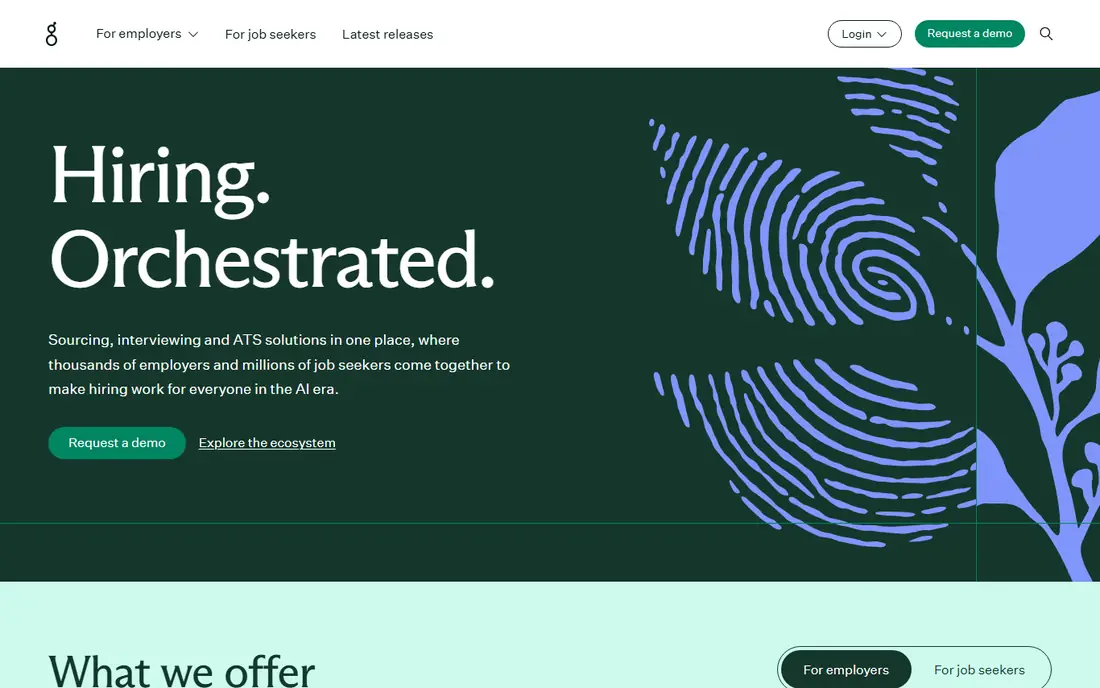
Greenhouse is built around structured hiring, with scorecards, interview plans, and consistent evaluation that help teams compare candidates fairly. Collaboration tools keep hiring managers, recruiters, and interviewers aligned, and the integration library covers HR, assessment, and background check tools. Reporting shows pipeline health and time to hire clearly.
Pricing is quote-based, and setup takes planning for larger teams. For companies that want disciplined, collaborative hiring, Greenhouse is our pick for most teams.
- Strong structured hiring
- Excellent interview tools
- Deep integrations
- Pricing is quote-based
- Setup takes planning
Lever
Ideal for: Collaborative recruiting
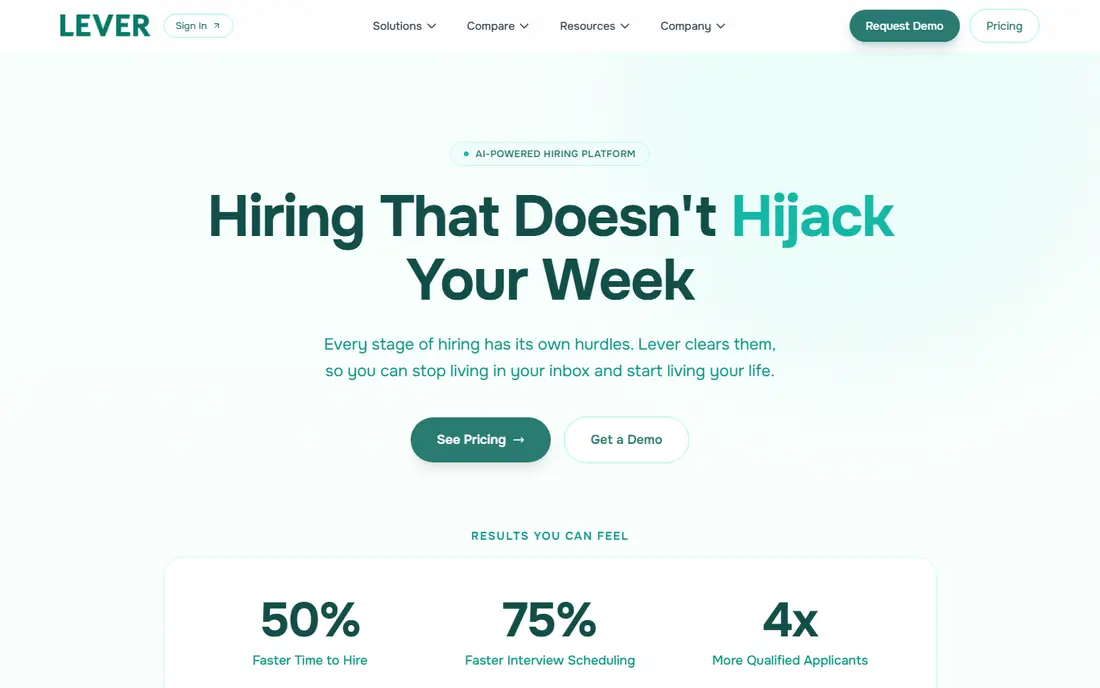
Lever combines applicant tracking with a CRM-style approach to sourcing, so recruiters can nurture passive candidates alongside active applicants. Collaboration is easy, with shared notes, mentions, and interview scheduling built in. Analytics show source effectiveness and pipeline conversion.
Pricing is quote-based, and some features need higher plans. For teams that source proactively and hire collaboratively, Lever is a strong choice.
- Strong CRM-style sourcing
- Easy collaboration
- Good analytics
- Pricing is quote-based
- Some features need higher plans
Workable
Ideal for: Fast affordable hiring
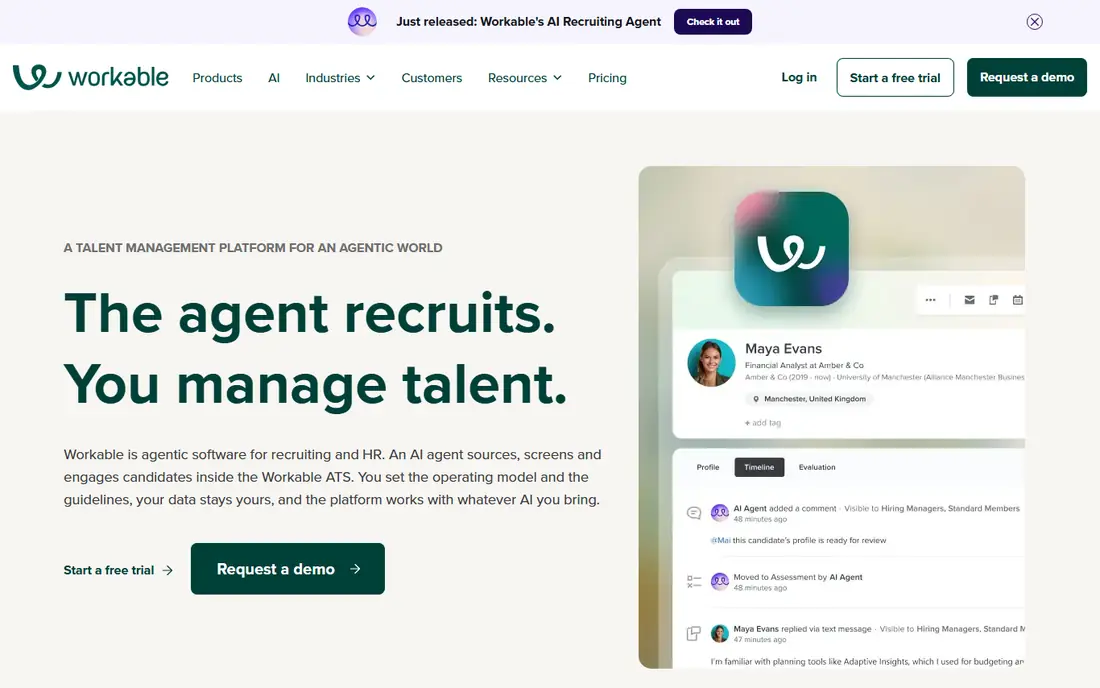
Workable offers fast setup, affordable plans, and distribution to many job boards from one posting. The interface is simple, hiring pipelines are easy to build, and collaboration covers comments, evaluations, and scheduling. AI features help with screening and job descriptions.
Advanced analytics need higher plans, and customization is limited compared with Greenhouse. For small and mid-size teams that want to hire quickly without enterprise cost, Workable is a practical pick.
- Quick setup
- Affordable plans
- Wide job board distribution
- Advanced analytics need higher plans
- Customization is limited
BambooHR
Ideal for: Recruiting plus HR
BambooHR combines an applicant tracking system with core HR features, including employee records, time off, and onboarding, in one system. That combination suits small and mid-size companies that want one vendor for people operations. The interface is easy, and the hiring module covers postings, pipelines, and candidate communication.
Recruiting depth is less than pure ATS tools like Greenhouse or Lever. For teams that want HR and recruiting together, BambooHR is a good fit.
- Recruiting plus core HR in one system
- Easy to use
- Good employee records
- Recruiting depth less than pure ATS tools
- Pricing varies by plan
SmartRecruiters
Ideal for: Enterprise hiring scale
SmartRecruiters serves larger companies with high-volume hiring, offering a marketplace of integrations, strong candidate experience tools, and workflows that scale across regions and brands. Collaboration and compliance features suit global teams. The platform handles complex approval chains and multi-brand hiring.
Pricing suits larger budgets, and setup takes time. For enterprises that need scale and breadth, SmartRecruiters is a reliable pick.
- Strong enterprise scale
- Marketplace of integrations
- Good candidate experience
- Pricing suits larger budgets
- Setup takes time
JazzHR
Ideal for: Small team recruiting
JazzHR offers affordable recruiting with easy pipelines, job board distribution, and candidate communication that small teams can learn quickly. Custom workflows and templates speed up common hiring tasks. The platform suits companies hiring a handful of roles at a time.
Advanced features are limited, and the interface feels basic next to Workable or Greenhouse. For small teams that want the essentials at a fair price, JazzHR is good value.
- Affordable
- Easy pipelines
- Good job board distribution
- Advanced features limited
- Interface feels basic
iCIMS
Ideal for: Large company hiring
iCIMS offers deep enterprise recruiting with applicant tracking, CRM, onboarding, and analytics, plus strong integrations with HR systems. Compliance tools and reporting suit regulated industries and global hiring. The platform scales to very high volumes.
Pricing suits larger budgets, and implementation takes planning. For large companies that need depth and compliance, iCIMS is a strong choice.
- Deep enterprise features
- Strong integrations
- Good compliance tools
- Pricing suits larger budgets
- Implementation takes planning
Recruitee
Ideal for: Flexible hiring pipelines
Recruitee offers flexible hiring pipelines with strong candidate management, automation, and collaboration tools. Pipelines adapt to different roles, and automation handles scheduling, messaging, and stage changes. The interface is clean, and reporting covers pipeline health and source performance.
The ecosystem is smaller than the leaders, and pricing varies by plan. For teams that want flexible pipelines without enterprise complexity, Recruitee is worth a trial.
- Flexible pipelines
- Strong candidate management
- Good automation
- Smaller ecosystem than leaders
- Pricing varies by plan
How we picked these
We compared official feature pages, pricing, hiring workflows, and public reviews for each platform, and we checked that each product is actively offered in October 2026. We favored tools with real applicant tracking, sourcing, and collaboration features, not simple job posting boards, and we kept a mix of affordable small-team tools and enterprise platforms. We left out tools with no working signup or trial and tools that have shut down.
How to choose a recruiting platform
Recruiting software shapes candidate experience, so test it from the candidate side as well as the recruiter side.
Test the candidate experience
Apply for a test role yourself and check how the application feels on mobile, how long it takes, and whether communication is clear. A clunky application loses good candidates before recruiters ever see them. Check how scheduling, messaging, and status updates work from the candidate view.
Check sourcing and distribution
Compare job board distribution, employee referral tools, and sourcing features for the channels where your candidates actually are. A platform that posts everywhere but sources nowhere will not fill hard roles. Test how the system handles duplicates, parses resumes, and tracks source quality.
Plan for structured evaluation
Decide how structured your hiring should be, from scorecards and interview plans to simple notes and gut feel. Structured tools like Greenhouse improve consistency, while lighter tools suit fast, low-volume hiring. Whichever you choose, make sure interviewers can actually use the evaluation tools without training sessions.
Onboarding handoff is easy to overlook, yet it shapes the new hire experience from offer to first day. Check whether the recruiting platform passes candidate data cleanly into your HR system or onboarding tool, without retyping names, start dates, and job details. A clean handoff reduces errors and lets new hires focus on their team instead of paperwork. Test the handoff with a mock hire during the trial, including offer letters, e-signatures, and background check triggers.
Diversity and compliance features also deserve a check, especially for companies hiring across regions. Look for tools that support structured interviews, anonymized screening where appropriate, and data retention controls that match local rules. Reporting should show hiring funnel data by stage without exposing sensitive candidate details to everyone. A platform that handles compliance well saves legal headaches later and supports fairer hiring decisions from the start.
Mobile access matters for hiring managers who review candidates between meetings, so test the mobile experience for approvals, interview feedback, and messaging. If managers cannot act quickly on their phones, pipelines stall while candidates wait. Check whether notifications are timely and whether the mobile app covers the tasks managers actually do, rather than offering a limited view that forces them back to desktop.
Employer branding tools round out the picture, since career pages and job descriptions shape how candidates perceive your company. Check whether the platform lets you build branded career pages, share employee stories, and keep job posts consistent across boards. A strong brand presence attracts better applicants and reduces reliance on paid job ads, which pays off over many hires. Review the career page on mobile, where most candidates will see it first.
Interview scheduling is a common bottleneck, so check how each platform handles panel scheduling, time zone differences, and rescheduling when interviewers cancel. Self-scheduling links and calendar sync reduce back-and-forth emails, while automated reminders cut no-shows. Test the scheduling flow with a real panel of three interviewers before committing, since a smooth flow here saves recruiters hours every week.
Finally, check data ownership and export options before signing, since your candidate database is a long-term asset. Confirm that you can export candidates, jobs, and history in usable formats at any time, without vendor help or extra fees. A platform that makes exit easy is usually confident in its own value, and that confidence is a good sign.
Frequently asked questions
What is Jobvite?
Jobvite is an applicant tracking system for sourcing, hiring workflows, and onboarding. The tools here offer similar recruiting capabilities with different emphasis on structure, price, and scale.
Which Jobvite alternative is best for small teams?
Workable and JazzHR suit small teams, since they offer fast setup, affordable pricing, and easy pipelines. BambooHR also fits small teams that want recruiting plus core HR in one system.
Which alternative is best for large companies?
Greenhouse, SmartRecruiters, and iCIMS suit large companies, since they offer deep workflows, integrations, and scale. Lever also fits larger teams that source proactively.
Do these tools integrate with HR systems?
Yes, most of them integrate with common HR, payroll, assessment, and background check tools, though depth varies. Check the integration list for your specific HR system before committing.
Can I import candidates and jobs from Jobvite?
Yes, in most cases, through CSV imports or vendor migration help. Clean duplicate candidate records first, and test the import with a small batch before moving your full pipeline.