Best Kobiton Alternatives in 2026: 7 Platforms Compared

- 1
 BrowserStackBroad real device testingVisit
- 2
 Sauce LabsWeb plus mobile testingVisit
- 3
 LambdaTestValue device cloud testingVisit
- 4
 PerfectoEnterprise mobile testingVisit
- 5
 BitbarFlexible device cloudVisit
- BrowserStack is our pick for most teams, thanks to broad real device coverage and strong automation support.
- Sauce Labs suits teams that need web and mobile testing in one platform with deep CI integrations.
- LambdaTest offers strong value for teams that want real devices, automation, and visual testing at a fair price.
- Perfecto, Bitbar, HeadSpin, and Digital.ai cover enterprise, performance, and AI-driven testing needs.
- Always test on your most popular real devices, since emulator results can hide device-specific bugs.
Quick comparison
| Product | Ideal for | Price from | Free version | |
|---|---|---|---|---|
| BrowserStack | Broad real device testing | See website | Free trial | Visit |
| Sauce Labs | Web plus mobile testing | See website | Free trial | Visit |
| LambdaTest | Value device cloud testing | See website | Free trial | Visit |
| Perfecto | Enterprise mobile testing | See website | See website | Visit |
| Bitbar | Flexible device cloud | See website | Free trial | Visit |
 HeadSpin | Performance and experience testing | See website | See website | Visit |
 Digital.ai | AI-driven continuous testing | See website | See website | Visit |
The best Kobiton alternatives
Kobiton offers real device testing for mobile apps, so a good replacement needs real phones and tablets, manual and automated testing, and integrations with your delivery pipeline. We compared official feature pages, pricing pages, documentation, and public reviews, focusing on device coverage, automation frameworks, performance tools, and cost at real test volume.
BrowserStack
Ideal for: Broad real device testing
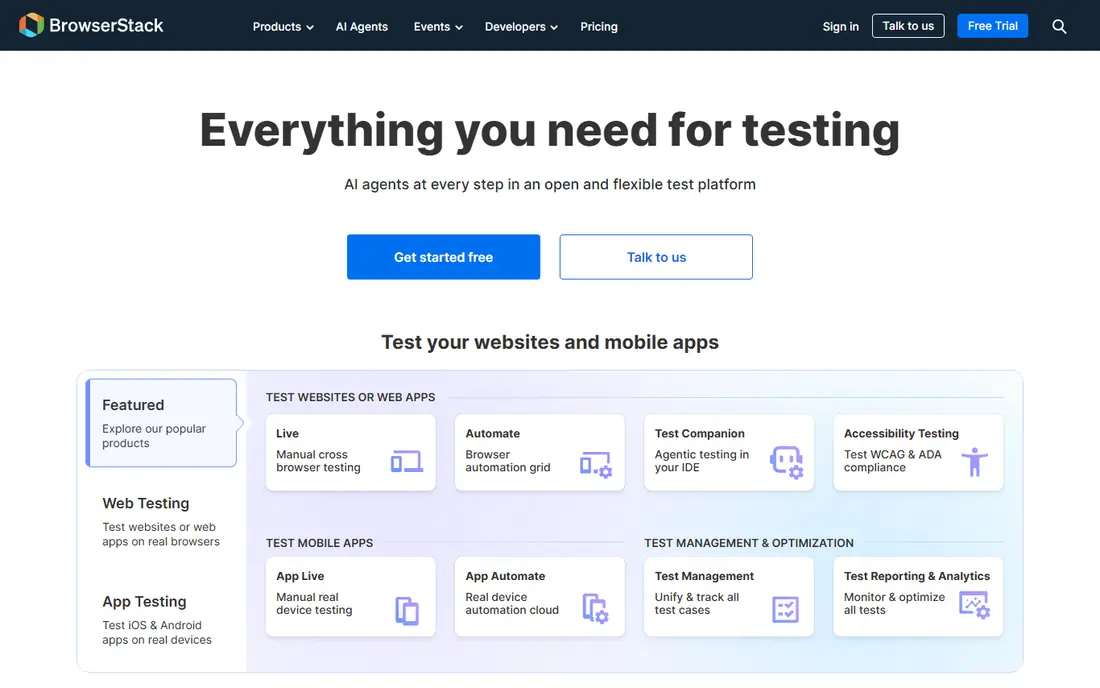
BrowserStack is the most widely used device and browser testing cloud on this list. It offers real mobile devices and desktop browsers for manual and automated testing, with support for common frameworks such as Appium, Selenium, and Playwright. Integrations with CI tools and issue trackers help teams run tests on every release.
Pricing scales with parallel sessions and device hours, so heavy automation suites need budget planning. For most mobile teams that want broad coverage without buying and maintaining a device lab, BrowserStack is our top pick.
- Very broad real device and browser coverage
- Strong automation support
- Good CI integrations
- Costs scale with parallel sessions
- Some features need higher tiers
Sauce Labs
Ideal for: Web plus mobile testing
Sauce Labs covers web and mobile testing in one cloud, with real devices, emulators, simulators, and desktop browsers. Its automation support spans Appium, Selenium, and other frameworks, and its analytics help teams spot flaky tests and failure patterns. Enterprises with both web and mobile apps benefit from a single vendor.
Pricing for larger use is quote-based, and the platform holds many features that take time to learn. For teams that test web and mobile together and want one reporting home, Sauce Labs is a strong Kobiton replacement.
- Web and mobile testing in one platform
- Broad device and browser coverage
- Deep CI integrations
- Pricing needs a quote for larger use
- Interface holds many features to learn
LambdaTest
Ideal for: Value device cloud testing
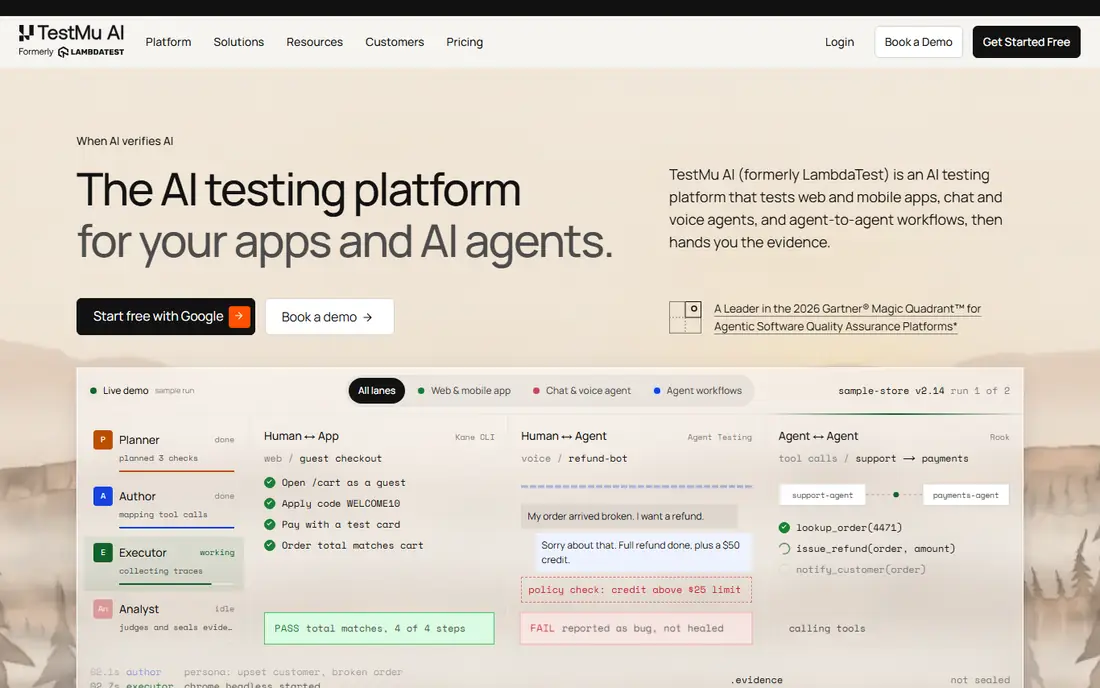
LambdaTest offers real device testing, browser testing, and automation in one platform at a competitive price. Its visual testing, smart testing, and CI integrations suit teams that want broad coverage without enterprise cost. A free trial lets teams test real devices before committing.
Rare device models may be thinner than on BrowserStack, and some enterprise features sit on higher tiers. For small and mid-sized teams that want strong value and a modern interface, LambdaTest is an excellent pick.
- Good value
- Real devices plus browsers
- Visual and automation testing in one platform
- Device depth is lighter than BrowserStack for rare models
- Enterprise features need higher tiers
Perfecto
Ideal for: Enterprise mobile testing
Perfecto, from Perforce, is an enterprise mobile testing cloud with real devices, automation support, and reporting built for large teams. Its platform suits regulated industries and large app portfolios where reliability, security, and audit trails matter. Scriptless and coded automation options cover different tester skill levels.
Small teams should weigh cost and setup. Perfecto is built for enterprise scale, and pricing is quote-based. For large organizations that need a proven, supported device cloud, Perfecto is a safe choice.
- Enterprise device cloud
- Strong automation and reporting
- Good for regulated industries
- Enterprise pricing and setup
- Smaller teams may find it heavy
Bitbar
Ideal for: Flexible device cloud
Bitbar offers a real device cloud with manual and automated testing, plus public shared devices and private dedicated devices for teams that need exclusive access. Framework support covers Appium and other common tools, and flexible plans suit teams with uneven test volumes.
The device catalog is smaller than BrowserStack, so check your must-test models before buying. For teams that want flexible plans and private device options without enterprise cost, Bitbar is a practical Kobiton replacement.
- Real device cloud with flexible plans
- Good framework support
- Public and private device options
- Smaller device catalog than BrowserStack
- Brand is less known than rivals
HeadSpin
Ideal for: Performance and experience testing
HeadSpin stands out for performance and experience testing on real devices in many locations. Beyond functional checks, it measures load times, video quality, and network behavior, with AI-driven insights that help teams find experience problems before users do. Global device access suits apps with international audiences.
Pricing is quote-based, and teams that only need functional testing may find HeadSpin more platform than they need. For apps where performance and experience decide retention, HeadSpin offers testing depth that functional-only clouds cannot match.
- Real devices worldwide
- Performance and experience measurement
- AI-driven insights
- Pricing is quote-based
- Performance focus may exceed simple functional needs
Digital.ai
Ideal for: AI-driven continuous testing
Digital.ai, which includes the former Experitest device cloud, offers continuous testing with AI-assisted features as part of a broader enterprise delivery platform. Real device testing, automation, and reporting fit into release pipelines for large organizations that ship often and need governance across teams.
Enterprise focus is the trade-off. Pricing is quote-based, and setup needs planning across tools. For large organizations standardizing testing and delivery, Digital.ai is a strong option. For small mobile teams, BrowserStack or LambdaTest will be faster to adopt.
- Continuous testing with AI features
- Broad enterprise tooling
- Good for large release pipelines
- Enterprise focus and pricing
- Setup needs planning
How we picked these
We compared official feature pages, pricing pages, documentation, and public reviews, and we checked that the homepages listed here belong to the products named. We favored platforms that offer real mobile devices, manual and automated testing, and CI integrations. We left out emulator-only tools with no real device access, and we did not include Kobiton itself, since this list is about replacements.
We also excluded products that failed our fit checks, including tools whose homepages no longer matched the product, tools that covered only a slice of the topic, and tools aimed at a different audience entirely. That filtering matters, because a long list padded with near-misses helps nobody choose. Every product that made the final list covers the core job in the title, works in October 2026, and offers a real path to try or buy it from the vendor directly.
What to check before you buy
Start with your device list. Pull analytics for your most popular phones, tablets, and operating system versions, then confirm each finalist offers those exact models as real devices, not only emulators. A cloud with thousands of devices is poor value if it lacks your top five.
Next, test automation with your real suite. Run your Appium or framework tests in the trial, measure pass rates and run times, and check debugging output when tests fail. Device cloud performance and log quality vary, and only a real run reveals the difference.
Finally, model cost at real volume. Count parallel sessions, device hours, and test runs per month, and compare plans at that volume rather than headline prices. A cheap plan with one parallel session can slow releases more than a pricier plan that runs your suite in minutes.
Pay attention to support and update pace before you commit. Read the help center, check whether guides match the current version of the product, and test support with a real question during the trial. A vendor that answers clearly and fixes problems quickly is worth more than a slightly lower price from a vendor that leaves you waiting. Also check how often the product changes and whether updates break existing workflows, since a tool that shifts under you every month can cost your team steady retraining time. Stability matters most for tools your whole team depends on daily, so favor vendors with a clear changelog and a reputation for careful releases.
Frequently asked questions
What is the best Kobiton alternative for most teams?
BrowserStack is our pick for most teams, thanks to broad real device coverage and strong automation support. Sauce Labs suits teams that also test web apps heavily, while LambdaTest offers the best value for smaller teams.
Is there a free Kobiton alternative?
Most platforms here offer free trials rather than permanent free plans. BrowserStack, Sauce Labs, LambdaTest, and Bitbar all offer trials that let you test real devices. Budget for a paid plan once testing becomes part of every release.
Do I need real devices, or are emulators enough?
Emulators suit early checks, but real devices catch problems with hardware, operating system versions, network behavior, and manufacturer skins. Test release candidates on real devices for your most popular models, and use emulators for quick daily checks.
Which frameworks do these platforms support?
All the platforms here support Appium for mobile automation, and most also support Selenium, Playwright, and other web frameworks. Confirm your exact framework versions during the trial, since support details change over time.
How do device clouds handle app security?
Reputable clouds wipe devices between sessions, isolate test data, and offer private devices for sensitive apps. Check security pages and ask about data handling before testing apps with real user data or unreleased features.
Can I use more than one of these tools together?
Yes, and many teams do, especially when one tool handles a core job well and another covers a niche need. The trick is to define which tool owns each job so records do not split across systems and confuse your team. Check integrations and data flow between the tools before committing, and name one system as the source of truth for each kind of record. Two tools that share data cleanly can beat one tool that does both jobs poorly, but two tools with no connection usually create duplicate work and errors.