LangGraph Alternatives in 2026: 8 Tools Compared

- 1
 CrewAIMulti-agent teamsVisit
- 2
 AutoGenMulti-agent researchVisit
- 3
 HaystackRetrieval pipelinesVisit
- 4
 LlamaIndexData frameworks for LLMsVisit
- 5
 Semantic KernelEnterprise agent appsVisit
- CrewAI and AutoGen suit teams building multi-agent systems with roles and collaboration.
- Haystack and LlamaIndex suit retrieval and document pipelines that feed language models.
- Semantic Kernel suits .NET and enterprise teams already on Microsoft tools.
- Flowise, Dify, and n8n suit low-code builders who want visual agent workflows.
Quick comparison
| Product | Ideal for | Price from | Free version | |
|---|---|---|---|---|
| CrewAI | Multi-agent teams | Free | Yes | Visit |
| AutoGen | Multi-agent research | Free | Yes | Visit |
| Haystack | Retrieval pipelines | Free | Yes | Visit |
| LlamaIndex | Data frameworks for LLMs | Free | Yes | Visit |
| Semantic Kernel | Enterprise agent apps | Free | Yes | Visit |
 Flowise | Visual agent builder | Free | Yes | Visit |
 Dify | Low-code LLM apps | Free | Yes | Visit |
 n8n | Workflow automation | Free | Yes | Visit |
The best LangGraph alternatives
We compared official feature pages, pricing pages, and app-store listings for agent frameworks and workflow tools available in October 2026. LangGraph builds stateful, multi-step agent graphs, and the tools below cover similar agent, retrieval, and workflow needs.
CrewAI
Ideal for: Multi-agent teams
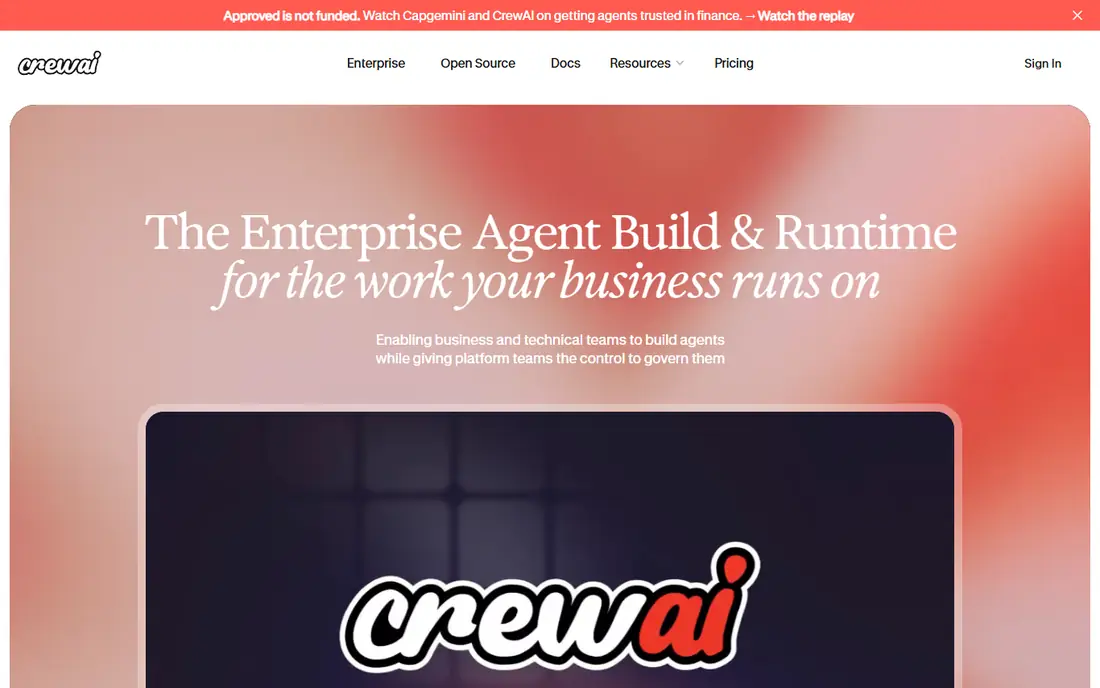
CrewAI is a Python framework for building multi-agent systems where agents take roles, such as researcher, writer, and reviewer, and collaborate on a task. Crews can run sequentially or hierarchically, with tools, memory, and guardrails for each agent. An enterprise platform adds deployment, monitoring, and management.
Multi-agent orchestration gets complex as crew size grows, and debugging a run with many agents takes patience. For a team that wants role-based agents working together, CrewAI's model is intuitive and well documented.
- Role-based agents that collaborate
- Python-first
- Enterprise platform available
- Orchestration complexity grows with crew size
- Debugging multi-agent runs takes time
AutoGen
Ideal for: Multi-agent research
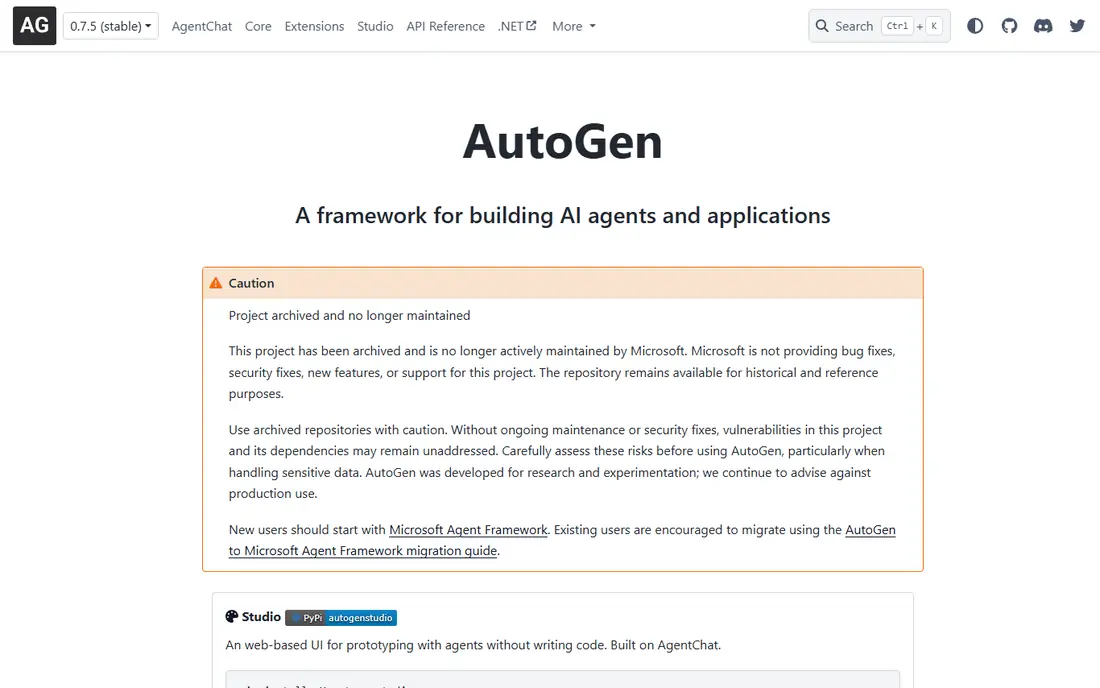
AutoGen, from Microsoft, is an open-source framework for building multi-agent applications where agents converse to solve tasks. It supports human-in-the-loop workflows, tool use, and code execution, with a research community behind it. The project has evolved through several versions, with a stable framework and a studio for visual building.
Version changes can confuse new users, and setup needs coding skill. For a research or engineering team that wants an open, Microsoft-backed multi-agent framework, AutoGen is a strong choice.
- Open-source multi-agent framework
- Microsoft backing
- Strong research community
- API and structure changed across versions
- Setup needs coding skill
Haystack
Ideal for: Retrieval pipelines
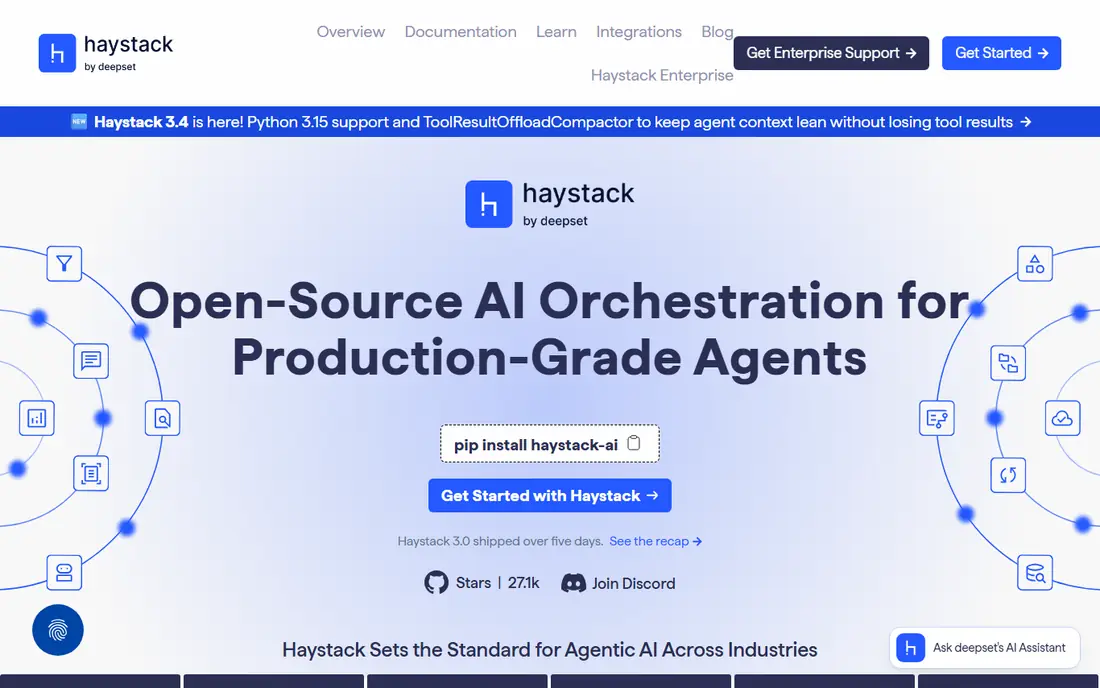
Haystack, from deepset, is an open-source framework for building retrieval pipelines, including search, question answering, and retrieval-augmented generation. Pipelines connect document stores, retrievers, and language models, with integrations for many vector stores and model providers. It suits teams that need accurate retrieval before generation.
Haystack focuses on retrieval rather than full agent orchestration, so multi-agent workflows need another layer. For a team whose main problem is finding the right documents for a model, Haystack is a proven framework.
- Open-source retrieval framework
- Pipelines for search and RAG
- Many integrations
- Focus is retrieval, not full agent orchestration
- Needs coding skill
LlamaIndex
Ideal for: Data frameworks for LLMs
LlamaIndex is a data framework for language models, covering ingestion, indexing, retrieval, and agent workflows. It connects to data sources, builds indexes, and lets models query private data with citations. Workflows support multi-step agent logic, and a cloud platform adds managed ingestion and extraction.
The API surface is large, and version changes need care when upgrading. For a team that needs to connect models to private data reliably, LlamaIndex's data tooling is a major strength.
- Strong data ingestion and indexing
- Workflows for agents
- Large ecosystem
- API surface is large
- Version changes need care
Semantic Kernel
Ideal for: Enterprise agent apps
Semantic Kernel is Microsoft's open-source SDK for building AI agents and apps, with support for .NET, Python, and Java. It offers plugins that wrap code and APIs as tools, planners that break tasks into steps, and memory for context. It fits enterprises already on Azure and Microsoft 365.
Docs can feel enterprise-focused, and the community is smaller than LangChain's. For a .NET or Microsoft-focused team, Semantic Kernel's integration with Azure and enterprise tooling is a clear advantage.
- Microsoft-backed SDK for .NET, Python, and Java
- Plugins and planners
- Enterprise fit
- Docs can feel enterprise-focused
- Smaller community than LangChain
Flowise
Ideal for: Visual agent builder
Flowise is an open-source, drag-and-drop builder for language model flows and agents. Users connect nodes for models, retrievers, tools, and memory, then deploy flows as APIs or chatbots. Self-hosting is supported, and a cloud version offers managed hosting.
Visual flows can get complex at large scale, and enterprise features are thinner than in Dify or n8n. For a builder who wants to prototype agents visually without code, Flowise is an accessible start.
- Drag-and-drop agent flows
- Open source
- Self-hosting option
- Visual flows get complex at scale
- Fewer enterprise features
Dify
Ideal for: Low-code LLM apps
Dify is a low-code platform for building language model apps, including chatbots, agents, and workflows, with visual builders and RAG pipelines. It supports many model providers, knowledge bases, and tools, with self-hosting or cloud deployment. Teams can ship an app without writing a full backend.
Complex apps still need care in workflow design, and enterprise features sit on paid plans. For a team that wants to ship LLM apps quickly with a visual builder, Dify is a strong choice.
- Visual app builder for chatbots and agents
- RAG pipelines
- Self-hosting option
- Workflow complexity grows with app size
- Enterprise features need paid plans
n8n
Ideal for: Workflow automation
n8n is a workflow automation platform with visual nodes for apps, APIs, and AI agents. It offers hundreds of integrations, self-hosting, and AI nodes that let workflows call models, tools, and memory. Teams use it to automate business processes and to build agent workflows inside larger automations.
Agent features sit inside a broader automation tool, so pure agent frameworks offer deeper orchestration. For a team that wants agents inside business workflows, n8n's integration breadth is a major advantage.
- Visual workflow automation
- 400-plus integrations
- AI agent nodes
- Self-hosting
- Agent features are part of a broader automation tool
- Complex agents need care
How we picked these
We compared official feature pages, pricing pages, and app-store listings for agent frameworks and workflow tools available in October 2026. We favored tools with current products, active development, and a clear agent or retrieval use case. We also weighed failure handling, observability, and model flexibility, since production agents need retries, traces, and cost controls, not just demos. We did not include our own product in this list.
How to choose a LangGraph alternative
Start with your building style. Coders who want multi-agent systems should try CrewAI or AutoGen, while data-focused teams should try Haystack or LlamaIndex. Microsoft shops should try Semantic Kernel, and visual builders should try Flowise, Dify, or n8n.
Then prototype one real workflow. Test retrieval quality, agent reliability, and debugging tools, since multi-step agents fail in ways simple prompts do not. Check self-hosting, model provider support, and cost before committing to a framework for production.
Agent frameworks look similar in demos but differ sharply in production. Before choosing, build a prototype that handles failure: a tool call that times out, a model that returns bad output, and a user who interrupts mid-task. Frameworks with good state handling, retries, and human review make these cases manageable, while simpler frameworks leave you building that logic yourself. Also check observability: traces, logs, and cost tracking matter once agents run at scale, since a looping agent can burn budget fast. Model provider flexibility matters too, since prices and capabilities change often, and a framework locked to one provider limits your options. Finally, test evaluation: a framework that makes it easy to run a test set and compare outputs will save more time than one with a longer feature list but weak testing tools. Prototype one real workflow end to end before committing to a framework.
Evaluation is the part of agent work that most teams underinvest in, so check what each framework offers there. A good setup lets you run a fixed set of test tasks, compare outputs across prompts and models, and track pass rates over time. Without that, prompt changes become guesswork, and regressions slip into production unnoticed. Also check how the framework handles long-running tasks, including persistence and recovery if a process restarts mid-run. Agents that run for minutes or hours need state that survives restarts, not just in-memory graphs. Finally, review the framework's release pace and community activity, since agent tooling changes fast, and a quiet project can leave you maintaining a fork sooner than expected.
Frequently asked questions
What is LangGraph?
LangGraph is a library for building stateful, multi-step agent applications with graphs, where nodes run tools and models and edges control flow. It is part of the LangChain ecosystem and suits agents that need cycles, memory, and human review.
What is the best LangGraph alternative?
CrewAI suits role-based multi-agent teams, while AutoGen suits research-style agent conversations. Haystack and LlamaIndex suit retrieval-heavy work, and Dify or n8n suit visual builders. The best pick depends on your building style and use case.
Can I build agents without coding?
Yes. Flowise, Dify, and n8n offer visual builders for agents and workflows, with self-hosting options. Complex agents still need design care, but a working prototype is possible without writing code.
What is the difference between CrewAI and AutoGen?
CrewAI organizes agents into role-based crews with a clear task flow, which suits production-style teams. AutoGen organizes agents through conversations, which suits research and experimentation with agent collaboration.
Is LangGraph free?
LangGraph is open source and free to use, with a paid LangSmith platform for monitoring and deployment. The alternatives on this list are also open source or offer free tiers, with paid cloud options for teams.
How do I keep AI agent costs under control?
Set limits at every level: cap steps per run, cap tokens per task, and add timeouts so a looping agent stops instead of running forever. Use smaller, cheaper models for routine steps and reserve large models for hard reasoning, and cache repeated results where possible. Track cost per task in your observability tooling, and alert on spikes, since a bad prompt or a retry loop can multiply spend overnight. Finally, test prompts on a small set before running them at scale, so cost surprises show up early.