Best Laravel Alternatives in 2026: 7 Frameworks Compared

- 1
 SymfonyEnterprise PHP frameworkVisit
- 2
 CodeIgniterLightweight PHP frameworkVisit
- 3
 DjangoBatteries-included PythonVisit
- 4
 Ruby on RailsFast convention-based buildsVisit
- 5
 ExpressMinimal Node.js frameworkVisit
- Symfony is our pick for PHP teams that want enterprise structure and long-term stability close to Laravel.
- Django suits Python teams that want batteries included, including admin, auth, and ORM out of the box.
- Ruby on Rails suits teams that value convention, speed of building, and a mature ecosystem.
- CodeIgniter, Express, Next.js, and ASP.NET Core cover lightweight PHP, JavaScript, full-stack React, and Microsoft stack needs.
- Always match the framework to your team language, since switching languages costs more than switching frameworks.
Quick comparison
| Product | Ideal for | Price from | Free version | |
|---|---|---|---|---|
| Symfony | Enterprise PHP framework | Free | Yes | Visit |
| CodeIgniter | Lightweight PHP framework | Free | Yes | Visit |
| Django | Batteries-included Python | Free | Yes | Visit |
| Ruby on Rails | Fast convention-based builds | Free | Yes | Visit |
| Express | Minimal Node.js framework | Free | Yes | Visit |
 Next.js | Full-stack React framework | Free | Yes | Visit |
 ASP.NET Core | Microsoft stack web apps | Free | Yes | Visit |
The best Laravel alternatives
Laravel made PHP web development fast and expressive, so a good replacement needs routing, ORM, auth, templating, and a community that answers questions. We compared official documentation, feature pages, and public reviews, focusing on language, included features, performance, ecosystem, and learning curve.
Symfony
Ideal for: Enterprise PHP framework
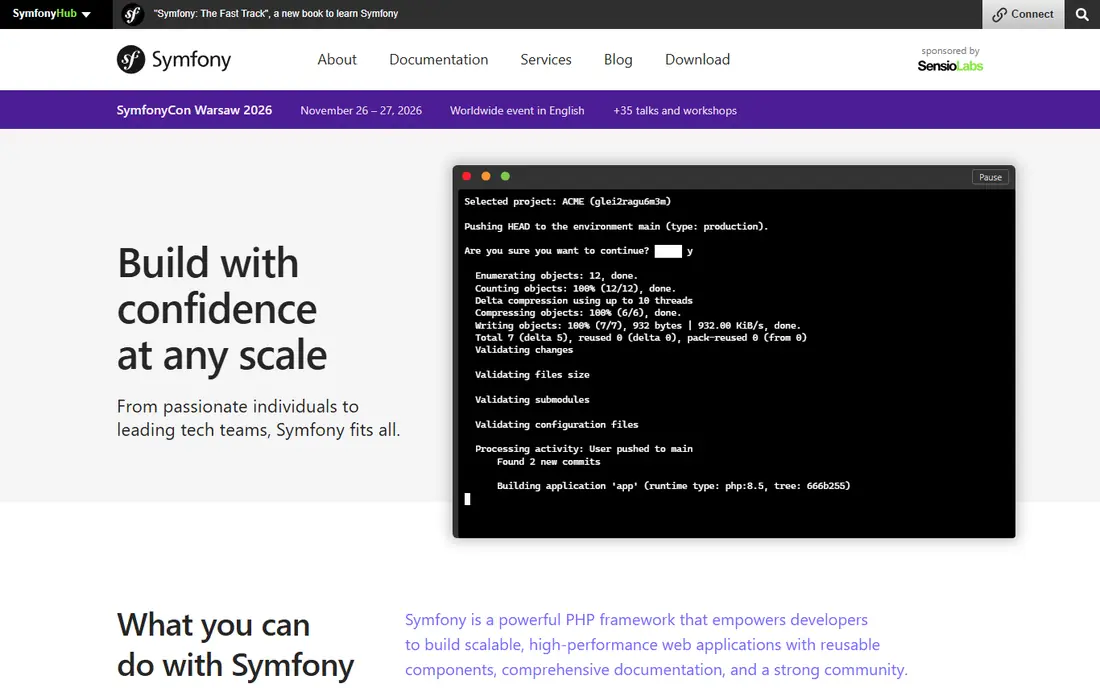
Symfony is the enterprise PHP framework closest to Laravel, and Laravel itself uses several Symfony components under the hood. Its reusable components, bundles, and long-term support releases suit large applications that need stability, testing, and clear architecture over many years.
Symfony needs more configuration than Laravel, and its full-stack setup takes longer to learn. For PHP teams building large or long-lived applications, Symfony offers structure and stability that pay off over time.
- Enterprise-grade components
- Long-term support
- Huge reusable component library
- More configuration than Laravel
- Learning curve for full-stack features
CodeIgniter
Ideal for: Lightweight PHP framework
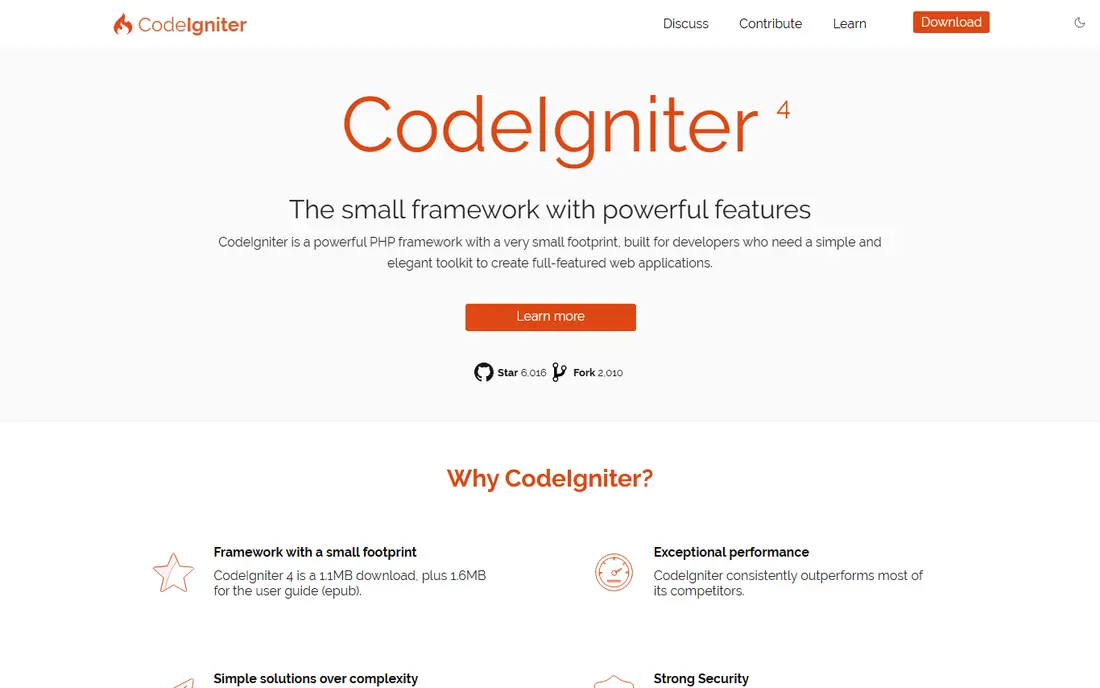
CodeIgniter is a lightweight PHP framework known for speed, simplicity, and a small footprint. Setup is quick, documentation is clear, and the framework stays out of your way for small and mid-sized applications. Teams that found Laravel heavy for simple projects often appreciate CodeIgniter directness.
Built-in features are fewer than Laravel, so larger apps need more third-party packages and custom code. For simple PHP projects, APIs, and teams that value speed and simplicity, CodeIgniter is a practical Laravel replacement.
- Very lightweight and fast
- Simple setup
- Small learning curve
- Fewer built-in features than Laravel
- Ecosystem is smaller
Django
Ideal for: Batteries-included Python
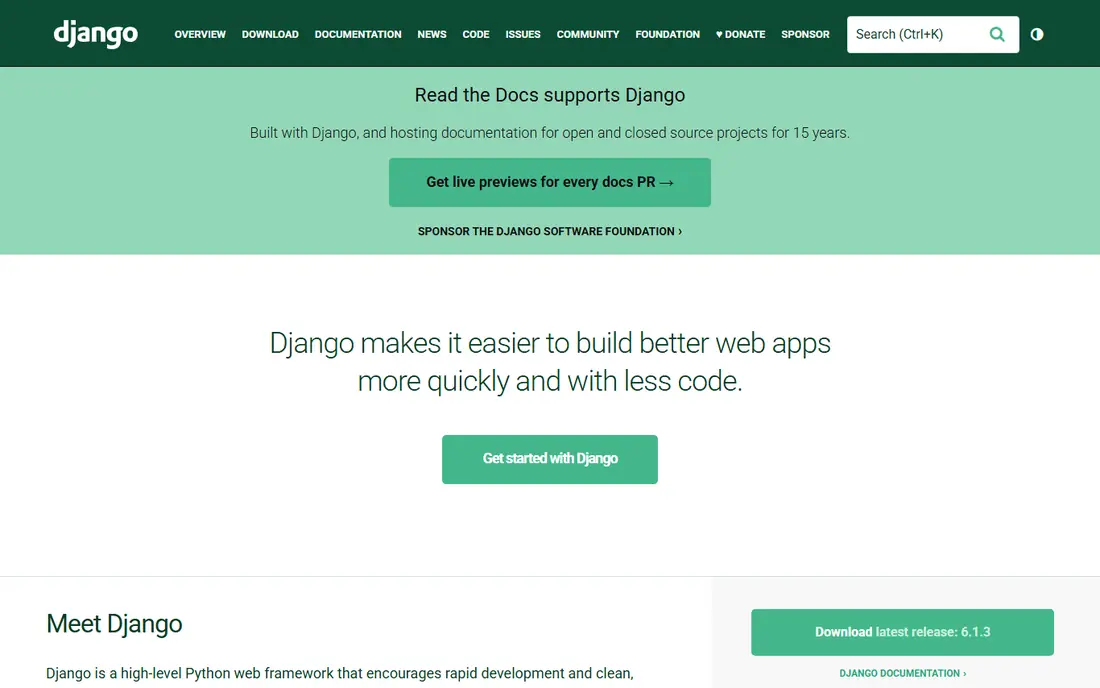
Django is the Python answer to Laravel: a batteries-included framework with ORM, auth, admin panel, forms, and security defaults out of the box. Its admin alone saves weeks on internal tools, and the Python ecosystem adds data, AI, and scientific libraries that PHP lacks.
The catch is language. Teams must move from PHP to Python, which costs learning time and changes hiring. For Python teams, or PHP teams willing to switch for data and AI strengths, Django is an excellent and mature choice.
- Admin, auth, and ORM included
- Strong security defaults
- Large Python ecosystem
- Python, not PHP, so teams must switch languages
- Monolith style suits some projects less
Ruby on Rails
Ideal for: Fast convention-based builds
Ruby on Rails pioneered the convention-over-configuration approach Laravel later adopted. Generators, Active Record, and a rich gem ecosystem let small teams build full products fast, from prototypes to production. Startups have long chosen Rails for speed of development.
The Ruby talent pool is smaller than PHP or JavaScript, and performance at very large scale needs care. For teams that value developer happiness and fast building, Rails remains a joyful and productive Laravel replacement.
- Convention over configuration
- Fast prototyping
- Mature gems and community
- Ruby talent pool is smaller than PHP or JavaScript
- Performance needs care at scale
Express
Ideal for: Minimal Node.js framework
Express is a minimal, flexible Node.js framework that gives teams routing and middleware without imposing structure. Its huge npm ecosystem and shared JavaScript language across front and back ends suit teams already building with React or other JavaScript tools.
Minimalism is also the cost. Auth, ORM, validation, and structure all need packages and decisions from your team. For APIs and JavaScript teams that want control, Express is a strong pick. For teams that want batteries included, Django or Rails will feel faster.
- Minimal and flexible
- Huge Node.js ecosystem
- Same language front and back
- Minimal core means more assembly
- Structure falls on your team
Next.js
Ideal for: Full-stack React framework
Next.js, from Vercel, is a full-stack React framework with server rendering, static generation, API routes, and server actions. Teams building modern web apps with React get front end and back end in one project, with deployment through Vercel or other hosts. That unity appeals to JavaScript teams.
Backend depth differs from Laravel, since Next.js is React-first rather than a traditional MVC framework with ORM and admin built in. For React teams building modern apps, Next.js is a natural Laravel replacement. For classic server-rendered PHP apps, Symfony or CodeIgniter will feel closer.
- Full-stack React with server rendering
- API routes
- Strong Vercel ecosystem
- React and JavaScript required
- Backend depth differs from Laravel
ASP.NET Core
Ideal for: Microsoft stack web apps
ASP.NET Core is a high-performance, cross-platform framework from Microsoft for building web apps and APIs with C#. Its tooling in Visual Studio, strong typing, and integration with Azure and Microsoft identity suit enterprises already on the Microsoft stack. Performance benchmarks consistently rank it among the fastest frameworks here.
Non-Microsoft teams face a learning curve in C# and the Microsoft ecosystem. For enterprises, government, and Microsoft shops, ASP.NET Core is a powerful and proven Laravel replacement.
- High performance
- Strong tooling in Visual Studio
- Enterprise Microsoft integration
- Microsoft stack focus
- Learning curve for non-Microsoft teams
How we picked these
We compared official documentation, feature pages, and public reviews, and we checked that the homepages listed here belong to the frameworks named. We favored frameworks with routing, database tools, auth, and active communities, covering PHP, Python, Ruby, JavaScript, and C#. We left out micro-frameworks with no full-stack story and CMS platforms, and we did not include Laravel itself, since this list is about replacements.
We also excluded products that failed our fit checks, including tools whose homepages no longer matched the product, tools that covered only a slice of the topic, and tools aimed at a different audience entirely. That filtering matters, because a long list padded with near-misses helps nobody choose. Every product that made the final list covers the core job in the title, works in October 2026, and offers a real path to try or buy it from the vendor directly.
What to check before you switch
Start with your team language. A framework in a language your team already knows will beat a technically better framework in a new language for at least the first year. Count hiring, training, and maintenance costs, not just framework features.
Next, build a real feature slice. Implement auth, a database model, forms, and an API endpoint in each finalist, and compare development speed and code clarity. A demo app hides the friction that real features reveal.
Finally, check ecosystem and hosting. Confirm packages exist for your payments, queues, caching, and background jobs, and confirm deployment fits your hosting and budget. A framework with a thin ecosystem for your must-have integrations will slow every future feature.
Use the trial the way you would use the real thing. Pick one genuine project, run it from start to finish, and invite the colleagues who will use the tool every day. Watch for friction in the steps you repeat most, such as setup, daily entry, sharing, and reporting, since those moments decide whether a tool survives after the novelty fades. Keep notes on what slowed you down, what needed a workaround, and what you still could not do by the end of the trial. Then compare those notes across finalists instead of comparing marketing pages. A trial that ends with a finished piece of real work tells you far more than a trial spent clicking through demo data, and it gives your team a fair basis for the final choice.
Also consider how each framework handles the parts of a project that appear after launch, such as background jobs, caching, file uploads, and scheduled tasks. A framework that covers those needs with maintained packages saves your team from assembling fragile glue code later. Check the package ecosystem for your payments, search, mail, and queue providers, and confirm that deployment, logging, and error tracking fit your hosting setup. A framework choice is really a choice about the next three years of maintenance, so favor the option whose community, docs, and upgrade path your team trusts most.
Frequently asked questions
What is the best Laravel alternative for PHP teams?
Symfony is our pick for PHP teams, thanks to enterprise components and long-term support. CodeIgniter suits teams that want a lightweight PHP framework for simpler projects.
Is there a free Laravel alternative?
Yes, all the frameworks here are free and open source, including Symfony, CodeIgniter, Django, Rails, Express, Next.js, and ASP.NET Core. Costs come from hosting, developer time, and any paid tooling, not framework licenses.
Which alternative is best for beginners?
CodeIgniter and Express are easiest to start with for simple projects, while Django offers the most included features for beginners who want guidance. Rails also suits beginners who value convention and fast prototyping.
Can I migrate a Laravel app to another framework?
Migration is possible but rarely automatic. Database schemas, models, and business logic can move with effort, while framework-specific features such as Blade templates and Eloquent quirks need rewriting. Plan a gradual rewrite or a new service rather than a big-bang port.
Which alternative is fastest?
ASP.NET Core and Express often rank high in raw performance benchmarks, while Django, Rails, and Laravel prioritize developer speed over raw request speed. For most apps, database design and caching matter more than framework benchmarks.
What happens to my data if I cancel?
That depends on the vendor, so read the terms and test an export before you commit. Good vendors let you export your core records in common formats and give you a grace period to download them after cancellation. Weaker vendors limit exports, charge for them, or delete data quickly, which can strand years of work. During your trial, export a sample of your own data and confirm it opens cleanly elsewhere. Keep a local backup of anything critical, and avoid building your whole operation around a tool that will not let your data leave.