Best LeadFuze Alternatives in 2026: 7 Tools Compared

- Apollo is our pick for most teams, since it pairs a large contact database with outreach and enrichment in one workspace.
- ZoomInfo suits larger revenue teams that need deep company data, intent signals, and a permanent free Lite plan to start.
- Hunter and Snov.io are the best value picks for smaller teams that mainly need verified emails and simple outreach.
- Lusha stands out for phone numbers and buying signals, while RocketReach is strong for broad global coverage.
- Always check data rules for your region before buying, and test a small list for bounce rates before scaling up.
Quick comparison
| Product | Ideal for | Price from | Free version | |
|---|---|---|---|---|
 Apollo | All-in-one prospecting and outreach | See website | Free trial | Visit |
 ZoomInfo | Enterprise B2B data and intent | See website | Yes | Visit |
 Lusha | Verified contacts and buying signals | See website | Yes | Visit |
 Seamless.AI | Real-time lead search | See website | Yes | Visit |
 Hunter | Email finding and verification | Free | Yes | Visit |
 Snov.io | Lead gen plus cold outreach | Free | Yes | Visit |
 RocketReach | Broad global contact coverage | See website | Free trial | Visit |
The best LeadFuze alternatives
LeadFuze built its name on finding leads and contact details for sales teams, so a good replacement needs accurate data first and outreach second. We compared official feature pages, pricing pages, privacy pages, and public reviews, focusing on coverage, verification, compliance tools, and how each product handles free access.
Apollo
Ideal for: All-in-one prospecting and outreach
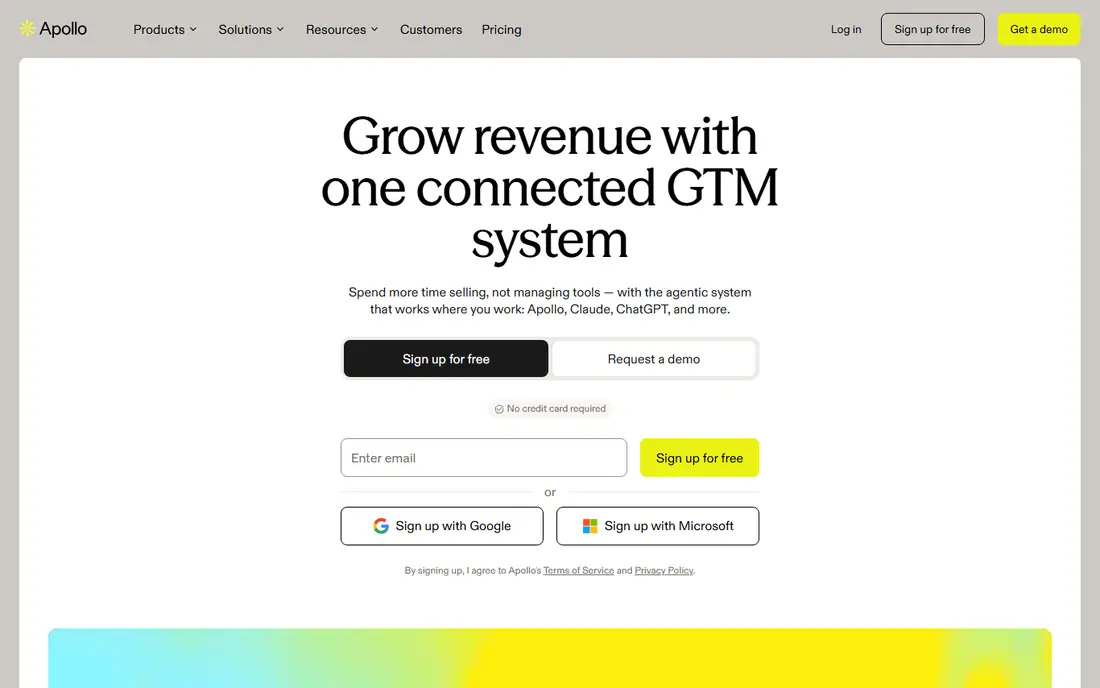
Apollo is the most complete LeadFuze replacement for teams that want one login for data and outreach. You can search contacts and accounts, enrich records, build sequences, and track replies without stitching together several tools. Its AI helpers can research accounts, draft outreach, and book meetings, with prompts at key moments so a human stays in control.
The catch is that no database is perfect in every niche. Apollo is strong for common tech and business roles, but coverage can thin out in specialist industries or smaller markets. Test your own target titles and regions during the trial, and check bounce rates on a small batch before you commit to a yearly plan.
- Large contact and account database
- Outreach, dialer, and enrichment in one workspace
- 200 plus integrations
- Data quality varies by niche
- Advanced features sit on higher tiers
ZoomInfo
Ideal for: Enterprise B2B data and intent
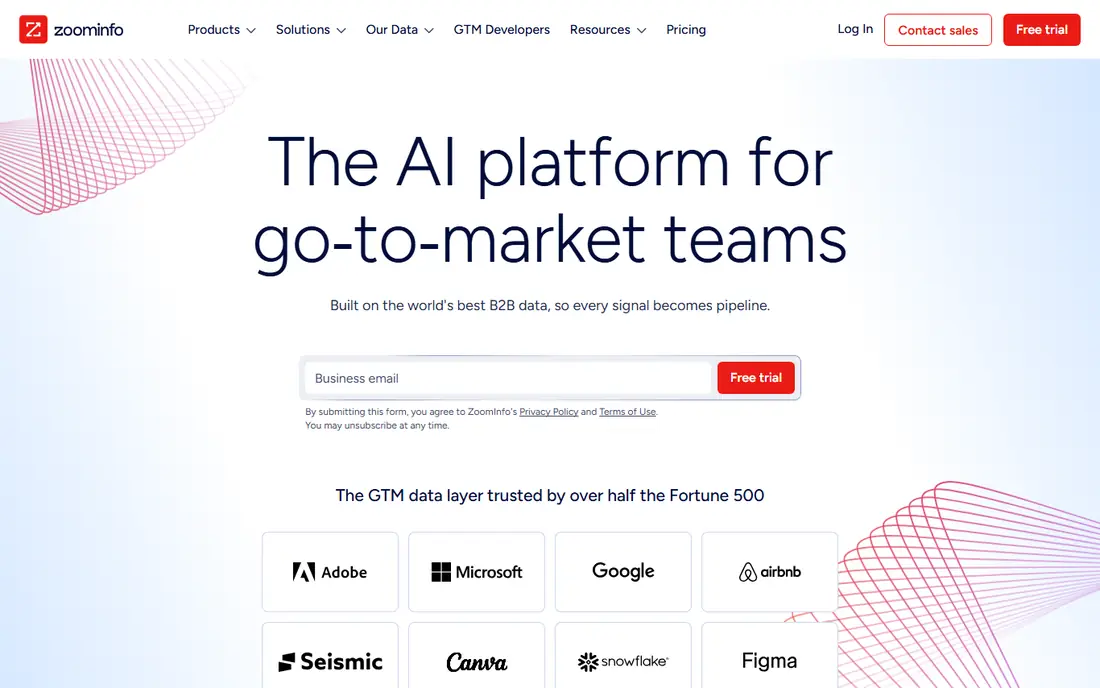
ZoomInfo is the enterprise-grade option on this list. Its platform combines verified data on hundreds of millions of contacts with buying signals, org charts, and AI agents that research accounts and prioritize deals. It also integrates with Salesforce, HubSpot, and Microsoft Dynamics, plus many sales engagement tools, which suits teams with a settled CRM.
For smaller teams, the main barrier is price transparency. The full platform is sold on usage-based pricing rather than a simple published seat price, so you need a sales conversation to get a firm number. The free Lite plan softens that, since it needs no credit card and lets you test basic search. If your team is large and data quality drives revenue, ZoomInfo is worth that conversation.
- Very large verified database
- Intent and org chart data
- Permanent free Lite plan
- Full platform pricing is quote-based
- Smaller teams may pay for depth they never use
Lusha
Ideal for: Verified contacts and buying signals
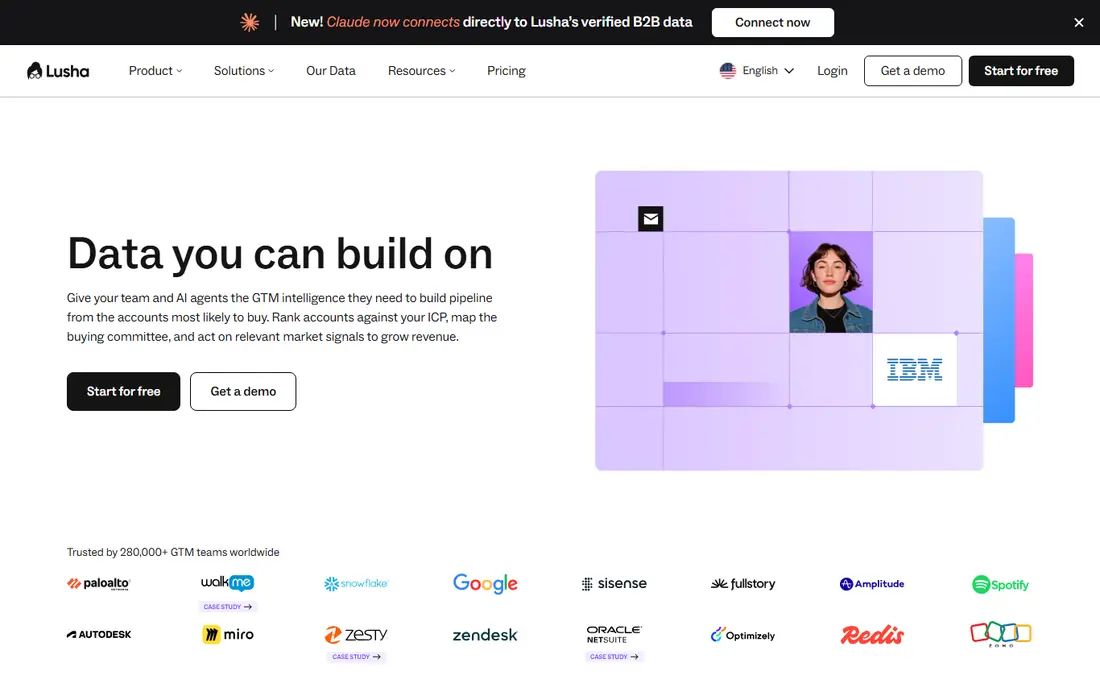
Lusha pitches itself as a data layer for go-to-market teams and AI agents, and its homepage backs that with published detail on verification and signals. Each email carries a confidence score and a last-updated date, and its 26 buying signal types, such as job changes, funding, and hiring surges, are dated events tied to named companies rather than vague intent. A free plan with no credit card required makes it easy to test.
The limits to watch are credits and geography. Heavy prospecting burns through credits fast, and phone coverage is stronger in some countries than others. Lusha also publishes compliance certifications, including GDPR and CCPA coverage, which matters if you prospect in Europe or California. For teams that call as well as email, Lusha is a strong mid-priced pick.
- Verified emails and phones with confidence scores
- Dated buying signals
- Browser extension and API
- Credit limits shape heavy use
- Phone coverage varies by country
Seamless.AI
Ideal for: Real-time lead search
Seamless.AI takes a different approach from database tools: it searches the web in real time each time you look up a prospect, rather than pulling only from a stored list. The company says its free tier covers up to 50 credits, and it backs its data with a credit-back promise when an email proves invalid. That model suits teams that value freshness over sheer list size.
The trade-off is scope. Seamless.AI is mainly a lead search and data tool, so you will still need a CRM or outreach tool to run campaigns. Pricing past the free tier is also handled through sales, which makes quick cost comparisons harder. If stale data has burned you before, the real-time approach is worth testing on your own target accounts.
- Real-time web search for fresh contacts
- Credit-back protection on bad emails
- Free starting credits
- Pricing beyond the free tier needs a sales conversation
- Best as a search tool, not a full CRM
Hunter
Ideal for: Email finding and verification
Hunter is the simplest tool on this list, and that is its strength. Give it a company domain and it finds associated email addresses, verifies them, and shows sources and confidence detail. It also offers outreach sequences, a Chrome extension, a Google Sheets add-on, and an API, so small teams can build a complete workflow around it.
What Hunter does not do is replace a full prospecting database. You cannot browse millions of contacts by title and industry in the same way as Apollo or ZoomInfo, and phone coverage is thinner. If your main job is finding and verifying emails for known target companies, Hunter is accurate, cheap to start, and easy to learn.
- Simple domain search and email finder
- Strong verification
- Free plan and pay-as-you-go credits
- No large prospecting database
- Phone data is limited compared with full data vendors
Snov.io
Ideal for: Lead gen plus cold outreach
Snov.io covers the whole small-team workflow: find leads, enrich them with emails and phone numbers, verify addresses, warm up mailboxes, and run email and LinkedIn campaigns on autopilot. Its LinkedIn extension finds emails directly from profiles and search results, which is handy for teams that prospect on LinkedIn daily. A free start with no credit card required lowers the barrier to testing.
The honest catch is complexity and deliverability. The platform holds many features, so new users should expect a learning period, and no tool can guarantee inbox placement if your domains, volume, and copy are not set up well. Use its warmup and verification steps, start with small sends, and watch bounce and reply rates before scaling.
- Lead finding, enrichment, verification, and outreach in one tool
- LinkedIn automation
- Free start with no card
- Interface packs in a lot, so setup takes care
- Deliverability depends on your sending setup
RocketReach
Ideal for: Broad global contact coverage
RocketReach is a lead intelligence platform built around finding verified emails and phones for decision makers. It highlights broad global coverage, with hundreds of millions of profiles, plus search, enrichment, a browser extension, and an API for teams that want data inside their own tools. Its messaging and autopilot features also let smaller teams send and automate outreach from the same account.
As with other data vendors, coverage is not uniform. Results tend to be strongest for common business roles and larger markets, and thinner for niche titles or smaller regions. Pricing past the trial is not fully public, so get a written quote for your expected volume. Test your hardest-to-find titles first, since those reveal the real gaps fastest.
- Broad global profiles and companies
- Email and phone search
- Browser extension and API
- Pricing is not fully public
- Data depth varies by region and industry
How we picked these
We compared official feature pages, pricing pages, privacy and compliance pages, and public reviews, and we checked that the homepages listed here load and belong to the products named. We favored tools that find and verify business contact data, offer a free plan or trial, and publish at least some detail on data sources and compliance. We left out pure email sending tools with no data finding, and we did not include LeadFuze itself, since this list is about replacements.
What to check before you buy
Start with your own list, not the vendor demo. Pick 50 real target accounts, including your hardest titles and regions, and run them through each finalist. Measure how many return a verified email, how many return a direct phone number, and how many bounce when you send a small test batch. A vendor that shines on common titles can still fail on your niche.
Next, read the compliance and credit rules. Check how the vendor sources data, whether it honors opt-outs, and which regions its certifications cover. Then map the credit math: monthly credits, rollover rules, charges for enrichment, and what happens when a record proves wrong. A cheap plan with tight credits can cost more than a pricier plan with room to work.
Finally, test the workflow end to end. Push enriched records into your CRM, run a short sequence, and confirm replies and bounces sync back. If the data is good but the sync is painful, your team will stop using the tool, and the best database in the world cannot help an empty pipeline.
Frequently asked questions
What is the best LeadFuze alternative for most teams?
Apollo is our pick for most teams, since it combines a large database with outreach, enrichment, and CRM integrations in one workspace. ZoomInfo suits larger teams that need deeper company and intent data. Smaller teams on a budget should start with Hunter or Snov.io.
Are there free LeadFuze alternatives?
Yes, in part. Hunter, Snov.io, Lusha, and Seamless.AI all offer free starting access, and ZoomInfo offers a permanent free Lite plan. Free tiers limit credits or features, so they suit testing and light use rather than heavy daily prospecting.
How accurate is B2B lead data?
Accuracy varies by vendor, title, and region, and no vendor is perfect. Look for verification, confidence scores, and last-updated dates, and always test with your own list. Measure bounce rates on a small send before you trust a new source at scale.
Do I need a separate outreach tool with these alternatives?
It depends on the product. Apollo and Snov.io include outreach, while Hunter, Lusha, and RocketReach focus more on data and need a CRM or sending tool for full campaigns. Map your workflow before buying so you do not pay twice for the same job.
Is cold outreach with purchased lead data legal?
Rules vary by country and state, and business contact data is treated differently from consumer data. Check the laws that apply to your prospects, honor opt-outs, and use vendors that publish sourcing and compliance detail. When in doubt, ask a lawyer before launching a large campaign.