LocalStack Alternatives in 2026: 8 Options Compared

- 1
 Serverless FrameworkLocal Lambda testing for serverless teamsVisit
- 2
 MinIOSelf-hosted S3-compatible storageVisit
- 3
 AzuriteLocal Azure storage emulationVisit
- 4
 DynamoDB LocalLocal DynamoDB developmentVisit
- 5
 S3MockLocal S3 testing in Java projectsVisit
- Serverless Framework is our first pick for Local Lambda testing for serverless teams, because it covers the core job well without a narrow focus.
- MinIO is a strong second option for Self-hosted S3-compatible storage, and it suits buyers who want a different balance of features and price.
- If you want to start free, look at Serverless Framework, MinIO, Azurite first, then check what sits behind their paid plans.
- DynamoDB Local stands out for Local DynamoDB development, with official local DynamoDB from AWS as its clearest strength.
- Shortlist two or three options, test each with a real task, and compare the total cost and limits before you commit.
Quick comparison
| Product | Ideal for | Price from | Free version | |
|---|---|---|---|---|
| Serverless Framework | Local Lambda testing for serverless teams | Free | Yes | Visit |
| MinIO | Self-hosted S3-compatible storage | Free | Yes | Visit |
| Azurite | Local Azure storage emulation | Free | Yes | Visit |
| DynamoDB Local | Local DynamoDB development | Free | Yes | Visit |
| S3Mock | Local S3 testing in Java projects | Free | Yes | Visit |
 Testcontainers | Real services in disposable containers | Free | Yes | Visit |
 LocalS3 | A lightweight local S3 server | Free | Yes | Visit |
 AWS SAM CLI | Local Lambda and API testing | Free | Yes | Visit |
The best LocalStack alternatives
These 8 options cover the main ways to handle localstack alternatives, from well-known leaders to smaller tools that suit a narrower job. We compared official feature pages, pricing, app-store listings, privacy policies, and public reviews to sort out where each one earns its place.
Serverless Framework
Ideal for: Local Lambda testing for serverless teams
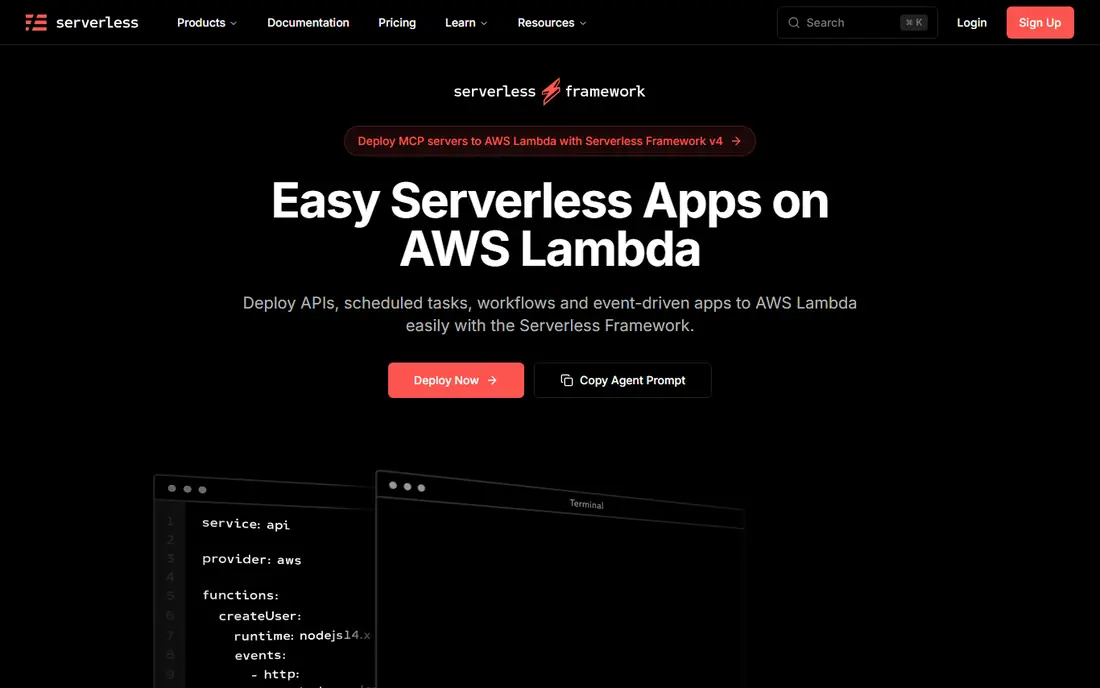
Serverless Framework fits local Lambda testing for serverless teams. Serverless Framework fits teams building Lambda APIs who want local invocation before deployment. Its strengths include local Lambda and API Gateway emulation via plugins, large plugin ecosystem, and AWS deployment tooling.
The honest catch is serverless focus, not the full AWS catalogue, and local emulation has limits. That matters most when your team relies on that area every day, so weigh it against the strengths above before you decide. A tool can still be the right pick with a clear weakness, as long as that weakness sits outside your main job.
We would shortlist Serverless Framework if local Lambda testing for serverless teams is your main priority. It is free to use at the core level, which makes trying it low risk. Start small, test it with a real workload, and compare the result with one other option on this list before you commit.
- Local Lambda and API Gateway emulation via plugins
- Large plugin ecosystem
- AWS deployment tooling
- Serverless focus, not the full AWS catalogue
- Local emulation has limits
MinIO
Ideal for: Self-hosted S3-compatible storage

For self-hosted S3-compatible storage, MinIO is a strong candidate. MinIO suits teams whose local AWS need is mainly object storage. Its strengths include s3-compatible object storage you can run anywhere, strong performance, and open source.
The honest catch is it covers storage, not the wider AWS service set, and clustering needs planning. That matters most when your team relies on that area every day, so weigh it against the strengths above before you decide. A tool can still be the right pick with a clear weakness, as long as that weakness sits outside your main job.
We would shortlist MinIO if self-hosted S3-compatible storage is your main priority. It is free to use at the core level, which makes trying it low risk. Start small, test it with a real workload, and compare the result with one other option on this list before you commit.
- S3-compatible object storage you can run anywhere
- Strong performance
- Open source
- It covers storage, not the wider AWS service set
- Clustering needs planning
Azurite
Ideal for: Local Azure storage emulation
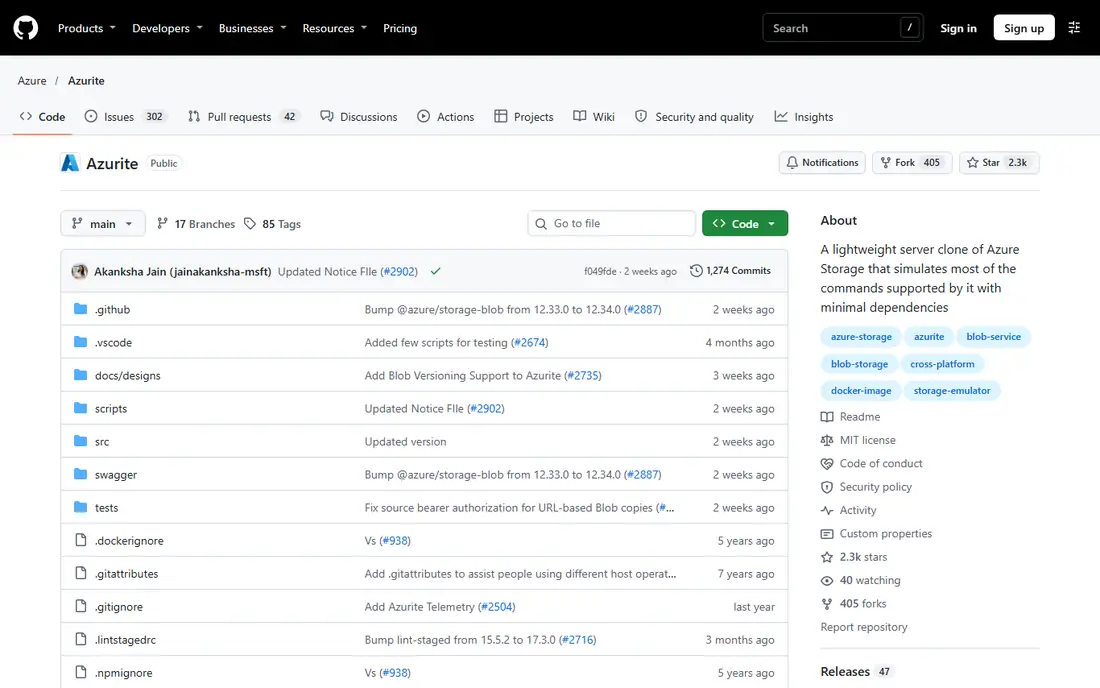
Azurite is built around local Azure storage emulation. Azurite fits Azure developers who need local storage without a cloud account. Its strengths include microsoft emulator for blob, queue, and table storage, and useful for Azure developers.
The honest catch is azure storage only, and other Azure services need separate emulators. That matters most when your team relies on that area every day, so weigh it against the strengths above before you decide. A tool can still be the right pick with a clear weakness, as long as that weakness sits outside your main job.
We would shortlist Azurite if local Azure storage emulation is your main priority. It is free to use at the core level, which makes trying it low risk. Start small, test it with a real workload, and compare the result with one other option on this list before you commit.
- Microsoft emulator for blob, queue, and table storage
- Useful for Azure developers
- Azure storage only
- Other Azure services need separate emulators
DynamoDB Local
Ideal for: Local DynamoDB development
If local DynamoDB development is the priority, DynamoDB Local deserves a close look. DynamoDB Local fits teams building heavily on DynamoDB tables and indexes. Its strengths include official local DynamoDB from AWS, offline table work, and simple setup.
The honest catch is only DynamoDB, so other services still need mocks or cloud accounts. That matters most when your team relies on that area every day, so weigh it against the strengths above before you decide. A tool can still be the right pick with a clear weakness, as long as that weakness sits outside your main job.
We would shortlist DynamoDB Local if local DynamoDB development is your main priority. It is free to use at the core level, which makes trying it low risk. Start small, test it with a real workload, and compare the result with one other option on this list before you commit.
- Official local DynamoDB from AWS
- Offline table work
- Simple setup
- Only DynamoDB, so other services still need mocks or cloud accounts
S3Mock
Ideal for: Local S3 testing in Java projects
S3Mock fits local S3 testing in Java projects. S3Mock suits Java teams that need a local S3 endpoint for integration tests. Its strengths include open source S3 mock with filesystem or in-memory storage, and test-friendly design.
The honest catch is s3 only, and feature coverage is narrower than real S3. That matters most when your team relies on that area every day, so weigh it against the strengths above before you decide. A tool can still be the right pick with a clear weakness, as long as that weakness sits outside your main job.
We would shortlist S3Mock if local S3 testing in Java projects is your main priority. It is free to use at the core level, which makes trying it low risk. Start small, test it with a real workload, and compare the result with one other option on this list before you commit.
- Open source S3 mock with filesystem or in-memory storage
- Test-friendly design
- S3 only
- Feature coverage is narrower than real S3
Testcontainers
Ideal for: Real services in disposable containers
For real services in disposable containers, Testcontainers is a strong candidate. Testcontainers fits teams that prefer testing against real services rather than emulated ones. Its strengths include runs real databases and services in containers for tests, language modules, and close to production behaviour.
The honest catch is tests run slower than pure mocks, and Docker is required on the test machine. That matters most when your team relies on that area every day, so weigh it against the strengths above before you decide. A tool can still be the right pick with a clear weakness, as long as that weakness sits outside your main job.
We would shortlist Testcontainers if real services in disposable containers is your main priority. It is free to use at the core level, which makes trying it low risk. Start small, test it with a real workload, and compare the result with one other option on this list before you commit.
- Runs real databases and services in containers for tests
- Language modules
- Close to production behaviour
- Tests run slower than pure mocks
- Docker is required on the test machine
LocalS3
Ideal for: A lightweight local S3 server
LocalS3 is built around a lightweight local S3 server. LocalS3 suits developers who want a quick local S3 endpoint without a large setup. Its strengths include simple local S3-compatible server for development and tests, and easy to run.
The honest catch is small project with narrower coverage, and community support only. That matters most when your team relies on that area every day, so weigh it against the strengths above before you decide. A tool can still be the right pick with a clear weakness, as long as that weakness sits outside your main job.
We would shortlist LocalS3 if a lightweight local S3 server is your main priority. It is free to use at the core level, which makes trying it low risk. Start small, test it with a real workload, and compare the result with one other option on this list before you commit.
- Simple local S3-compatible server for development and tests
- Easy to run
- Small project with narrower coverage
- Community support only
AWS SAM CLI
Ideal for: Local Lambda and API testing
If local Lambda and API testing is the priority, AWS SAM CLI deserves a close look. AWS SAM CLI fits serverless teams testing Lambda functions and APIs before deployment. Its strengths include official AWS tooling for local Lambda invocation, SAM template support, and step-through debugging.
The honest catch is focus is serverless, not the full AWS catalogue, and local emulation has limits. That matters most when your team relies on that area every day, so weigh it against the strengths above before you decide. A tool can still be the right pick with a clear weakness, as long as that weakness sits outside your main job.
We would shortlist AWS SAM CLI if local Lambda and API testing is your main priority. It is free to use at the core level, which makes trying it low risk. Start small, test it with a real workload, and compare the result with one other option on this list before you commit.
- Official AWS tooling for local Lambda invocation
- SAM template support
- Step-through debugging
- Focus is serverless, not the full AWS catalogue
- Local emulation has limits
How we picked these
We started from the topic itself and kept only products that exist, work in October 2026, and truly fit the job in the title. For each option we checked official feature pages and pricing, app-store listings where relevant, privacy policies, and public reviews, and we left out products whose fit depended on stretching the definition. Where a price or free tier could not be verified from the vendor, we wrote See website rather than guessing a number.
We also weighed who each product is really for, not just its feature list. A broad platform can be the wrong pick for a small team, and a simple tool can be the wrong pick for a large operation, so the write-ups above name the audience, the strength, and the catch for each option. That is the comparison we would want before spending money or moving data.
How to choose a local cloud emulator
Start with your main job
Write down the one job you need done every week, then judge each option against that job first. Extra features look good in a demo, but they add cost, training, and admin work when they sit unused. If two options both cover your main job, pick the one with the clearer pricing and the simpler setup for your team.
Check pricing and limits
Compare the total cost for your team size and usage, not just the headline plan. Check seat pricing, usage limits, add-ons, and contract terms, and ask what happens when you grow past a tier. A free plan or trial is useful, but read what it excludes, since the feature you need most is often the one held back for paid plans.
Test before you commit
Run a short trial with real data and a real task, and involve the people who will use the tool daily. Check support response, data export, and how easy it is to leave, because switching costs are part of the price. If a trial feels hard to set up, treat that as useful evidence about the product, not just about your team.
Frequently asked questions
What are localstack alternatives?
They are products and services that cover the same job as the original topic, in this case localstack alternatives. The list above includes Serverless Framework, MinIO, and Azurite, among others, each with a different balance of features, price, and audience. Start from your main job, then narrow the list to the two or three options that fit it best.
Which option is best for most people?
For most buyers, Serverless Framework is a sensible starting point for Local Lambda testing for serverless teams, because it covers the core job well. If your priority is different, MinIO for Self-hosted S3-compatible storage or DynamoDB Local for Local DynamoDB development may fit better. There is no single winner for every team, so match the pick to your size, budget, and workflow.
Is there a free option?
Yes, Serverless Framework, MinIO, Azurite offer a free way to start, though paid plans add depth and support. Free tiers usually limit usage, seats, or advanced features, so check the limits against your real workload. A free start is still a good way to test fit before paying.
How much do these options cost?
Costs vary by plan, team size, and usage, and several vendors use quote-based pricing, which is why some entries say See website. Compare the total for your actual use, including seats, add-ons, and contract length, rather than the lowest headline price. Ask each vendor for a written quote before you decide.
How do I switch from my current tool?
Start by exporting your data and checking what the new tool can import, since migration quality varies a lot. Run both tools side by side for a short period, move one team or project first, and keep the old tool until the new one proves itself. Ask the vendor for migration help in writing before you sign.