Best Majestic Alternatives in 2026: 8 Options Compared

- Ahrefs and Semrush are the most complete replacements, with large backlink indexes plus keyword and audit tools.
- Moz Pro suits teams that want a simpler suite with link data and strong learning resources.
- SE Ranking, Mangools and Ubersuggest offer good value link and keyword data for smaller teams.
- Serpstat and SpyFu suit teams that want competitor research alongside backlink analysis.
Quick comparison
| Product | Ideal for | Price from | Free version | |
|---|---|---|---|---|
 Ahrefs | largest backlink index | See website | Free trial | Visit |
 Semrush | backlinks plus full SEO suite | See website | Free trial | Visit |
 Moz Pro | link data with domain authority | See website | Free trial | Visit |
 SE Ranking | value backlink and SEO suite | See website | Free trial | Visit |
 Mangools | friendly link and keyword toolkit | See website | Free trial | Visit |
 Ubersuggest | affordable backlink overview | See website | Free trial | Visit |
 Serpstat | competitor and backlink research | See website | Free trial | Visit |
 SpyFu | competitor keyword and link research | See website | Free trial | Visit |
The best Majestic Alternatives
Here are our picks for the best majestic alternatives, covering a mix of well-known leaders and strong smaller options. We compared official feature pages, pricing pages, app-store listings, privacy policies and public reviews to build this list.
Ahrefs
Ideal for: largest backlink index
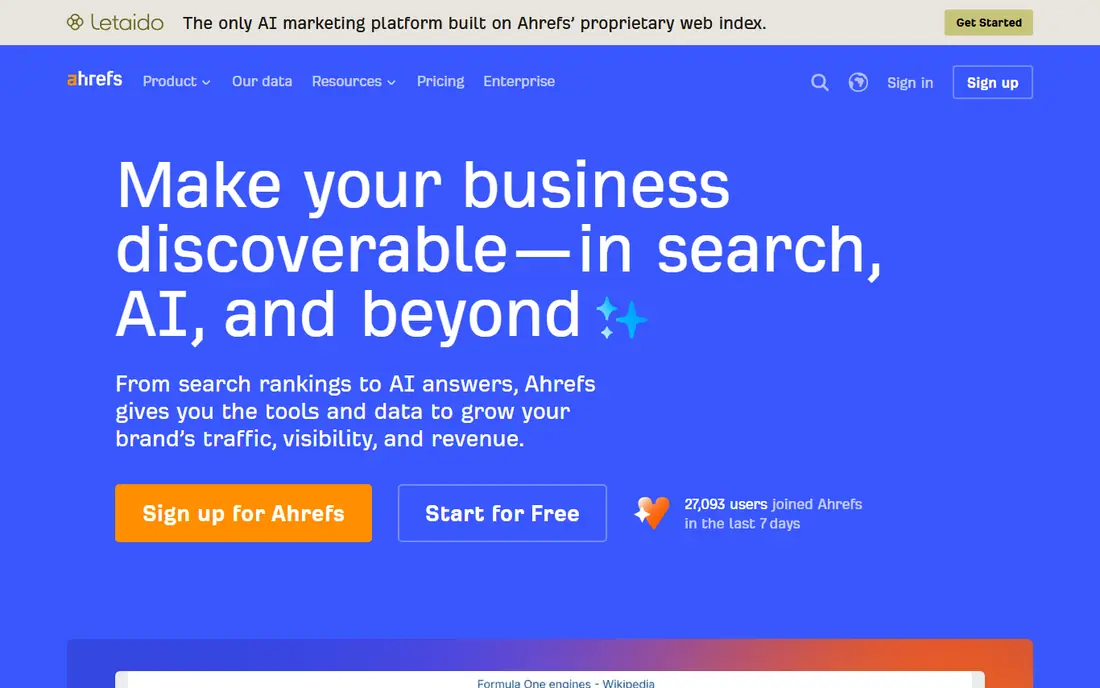
Ahrefs has one of the largest and freshest backlink indexes available, with site explorer tools that show backlinks, referring domains and top pages in detail. Its domain rating and URL rating metrics are widely used, and the wider suite covers keywords, audits and rank tracking.
Pricing is higher than value tools, and the suite takes time to learn. For backlink analysis and full SEO work, Ahrefs is the leading Majestic alternative.
Bottom line: Ahrefs suits largest backlink index best. Its strongest point is large, fresh backlink index, while the main drawback to weigh is higher price. Check the current pricing page before deciding, since plans and limits change.
- Large, fresh backlink index
- Full SEO suite
- Reliable metrics
- Higher price
- Learning curve
Semrush
Ideal for: backlinks plus full SEO suite
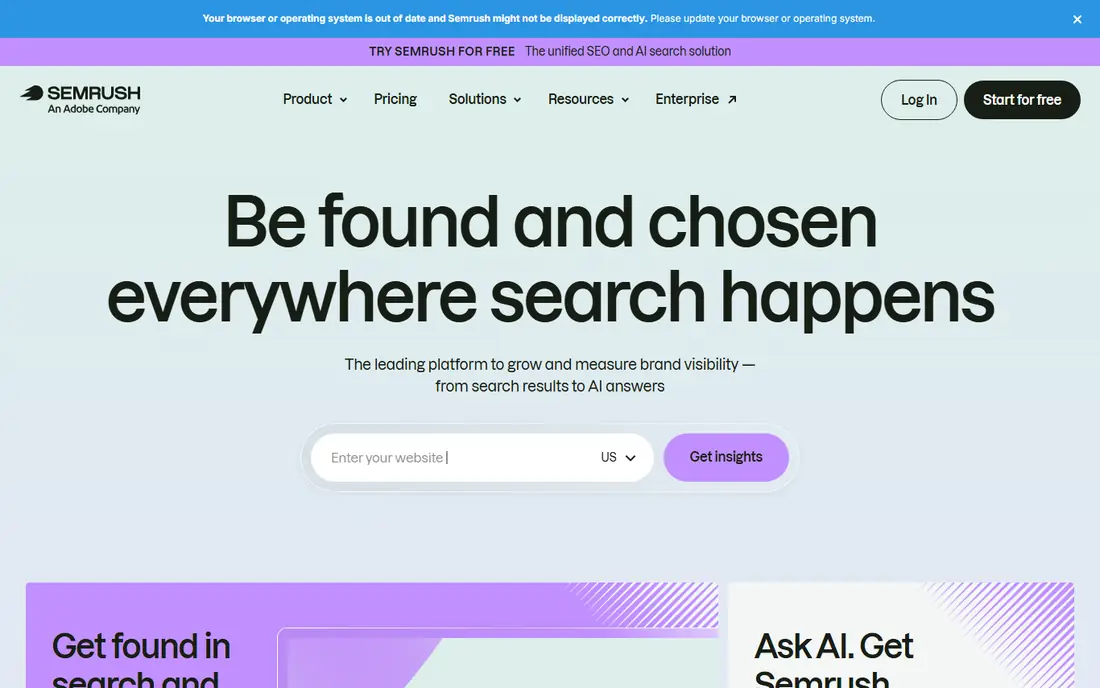
Semrush combines a large backlink database with keyword research, audits and competitor analysis in one platform. Its backlink analytics show referring domains, anchor text and authority scores, while the wider toolkit supports content and advertising work too.
Pricing rises with projects, and the interface is dense for beginners. For backlink analysis inside a broad marketing toolkit, Semrush is a strong choice.
Bottom line: Semrush suits backlinks plus full SEO suite best. Its strongest point is large backlink database, while the main drawback to weigh is price rises with projects. Check the current pricing page before deciding, since plans and limits change.
- Large backlink database
- Competitor analysis
- Broad toolkit
- Price rises with projects
- Interface is dense
Moz Pro
Ideal for: link data with domain authority
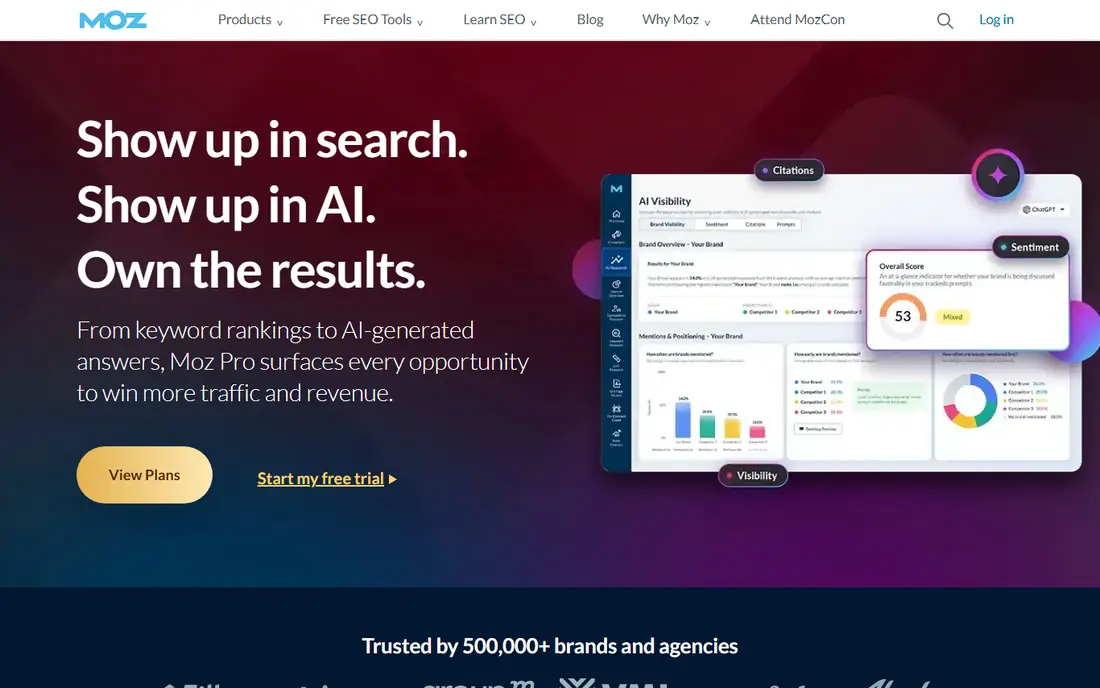
Moz Pro offers link explorer data with its well-known domain authority metric, alongside keyword research, audits and rank tracking. Its learning resources help teams interpret link data, and the interface is approachable for beginners.
The link index is smaller than Ahrefs, and crawl limits apply on lower tiers. For link analysis with a friendly suite, Moz Pro is a solid alternative.
Bottom line: Moz Pro suits link data with domain authority best. Its strongest point is domain authority metric, while the main drawback to weigh is index smaller than Ahrefs. Check the current pricing page before deciding, since plans and limits change.
- Domain authority metric
- Link explorer
- Learning resources
- Index smaller than Ahrefs
- Crawl limits on lower tiers
SE Ranking
Ideal for: value backlink and SEO suite
SE Ranking offers backlink checking alongside audits, rank tracking and keyword research at an affordable price. Agencies value its white-label reporting, and small teams get a full SEO toolkit without a large bill.
The backlink index is smaller than Ahrefs, and the interface takes some learning. For value backlink analysis, SE Ranking is a strong pick.
Bottom line: SE Ranking suits value backlink and SEO suite best. Its strongest point is affordable backlink checks, while the main drawback to weigh is index smaller than top tools. Check the current pricing page before deciding, since plans and limits change.
- Affordable backlink checks
- Audits and tracking together
- Good for agencies
- Index smaller than top tools
- Interface takes learning
Mangools
Ideal for: friendly link and keyword toolkit
Mangools includes LinkMiner for backlink analysis inside a friendly toolkit with keyword research and rank tracking. The interface is clean, pricing suits freelancers, and link data covers the essentials for small sites.
The index is smaller than Ahrefs, and audit depth is limited. For friendly, affordable link checks, Mangools is a good choice.
Bottom line: Mangools suits friendly link and keyword toolkit best. Its strongest point is linkMiner for backlink checks, while the main drawback to weigh is index smaller than Ahrefs. Check the current pricing page before deciding, since plans and limits change.
- LinkMiner for backlink checks
- Clean interface
- Affordable
- Index smaller than Ahrefs
- Audit depth limited
Ubersuggest
Ideal for: affordable backlink overview
Ubersuggest offers backlink overviews alongside keyword research and audits at a low cost, with a simple interface for beginners. It suits freelancers and small businesses that need a basic picture of their link profile.
Data depth is limited compared with Ahrefs and Semrush. For affordable backlink basics, Ubersuggest is a practical pick.
Bottom line: Ubersuggest suits affordable backlink overview best. Its strongest point is low cost, while the main drawback to weigh is data depth limited. Check the current pricing page before deciding, since plans and limits change.
- Low cost
- Backlink overview and keyword data
- Simple interface
- Data depth limited
- Some features need higher tiers
Serpstat
Ideal for: competitor and backlink research
Serpstat combines backlink analysis with competitor research, keyword data and audits, at prices below the largest platforms. Agencies use it for client research across SEO and PPC, with a broad toolkit for the money.
The backlink index is smaller than Ahrefs, and the interface takes learning. For competitor research with backlink data, Serpstat is a strong value option.
Bottom line: Serpstat suits competitor and backlink research best. Its strongest point is backlink analysis plus competitor data, while the main drawback to weigh is index smaller than top tools. Check the current pricing page before deciding, since plans and limits change.
- Backlink analysis plus competitor data
- Affordable tiers
- Good for agencies
- Index smaller than top tools
- Interface takes learning
SpyFu
Ideal for: competitor keyword and link research
SpyFu focuses on competitor research, showing the keywords competitors rank for and buy, alongside backlink data. Its historical data helps teams understand competitor strategy over time, which is useful for planning.
Backlink depth is less than dedicated link tools, and the interface is functional. For competitor-led research with link data, SpyFu is a useful option.
Bottom line: SpyFu suits competitor keyword and link research best. Its strongest point is competitor keyword history, while the main drawback to weigh is backlink depth less than dedicated tools. Check the current pricing page before deciding, since plans and limits change.
- Competitor keyword history
- Backlink data
- Affordable
- Backlink depth less than dedicated tools
- Interface is functional
How we picked these
We started from the original product and what people use it for, then compared official feature pages, pricing pages, app-store listings, privacy policies and public reviews for each candidate. We kept only products that exist, work in October 2026 and genuinely fit the topic, and we left out products that were discontinued, unrelated or too thin to recommend.
We weighed fit for the topic first, then price and free options, ease of setup and the honest downsides that show up in reviews and documentation. Prices are given as listed on the vendor's own site where we could verify them, and we wrote See website where a price was quoted, unclear or likely to change by plan.
We also left out products that no longer exist, that have been folded into a different product, or that only partly fit the topic. A longer list would have been easier to write, but a list padded with poor fits helps nobody choose, so we kept the list to products we can genuinely recommend for this use.
How to choose a backlink analysis tool
Start with the index size and freshness. A backlink tool is only useful if its index covers the links that matter to your site and updates regularly. Compare a known site across tools during a trial to see which index feels most complete.
Next, check the metrics you rely on. Trust flow, domain rating, domain authority and similar scores are each provider's own estimate, not a search engine metric. Use them to compare sites relatively, not as absolute measures of quality.
Finally, check the wider toolkit. A tool that also covers keyword research, audits and rank tracking may replace several subscriptions, while a pure link tool may need companions. Price the full toolkit you need, not just link data.
Run a real trial before you pay. Sign up for the free tier or trial, connect it to a real project, and test the exact tasks you do every week rather than the demo workflow. Check how long setup takes, how clear the reporting is and how quickly support replies, since those details decide whether a tool survives past the first month.
Plan the switch, not just the signup. Export your data from the old tool, check what imports cleanly and what must be rebuilt by hand, and keep the old system running until the new one has handled real work. A short overlap period avoids lost data and gives your team time to learn the new workflow.
Frequently asked questions
What is Majestic used for?
Majestic is an SEO tool known for its backlink index, with trust flow and citation flow metrics that show link quality and quantity. It helps SEO teams analyse backlink profiles, find link opportunities and check competitors.
What is the best Majestic alternative?
Ahrefs is the strongest replacement, with a large backlink index and a full SEO suite. Semrush is close behind, while Moz Pro suits teams that want a simpler suite with its own link metrics.
Are link metrics accurate?
Link metrics are estimates from each provider's index, not official search engine data. They are useful for comparing sites and spotting trends, but they should not be treated as exact measures of ranking power.
Can I check competitor backlinks with these tools?
Yes. All of these tools let you enter a competitor domain and see its backlinks, referring domains and top linked pages, which helps with link building research.
Is there a free backlink checker?
Ahrefs, Semrush and Moz offer free backlink checkers with limits, and Ubersuggest offers limited free checks. Full backlink data and history usually need a paid plan.
Can I try these options before paying?
Yes, in most cases. Nearly every option on this list offers a free tier or a free trial, and we note that in the comparison table and in each product block. Use the trial for real work rather than a quick look, and check the renewal price before the trial ends so there are no surprises.