Best Mendix Alternatives in 2026: 8 Options Compared

- 1
 OutSystemsEnterprise low-code appsVisit
- 2
 Microsoft Power AppsLow-code inside Microsoft 365Visit
- 3
 AppianProcess automation and low-codeVisit
- 4
 Salesforce LightningLow-code on SalesforceVisit
- 5
 Zoho CreatorAffordable low-code appsVisit
- Our pick for most people is OutSystems, because it covers enterprise low-code apps with the fewest trade-offs in this group.
- If you want to start without paying, Bubble is the strongest free starting point here, though its paid tier adds the deeper features.
- Microsoft Power Apps is the best second look when OutSystems does not fit, since it serves low-code inside microsoft 365 rather than the same audience.
- Prices and plan limits change often, so confirm the current terms on each vendor site and read the fine print on limits, renewals and cancellation before you pay.
Quick comparison
| Product | Ideal for | Price from | Free version | |
|---|---|---|---|---|
| OutSystems | Enterprise low-code apps | See website | No | Visit |
| Microsoft Power Apps | Low-code inside Microsoft 365 | See website | Free trial | Visit |
| Appian | Process automation and low-code | See website | No | Visit |
| Salesforce Lightning | Low-code on Salesforce | See website | No | Visit |
| Zoho Creator | Affordable low-code apps | See website | Free trial | Visit |
 Bubble | No-code web apps | See website | Yes | Visit |
 Retool | Internal tools for developers | See website | Yes | Visit |
 ServiceNow App Engine | Low-code on ServiceNow | See website | No | Visit |
The best mendix alternatives
We compared official feature pages, pricing pages, app store listings, privacy policies and public reviews to build this list for mendix alternatives. Every option below exists and works today, and each one earns its place for a different kind of reader. Read the shortlist with your own situation in mind. A cheaper option that you actually use beats a powerful one that sits untouched, and a plan that looks cheap on the monthly line can cost more once add-ons and limits are counted.
OutSystems
Ideal for: Enterprise low-code apps
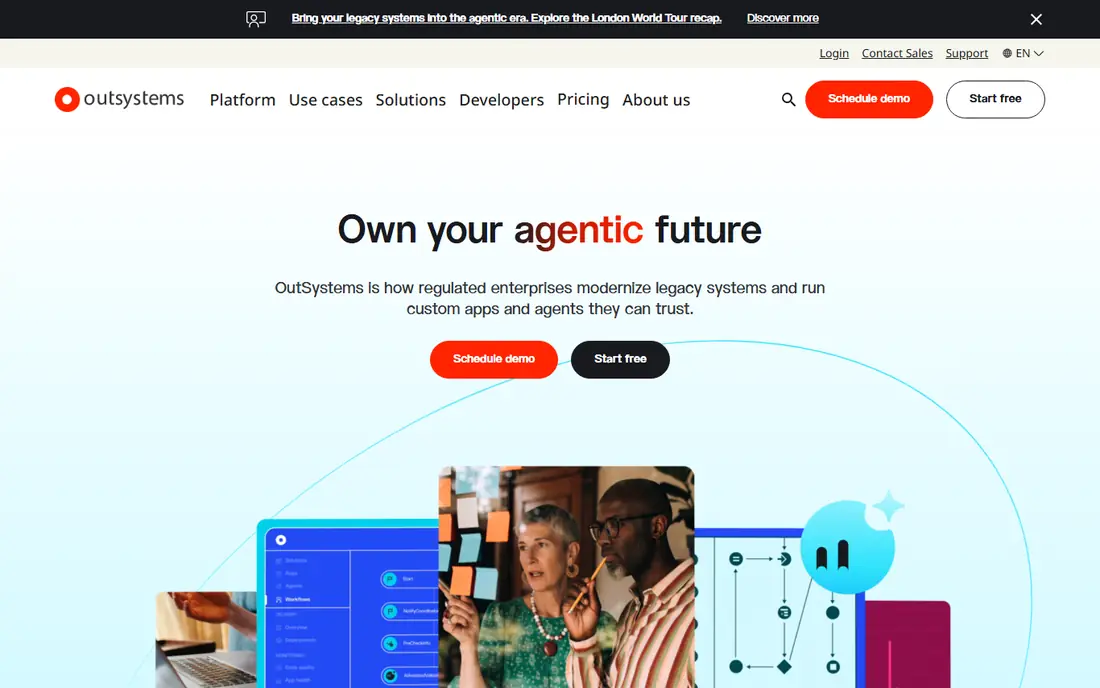
OutSystems is the closest enterprise rival to Mendix, with full-stack low-code development, AI assistance and scale for large business applications. It suits organisations building customer-facing and internal apps on one platform. Pricing is enterprise-level, and complex apps still need skilled developers. For readers focused on enterprise low-code apps, the appeal is full-stack app building. That strength matters in daily use, because it is the part you will notice every week, not a feature you open once and forget. Compare it against the rest of the list on that one point first, then look at price, platform support and how the company handles your data. The catch is enterprise pricing. learning curve for complex apps If that trade-off is acceptable for how you work, this is a solid choice, and a short trial will tell you more than any review can.
- Full-stack app building
- Strong enterprise scale
- AI-assisted development
- Enterprise pricing
- Learning curve for complex apps
Microsoft Power Apps
Ideal for: Low-code inside Microsoft 365
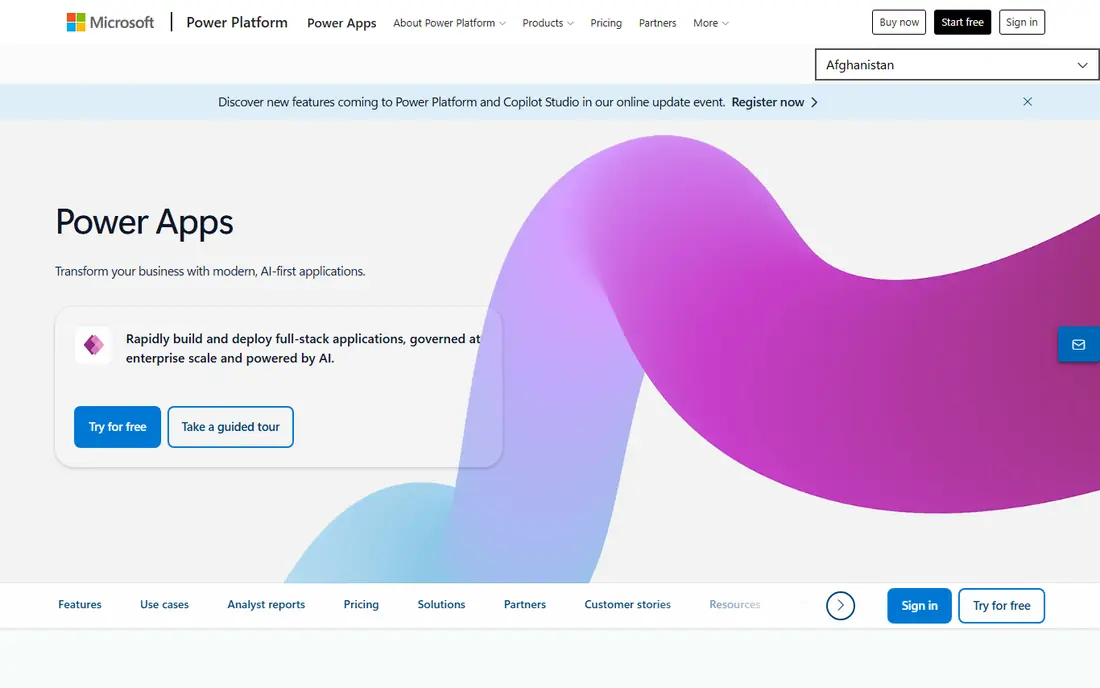
Microsoft Power Apps is the obvious pick for Microsoft 365 workplaces, since it connects to Dataverse, Teams and SharePoint with AI-assisted building. Many organisations already hold licences that cover basic use. Licensing gets confusing at scale, and teams outside Microsoft 365 get less value. For readers focused on low-code inside microsoft 365, the appeal is included in many Microsoft plans. That strength matters in daily use, because it is the part you will notice every week, not a feature you open once and forget. Compare it against the rest of the list on that one point first, then look at price, platform support and how the company handles your data. The honest weakness is best inside Microsoft 365. licensing can be confusing Try it on a real task before you pay, and check whether the entry plan covers the feature you actually need.
- Included in many Microsoft plans
- Dataverse and Teams integration
- AI builder
- Best inside Microsoft 365
- Licensing can be confusing
Appian
Ideal for: Process automation and low-code
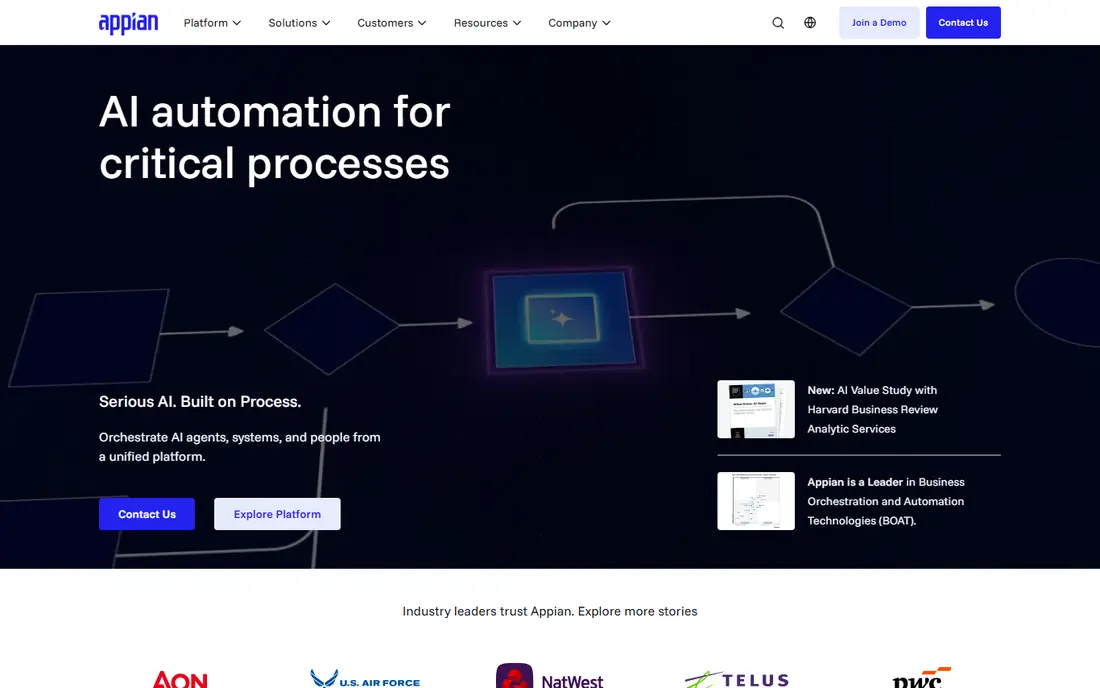
Appian blends low-code app building with process automation and case management, which suits regulated organisations that need approval workflows and audit trails. Governance and enterprise controls are strong. Cost is high, and teams that only need simple apps may find it heavier than necessary. For readers focused on process automation and low-code, the appeal is process automation plus app building. That strength matters in daily use, because it is the part you will notice every week, not a feature you open once and forget. Compare it against the rest of the list on that one point first, then look at price, platform support and how the company handles your data. Watch out for high cost. more process-focused than pure app building If you can live with that limit, the rest of the package is easy to recommend for its audience.
- Process automation plus app building
- Strong governance
- Enterprise controls
- High cost
- More process-focused than pure app building
Salesforce Lightning
Ideal for: Low-code on Salesforce
Salesforce Lightning lets teams build apps directly on Salesforce data, with drag-and-drop components and a huge AppExchange ecosystem. It is the right choice when customer data already lives in Salesforce. Licence costs stack up, and heavy customisation still needs developer skill. For readers focused on low-code on salesforce, the appeal is build apps on Salesforce data. That strength matters in daily use, because it is the part you will notice every week, not a feature you open once and forget. Compare it against the rest of the list on that one point first, then look at price, platform support and how the company handles your data. The catch is requires Salesforce licences. complexity grows with customisation If that trade-off is acceptable for how you work, this is a solid choice, and a short trial will tell you more than any review can.
- Build apps on Salesforce data
- Huge ecosystem
- AppExchange components
- Requires Salesforce licences
- Complexity grows with customisation
Zoho Creator
Ideal for: Affordable low-code apps
Zoho Creator gives small and mid-sized teams an affordable low-code builder with drag-and-drop forms, workflows and reports. Integration with Zoho apps is a bonus for existing Zoho users. Very large enterprise apps may outgrow it, and custom code options are narrower than on enterprise platforms. For readers focused on affordable low-code apps, the appeal is low-cost plans. That strength matters in daily use, because it is the part you will notice every week, not a feature you open once and forget. Compare it against the rest of the list on that one point first, then look at price, platform support and how the company handles your data. The honest weakness is less suited to very large enterprise apps. custom code options are narrower Try it on a real task before you pay, and check whether the entry plan covers the feature you actually need.
- Low-cost plans
- Drag-and-drop builder
- Zoho app integration
- Less suited to very large enterprise apps
- Custom code options are narrower
Bubble
Ideal for: No-code web apps
Bubble lets non-developers build full web apps with databases, workflows and user accounts, no code required. Its plugin marketplace extends the basics, and prototyping is fast. Performance at scale needs careful design, and apps live on Bubble infrastructure, so lock-in deserves a hard look. For readers focused on no-code web apps, the appeal is build full web apps without code. That strength matters in daily use, because it is the part you will notice every week, not a feature you open once and forget. Compare it against the rest of the list on that one point first, then look at price, platform support and how the company handles your data. Watch out for performance and scale need care. vendor lock-in is a real consideration If you can live with that limit, the rest of the package is easy to recommend for its audience.
- Build full web apps without code
- Plugin marketplace
- Fast prototyping
- Performance and scale need care
- Vendor lock-in is a real consideration
Retool
Ideal for: Internal tools for developers
Retool is the pick for internal tools, letting developers assemble admin panels, dashboards and workflows from database queries and components in days. Code is available when drag-and-drop is not enough. It is not built for public customer apps, and per-user pricing adds up for large internal teams. For readers focused on internal tools for developers, the appeal is fast internal dashboards and admin tools. That strength matters in daily use, because it is the part you will notice every week, not a feature you open once and forget. Compare it against the rest of the list on that one point first, then look at price, platform support and how the company handles your data. The catch is built for internal tools, not customer apps. pricing scales with users If that trade-off is acceptable for how you work, this is a solid choice, and a short trial will tell you more than any review can.
- Fast internal dashboards and admin tools
- Database connections
- Code when needed
- Built for internal tools, not customer apps
- Pricing scales with users
ServiceNow App Engine
Ideal for: Low-code on ServiceNow
ServiceNow App Engine lets organisations build workflow apps on the ServiceNow platform, with governance, automation and AI features included. It suits enterprises already running ServiceNow for IT and service work. Outside that ecosystem it makes little sense, and licence costs are enterprise-level. For readers focused on low-code on servicenow, the appeal is build workflow apps on ServiceNow. That strength matters in daily use, because it is the part you will notice every week, not a feature you open once and forget. Compare it against the rest of the list on that one point first, then look at price, platform support and how the company handles your data. The honest weakness is needs ServiceNow licences. best inside that ecosystem Try it on a real task before you pay, and check whether the entry plan covers the feature you actually need.
- Build workflow apps on ServiceNow
- Strong enterprise governance
- AI features
- Needs ServiceNow licences
- Best inside that ecosystem
How we picked these
We started from the topic itself and kept only products that exist and work today and truly fit it. For each one we checked the official homepage, the pricing page and the free tier, and we read app store listings, privacy policies and public reviews where they were relevant. Products with a homepage we could not verify were left out, and prices we could not verify are shown as See website rather than guessed. We favored a mix of well-known leaders and strong smaller options, and we weighed entry price, free tier, platform coverage and honest weaknesses. No product here paid for its place, and we did not claim hands-on testing we did not do. What follows is a comparison of published facts, so you can check any claim on the vendor site before you buy.
Choosing a low-code platform you can grow with
Start by naming the job you need done, then match it to one entry plan, not to a whole product family. Check which devices are supported, whether your data can be exported, and what happens when you cancel. An option that locks your work inside its own format costs more to leave later, even when the monthly price looks low. Next, test the free tier or trial on a real task from your own week, and watch for the limit that bites first. That limit is usually a seat count, a usage cap or a feature held back for a higher tier. Appian and Salesforce Lightning are worth comparing side by side here, because they serve different audiences at different prices, and the cheaper one is not always the weaker one for your case. Finally, read the renewal and cancellation terms before you enter payment details, and set a reminder to review the subscription after the first month. Many buyers keep paying for a tool they stopped opening, and a short review each quarter keeps the stack honest. If two options feel close, pick the one with clearer pricing and simpler cancellation.
Frequently asked questions
What is the best mendix alternatives?
For most readers it is OutSystems, because it covers enterprise low-code apps with a clear published feature set and broad support. Microsoft Power Apps is the best alternative when you need low-code inside microsoft 365 instead. Try the free tier or trial of both before you decide, since daily feel matters as much as the feature list.
Is there a free mendix alternatives?
Yes, several options here offer a free tier, including Bubble, Retool. Free tiers usually limit seats, usage or advanced features, so check what is included before you rely on one for daily work.
How much should I expect to pay?
Entry prices in this list run from free up to the higher tiers shown in the comparison table, and the real cost depends on seats, usage and add-ons. OutSystems starts at see website, which is a fair benchmark for the group. Always confirm the current price on the official site, since vendors change plans during the year.
Can I switch to a different option later?
In most cases yes, but the effort depends on how much data you have stored and whether it exports cleanly. Before you commit, check export options and whether a trial lets you import your existing work. Keeping a backup outside the tool makes any future switch far easier.
Is low-code safe for serious business apps?
Yes when governance, testing and data controls are in place, and when the platform supports the integrations and scale your app needs. Prototype fast, but check security, export and vendor lock-in before you build a core system on any low-code tool.