Best Meta Custom Conversions Alternatives in 2026: 7 Tracking Tools Compared

- Google Analytics 4 suits most sites as a free, widely supported conversion tracking base.
- Segment and Mixpanel suit product teams that need event data sent to many tools at once.
- Plausible, Fathom, and Matomo suit privacy-conscious sites that want simpler analytics.
- Amplitude suits teams that need deep product and funnel analysis.
- Always get user consent where required and check each tool's privacy settings before tracking.
Quick comparison
| Product | Ideal for | Price from | Free version | |
|---|---|---|---|---|
 Google Analytics 4 | Free web conversion tracking | Free | Yes | Visit |
 Segment | Customer data routing | See website | Free trial | Visit |
 Mixpanel | Product event analytics | See website | Free trial | Visit |
 Amplitude | Product and funnel analytics | See website | Free trial | Visit |
 Plausible | Privacy-friendly analytics | See website | Free trial | Visit |
 Matomo | Self-hosted analytics | See website | Free trial | Visit |
 Fathom | Simple privacy analytics | See website | Free trial | Visit |
The best Meta custom conversions alternatives
Meta custom conversions let advertisers track specific website actions for ad optimization. The tools below offer other ways to measure conversions, from free web analytics to privacy-first platforms and product analytics. We compared official feature pages, pricing pages, and public documentation.
Google Analytics 4
Ideal for: Free web conversion tracking
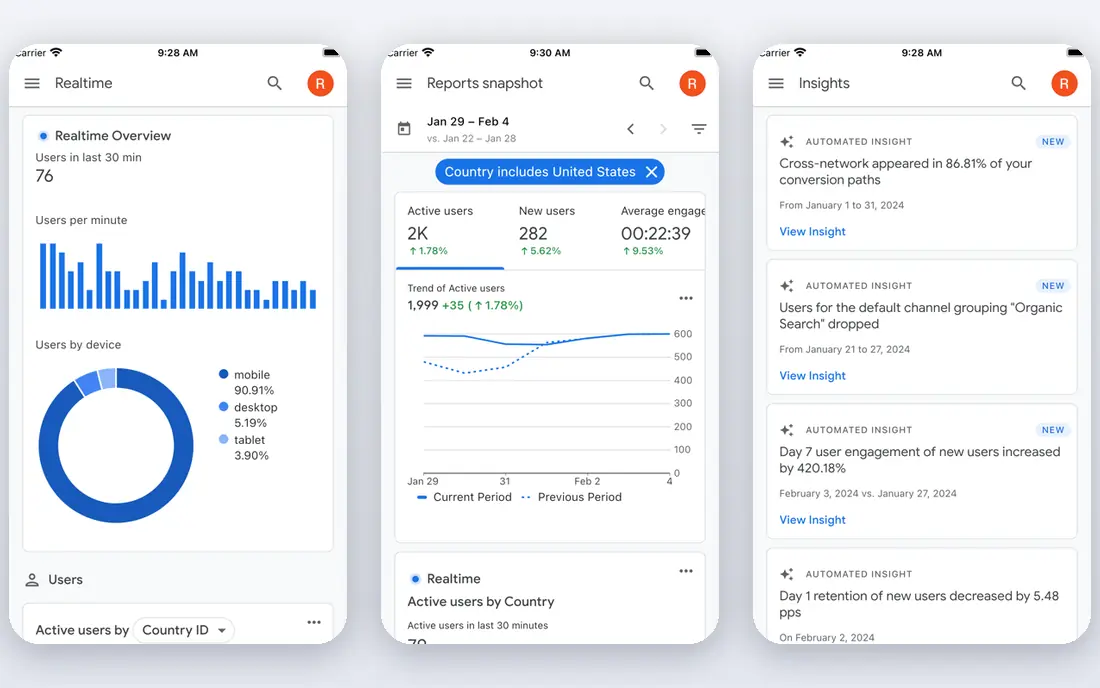
Google Analytics 4 is the default starting point for most sites. It tracks page views, purchases, signups, and custom events, and lets marketers mark key events as conversions. Its Google Ads integration means conversion data can feed ad optimization, much like Meta custom conversions do for Meta ads.
The interface takes time to learn, and privacy settings deserve attention, especially for sites in regulated regions. Even so, for a free, well-documented baseline, GA4 is hard to skip. Our pick for most sites is GA4, paired with a consent tool where required.
- Free with wide adoption and documentation
- Conversion events and audiences built in
- Integrates with Google Ads
- Interface can confuse beginners
- Data sampling and privacy settings need care
Segment
Ideal for: Customer data routing

Segment acts as a hub for customer data. Developers instrument events once, and Segment routes them to analytics, ad platforms, email tools, and warehouses. That consistency matters when teams otherwise track the same action differently in each tool, which leads to mismatched reports.
Volume-based pricing can grow quickly, and initial setup is a developer task. For product teams with several tools that must agree on conversion data, Segment is a strong foundation. Smaller sites may find GA4 alone is enough.
- Collects events once and sends them to many tools
- Consistent tracking across web and mobile
- Strong integrations
- Pricing scales with event volume
- Setup needs developer help
Mixpanel
Ideal for: Product event analytics
Mixpanel tracks what users do inside a product or site, then turns those events into funnels, retention curves, and cohort reports. Marketers can see which steps lose people before signup or purchase, and product teams can test changes against real behavior. That depth suits subscription products and apps.
For simple ad attribution, GA4 or an ad platform report may be simpler. For teams that need to understand user journeys after the click, Mixpanel is a strong pick. Use its free tier to test event design before scaling.
- Event and funnel analysis for products
- Retention and cohort reports
- Autocapture options
- Web marketing attribution is thinner than product analytics
- Costs rise with event volume
Amplitude
Ideal for: Product and funnel analytics
Amplitude competes with Mixpanel on product analytics, with a focus on visualizing user journeys, funnels, and retention. Teams can segment users, compare behaviors, and spot where conversions break down. Its starter tier lets smaller teams explore before paying.
Advanced features take time to master, and large event volumes move into quoted pricing. For data-driven product and growth teams, Amplitude is a credible alternative to Meta-only conversion tracking. Pair it with GA4 for a fuller marketing view.
- Deep funnel, retention, and journey analytics
- Strong visualization tools
- Generous starter tier for many teams
- Learning curve for advanced analysis
- Enterprise pricing for large volumes
Plausible
Ideal for: Privacy-friendly analytics
Plausible offers simple, privacy-friendly web analytics with goal tracking for conversions such as signups, purchases, and outbound clicks. Its script is lightweight, it avoids cookies by default, and its dashboard stays readable without training. Sites that want clean numbers without surveillance-style tracking will like it.
Complex funnel and audience analysis is thinner than GA4, so data-heavy teams may keep both. For blogs, small businesses, and privacy-conscious sites, Plausible is our pick for simple conversion tracking. Check its page-view pricing tiers before subscribing.
- Lightweight script with no cookies by default
- Simple dashboard focused on key metrics
- Goal conversion tracking included
- Less depth than GA4 for complex funnels
- Paid plans based on page views
Matomo
Ideal for: Self-hosted analytics
Matomo gives site owners a choice: hosted service or self-hosted software with full data ownership. It tracks goals, ecommerce conversions, funnels, and campaigns, with privacy controls such as IP anonymization and consent handling. Organizations that must keep data on their own servers often choose Matomo for that reason.
Self-hosting adds maintenance work, and the interface is less slick than Plausible or Fathom. For teams with strict data ownership rules, that trade is worth it. Matomo suits nonprofits, government sites, and privacy-sensitive businesses.
- Self-hosting option for full data ownership
- Goal and ecommerce conversion tracking
- Strong privacy controls
- Self-hosting needs server upkeep
- Interface feels dated beside newer tools
Fathom
Ideal for: Simple privacy analytics
Fathom keeps analytics simple and private, tracking page views and goal completions without cookies or personal data collection. Its dashboard shows the metrics most small sites need, and its script loads quickly. For owners who found GA4 overwhelming, Fathom is a relief.
Advanced segmentation and funnel depth are limited, so larger marketing teams may need more. For small sites that want honest conversion counts without complexity, Fathom is a strong, privacy-respecting pick.
- Simple dashboard with goal tracking
- Privacy-first design with no cookies
- Fast lightweight script
- Limited advanced segmentation
- Pricing based on page views
How we picked these
We compared official feature pages, pricing pages, and public documentation, looking for tools that track website conversions, events, or goals without depending on Meta. We favored tools that are actively maintained and work in October 2026, and we mixed free, privacy-first, and product analytics options. We did not claim hands-on testing, and we note that tracking rules and consent laws vary by region, so check local requirements.
We also weighed practical details that matter after signup. That included how easy each product is to set up, whether support answers promptly, and whether pricing stays clear as usage grows. We read user complaints as well as praise, since repeated complaints about billing, onboarding, or missing features often signal a real weakness. Where a product had a known limitation, we said so in its write-up rather than smoothing it over. Our goal was a shortlist that a reader can trust for meta custom conversions for web alternatives, not a list of every vendor in the market. Readers with unusual needs should still test their top two choices, since fit depends on budget, team size, and the features used every day.
What to check before you switch tracking
Start by listing the conversions that matter: purchases, signups, trial starts, or form completions. Define each one the same way across tools, or reports will disagree. Then check consent requirements for your visitors, and set up a consent tool where the law requires it, since tracking without consent can create legal risk.
Next, test event accuracy. Compare a new tool against orders or signups you can count directly, and fix double-counting or missing events before using the data for ad decisions. Keep Meta tracking if you still run Meta ads, and use these tools to add independent measurement, not just to replace one black box with another.
Testing your shortlist before you commit
A short trial answers questions that no comparison table can settle. Sign up for your top two choices, run a real task from your own work, and watch how long it takes and where you get stuck. For meta custom conversions for web alternatives, that real task might be a weekly workflow you repeat, a report you need every month, or a setup step your team must repeat for new members. If a tool slows that task down, it will cost time every week, no matter how good its feature list looks.
Pay attention to support during the trial as well. Send a question through the normal support channel and note how long a useful answer takes. Check billing clarity too: confirm what the trial includes, when it ends, and what the first paid invoice will actually show. A tool that is hard to cancel, or that hides fees until checkout, deserves caution.
Finally, ask who else on your team must use the tool. A product that only one person likes will stall, while a product the whole team adopts will pay for itself. Gather quick feedback from the people who will use it daily, compare their notes with your own, and then choose. That small amount of trial discipline prevents most bad purchases, and it costs far less than switching tools again in six months.
Budgeting the full cost, not just the headline price
Headline prices rarely tell the full story. Add up per-user fees, add-on charges, implementation help, and any training your team needs, then compare that total across your shortlist. A cheaper plan that needs three paid add-ons can end up costing more than a fuller plan from a rival. Check renewal terms as well, since introductory discounts often expire after the first term and the second year price is the one you will actually live with.
Think about exit costs too. Before you commit, confirm how your data exports, whether your content or history moves cleanly, and what happens if you pause or cancel. A tool with clean exports gives you freedom later, while a tool that locks data in makes switching painful. Choosing with the full cost and the exit path in mind keeps your meta custom conversions for web alternatives decision sound for the long term, not just for the first month.
Frequently asked questions
What are Meta custom conversions?
Meta custom conversions are rules that tell Meta which website actions count as conversions for ad reporting and optimization. They are set up in Meta Events Manager using Pixel or Conversions API data.
Can Google Analytics replace Meta custom conversions?
For measurement, yes in large part, since GA4 tracks conversions independently. For optimizing Meta ads, Meta still needs its own conversion signals, so many advertisers run both.
Which alternative is best for privacy?
Plausible, Fathom, and Matomo lead on privacy, with cookie-free options and data ownership controls. Check each privacy policy and data location before choosing.
Do I need developer help to set these up?
GA4, Plausible, and Fathom can be set up with a simple script or tag manager. Segment and advanced product analytics usually need developer time for event design.
How do I track conversions without cookies?
Privacy tools use aggregated, cookie-free measurement, and server-side tracking can reduce reliance on browser cookies. Accuracy may differ from cookie-based tracking, so compare against your own order data.