MLflow Alternatives in 2026: 8 Tools Compared

- Weights and Biases and Neptune lead on hosted experiment tracking with strong visualization.
- ClearML suits teams that want experiment tracking plus orchestration in one open platform.
- Comet and Aim cover tracking for teams that prefer hosted or lightweight self-hosted setups.
- TensorBoard and Kubeflow fit teams already invested in TensorFlow or Kubernetes.
- DVC adds data versioning, which experiment trackers alone do not solve.
Quick comparison
| Product | Ideal for | Price from | Free version | |
|---|---|---|---|---|
 Weights and Biases | Hosted experiment tracking | See website | Free trial | Visit |
 Neptune | Experiment metadata tracking | See website | Free trial | Visit |
 ClearML | Open experiment platform | See website | Yes | Visit |
 Comet | Experiment tracking platform | See website | Free trial | Visit |
 Aim | Lightweight experiment tracker | See website | Yes | Visit |
 TensorBoard | TensorFlow visualization tool | Free | Yes | Visit |
 Kubeflow | ML on Kubernetes | Free | Yes | Visit |
 DVC | Data and model versioning | Free | Yes | Visit |
The best MLflow alternatives
Our comparison drew on official feature and pricing pages, app store listings, privacy policies, and public reviews. The notes below give each option a fair hearing, including where it falls short.
Weights and Biases
Ideal for: Hosted experiment tracking
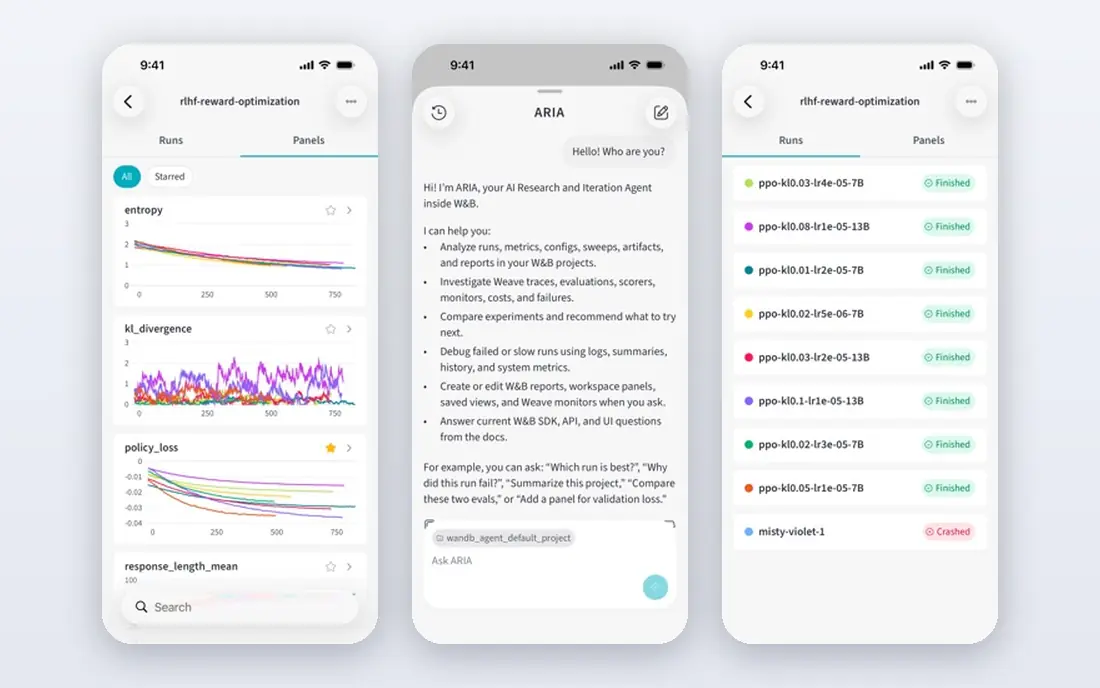
If Hosted experiment tracking is the job, start here: it offers rich experiment visuals, collaboration, and a model registry in a hosted platform. Teams can compare runs and share results without managing servers. It fits readers who want a practical option without a long setup, and it pairs well with the other choices on this list for comparison.
The honest catch is that paid tiers apply for teams, and the hosted model suits some buyers only. Pricing is quoted rather than published as a single list price, so check the vendor site for the current figure for your setup. That balance of strengths and limits is what kept it on the list, even though it is not the right pick for every reader.
- Rich experiment visuals
- Collaboration
- Model registry
- Paid tiers for teams
- Hosted model suits some only
Neptune
Ideal for: Experiment metadata tracking

This option suits Experiment metadata tracking well, since it tracks experiment metadata flexibly, with collaboration and wide integrations. Flexible metadata suits teams with varied model types and workflows. It fits readers who want a practical option without a long setup, and it pairs well with the other choices on this list for comparison.
What holds it back a little is that paid tiers apply at scale, and setup takes care. Pricing is quoted rather than published as a single list price, so check the vendor site for the current figure for your setup. That balance of strengths and limits is what kept it on the list, even though it is not the right pick for every reader.
- Flexible metadata tracking
- Collaboration
- Integrations
- Paid tiers for scale
- Setup takes care
ClearML
Ideal for: Open experiment platform
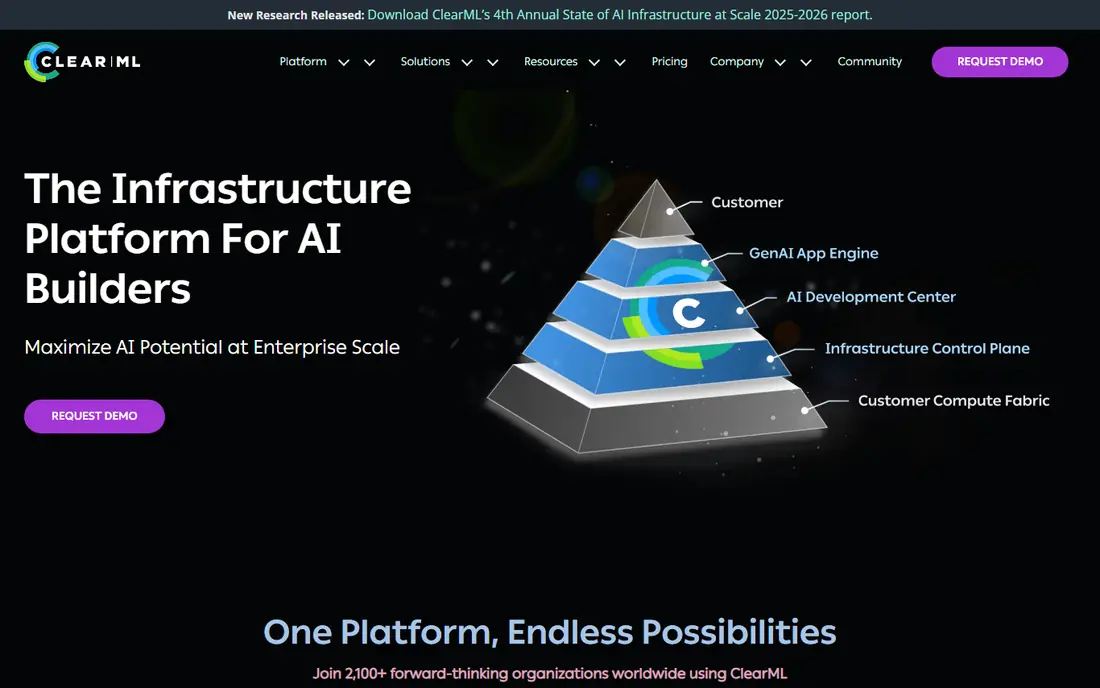
Buyers focused on Open experiment platform will find a lot to like, as it offers an open source core covering experiment tracking plus orchestration. Orchestration helps teams move from experiments to repeatable pipelines. It fits readers who want a practical option without a long setup, and it pairs well with the other choices on this list for comparison.
The downside to weigh is that self-hosting takes effort, and the interface is dense. Pricing is quoted rather than published as a single list price, so check the vendor site for the current figure for your setup. That balance of strengths and limits is what kept it on the list, even though it is not the right pick for every reader.
- Open source core
- Orchestration
- Experiment tracking
- Self-hosting takes effort
- Interface is dense
Comet
Ideal for: Experiment tracking platform
For teams or readers weighing Experiment tracking platform, this is a strong candidate because it provides experiment tracking with a model registry and collaboration tools. A clean run comparison view helps teams spot which changes actually improved results. It fits readers who want a practical option without a long setup, and it pairs well with the other choices on this list for comparison.
Before you commit, note that paid tiers apply for teams, and the focus is hosted. Pricing is quoted rather than published as a single list price, so check the vendor site for the current figure for your setup. That balance of strengths and limits is what kept it on the list, even though it is not the right pick for every reader.
- Experiment tracking
- Model registry
- Collaboration
- Paid tiers for teams
- Hosted focus
Aim
Ideal for: Lightweight experiment tracker
When Lightweight experiment tracker matters most, this option stands out for it offers a lightweight, open source tracker with a fast interface for run comparison. Its low overhead suits teams that want tracking without a heavy platform. It fits readers who want a practical option without a long setup, and it pairs well with the other choices on this list for comparison.
One limitation worth knowing is that the ecosystem is smaller, and enterprise features are fewer. Pricing is quoted rather than published as a single list price, so check the vendor site for the current figure for your setup. That balance of strengths and limits is what kept it on the list, even though it is not the right pick for every reader.
- Lightweight and open source
- Fast UI
- Run comparison
- Smaller ecosystem
- Fewer enterprise features
TensorBoard
Ideal for: TensorFlow visualization tool
For TensorFlow visualization tool, this one earns a close look because it visualizes metrics and graphs free, with strong TensorFlow integration. That visualization helps debug training runs in detail. It fits readers who want a practical option without a long setup, and it pairs well with the other choices on this list for comparison.
The trade-off is that its scope is narrower, and tracking features are basic compared with full platforms. There is no charge for the core product, though paid upgrades exist in most cases. That balance of strengths and limits is what kept it on the list, even though it is not the right pick for every reader.
- Free visualization
- TensorFlow integration
- Metrics and graphs
- Narrower scope
- Tracking features are basic
Kubeflow
Ideal for: ML on Kubernetes
If ML on Kubernetes is the job, start here: it runs machine learning workloads natively on Kubernetes, including pipelines. That native fit suits teams already standardized on Kubernetes. It fits readers who want a practical option without a long setup, and it pairs well with the other choices on this list for comparison.
The honest catch is that setup is complex, and Kubernetes expertise is needed. There is no charge for the core product, though paid upgrades exist in most cases. That balance of strengths and limits is what kept it on the list, even though it is not the right pick for every reader.
- Kubernetes-native ML
- Pipelines
- Open source
- Complex setup
- Kubernetes expertise needed
DVC
Ideal for: Data and model versioning
This option suits Data and model versioning well, since it versions data and models with Git integration, solving a problem trackers alone miss. Pipeline support ties data versions to reproducible runs. It fits readers who want a practical option without a long setup, and it pairs well with the other choices on this list for comparison.
What holds it back a little is that its focus is data versioning, not full experiment tracking, so pair it with a tracker. There is no charge for the core product, though paid upgrades exist in most cases. That balance of strengths and limits is what kept it on the list, even though it is not the right pick for every reader.
- Data versioning
- Git integration
- Pipeline support
- Focus is data, not full experiment tracking
How we picked these
We started from the topic itself and kept only products that exist, work in October 2026, and truly fit what a reader searching this topic would want. We compared official feature pages, pricing pages, app store listings, privacy policies, and public reviews, and we left out products whose pricing or core features we could not verify. Where a price was not published clearly, we wrote See website rather than guessing a figure.
We also gave weight to fit over fame. A well-known name stayed on the list only if it matched the topic, and a smaller option earned a place when it solved the same problem well. We did not claim hands-on testing that did not happen, and we noted honest weaknesses alongside the strengths for every option.
Choosing an MLflow alternative for your team
Start with how you run experiments. A hosted tracker suits teams that want fast setup, while a self-hosted open tool suits teams with strict data rules. That hosting choice narrows the list quickly.
Next, check model registry and collaboration needs. If models move to production, a registry with approvals matters. If research is exploratory, run comparison and visualization matter more than registry depth.
Finally, test with a real project. Track a full experiment, compare runs, and try to reproduce a result from the recorded metadata. A tracker that cannot reproduce a run cleanly will cause problems later, however pretty its charts look.
Frequently asked questions
What is MLflow used for?
MLflow tracks machine learning experiments, packages models, and manages a model registry. Teams use it to compare runs, reproduce results, and move models toward production.
Why look for an MLflow alternative?
Some teams want hosted convenience, better visualization, orchestration, or data versioning that MLflow handles lightly. Alternatives cover those gaps in different ways.
Are there free MLflow alternatives?
Yes, Aim, TensorBoard, Kubeflow, and DVC are free and open source, while hosted tools offer free trials or personal tiers. Team features are usually paid.
Do I need a model registry too?
If models reach production, a registry helps with versioning, approvals, and rollback. Exploratory teams can start with tracking alone and add a registry later.
Can I use DVC with an experiment tracker?
Yes, DVC pairs well with trackers, since it versions data while the tracker records runs. Together they make results more reproducible.