Best Nimble Alternatives in 2026: 7 Simple CRMs Compared

- HubSpot suits small businesses that want a free CRM with room to grow.
- Pipedrive suits sales teams that want visual pipelines and deal tracking.
- Zoho CRM and Freshsales suit budget-conscious teams that need broad CRM features.
- Insightly and Capsule suit small teams that want simple contact and project tracking.
- Copper suits teams that live in Google Workspace and want CRM inside Gmail.
Quick comparison
| Product | Ideal for | Price from | Free version | |
|---|---|---|---|---|
 HubSpot CRM | Free CRM with growth room | Free | Yes | Visit |
 Pipedrive | Visual sales pipelines | See website | Free trial | Visit |
 Zoho CRM | Affordable full CRM | See website | Yes | Visit |
 Insightly | Contacts plus projects | See website | Free trial | Visit |
 Capsule | Simple small business CRM | See website | Yes | Visit |
 Copper | CRM inside Google Workspace | See website | Free trial | Visit |
 Freshsales | Sales CRM with AI insights | See website | Yes | Visit |
The best Nimble alternatives
Nimble is a simple CRM that builds contact profiles from social and email data for small businesses. The tools below cover similar ground, from free CRMs to sales-focused pipelines. We compared official feature pages, pricing pages, and public documentation.
HubSpot CRM
Ideal for: Free CRM with growth room
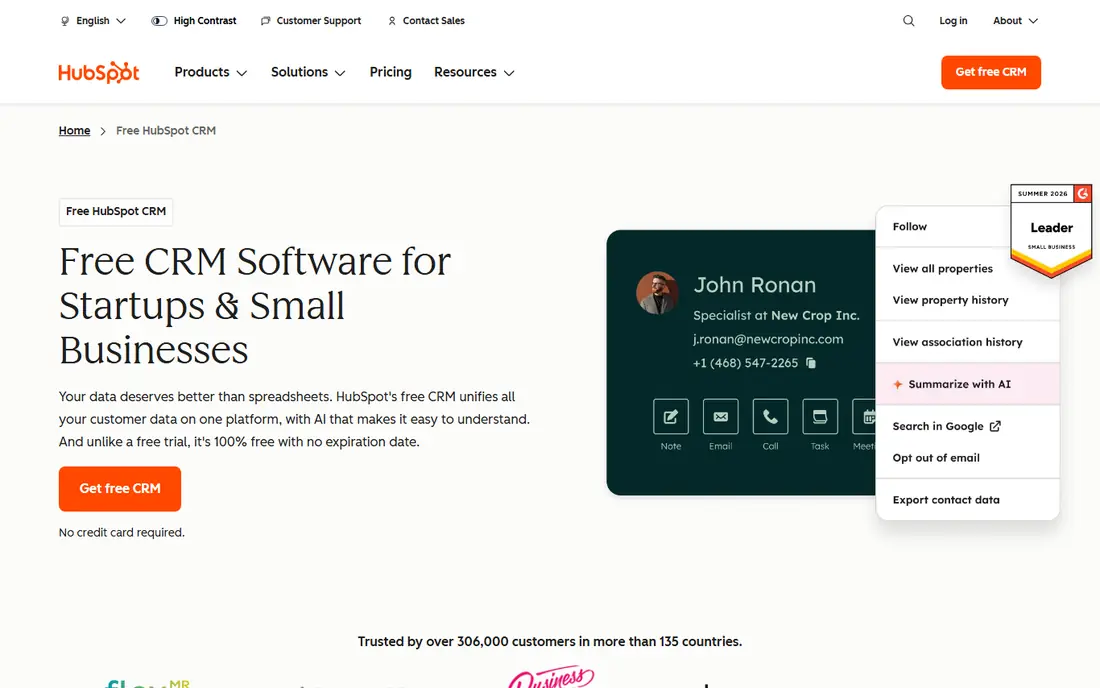
HubSpot CRM offers free contact management, deal pipelines, email tracking, and reporting, with room to add marketing, sales, and service hubs as a business grows. Its interface is polished, and its integrations cover common business tools. Small businesses can start free and upgrade only when needed.
Paid hubs can become costly, and full setup takes time. For a small business that wants a free CRM with a clear growth path, HubSpot is our pick. Start with the free CRM and add hubs only when they earn their cost.
- Free CRM with contacts, deals, and email tracking
- Strong integrations
- Scalable to marketing and service hubs
- Advanced features and higher tiers cost significantly more
- Setup takes time for full use
Pipedrive
Ideal for: Visual sales pipelines

Pipedrive focuses on sales pipelines, with visual deal boards, activity reminders, and forecasting that help sales teams close deals. Its interface is simple enough for non-technical sellers, and its automation handles routine follow-ups. That sales focus suits teams whose main CRM job is winning deals.
Marketing automation and service features are thinner than HubSpot. For a sales-led small business, Pipedrive is a strong pick. Trial it with your real pipeline stages first.
- Visual pipelines that sales teams love
- Activity reminders and deal tracking
- Easy setup for sales workflows
- Less marketing automation than HubSpot
- Pricing is per user
Zoho CRM
Ideal for: Affordable full CRM
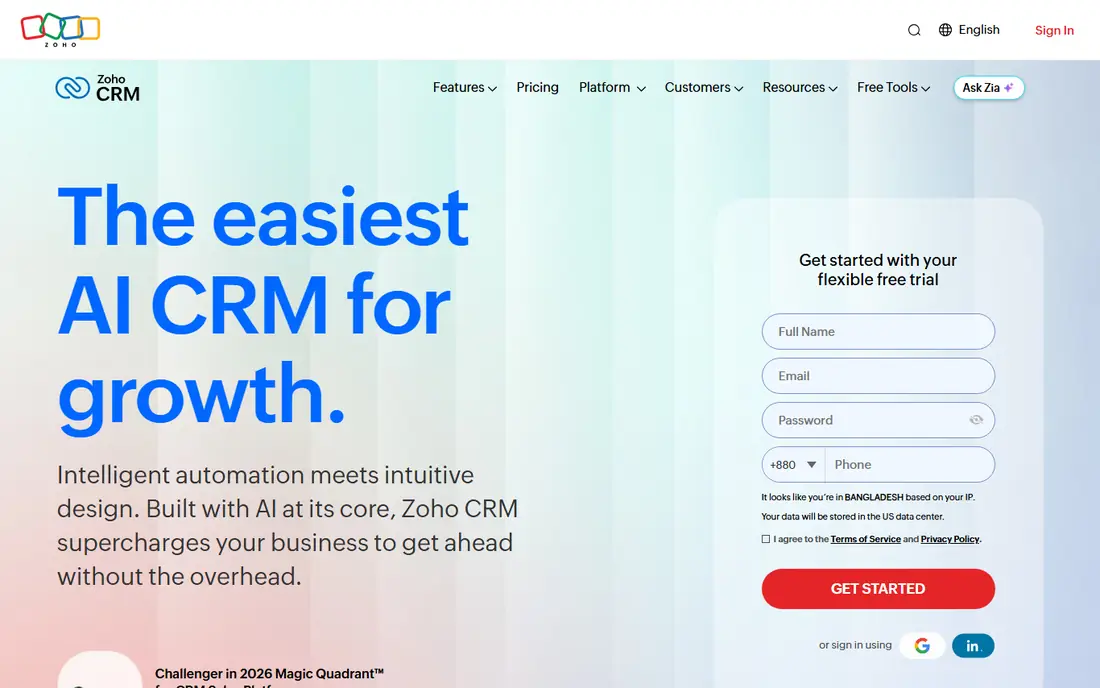
Zoho CRM offers a broad feature set at prices below many rivals, with leads, contacts, deals, automation, analytics, and integrations across Zoho apps. Its free tier suits very small teams, while paid tiers add workflow depth. That value appeals to budget-conscious businesses.
The interface can feel crowded, and advanced setup takes learning time. For a business that wants full CRM features affordably, Zoho CRM is a strong pick. Zoho users get extra value from shared data across apps.
- Broad CRM features at affordable prices
- Automation, analytics, and integrations
- Free tier for small teams
- Interface can feel busy
- Learning curve for advanced features
Insightly
Ideal for: Contacts plus projects
Insightly combines CRM with project management, letting service businesses track contacts, opportunities, and delivery projects in one system. That blend suits consultancies, agencies, and trades that sell a project and then deliver it. Its reporting covers sales and project progress together.
Sales automation depth is thinner than Pipedrive or HubSpot. For a service business that needs CRM plus projects, Insightly is a practical pick. Trial it with a real client project to judge workflow fit.
- CRM beside project management
- Contact and opportunity tracking
- Good for service businesses
- Less sales automation depth than Pipedrive
- Interface feels dated in places
Capsule
Ideal for: Simple small business CRM
Capsule keeps CRM simple: contacts, pipelines, tasks, and history in a clean interface that small teams learn quickly. Its free tier covers small teams, and paid tiers add users and features without complexity. That simplicity suits businesses that found larger CRMs overwhelming.
Advanced automation, marketing, and reporting are thinner than bigger rivals. For a small team that wants a simple CRM that staff will actually use, Capsule is a good pick. It is closest in spirit to Nimble simplicity on this list.
- Very simple CRM with contacts, pipelines, and tasks
- Easy setup
- Free tier for small teams
- Fewer advanced features than HubSpot or Zoho
- Smaller integration set
Copper
Ideal for: CRM inside Google Workspace
Copper builds CRM inside Gmail and Google Workspace, automatically capturing contacts, emails, and calendar events into pipelines. Google-based teams can manage relationships without leaving Gmail, which boosts adoption. Its interface is clean and its setup is quick for Google shops.
Teams outside Google Workspace get less value. For a Google-based small business that wants CRM in Gmail, Copper is a strong pick. Check current plan limits for contacts and pipelines.
- CRM inside Gmail and Google Workspace
- Automatic contact and email capture
- Simple pipeline management
- Best inside Google Workspace
- Pricing is per user
Freshsales
Ideal for: Sales CRM with AI insights
Freshsales, from Freshworks, offers sales CRM with pipelines, email, phone, and AI lead scoring that prioritizes promising deals. Its free tier suits small teams, while paid tiers add automation and AI insights. That blend suits sales teams that want smart prioritization without enterprise cost.
Learning the Freshworks ecosystem takes time, and AI features sit on higher tiers. For a sales team that wants AI-assisted prioritization affordably, Freshsales is a good pick. Trial its lead scoring on your real pipeline.
- Sales CRM with AI lead scoring and insights
- Pipelines, email, and phone tools
- Free tier available
- Freshworks ecosystem learning curve
- Advanced AI features need higher tiers
How we picked these
We compared official feature pages, pricing pages, and public documentation, looking for simple CRM, contact management, or pipeline features that match Nimble. We favored tools that are actively maintained and work in October 2026, and we mixed free CRMs with sales-focused options. We did not claim hands-on testing, and we note that pricing is often per user, so model costs for your team size.
We also weighed practical details that matter after signup. That included how easy each product is to set up, whether support answers promptly, and whether pricing stays clear as usage grows. We read user complaints as well as praise, since repeated complaints about billing, onboarding, or missing features often signal a real weakness. Where a product had a known limitation, we said so in its write-up rather than smoothing it over. Our goal was a shortlist that a reader can trust for nimble alternatives, not a list of every vendor in the market. Readers with unusual needs should still test their top two choices, since fit depends on budget, team size, and the features used every day.
What to check before you choose
Start with your main CRM job: contact tracking, sales pipelines, or service projects. Each job favors a different tool, and a sales pipeline tool will frustrate a team that mainly needs contact history. List must-haves such as email integration, mobile access, automation, or reporting.
Next, trial with real contacts and deals. Check import ease, duplicate handling, and mobile usability, since a CRM that staff avoid is worthless. Also confirm export options, so you can leave later without losing history. A trial with your actual pipeline will reveal adoption fit.
Testing your shortlist before you commit
A short trial answers questions that no comparison table can settle. Sign up for your top two choices, run a real task from your own work, and watch how long it takes and where you get stuck. For nimble alternatives, that real task might be a weekly workflow you repeat, a report you need every month, or a setup step your team must repeat for new members. If a tool slows that task down, it will cost time every week, no matter how good its feature list looks.
Pay attention to support during the trial as well. Send a question through the normal support channel and note how long a useful answer takes. Check billing clarity too: confirm what the trial includes, when it ends, and what the first paid invoice will actually show. A tool that is hard to cancel, or that hides fees until checkout, deserves caution.
Finally, ask who else on your team must use the tool. A product that only one person likes will stall, while a product the whole team adopts will pay for itself. Gather quick feedback from the people who will use it daily, compare their notes with your own, and then choose. That small amount of trial discipline prevents most bad purchases, and it costs far less than switching tools again in six months.
Budgeting the full cost, not just the headline price
Headline prices rarely tell the full story. Add up per-user fees, add-on charges, implementation help, and any training your team needs, then compare that total across your shortlist. A cheaper plan that needs three paid add-ons can end up costing more than a fuller plan from a rival. Check renewal terms as well, since introductory discounts often expire after the first term and the second year price is the one you will actually live with.
Think about exit costs too. Before you commit, confirm how your data exports, whether your content or history moves cleanly, and what happens if you pause or cancel. A tool with clean exports gives you freedom later, while a tool that locks data in makes switching painful. Choosing with the full cost and the exit path in mind keeps your nimble alternatives decision sound for the long term, not just for the first month.
Frequently asked questions
What does Nimble do?
Nimble is a simple CRM that builds enriched contact profiles from social media and email, helping small businesses manage relationships without a complex enterprise CRM.
Which Nimble alternative is free?
HubSpot CRM, Zoho CRM, Capsule, and Freshsales all offer free tiers for small teams. Check contact, user, and feature limits on each free plan before relying on it.
Which CRM is best for small sales teams?
Pipedrive suits visual pipeline selling, while HubSpot suits teams that want free CRM with growth room. Copper suits Google Workspace teams that live in Gmail.
Can I import contacts from Nimble?
Yes, most CRMs offer CSV import and migration tools, and some offer assisted migration. Test import with a sample file and check duplicate handling before moving your full list.
Do I need a CRM if I use spreadsheets?
Spreadsheets work for tiny lists, but a CRM adds reminders, history, pipelines, and team visibility as contacts grow. Switch when follow-ups start slipping through spreadsheet gaps.