Best Nylas Alternatives in 2026: 7 Email and Calendar API Tools Compared

- Cronofy suits developers who need calendar scheduling APIs specifically.
- Unified.to, Merge, and Apideck suit teams that need many integrations through one API.
- Paragon suits teams that need unified SaaS integrations with managed authentication.
- Microsoft Graph and Google Workspace APIs suit teams standardized on those platforms.
- Check provider coverage, since unified APIs differ in which email and calendar services they support.
Quick comparison
| Product | Ideal for | Price from | Free version | |
|---|---|---|---|---|
 Cronofy | Calendar scheduling APIs | See website | Free trial | Visit |
 Unified.to | Unified integrations API | See website | Free trial | Visit |
 Merge | Unified HR and CRM APIs | See website | Free trial | Visit |
 Apideck | Unified business APIs | See website | Free trial | Visit |
 Paragon | Unified SaaS integrations | See website | Free trial | Visit |
 Microsoft Graph | APIs inside Microsoft 365 | See website | Free trial | Visit |
 Google Workspace APIs | APIs inside Google Workspace | See website | Free trial | Visit |
The best Nylas alternatives
Nylas provides APIs for email, calendar, and contacts, letting apps sync mailboxes without building each provider integration separately. The tools below cover similar ground, from calendar-specific APIs to unified integration platforms. We compared official documentation, pricing pages, and public developer guides.
Cronofy
Ideal for: Calendar scheduling APIs
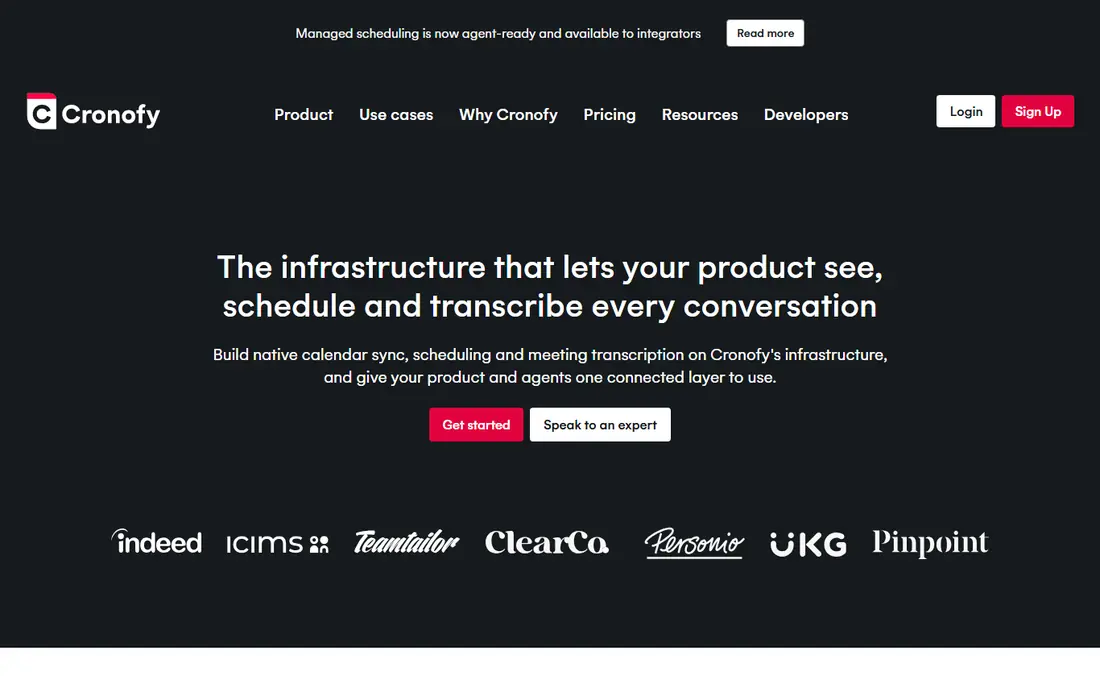
Cronofy focuses on calendar integrations, with APIs for availability, scheduling, event sync, and smart invites across Google, Microsoft, Apple, and other providers. Its scheduling UI components help apps add booking flows without building them from scratch. That focus suits scheduling products, CRMs, and HR tools.
Email features are thinner than Nylas, so email-heavy apps need another API beside it. For a calendar-first product, Cronofy is our pick for depth and provider coverage. Trial it with your target calendar providers first.
- Calendar APIs for scheduling, availability, and events
- Supports Google, Microsoft, Apple, and others
- Strong scheduling UI components
- Calendar focus means less email depth
- Pricing scales with connected accounts
Unified.to
Ideal for: Unified integrations API
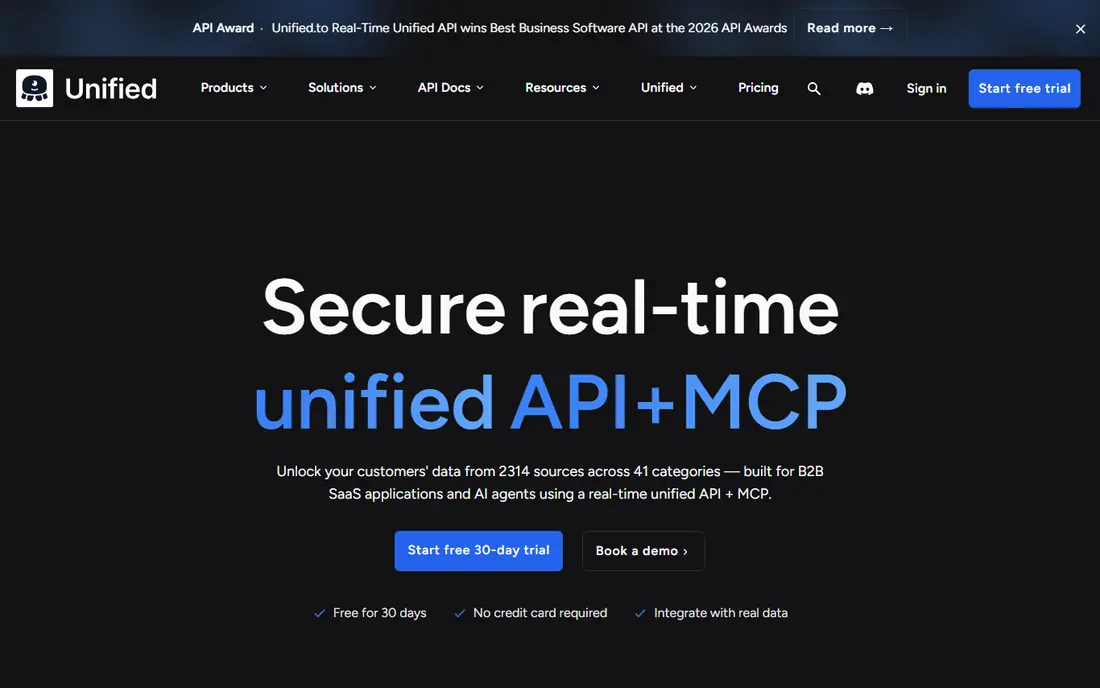
Unified.to offers a unified API across many SaaS categories, including messaging, calendar, CRM, HR, and accounting, letting developers add integrations without building each one separately. Its setup is fast, and real-time sync options suit apps that need fresh data. That breadth appeals to SaaS teams adding many integrations.
Category depth varies, so check email and calendar coverage specifically for your needs. For a team that wants many integrations through one API, Unified.to is a strong pick. Test it against your top three integration targets.
- One API for many SaaS categories including messaging and calendar
- Fast integration setup
- Real-time sync options
- Newer platform with a smaller ecosystem
- Category coverage varies
Merge
Ideal for: Unified HR and CRM APIs
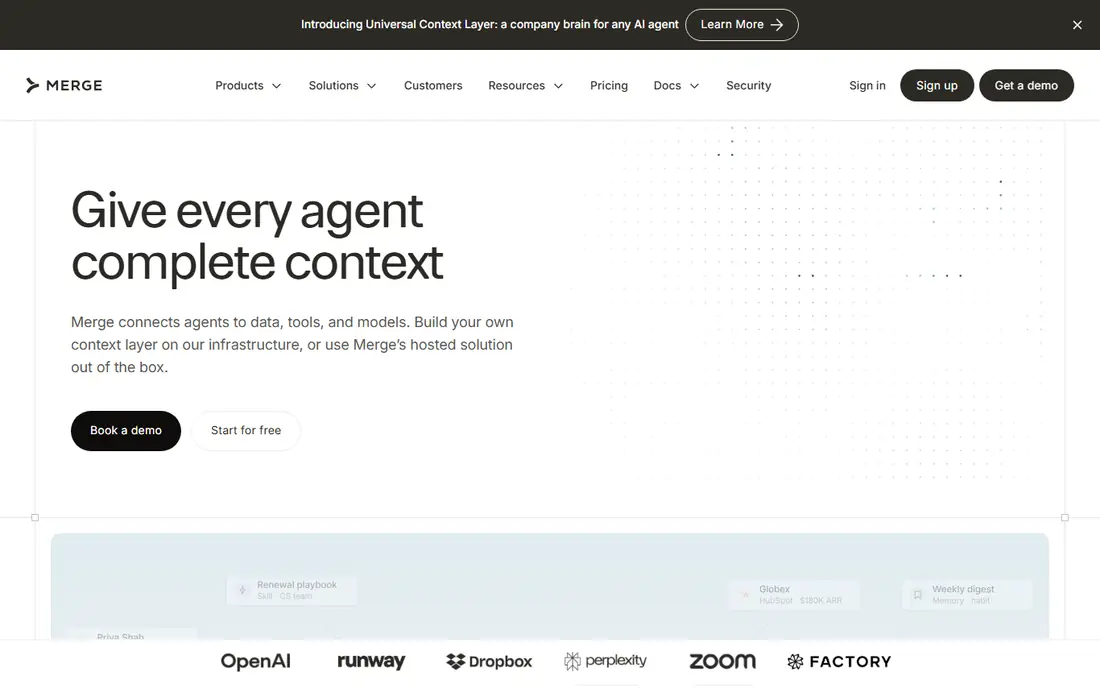
Merge provides unified APIs for HR, payroll, CRM, accounting, and other categories, normalizing data across providers so apps handle one model instead of many. Its docs and support are strong, and its coverage suits B2B SaaS teams adding customer integrations. That normalization saves significant engineering time.
Direct email and calendar API depth is thinner than Nylas or Cronofy, so email-first apps should check coverage carefully. For a B2B SaaS team that needs many business integrations, Merge is a leading pick. Ask for a coverage check for your target providers.
- Unified APIs with normalized data models
- Strong HR, CRM, and accounting coverage
- Good docs and support
- Email and calendar coverage is thinner than Nylas
- Pricing is quoted for many plans
Apideck
Ideal for: Unified business APIs
Apideck offers unified APIs across business software categories, with a vault that lets end customers connect their accounts securely. Developers build once against Apideck models, then support many providers. That approach suits SaaS apps that need customer integrations quickly.
Email-specific features are less deep than Nylas, so check whether your email use case fits its messaging coverage. For a SaaS team adding business integrations broadly, Apideck is a practical pick. Trial it with your most important integration first.
- Unified APIs for CRM, HR, accounting, and more
- Vault for managing customer connections
- Good developer docs
- Email API depth varies by category
- Newer vendor than Merge
Paragon
Ideal for: Unified SaaS integrations
Paragon gives SaaS teams a unified integration platform, with managed authentication and a workflow builder for syncing data across customer apps. Developers build integrations once against Paragon models, then support many providers without handling each OAuth flow separately. That approach suits B2B apps adding customer integrations quickly.
Direct email and calendar API depth varies by category, so email-first apps should check coverage for their specific providers. For a SaaS team that needs many integrations through one platform, Paragon is a practical pick. Test it against your top three integration targets.
- Unified integrations across many SaaS categories with managed authentication
- Workflow builder for integration logic
- Good developer docs
- Email and calendar depth varies by category
- Pricing is quoted for many plans
Microsoft Graph
Ideal for: APIs inside Microsoft 365
Microsoft Graph gives developers native APIs for Outlook mail, calendars, Teams, OneDrive, and other Microsoft 365 services, with identity and security built on Azure AD. Apps standardized on Microsoft get deep, reliable access without a third-party layer. That native fit suits enterprise tools for Microsoft shops.
Multi-provider apps need separate Google and other integrations beside Graph. For a Microsoft-only product, Graph is the natural Nylas replacement and costs nothing beyond Microsoft licensing in many cases. Check permission scopes carefully for user consent.
- Native APIs for Outlook mail, calendar, Teams, and files
- Deep Microsoft 365 integration
- Strong identity and security
- Microsoft-only coverage
- Building multi-provider support needs extra work
Google Workspace APIs
Ideal for: APIs inside Google Workspace
Google Workspace APIs give native access to Gmail, Calendar, Drive, and Contacts, with extensive docs, samples, and client libraries. Apps for Google Workspace users get reliable sync without a third-party layer, and pricing is generally included in Google Cloud usage. That native fit suits Google-centric products.
Multi-provider support needs separate Microsoft and other integrations, and sensitive Gmail scopes require Google OAuth verification. For a Google-only product, these APIs are the natural pick. Plan verification time for sensitive scopes early.
- Native APIs for Gmail, Calendar, Drive, and Contacts
- Reliable Google integration
- Extensive docs and samples
- Google-only coverage
- OAuth verification needed for sensitive scopes
How we picked these
We compared official documentation, pricing pages, and public developer guides, looking for email, calendar, or unified API features that match Nylas. We favored tools that are actively maintained and work in October 2026, and we mixed unified platforms with native provider APIs. We did not claim hands-on testing, and we note that provider coverage varies, so verify your target mail and calendar services.
We also weighed practical details that matter after signup. That included how easy each product is to set up, whether support answers promptly, and whether pricing stays clear as usage grows. We read user complaints as well as praise, since repeated complaints about billing, onboarding, or missing features often signal a real weakness. Where a product had a known limitation, we said so in its write-up rather than smoothing it over. Our goal was a shortlist that a reader can trust for nylas alternatives, not a list of every vendor in the market. Readers with unusual needs should still test their top two choices, since fit depends on budget, team size, and the features used every day.
What to check before you choose
Start with your provider list: which email and calendar services must your app support. Unified APIs save time across many providers, while native APIs give deeper access inside one ecosystem. Check sync reliability, webhook support, and rate limits for your expected volume.
Next, test auth and consent flows with real accounts. Users must trust your app with mailbox access, so permission scopes should be minimal and clearly explained. Also check data handling: where synced data is stored, how long it is kept, and what security certifications apply. A pilot with a few test accounts will reveal sync gaps early.
Testing your shortlist before you commit
A short trial answers questions that no comparison table can settle. Sign up for your top two choices, run a real task from your own work, and watch how long it takes and where you get stuck. For nylas alternatives, that real task might be a weekly workflow you repeat, a report you need every month, or a setup step your team must repeat for new members. If a tool slows that task down, it will cost time every week, no matter how good its feature list looks.
Pay attention to support during the trial as well. Send a question through the normal support channel and note how long a useful answer takes. Check billing clarity too: confirm what the trial includes, when it ends, and what the first paid invoice will actually show. A tool that is hard to cancel, or that hides fees until checkout, deserves caution.
Finally, ask who else on your team must use the tool. A product that only one person likes will stall, while a product the whole team adopts will pay for itself. Gather quick feedback from the people who will use it daily, compare their notes with your own, and then choose. That small amount of trial discipline prevents most bad purchases, and it costs far less than switching tools again in six months.
Budgeting the full cost, not just the headline price
Headline prices rarely tell the full story. Add up per-user fees, add-on charges, implementation help, and any training your team needs, then compare that total across your shortlist. A cheaper plan that needs three paid add-ons can end up costing more than a fuller plan from a rival. Check renewal terms as well, since introductory discounts often expire after the first term and the second year price is the one you will actually live with.
Think about exit costs too. Before you commit, confirm how your data exports, whether your content or history moves cleanly, and what happens if you pause or cancel. A tool with clean exports gives you freedom later, while a tool that locks data in makes switching painful. Choosing with the full cost and the exit path in mind keeps your nylas alternatives decision sound for the long term, not just for the first month.
Frequently asked questions
What does Nylas do?
Nylas provides APIs for email, calendar, and contacts, letting apps sync and interact with user mailboxes across providers without building each integration separately.
Which Nylas alternative is best for calendar only?
Cronofy leads for calendar-specific APIs, with scheduling, availability, and event sync across major providers. Native Google and Microsoft APIs also suit single-platform calendar apps.
Do unified APIs replace native provider APIs?
For many apps, yes, since they normalize data across providers and handle sync. For deep, provider-specific features, native APIs may still be needed beside a unified layer.
How is unified API pricing set?
Most charge by connected accounts, API calls, or features, with free tiers or trials for testing. Model costs for your expected customer account count.
Is mailbox access safe for users?
Reputable APIs use OAuth consent, minimal scopes, encryption, and audit logs. Users should see exactly what your app can access, and you should store as little mailbox data as possible.