Oilfield Software Alternatives in 2026: 7 Systems Compared

- 1
 Peloton WellViewWell data across the lifecycleVisit
- 2
 Peloton RigViewRig scheduling and coordinationVisit
- 3
 RigEROilfield rental and service operationsVisit
- 4
 Quorum Production OperationsDaily production reporting workflowsVisit
- 5
 SLB AvocetMulti-asset production accountingVisit
- Peloton WellView and RigView cover the well lifecycle and rig scheduling on one shared platform, which suits operators with many wells.
- RigER fits service and rental companies that need quotes, dispatch, field tickets and invoicing in one system.
- Quorum and SLB Avocet suit production accounting and reporting, with Quorum strong on daily workflows and Avocet on multi-asset control.
- PakEnergy and WellDatabase cover accounting and well data research for smaller operators and land-focused teams.
Quick comparison
| Product | Ideal for | Price from | Free version | |
|---|---|---|---|---|
| Peloton WellView | Well data across the lifecycle | See website | No | Visit |
| Peloton RigView | Rig scheduling and coordination | See website | No | Visit |
| RigER | Oilfield rental and service operations | See website | No | Visit |
| Quorum Production Operations | Daily production reporting workflows | See website | No | Visit |
| SLB Avocet | Multi-asset production accounting | See website | No | Visit |
 PakEnergy | Oil and gas accounting | See website | No | Visit |
 WellDatabase | Well data research and tracking | See website | Free trial | Visit |
The best oilfield software alternatives
Oilfield software is a broad category, from well data and drilling to production accounting and field service billing, and no single product covers it all. The seven systems below are established alternatives used by operators, service companies and rental firms today. We compared official product pages and industry coverage to match each system to the job it does best.
Peloton WellView
Ideal for: Well data across the lifecycle

Peloton WellView is the well data system at the heart of the Peloton Platform, carrying a well's record from planning and drilling through completions, production, abandonment and reclamation. Operations, engineering and accounting teams work from the same record instead of reconciling separate spreadsheets.
Because WellView connects to Peloton's production, land and scheduling tools, it suits operators that want one data foundation across the lifecycle. Pricing is quoted and implementation is a project, so it fits operators with real well counts rather than a single-well shop.
- Manages the well record from planning through abandonment
- Shared data across operations and engineering
- Part of the wider Peloton Platform
- Enterprise pricing is quoted
- Implementation takes planning for large well counts
Peloton RigView
Ideal for: Rig scheduling and coordination
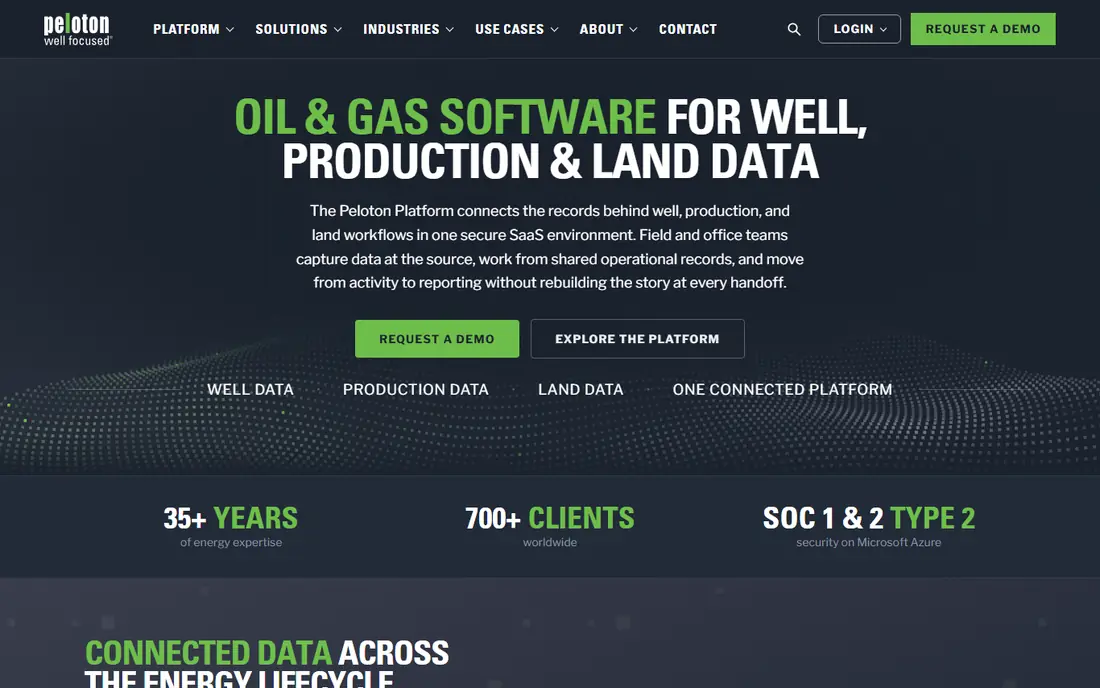
Peloton RigView handles rig and service scheduling across the well lifecycle, helping teams coordinate drilling, completions, interventions and abandonments from one calendar. Visual tools flag conflicts before a rig is double-booked, and drag-and-drop changes keep plans current.
RigView is strongest when paired with WellView, since scheduling decisions then draw on the same well data. For an operator juggling many rigs and service crews, that coordination is where RigView earns its place.
- Central scheduling across drilling, completions and interventions
- Conflict alerts before double-booking
- Works with WellView data
- Most valuable alongside other Peloton tools
- Enterprise pricing is quoted
RigER
Ideal for: Oilfield rental and service operations
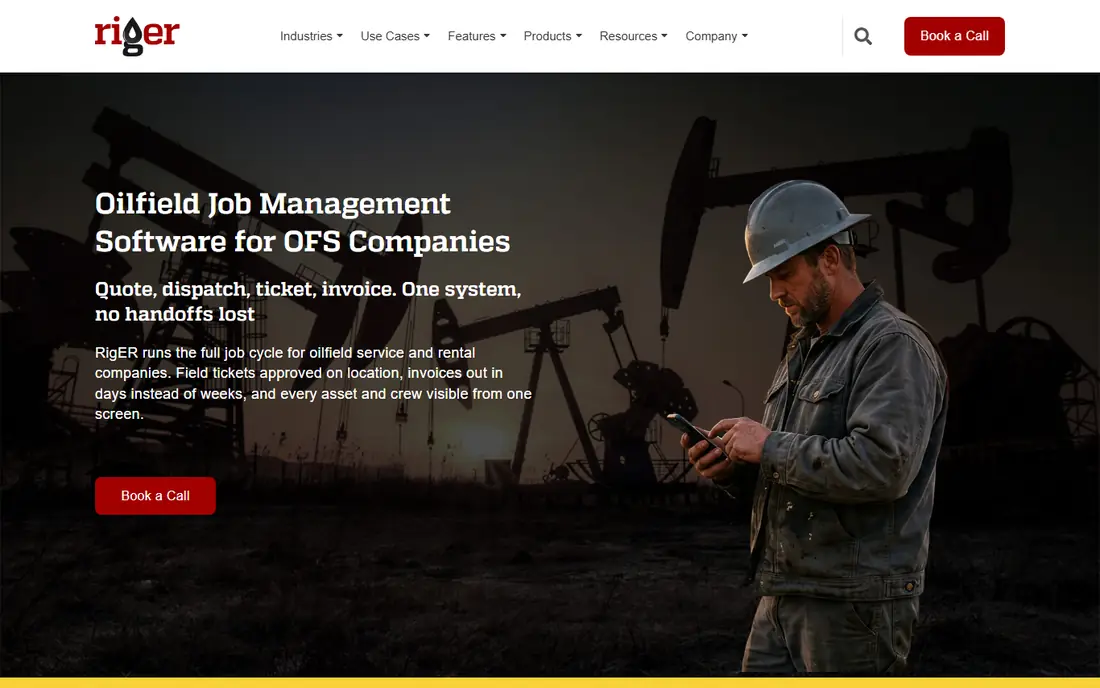
RigER is built for oilfield service and equipment rental companies, managing the job from client request and quote through dispatch, field tickets and final invoice. It tracks equipment and rental days, handles billing by location, and supports mobile shop and yard check-in with inspection cards.
The latest release adds dashboards for invoicing, rework and location history, plus accounting integrations. For a rental or service firm still running jobs on spreadsheets and paper tickets, RigER is a purpose-built alternative worth a demo.
- Covers quotes to invoices for rental and service work
- Field tickets, dispatch and billing in one flow
- Mobile check-in and inspection cards
- Built for service and rental firms, not operators
- Pricing is quoted
Quorum Production Operations
Ideal for: Daily production reporting workflows
Quorum Production Operations focuses on the daily reporting workflow: field volumes, allocations and approvals with traceable changes, so reported numbers stand up to internal review and regulatory questions. That audit trail is its main strength over spreadsheet reporting.
It sits inside Quorum's wider energy software suite, which covers land, accounting and planning, so operators already using Quorum get a natural fit. For a team whose pain is daily reporting discipline, Quorum is a strong shortlist option.
- Repeatable daily reporting with approvals
- Traceable changes for audits
- Part of a wider energy software suite
- Enterprise pricing is quoted
- Best value as part of a Quorum deployment
SLB Avocet
Ideal for: Multi-asset production accounting
SLB Avocet is a production accounting platform for operators that need controlled, auditable outputs across many assets, tying reported volumes back to measurement lineage. That control matters when allocations feed revenue, royalties and regulatory filings.
Avocet is an enterprise product from SLB, with implementation to match, so it suits multi-asset operators rather than small shops. If production accounting accuracy is the top priority, Avocet is one of the established leaders to evaluate.
- Controlled production accounting outputs
- Measurement lineage tied to results
- Suits multi-asset operators
- Enterprise scope and pricing
- Implementation is a significant project
PakEnergy
Ideal for: Oil and gas accounting
PakEnergy provides accounting software designed for oil and gas operators, covering revenue distribution, joint interest billing, accounts payable and reporting in workflows that match how the industry actually books production and costs. That specialization saves the customization generic accounting tools demand.
It is an accounting system first, so field operations and well data need other tools alongside it. For an operator whose accounting is the bottleneck, PakEnergy is a focused and credible alternative.
- Accounting built for oil and gas workflows
- Revenue, joint interest and reporting modules
- Cloud and on-premises options
- Accounting focus means less field operations depth
- Pricing is quoted
WellDatabase
Ideal for: Well data research and tracking
WellDatabase is a web-based well data platform for researching wells, production, permits and operators, useful for scouting acreage, checking nearby activity and supporting due diligence. Its search-first design makes it quick to learn compared with full operations suites.
Coverage varies by basin and it does not replace an operations or accounting system, so treat it as a research and tracking tool alongside your core software. For land, business development and small-operator teams, it is a practical and affordable option.
A further factor is offline and field reliability. Rigs, yards and remote sites often have poor connectivity, so test how each system behaves without signal: can field staff enter tickets, check schedules and record data offline, and does it sync cleanly later. A system that only works well in the office will produce gaps in exactly the field data managers rely on.
- Searchable well, production and permit data
- Useful for scouting and due diligence
- Web based and easy to start
- Data coverage varies by basin
- Not a full operations system
How we picked these
We compared official product pages, vendor documentation and recent industry coverage, focusing on which part of the oilfield each system serves: well data, scheduling, service operations, production accounting or research. We favored systems that are actively sold today and used by real operators or service firms.
We left out generic project or accounting tools that are not built for oil and gas, since the industry's data models for wells, production and joint interest billing are specific. A system made this list only if its oilfield focus is clear from its own product pages.
How to choose oilfield software for your operation
Start by naming the job that hurts most. An operator drowning in well data needs WellView or WellDatabase. A service firm losing money on tickets needs RigER. An operator failing audits on production numbers needs Quorum or Avocet. Buying a system for a different job wastes money no matter how good the software is.
Ask about data migration before price
Well histories, production records and land data are hard to move, and migration cost often exceeds the first year of licenses. Ask each vendor for a migration plan, a sample import of your real data, and references from a company of your size that migrated recently.
Check field usability, not just office features
Field staff will use the system in yards, on rigs and in trucks, often with poor connectivity. Test mobile check-in, offline behavior and ticket entry with real field users during the trial. A system the field refuses to use produces data nobody trusts.
Plan for integration with accounting
Operations data eventually becomes money: invoices, revenue and royalties. Confirm how the system connects to your accounting tool, whether through built-in modules or integrations, and test one full cycle from field ticket to invoice before signing.
Frequently asked questions
What is the best oilfield software?
It depends on the job. Peloton WellView leads for well data, RigER leads for rental and service operations, and Quorum and SLB Avocet lead for production accounting. Most operators use more than one system across these jobs.
What does oilfield software do?
It manages the data and workflows of oil and gas operations: well records, rig scheduling, field tickets, production volumes, allocations, accounting and reporting. Different products cover different slices, from drilling to revenue.
Is oilfield software expensive?
Most established systems are enterprise priced and quoted, since implementation and migration are significant. Research tools like WellDatabase are more affordable. Get a total first-year quote including implementation, not just licenses.
Can small operators use these systems?
Some can, especially research tools and service-focused systems like RigER for service firms. Large operator suites like WellView and Avocet are built for companies with many wells and justify their cost at that scale.
How long does implementation take?
Research tools can start in days, service systems in weeks, and enterprise well or accounting suites in months, depending on well count and data migration. Ask for a phased plan that delivers one working workflow first.
Do oilfield systems work offline in the field?
Some do, with mobile apps that cache data and sync when connectivity returns, while others need a live connection. Test offline entry, photo capture and sync behavior with real field users during the trial, since field reliability decides whether data gets recorded at all.