Best Perdoo Alternatives in 2026: 7 OKR and Goal Tools Compared

- 1
 LatticeGoals plus performanceVisit
- 2
 WeekdoneSimple OKR check-insVisit
- 3
 BetterworksEnterprise goals and performanceVisit
- 4
 Microsoft Viva GoalsOKRs inside Microsoft 365Visit
- 5
 QuantiveOKR strategy platformVisit
- Lattice and Betterworks suit companies that want goals beside performance reviews.
- Weekdone suits small teams that want simple weekly OKR check-ins.
- Microsoft Viva Goals suits organizations already on Microsoft 365.
- Quantive, WorkBoard, and Mooncamp suit teams that need deeper OKR strategy features.
- Pick a tool teams will update weekly, since an unused OKR tool helps no one.
Quick comparison
| Product | Ideal for | Price from | Free version | |
|---|---|---|---|---|
| Lattice | Goals plus performance | See website | No | Visit |
| Weekdone | Simple OKR check-ins | See website | Yes | Visit |
| Betterworks | Enterprise goals and performance | See website | No | Visit |
| Microsoft Viva Goals | OKRs inside Microsoft 365 | See website | No | Visit |
| Quantive | OKR strategy platform | See website | Free trial | Visit |
 WorkBoard | Enterprise OKR execution | See website | No | Visit |
 Mooncamp | Flexible OKR tracking | See website | Yes | Visit |
The best Perdoo alternatives
Perdoo is an OKR and goal management platform for strategy execution, with goal alignment, check-ins, and reporting. The tools below cover similar ground, from simple OKR trackers to enterprise strategy platforms. We compared official feature pages, pricing pages, and public documentation.
Lattice
Ideal for: Goals plus performance
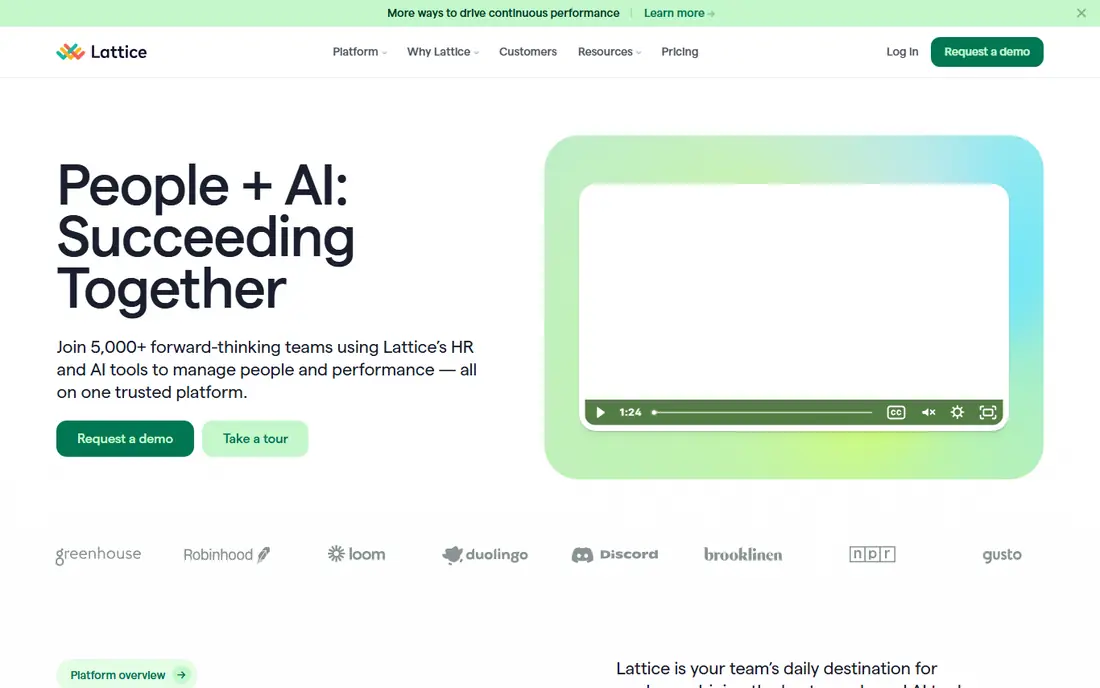
Lattice combines goal tracking with performance management, feedback, and engagement surveys, which suits HR-led companies that want one people platform. Teams set goals, track progress, and link them to reviews without switching tools. Its interface is polished and easy for non-technical staff.
Dedicated OKR teams may miss deeper strategy features such as advanced alignment maps. For a company that wants goals inside a broader people platform, Lattice is our pick. Check which modules sit in your plan, since pricing is modular.
- Goals beside performance reviews, feedback, and engagement
- Clean interface
- Strong HR integrations
- OKR depth is thinner than dedicated OKR platforms
- Pricing is per user
Weekdone
Ideal for: Simple OKR check-ins
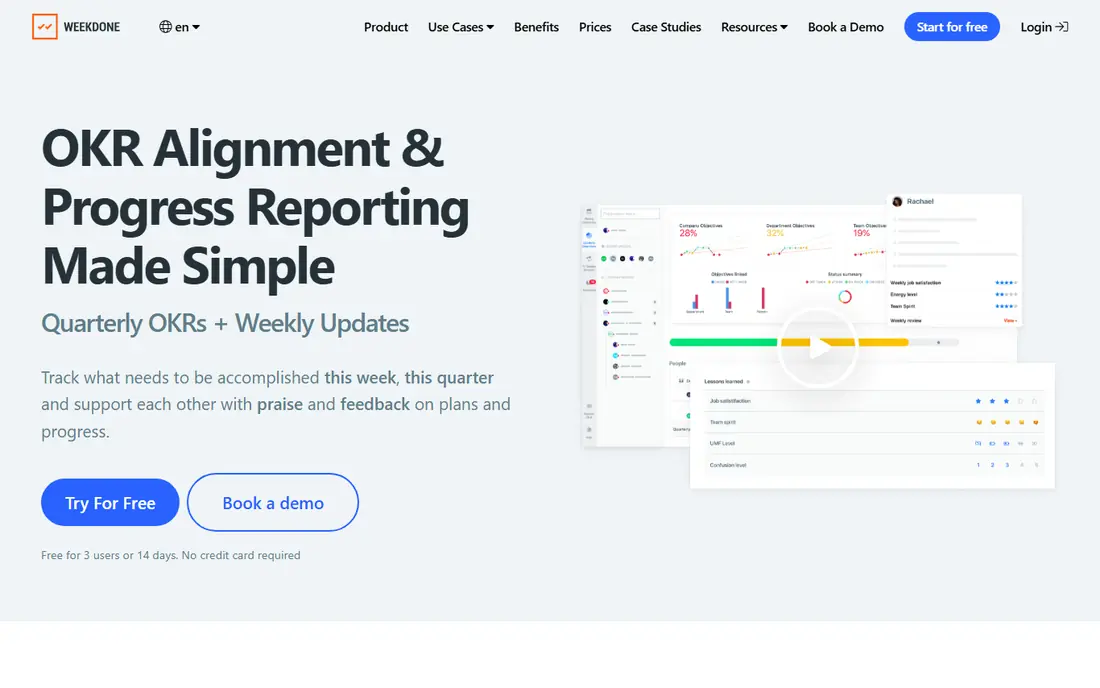
Weekdone keeps OKRs simple: teams set objectives, update key results weekly, and review progress on clear dashboards. That weekly rhythm suits small and mid-size teams that want OKRs without heavy process. Its free tier covers small teams well.
Large enterprises with complex strategy maps may need more depth. For a team adopting OKRs for the first time, Weekdone is a friendly, low-friction pick. Trial it for one quarter before deciding on a larger platform.
- Simple weekly OKR check-ins with progress updates
- Easy for small teams
- Clear team dashboards
- Less depth for enterprise strategy
- Fewer advanced integrations than larger platforms
Betterworks
Ideal for: Enterprise goals and performance
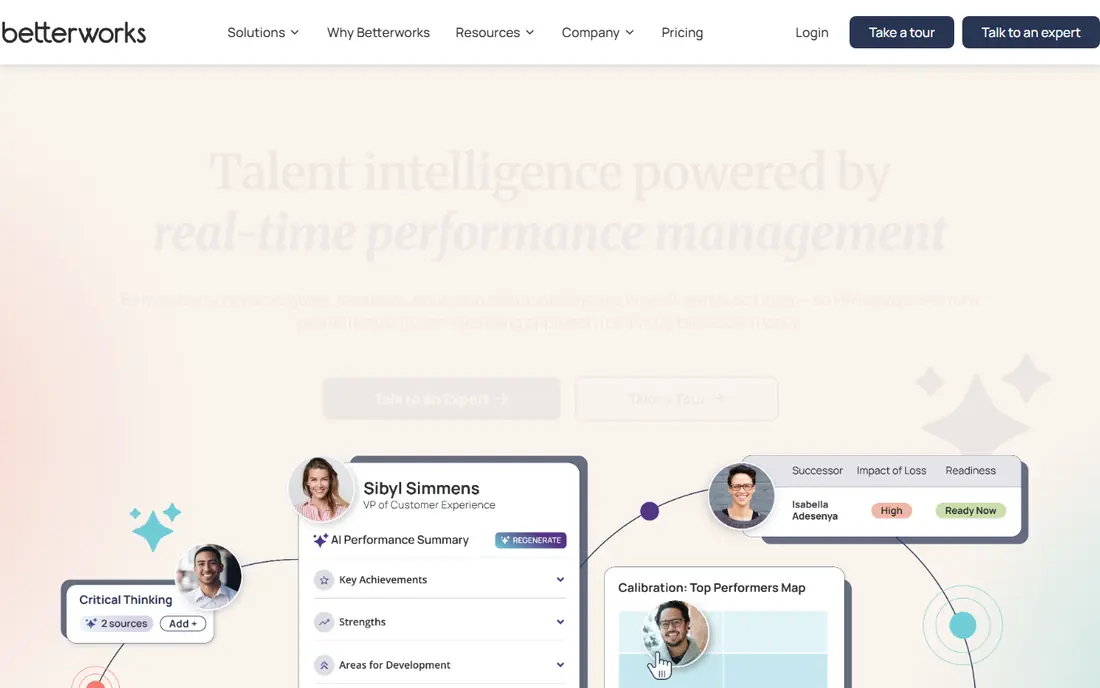
Betterworks pairs OKR and goal tracking with performance conversations, feedback, and analytics for larger organizations. Managers can link goals to reviews, track progress across teams, and spot alignment gaps. Its enterprise focus suits companies with formal performance cycles.
Pricing is quoted and implementation needs planning. For a large company that wants goals and performance in one system, Betterworks is a strong pick. Ask for a demo with your review cycle in mind.
- Enterprise goals, OKRs, and performance management
- Conversation and feedback tools
- Strong analytics
- Enterprise pricing is quoted
- Implementation takes time
Microsoft Viva Goals
Ideal for: OKRs inside Microsoft 365
Microsoft Viva Goals, formerly Ally.io, brings OKR tracking into Microsoft Teams and Microsoft 365. Teams set objectives, check in on key results, and view alignment dashboards without leaving Teams. That fit suits organizations already standardized on Microsoft tools.
Standalone OKR depth is thinner than Quantive or WorkBoard, and value drops outside Microsoft 365. For a Microsoft shop that wants OKRs where staff already work, Viva Goals is a natural pick. Check your current Microsoft license for included access.
- OKRs inside Teams and Microsoft 365
- Alignment dashboards
- Integrates with Microsoft tools
- Best value inside Microsoft 365
- Less standalone depth than dedicated OKR platforms
Quantive
Ideal for: OKR strategy platform
Quantive is a dedicated OKR platform for strategy execution, with goal alignment, check-ins, dashboards, and integrations with tools such as Slack, Jira, and Salesforce. Strategy teams can map company goals to team objectives and track progress in one place. Its focus keeps OKR workflows clear.
Teams new to OKRs may need training to use it well, since the tool assumes OKR habits. For a company committed to OKRs as a strategy method, Quantive is a strong dedicated pick. Trial it with one department first.
- Dedicated OKR strategy with alignment and execution features
- Integrations with common work tools
- Strong reporting
- Needs OKR discipline to get value
- Pricing is quoted for many plans
WorkBoard
Ideal for: Enterprise OKR execution
WorkBoard combines OKRs with execution tools such as meeting agendas, dashboards, and results tracking for large organizations. Its alignment views show how team goals connect to company strategy, and its support services help teams adopt OKRs. Enterprises with formal strategy cycles value that structure.
Small teams will find it heavy and costly. For a large organization that wants OKRs plus execution discipline, WorkBoard is a proven pick. Budget for onboarding beside licensing.
- Enterprise OKR and execution platform with meetings and dashboards
- Strong alignment views
- Coaching and support services
- Enterprise pricing and complexity
- Less suited to small teams
Mooncamp
Ideal for: Flexible OKR tracking
Mooncamp offers flexible OKR tracking with objectives, key results, check-ins, and dashboards in a modern interface. Teams can adapt it to different goal methods, and its free tier suits small teams testing OKRs. That flexibility appeals to startups and growing companies.
Enterprise HR integrations and support depth are thinner than Lattice or Betterworks. For a small or growing team that wants flexible, affordable OKR tracking, Mooncamp is a good pick. Test its check-in rhythm with your team for a quarter.
- Flexible OKR tracking with check-ins and dashboards
- Clean modern interface
- Free tier for small teams
- Smaller vendor than enterprise rivals
- Fewer HR integrations
How we picked these
We compared official feature pages, pricing pages, and public documentation, looking for OKR, goal alignment, and check-in features that match Perdoo. We favored tools that are actively maintained and work in October 2026, and we mixed simple trackers with enterprise platforms. We did not claim hands-on testing, and we note that pricing is often per user, so model costs for your team size.
We also weighed practical details that matter after signup. That included how easy each product is to set up, whether support answers promptly, and whether pricing stays clear as usage grows. We read user complaints as well as praise, since repeated complaints about billing, onboarding, or missing features often signal a real weakness. Where a product had a known limitation, we said so in its write-up rather than smoothing it over. Our goal was a shortlist that a reader can trust for perdoo alternatives, not a list of every vendor in the market. Readers with unusual needs should still test their top two choices, since fit depends on budget, team size, and the features used every day.
What to check before you choose
Start with your OKR maturity. A team new to OKRs needs simplicity and coaching, while a mature team needs alignment maps and integrations. Picking an enterprise platform for a first OKR quarter often leads to low adoption, while a simple tool may frustrate a mature team.
Next, test the weekly check-in habit. The best tool is the one managers and staff actually update, so run a pilot quarter with real goals. Check integrations with your work tools, since manual progress updates kill adoption. A pilot will show whether the tool fits your meeting rhythm.
Testing your shortlist before you commit
A short trial answers questions that no comparison table can settle. Sign up for your top two choices, run a real task from your own work, and watch how long it takes and where you get stuck. For perdoo alternatives, that real task might be a weekly workflow you repeat, a report you need every month, or a setup step your team must repeat for new members. If a tool slows that task down, it will cost time every week, no matter how good its feature list looks.
Pay attention to support during the trial as well. Send a question through the normal support channel and note how long a useful answer takes. Check billing clarity too: confirm what the trial includes, when it ends, and what the first paid invoice will actually show. A tool that is hard to cancel, or that hides fees until checkout, deserves caution.
Finally, ask who else on your team must use the tool. A product that only one person likes will stall, while a product the whole team adopts will pay for itself. Gather quick feedback from the people who will use it daily, compare their notes with your own, and then choose. That small amount of trial discipline prevents most bad purchases, and it costs far less than switching tools again in six months.
Budgeting the full cost, not just the headline price
Headline prices rarely tell the full story. Add up per-user fees, add-on charges, implementation help, and any training your team needs, then compare that total across your shortlist. A cheaper plan that needs three paid add-ons can end up costing more than a fuller plan from a rival. Check renewal terms as well, since introductory discounts often expire after the first term and the second year price is the one you will actually live with.
Think about exit costs too. Before you commit, confirm how your data exports, whether your content or history moves cleanly, and what happens if you pause or cancel. A tool with clean exports gives you freedom later, while a tool that locks data in makes switching painful. Choosing with the full cost and the exit path in mind keeps your perdoo alternatives decision sound for the long term, not just for the first month.
Frequently asked questions
What are OKRs?
OKRs are Objectives and Key Results: a goal method where teams set ambitious objectives and measure them with specific, numeric key results. Check-ins, usually weekly, track progress and surface blockers.
Which Perdoo alternative is best for small teams?
Weekdone and Mooncamp suit small teams with simple check-ins and free tiers. Lattice suits small companies that also want performance reviews in the same tool.
Do OKR tools work without OKR training?
They help, but OKR habits matter more than software. Teams new to OKRs should start simple, set few objectives, and review progress weekly.
How is OKR pricing set?
Most tools charge per user per month, with free tiers for small teams and quoted pricing for enterprises. Check user minimums and included modules.
Can OKRs replace performance reviews?
No, OKRs track team goals, while reviews assess individual performance and growth. Tools such as Lattice and Betterworks link the two, but they serve different purposes.