Best Pivotal Tracker Alternatives in 2026: 8 Options Compared

- Our pick for most people is Jira, because it balances price, features and ease of use for the widest group of readers.
- Free plans are real here, but the limits matter: check what Asana and Monday Work Management actually include before you commit.
- Prices in this guide come from vendor pricing pages and current comparisons checked in October 2026, and they can change, so confirm the plan on the vendor site before you buy.
- The best choice depends on your budget, your experience level and how much support you want, not on which brand is most famous.
Quick comparison
| Product | Ideal for | Price from | Free version | |
|---|---|---|---|---|
 Jira | Agile project tracking at scale | See website | Yes | Visit |
 Asana | Team project and task management | See website | Yes | Visit |
 Monday Work Management | Flexible project and work tracking | See website | Yes | Visit |
 ClickUp | All-in-one productivity and projects | See website | Yes | Visit |
 Linear | Fast issue tracking for product teams | See website | Yes | Visit |
 Shortcut | Agile tracking for software teams | See website | Yes | Visit |
 Trello | Simple Kanban boards for small teams | See website | Yes | Visit |
 Azure Boards | Agile tracking inside Azure DevOps | See website | Yes | Visit |
The best Pivotal Tracker Alternatives in 2026
We compared official feature pages, pricing pages, app store listings, privacy policies and public reviews to build this list for pivotal tracker alternatives. Every option below exists and works today, and each one earns its place for a different kind of reader.
Jira
Ideal for: Agile project tracking at scale
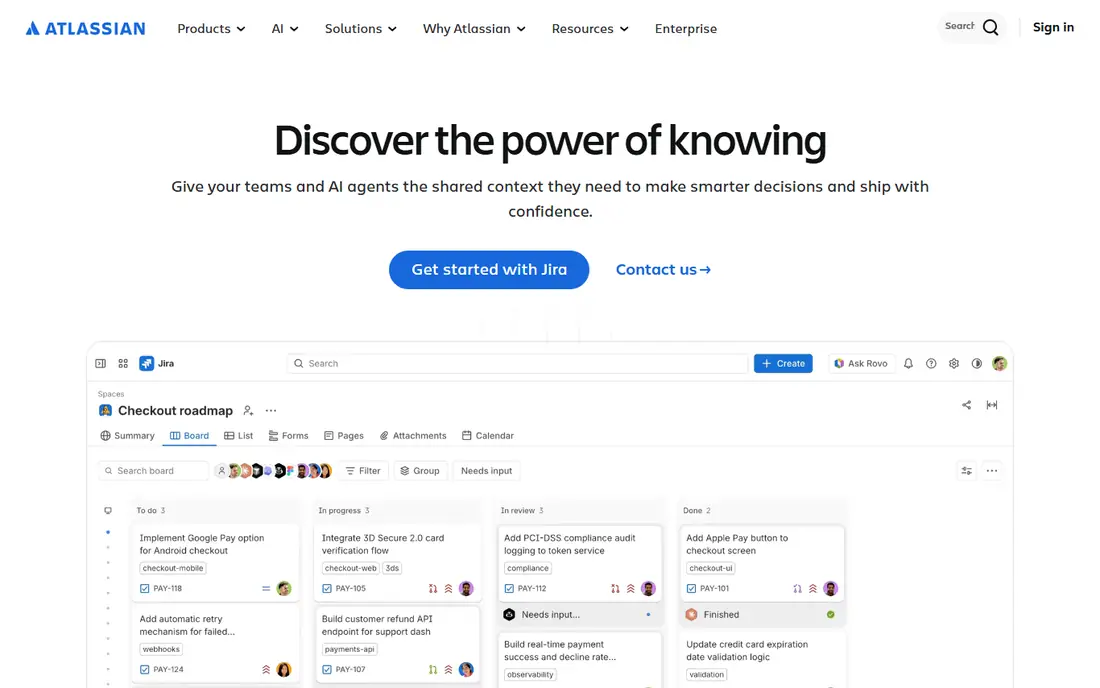
Here is the short version. Jira suits agile teams at scale, with boards, roadmaps and reporting that handle complex product work. It fits readers who want agile project tracking at scale, and its published feature set matches that promise rather than trying to cover every possible use case at once. The price picture is see website, with a free plan status of yes. The setup and admin effort are real, so small teams should trial it against simpler tools first. Before you sign up, check the current plan limits on the official site, because caps on users, usage or features are where most buyers get surprised after the first month.
- Scrum and Kanban boards
- Roadmaps
- Strong reporting
- Setup and admin take time
- Interface can feel heavy
Asana
Ideal for: Team project and task management
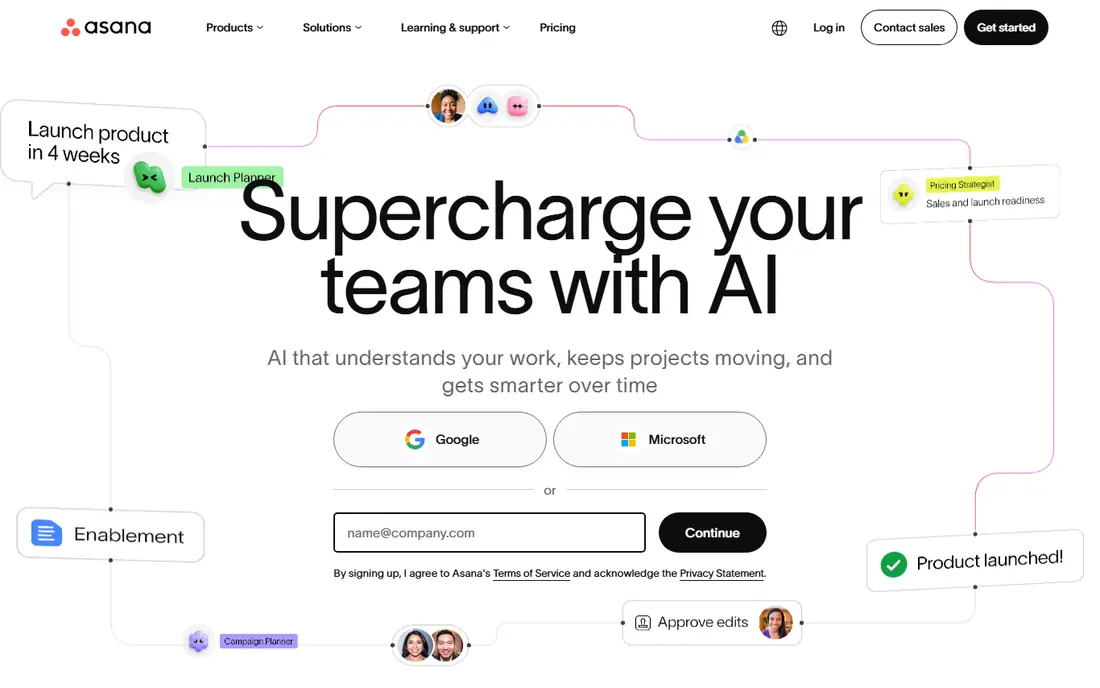
Start here if you want the safe default. Asana suits teams that want clear task and project tracking, with timelines and portfolios for managers. It fits readers who want team project and task management, and its published feature set matches that promise rather than trying to cover every possible use case at once. The price picture is see website, with a free plan status of yes. Agile story pointing and velocity tools are simpler than Jira or Shortcut, so check those needs first. Before you sign up, check the current plan limits on the official site, because caps on users, usage or features are where most buyers get surprised after the first month.
- Tasks, projects and portfolios
- Timelines
- Automations
- Advanced features need paid plans
- Agile story tools are simpler than Jira
Monday Work Management
Ideal for: Flexible project and work tracking

This one suits a specific kind of reader. Monday Work Management gives teams flexible boards for projects and sprints, with automations that reduce manual updates. It fits readers who want flexible project and work tracking, and its published feature set matches that promise rather than trying to cover every possible use case at once. The price picture is see website, with a free plan status of yes. Deep agile reporting is thinner than Jira, so agile-heavy teams should trial it on a real sprint. Before you sign up, check the current plan limits on the official site, because caps on users, usage or features are where most buyers get surprised after the first month.
- Flexible boards
- Automations
- Templates
- Wide integrations
- Pricing grows with users
- Agile features are broader than deep
ClickUp
Ideal for: All-in-one productivity and projects
Consider this if the top picks do not fit. ClickUp gives teams tasks, docs, goals and time tracking in one workspace, with a generous free tier. It fits readers who want all-in-one productivity and projects, and its published feature set matches that promise rather than trying to cover every possible use case at once. The price picture is see website, with a free plan status of yes. The breadth can overwhelm new users, so start with one use case and add features slowly. Before you sign up, check the current plan limits on the official site, because caps on users, usage or features are where most buyers get surprised after the first month.
- Tasks, docs, goals and time tracking
- Wide templates
- Free tier
- Feature breadth can overwhelm new users
- Pricing grows with seats
Linear
Ideal for: Fast issue tracking for product teams
A strong option for a narrower need. Linear suits software product teams that want fast, clean issue tracking with cycles and roadmaps. It fits readers who want fast issue tracking for product teams, and its published feature set matches that promise rather than trying to cover every possible use case at once. The price picture is see website, with a free plan status of yes. Non-software teams may find its product focus narrower than Asana or Monday. Before you sign up, check the current plan limits on the official site, because caps on users, usage or features are where most buyers get surprised after the first month.
- Fast issue tracking
- Cycles and roadmaps
- Clean interface
- Best for software teams
- Non-software project features are thinner
Shortcut
Ideal for: Agile tracking for software teams
Worth a close look before you decide. Shortcut, formerly Clubhouse, suits software teams that want agile story tracking with iterations and docs. It fits readers who want agile tracking for software teams, and its published feature set matches that promise rather than trying to cover every possible use case at once. The price picture is see website, with a free plan status of yes. Its smaller ecosystem means some integrations need workarounds, so check your must-have tools. Before you sign up, check the current plan limits on the official site, because caps on users, usage or features are where most buyers get surprised after the first month.
- Stories, epics and iterations
- Docs
- Integrations
- Smaller ecosystem than Jira
- Reporting is simpler
Trello
Ideal for: Simple Kanban boards for small teams
This belongs on the shortlist for a reason. Trello suits small teams that want simple Kanban boards with almost no setup. It fits readers who want simple kanban boards for small teams, and its published feature set matches that promise rather than trying to cover every possible use case at once. The price picture is see website, with a free plan status of yes. Larger agile teams will outgrow it, so use it for simple workflows, not complex product planning. Before you sign up, check the current plan limits on the official site, because caps on users, usage or features are where most buyers get surprised after the first month.
- Simple Kanban boards
- Easy setup
- Power-Ups
- Advanced agile reporting needs paid plans and Power-Ups
- Scale is limited
Azure Boards
Ideal for: Agile tracking inside Azure DevOps
Do not overlook this one. Azure Boards suits teams already using Azure DevOps, because boards, code and pipelines link together. It fits readers who want agile tracking inside azure devops, and its published feature set matches that promise rather than trying to cover every possible use case at once. The price picture is see website, with a free plan status of yes. Outside that ecosystem, its advantage fades, so judge it on your development stack. Before you sign up, check the current plan limits on the official site, because caps on users, usage or features are where most buyers get surprised after the first month.
- Boards, backlogs and sprints
- Azure DevOps integration
- Reporting
- Best inside Microsoft and Azure
- Standalone use is heavier
How we picked these
We started from official feature pages and pricing pages, then checked app store listings, privacy policies and public reviews to confirm each product still works and still fits the topic. Products that could not be verified, or that only partly matched the topic, were left out, even when they were well known. We favoured a mix of established leaders and strong smaller options, and we weighted price transparency, a usable free tier or trial, and honest limits more heavily than marketing claims. No product on this list paid for its place, and our pick for most people is the one we would suggest to a friend with ordinary needs and an ordinary budget.
How to pick agile tracking that fits your team size
Start with team size and method. A small team running Kanban needs a simple board, while a larger team running Scrum needs backlogs, sprints, velocity and roadmaps. Next, check integrations with your code, docs and chat tools, since a tracker that cannot link to code or docs creates manual status work. Then check reporting: velocity, burndown and cycle time matter for planning, but only if someone actually reads them. Trial the top two on a real sprint, not a demo project, and watch whether the team updates stories without prompting. Also check pricing at your team size, since per-user costs add up for large teams. Confirm permissions and guest access if clients or contractors need visibility, and confirm export options, so your project history remains yours if you switch tools. Finally, keep the workflow simple at first, because a tracker with too many statuses and fields will slow the team it is meant to help.
Frequently asked questions
What is the best Pivotal Tracker alternative?
Jira suits large agile teams, Linear and Shortcut suit software product teams, and Asana and Monday suit broader project work. The right pick depends on team size and agile depth.
Is there a free Pivotal Tracker alternative?
Jira, Asana, Monday, ClickUp, Linear, Shortcut, Trello and Azure Boards all offer free tiers, though each limits users or features. Free tiers suit small teams, while larger teams need paid plans.
What happened to Pivotal Tracker?
Pivotal Tracker was discontinued, so users need to migrate to another agile tracking tool. Export stories, epics and history before you switch, and plan a cutover sprint.
What is the difference between Scrum and Kanban tools?
Scrum tools support sprints, backlogs and velocity, while Kanban tools support continuous flow on a board. Most tools here support both, but depth varies, so check your method.
Can I migrate stories from Pivotal Tracker?
Most tools offer import tools for stories and projects, though labels, history and comments rarely move perfectly. Export your data first and plan a review pass after import.