Best Pixlr Alternatives in 2026: 8 Editors Compared

- Photopea is our pick for free browser photo editor, and it leads a list that covers both well-known names and smaller options worth a look.
- Canva stands out for readers who want a simpler start, while Adobe Express suits those who need more depth in one area.
- Prices and free tiers change often, so check the vendor pricing page and the current trial terms before you buy, and treat any price here as a starting point only.
- The best choice depends on your workflow, your budget and how much setup help you want, so use the free tier or trial to test the product with your own work.
- Krita rounds out the list for readers with a specific need that the larger names do not cover as well.
Quick comparison
| Product | Ideal for | Price from | Free version | |
|---|---|---|---|---|
 Photopea | Free browser photo editor | Free | Yes | Visit |
 Canva | Easy design for everyone | Free | Yes | Visit |
 Adobe Express | Quick Adobe-powered design | Free | Yes | Visit |
 Fotor | Online photo editor | Free | Yes | Visit |
 BeFunky | Simple photo editor and designer | Free | Yes | Visit |
 Polarr | Photo filters and editing | Free | Yes | Visit |
 GIMP | Free desktop photo editing | Free | Yes | Visit |
 Krita | Free digital painting | Free | Yes | Visit |
The best Pixlr alternatives
We compared official feature pages, pricing pages, app store listings, privacy policies and public reviews to build this list, focusing on products that fit pixlr alternatives closely and are still available in October 2026. Our pick for most readers is Photopea, but the right answer depends on your budget and the features you will actually use.
Photopea
Ideal for: Free browser photo editor
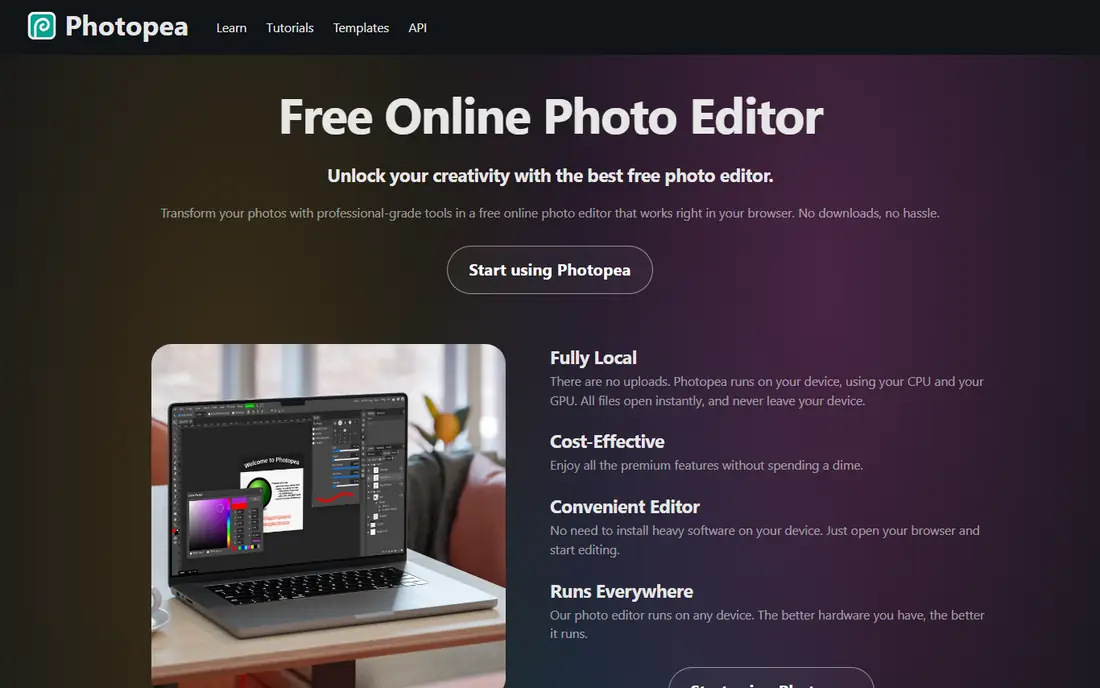
Photopea is a strong option for free browser photo editor. Its strengths include photoshop-style editing free in browser; psd support; no install. That combination is why it earned a place here, and it gives most readers a clear reason to start a trial with this product before looking further afield. When we compared the official feature pages, the practical question was fit rather than raw feature count. A tool that covers your main workflow well will serve you better than a broader product you only half use. Check the pricing page and the trial terms before you commit, and confirm that the plan you want includes the features you actually need. The honest catch is that ads in free use; performance with huge files varies. If that weakness touches your main workflow, look at the next option on this list instead. If it does not, Photopea is a sensible choice, and a short trial with your own data will confirm whether the fit holds up in daily use.
- Photoshop-style editing free in browser
- PSD support
- No install
- Ads in free use
- Performance with huge files varies
Canva
Ideal for: Easy design for everyone
Canva is a strong option for easy design for everyone. Its strengths include templates for social and print; huge asset library; collaboration. That combination is why it earned a place here, and it gives most readers a clear reason to start a trial with this product before looking further afield. The day-to-day experience matters as much as the headline features. Look at how the product handles onboarding, support and the tasks you will repeat every week. A short trial is the fastest way to learn whether the interface suits your team, and whether the help docs answer real questions without a support ticket. The honest catch is that pro features need a subscription; precise photo editing is limited. If that weakness touches your main workflow, look at the next option on this list instead. If it does not, Canva is a sensible choice, and a short trial with your own data will confirm whether the fit holds up in daily use.
- Templates for social and print
- Huge asset library
- Collaboration
- Pro features need a subscription
- Precise photo editing is limited
Adobe Express
Ideal for: Quick Adobe-powered design
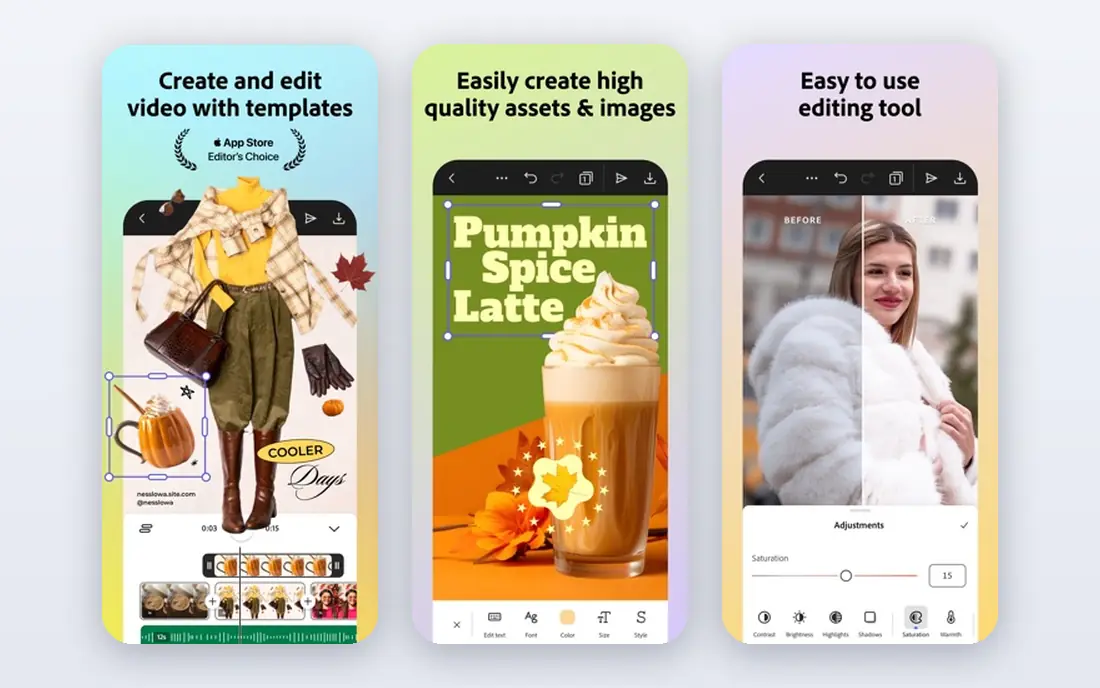
Adobe Express is a strong option for quick adobe-powered design. Its strengths include templates plus adobe assets; brand kits; social scheduling. That combination is why it earned a place here, and it gives most readers a clear reason to start a trial with this product before looking further afield. We also weighed what each option leaves out. Every product on this list has a gap, and the right choice depends on which gap you can live with. Read the plan comparison on the vendor site carefully, since a feature that looks included on the homepage may sit in a higher tier. The honest catch is that free tier limits premium assets; deep editing needs photoshop. If that weakness touches your main workflow, look at the next option on this list instead. If it does not, Adobe Express is a sensible choice, and a short trial with your own data will confirm whether the fit holds up in daily use.
- Templates plus Adobe assets
- Brand kits
- Social scheduling
- Free tier limits premium assets
- Deep editing needs Photoshop
Fotor
Ideal for: Online photo editor
Fotor is a strong option for online photo editor. Its strengths include easy edits plus collage and design; batch tools; templates. That combination is why it earned a place here, and it gives most readers a clear reason to start a trial with this product before looking further afield. For most readers, the deciding factors are price, ease of setup and support quality. A product with clear documentation and a responsive support team will save time over months of use. If you work with a team, test sharing, permissions and reporting during the trial, since those details shape daily use. The honest catch is that free tier shows ads; advanced tools need pro. If that weakness touches your main workflow, look at the next option on this list instead. If it does not, Fotor is a sensible choice, and a short trial with your own data will confirm whether the fit holds up in daily use.
- Easy edits plus collage and design
- Batch tools
- Templates
- Free tier shows ads
- Advanced tools need Pro
BeFunky
Ideal for: Simple photo editor and designer
BeFunky is a strong option for simple photo editor and designer. Its strengths include simple editor; collage maker; graphic designer tools. That combination is why it earned a place here, and it gives most readers a clear reason to start a trial with this product before looking further afield. Another factor is how well the product fits the tools you already use. Check the integration list on the official site and confirm that the connections you need are included in your plan, not only in an enterprise tier. A clean integration can remove manual work, while a missing one can add a weekly chore. The honest catch is that free tier limits; batch editing needs plus. If that weakness touches your main workflow, look at the next option on this list instead. If it does not, BeFunky is a sensible choice, and a short trial with your own data will confirm whether the fit holds up in daily use.
- Simple editor
- Collage maker
- Graphic designer tools
- Free tier limits
- Batch editing needs Plus
Polarr
Ideal for: Photo filters and editing
Polarr is a strong option for photo filters and editing. Its strengths include strong filters; masks and local adjustments; mobile and web. That combination is why it earned a place here, and it gives most readers a clear reason to start a trial with this product before looking further afield. Finally, think about growth. A product that fits a solo user today may feel tight once a team or a larger workload arrives. Look at how pricing changes as seats, volume or usage grow, and pick an option whose next tier still makes sense for your budget. The honest catch is that advanced tools need pro; desktop app is limited. If that weakness touches your main workflow, look at the next option on this list instead. If it does not, Polarr is a sensible choice, and a short trial with your own data will confirm whether the fit holds up in daily use.
- Strong filters
- Masks and local adjustments
- Mobile and web
- Advanced tools need Pro
- Desktop app is limited
GIMP
Ideal for: Free desktop photo editing
GIMP is a strong option for free desktop photo editing. Its strengths include deep editing free; plugins; all major platforms. That combination is why it earned a place here, and it gives most readers a clear reason to start a trial with this product before looking further afield. When we compared the official feature pages, the practical question was fit rather than raw feature count. A tool that covers your main workflow well will serve you better than a broader product you only half use. Check the pricing page and the trial terms before you commit, and confirm that the plan you want includes the features you actually need. The honest catch is that learning curve; interface less modern. If that weakness touches your main workflow, look at the next option on this list instead. If it does not, GIMP is a sensible choice, and a short trial with your own data will confirm whether the fit holds up in daily use.
- Deep editing free
- Plugins
- All major platforms
- Learning curve
- Interface less modern
Krita
Ideal for: Free digital painting
Krita is a strong option for free digital painting. Its strengths include painting and illustration tools free; brush engines; animation. That combination is why it earned a place here, and it gives most readers a clear reason to start a trial with this product before looking further afield. The day-to-day experience matters as much as the headline features. Look at how the product handles onboarding, support and the tasks you will repeat every week. A short trial is the fastest way to learn whether the interface suits your team, and whether the help docs answer real questions without a support ticket. The honest catch is that photo editing is secondary; interface density for newcomers. If that weakness touches your main workflow, look at the next option on this list instead. If it does not, Krita is a sensible choice, and a short trial with your own data will confirm whether the fit holds up in daily use.
- Painting and illustration tools free
- Brush engines
- Animation
- Photo editing is secondary
- Interface density for newcomers
How we picked these
We started from the topic itself and kept only products that truly fit it, are still available in October 2026, and have an official homepage we could check. We compared official feature pages, pricing pages, app store listings, privacy policies and public reviews, and we gave extra weight to products with clear pricing, clear privacy terms and a track record of support. We did not claim hands-on testing we did not do. Instead, we weighed what each vendor states on its own site against what public reviews report about setup, support and limits. Where a price could not be verified from the vendor site, we wrote See website rather than guessing a number.
How to choose the right option for pixlr alternatives
Start with the job you need done, not with the longest feature list. Write down the two or three tasks you will do every week, then check which products cover those tasks in the plan you can afford. A product that handles your core tasks well will beat a broader tool that handles them awkwardly.
Check the price and the free tier
Compare the starting price, the free plan and the trial length side by side, and look at what happens when you add seats, volume or usage. Some products look cheap at first and grow costly as a team grows, while others include more in a mid-tier plan. Read the pricing page in full before you commit.
Test before you commit
Use the free tier or trial with real work, not only with sample data. Invite a colleague if the product is for a team, and test the features you will rely on most, including support response times. A week of real use reveals more than a month of reading reviews.
Watch the limits
Every product on this list has limits, and the right one is the product whose limits you rarely meet. Check storage, usage, support hours and integration coverage, and confirm that the plan you choose includes the help you need when something goes wrong.
Frequently asked questions
What is the best option for pixlr alternatives?
For most readers, Photopea is the safest starting point because it fits free browser photo editor well. Readers with a different priority, such as a lower price or a simpler setup, may prefer Canva or Adobe Express. Use the comparison table above to narrow the list, then test one or two options before you commit.
Are there free options for pixlr alternatives?
Yes, several products on this list offer a free tier or a free trial, including Canva and Fotor in many cases. Free tiers usually limit features, usage or seats, so check the vendor pricing page to confirm what is included. A free tier is a good way to test fit before paying.
How much should I expect to pay?
Prices vary widely by product and plan, and they change often. Some tools are free for basic use, while others charge per user or per month for team features. We wrote See website where a price could not be verified, so always confirm the current price on the official site before you buy.
Can I switch later if I pick the wrong product?
In most cases, yes, though switching takes effort if you have stored a lot of data or built workflows around one tool. Export your data regularly and check the export options before you commit. A trial period is the best time to learn whether the product will last.
How do I stay safe when choosing one of these products?
Read the privacy policy and terms, check what data the vendor collects, and use strong passwords with two-factor authentication where it is offered. For tools that handle personal or financial data, prefer vendors with clear security pages and a history of fixing reported problems.