Best Quizlet Alternatives in 2026: 8 Apps Compared

- Our pick for most people is Anki, because it covers free spaced repetition for long-term memory with the fewest trade-offs in this group.
- If you want to start without paying, Anki is the strongest free option here, though its paid tier adds the deeper features.
- Knowt is the best second look when Anki does not fit, since it serves closest free quizlet replacement rather than the same audience.
- Prices and plan limits change often, so confirm the current terms on each vendor site and read the fine print on limits, renewals and cancellation.
Quick comparison
| Product | Ideal for | Price from | Free version | |
|---|---|---|---|---|
 Anki | Free spaced repetition for long-term memory | Free | Yes | Visit |
 Knowt | Closest free Quizlet replacement | Free | Yes | Visit |
 Brainscape | Confidence-based repetition with certified content | Free | Yes | Visit |
 RemNote | Notes and flashcards in one system | Free | Yes | Visit |
 Mochi | Clean Markdown flashcards with Anki import | Free | Yes | Visit |
 Gizmo | AI quizzes and flashcards from your material | See website | Yes | Visit |
 Scholarly | AI flashcards from PDFs and recordings | Free | Yes | Visit |
 MintDeck | Free iPhone flashcards with spaced repetition | Free | Yes | Visit |
The best Quizlet alternatives
Choosing among quizlet alternatives comes down to fit, not fame. We compared official feature pages, pricing pages, app store listings, privacy policies and public reviews for each option below, and we weighed what you actually get on the entry plan against what stays behind a paywall. Anki leads this list because it handles free spaced repetition for long-term memory well for the widest range of readers, but the right choice depends on your budget, your device and how much hand-holding you want. Read the shortlist with your own situation in mind. A cheaper tool that you actually use beats a powerful one that sits untouched, and a plan that looks cheap on the monthly line can cost more once add-ons and limits are counted. Spaced repetition and import options decide the pick. If you have Quizlet sets, pick an app that imports them, and if you want long-term memory, pick true spaced repetition over simple flipping.
Anki
Ideal for: Free spaced repetition for long-term memory
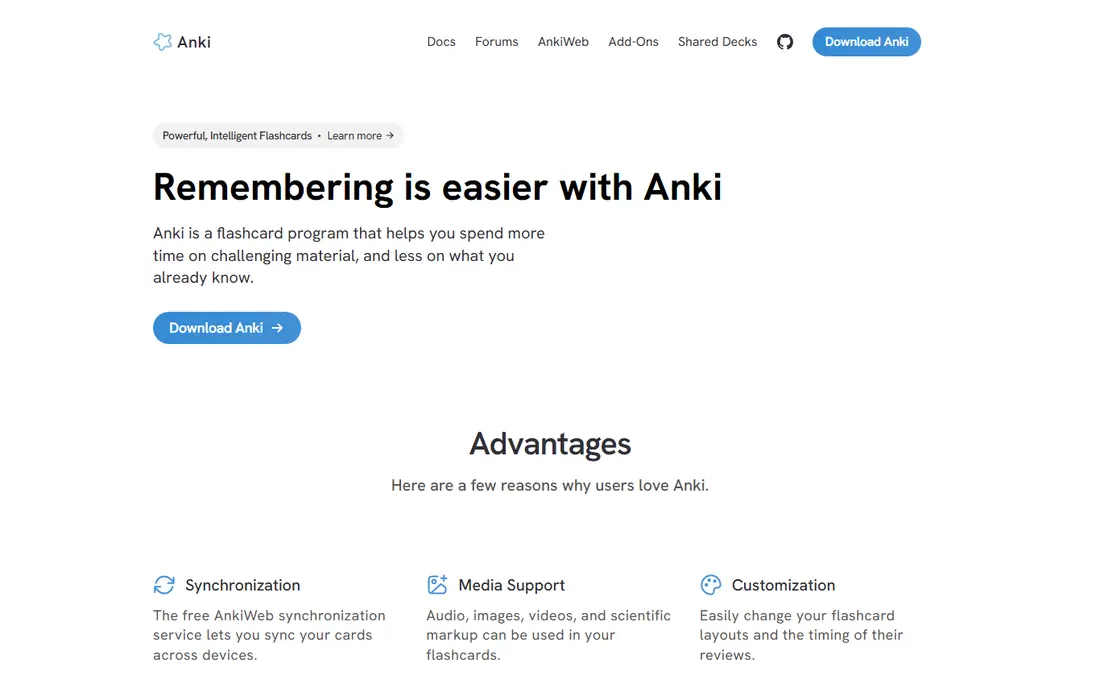
Anki is the most powerful free flashcard tool, with a spaced repetition algorithm that schedules reviews for long-term memory. Its setup takes patience, but serious students get unmatched retention tools. For readers focused on free spaced repetition for long-term memory, the appeal is proven spaced repetition algorithm. That strength matters in daily use, because it is the part you will notice every week, not a feature you open once and forget. Compare it against the rest of the list on that one point first, then look at price, platform support and how the company handles your data. The honest weakness is iOS app is a paid purchase. Setup and interface take learning Try it on a real task before you pay, and check whether the entry plan covers the feature you actually need.
- Proven spaced repetition algorithm
- Free on desktop and Android
- Huge shared deck library and add-ons
- IOS app is a paid purchase
- Setup and interface take learning
Knowt
Ideal for: Closest free Quizlet replacement

Knowt is the closest free Quizlet swap, with Learn mode free and Quizlet sets importing in one click. Students leaving Quizlet paywalls get the most from it, though its algorithm is simpler than Anki. For readers focused on closest free quizlet replacement, the appeal is free Learn mode and spaced repetition. That strength matters in daily use, because it is the part you will notice every week, not a feature you open once and forget. Compare it against the rest of the list on that one point first, then look at price, platform support and how the company handles your data. Watch out for spaced repetition is simpler than Anki. Premium features need a paid plan If you can live with that limit, the rest of the package is easy to recommend for its audience.
- Free Learn mode and spaced repetition
- One-click Quizlet set import
- AI flashcard generation from notes
- Spaced repetition is simpler than Anki
- Premium features need a paid plan
Brainscape
Ideal for: Confidence-based repetition with certified content

Brainscape suits exam students, with confidence-based repetition and certified content for tests. Its clean design helps focused study, though full features need a subscription. For readers focused on confidence-based repetition with certified content, the appeal is confidence-based repetition system. That strength matters in daily use, because it is the part you will notice every week, not a feature you open once and forget. Compare it against the rest of the list on that one point first, then look at price, platform support and how the company handles your data. The catch is subscription needed for full features. Free tier is limited If that trade-off is acceptable for how you work, this is a solid choice, and a short trial will tell you more than any review can.
- Confidence-based repetition system
- Certified content for exams
- Clean design for study
- Subscription needed for full features
- Free tier is limited
RemNote
Ideal for: Notes and flashcards in one system
RemNote unifies notes and flashcards, turning your notes into cards without retyping. Students who study from notes get the most from it, though its breadth can feel cluttered. For readers focused on notes and flashcards in one system, the appeal is notes that turn into flashcards automatically. That strength matters in daily use, because it is the part you will notice every week, not a feature you open once and forget. Compare it against the rest of the list on that one point first, then look at price, platform support and how the company handles your data. The honest weakness is tries to do everything, so it can feel cluttered. Learning curve for the full system Try it on a real task before you pay, and check whether the entry plan covers the feature you actually need.
- Notes that turn into flashcards automatically
- Knowledge graphs
- Spaced repetition built in
- Tries to do everything, so it can feel cluttered
- Learning curve for the full system
Mochi
Ideal for: Clean Markdown flashcards with Anki import
Mochi suits Markdown users who want Anki-style control with a cleaner interface. Its Anki import preserves review history, which matters for long-term studiers. For readers focused on clean markdown flashcards with anki import, the appeal is markdown-based cards. That strength matters in daily use, because it is the part you will notice every week, not a feature you open once and forget. Compare it against the rest of the list on that one point first, then look at price, platform support and how the company handles your data. Watch out for free tier limits some features. Smaller library than Quizlet If you can live with that limit, the rest of the package is easy to recommend for its audience.
- Markdown-based cards
- Anki deck import with review history
- Simple, clean interface
- Free tier limits some features
- Smaller library than Quizlet
Gizmo
Ideal for: AI quizzes and flashcards from your material
Gizmo turns notes and videos into AI quizzes and flashcards, which suits students with lots of source material. Its AI generation saves card-making time, though quality depends on the source. For readers focused on ai quizzes and flashcards from your material, the appeal is aI-generated quizzes from notes and videos. That strength matters in daily use, because it is the part you will notice every week, not a feature you open once and forget. Compare it against the rest of the list on that one point first, then look at price, platform support and how the company handles your data. The catch is aI quality varies by source material. Newer product with less history If that trade-off is acceptable for how you work, this is a solid choice, and a short trial will tell you more than any review can.
- AI-generated quizzes from notes and videos
- Spaced repetition features
- Free tier to start
- AI quality varies by source material
- Newer product with less history
Scholarly
Ideal for: AI flashcards from PDFs and recordings
Scholarly suits students whose material lives in PDFs or recordings, since it generates cards from them. Its free plan covers a first taste, while heavy users need a paid plan. For readers focused on ai flashcards from pdfs and recordings, the appeal is aI card generation from PDFs and recordings. That strength matters in daily use, because it is the part you will notice every week, not a feature you open once and forget. Compare it against the rest of the list on that one point first, then look at price, platform support and how the company handles your data. The honest weakness is free plan covers limited AI creations. Paid plan needed for heavy use Try it on a real task before you pay, and check whether the entry plan covers the feature you actually need.
- AI card generation from PDFs and recordings
- Free plan to start
- Export options for Anki
- Free plan covers limited AI creations
- Paid plan needed for heavy use
MintDeck
Ideal for: Free iPhone flashcards with spaced repetition
MintDeck is the free iPhone pick, with spaced repetition, Anki import and offline study. iPhone students who want a modern free app get the most from it, though its community is smaller. For readers focused on free iphone flashcards with spaced repetition, the appeal is free on iPhone with spaced repetition. That strength matters in daily use, because it is the part you will notice every week, not a feature you open once and forget. Compare it against the rest of the list on that one point first, then look at price, platform support and how the company handles your data. Watch out for iOS-focused. Smaller community than Anki If you can live with that limit, the rest of the package is easy to recommend for its audience.
- Free on iPhone with spaced repetition
- Anki import support
- Offline study and audio generation
- IOS-focused
- Smaller community than Anki
How we picked these
We started from the topic itself and kept only products that exist and work today and truly fit it. For each one we checked the official homepage, the pricing page and the free tier, and we read app store listings, privacy policies and public reviews where they were relevant. Products with a homepage we could not verify were left out, and prices we could not verify are shown as See website rather than guessed. We favored a mix of well-known leaders and strong smaller options, and we weighed entry price, free tier, platform coverage and honest weaknesses. No product here paid for its place, and we did not claim hands-on testing we did not do. What follows is a comparison of published facts, so you can check any claim on the vendor site before you buy.
How to pick a flashcard app you will still open in week six
Start by naming the job you need done, then match it to one entry plan, not to a whole product family. Check which devices are supported, whether your data can be exported, and what happens when you cancel. A tool that locks your work inside its own format costs more to leave later, even when the monthly price looks low. Next, test the free tier or trial on a real task from your own week, and watch for the limit that bites first. That limit is usually a seat count, a usage cap or a feature held back for a higher tier. Brainscape and RemNote are worth comparing side by side here, because they serve different audiences at different prices, and the cheaper one is not always the weaker one for your case. Finally, read the renewal and cancellation terms before you enter payment details, and set a reminder to review the subscription after the first month. Many buyers keep paying for a tool they stopped opening, and a short review each quarter keeps the stack honest. If two options feel close, pick the one with clearer pricing and simpler cancellation.
Frequently asked questions
What is the best quizlet alternatives?
For most readers it is Anki, because it covers free spaced repetition for long-term memory with a clear pricing page and broad support. Knowt is the best alternative when you need closest free quizlet replacement instead. Try the free tier or trial of both before you decide, since daily feel matters as much as the feature list.
Is there a free quizlet alternatives?
Yes, several options here offer a free tier, including Anki, Knowt, Brainscape. Free tiers usually limit seats, usage or advanced features, so check what is included before you rely on one for daily work.
How much should I expect to pay?
Entry prices in this list run from free up to the higher tiers shown in the comparison table, and the real cost depends on seats, usage and add-ons. Anki starts at free, which is a fair benchmark for the group. Always confirm the current price on the official site, since vendors change plans during the year.
Can I switch to a different option later?
In most cases yes, but the effort depends on how much data you have stored and whether it exports cleanly. Before you commit, check export options and whether a trial lets you import your existing work. Keeping a backup outside the tool makes any future switch far easier.
Can I import my Quizlet sets into another app?
Yes, on several apps here. Knowt offers one-click Quizlet import, and Mochi imports Anki decks, so your existing sets transfer. Check the import tool for your app before you switch, since formatting can vary.