Best Rayobyte Alternatives in 2026: 7 Proxy Providers Compared

- Bright Data is our pick for teams that need the largest network with strong compliance and enterprise tools.
- Oxylabs suits data teams that want reliable proxies plus scraping APIs for hard targets.
- Decodo, NetNut, IPRoyal, and Webshare cover value, speed, budget, and simple datacenter needs.
- SOAX suits teams that want residential and mobile proxies with flexible targeting.
- Always test success rates on your real target sites, since proxy quality varies by site, location, and IP type.
Quick comparison
| Product | Ideal for | Price from | Free version | |
|---|---|---|---|---|
 Bright Data | Largest proxy network | See website | Free trial | Visit |
 Oxylabs | Reliable scraping proxies | See website | Free trial | Visit |
 Decodo | Value residential proxies | See website | Free trial | Visit |
 NetNut | Fast ISP proxies | See website | Free trial | Visit |
 IPRoyal | Affordable proxy plans | See website | Free trial | Visit |
 Webshare | Simple datacenter proxies | See website | Free trial | Visit |
 SOAX | Residential and mobile proxies | See website | Free trial | Visit |
The best Rayobyte alternatives
Rayobyte is known for datacenter proxies with a focus on affordability, so a good replacement needs clean IPs, location options, reliable uptime, and pricing that fits your volume. We compared official feature pages, pricing pages, and public reviews, focusing on proxy types, pool quality, speed, location coverage, and compliance practices.
Bright Data
Ideal for: Largest proxy network
Bright Data offers residential, mobile, ISP, and datacenter proxies at large scale, plus data collection tools and APIs. Its compliance documentation and usage controls suit enterprises that need to show how IPs are sourced and used. Location targeting covers many countries, cities, and carriers.
Pricing complexity is the main drawback, with pay-per-use and subscription models that need modeling for your traffic. For teams that need scale and reliability above the lowest price, Bright Data is our top pick.
- Very large network across proxy types
- Strong compliance tools
- Enterprise support
- Pricing is complex
- Smaller teams may find it costly
Oxylabs
Ideal for: Reliable scraping proxies
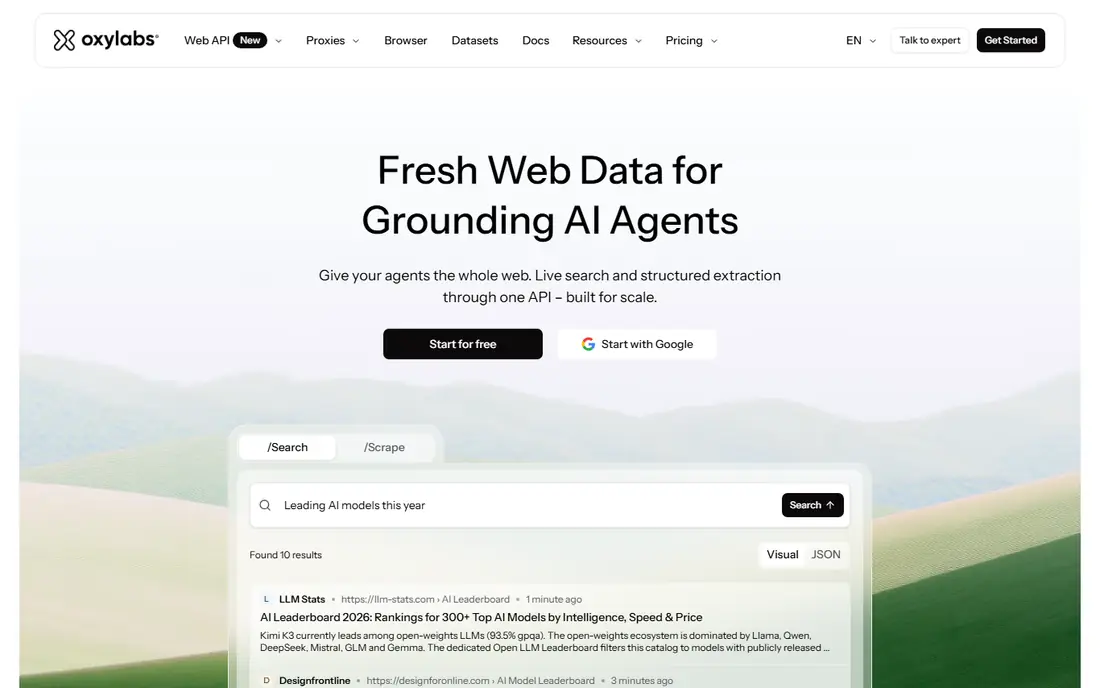
Oxylabs pairs residential, mobile, ISP, and datacenter proxies with scraping APIs that handle rendering, retries, and parsing for hard targets. Its documentation and support help data teams run stable collection jobs, and location targeting covers common scraping needs.
Smaller teams should watch usage costs, especially at higher tiers. For data teams that value reliability and support, Oxylabs is a strong Rayobyte replacement.
- Reliable residential and datacenter proxies
- Scraping APIs
- Strong documentation
- Enterprise pricing can be high
- Usage costs need watching
Decodo
Ideal for: Value residential proxies
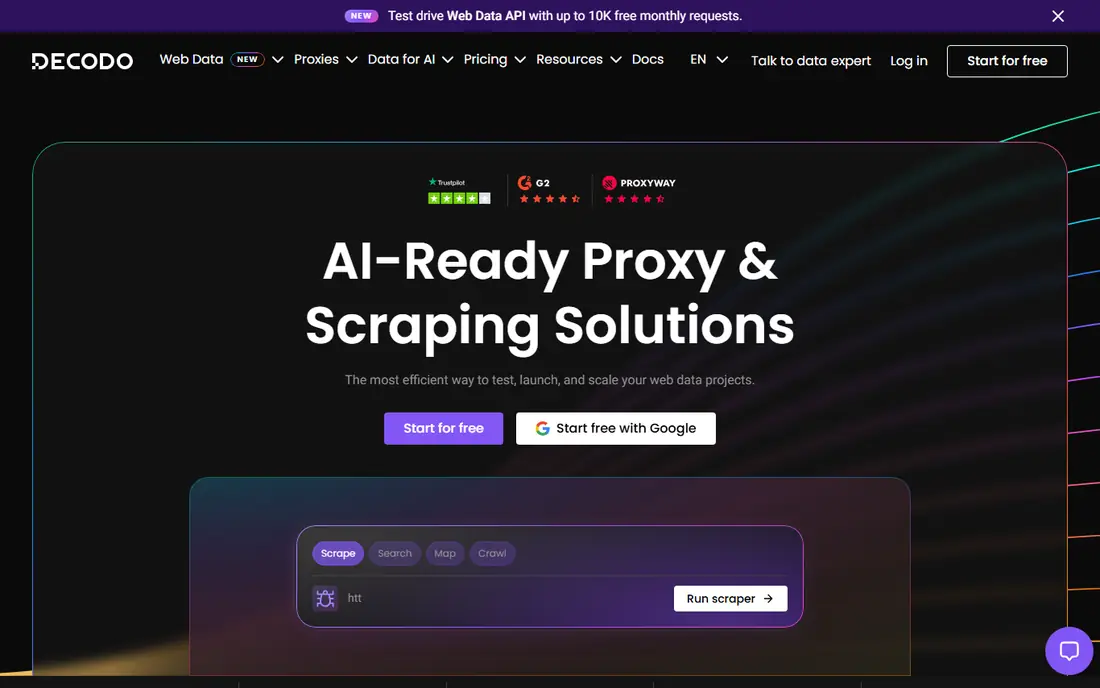
Decodo, formerly Smartproxy, offers residential, mobile, and datacenter proxies at competitive prices with a straightforward dashboard. That value focus suits small and mid-sized teams, SEO tools, and ecommerce monitoring that need dependable proxies without enterprise cost.
Pool depth and enterprise features are lighter than the top rivals. For teams that want solid proxies at a fair price, Decodo is a practical pick, and its trial lets you test success rates before scaling.
- Good value across proxy types
- Easy dashboard
- Growing coverage
- Pool depth is lighter than Bright Data
- Enterprise tooling is thinner
NetNut
Ideal for: Fast ISP proxies
NetNut builds proxies on direct ISP connections, plus residential options, which can mean lower latency and higher success rates for speed-sensitive collection. Price monitoring, ad verification, and data jobs that need fast, stable IPs benefit most.
Pricing for small volumes needs a closer look, and the dashboard is simpler than Bright Data. For teams that prioritize speed, NetNut is worth testing on your hardest targets.
- Fast ISP and residential proxies
- Direct ISP connections
- Good for speed-sensitive jobs
- Pricing needs a closer look for small volumes
- Dashboard is simpler than rivals
IPRoyal
Ideal for: Affordable proxy plans
IPRoyal offers affordable residential, mobile, and datacenter proxies with pay-as-you-go options that suit small teams and developers. Setup is simple, and the dashboard covers proxy management, location targeting, and usage tracking without enterprise complexity.
Pool size is smaller than Bright Data or Oxylabs, so test success rates on your target sites before scaling. For budget-conscious teams with moderate volume, IPRoyal offers good value close to Rayobyte pricing style.
- Affordable residential and datacenter proxies
- Pay-as-you-go options
- Simple setup
- Pool size is smaller than top rivals
- Support depth varies by plan
Webshare
Ideal for: Simple datacenter proxies
Webshare is the closest simple datacenter alternative to Rayobyte, with straightforward plans, a free tier for testing, and an easy API. Developers who need fast, cheap IPs for testing, internal tools, and less strict targets will find it easy to adopt.
Residential depth is lighter, and datacenter IPs face more blocks on strict sites. For general use, Webshare is affordable and simple. For hard targets, pair it with a residential provider from this list.
- Simple datacenter plans
- Free tier for testing
- Easy API and dashboard
- Residential depth is lighter
- Datacenter IPs face more blocks on strict sites
SOAX
Ideal for: Residential and mobile proxies
SOAX focuses on residential and mobile proxies with flexible targeting by country, region, city, and carrier, plus a clean dashboard for managing pools and usage. That focus suits data collection, ad verification, and market research where residential or mobile IPs perform better than datacenter IPs.
Datacenter depth is lighter than Webshare or Rayobyte, and pricing varies by proxy type. For teams that need residential and mobile coverage alongside datacenter options, SOAX rounds out this list well.
- Residential and mobile proxy focus
- Flexible location and carrier targeting
- Clean dashboard
- Pricing varies by proxy type
- Datacenter depth is lighter than Webshare
How we picked these
We compared official feature pages, pricing pages, and public reviews, and we checked that the homepages listed here belong to the products named. We favored providers that offer datacenter, residential, or mobile proxies with location targeting and trials, plus attention to compliance. We left out free proxy lists with no vendor accountability, and we did not include Rayobyte itself, since this list is about replacements.
We also weighed how each vendor treats new users, including trial length, onboarding help, and the quality of its public documentation. A tool with clear guides and responsive support earns trust faster than a tool with a thin help center, even when feature lists look similar. We gave extra weight to vendors that publish pricing openly and explain limits plainly, since hidden costs and surprise caps cause most buyer regret. Where pricing was only available on request, we said so rather than guessing, and we treated a missing free tier as a real drawback for small teams testing on a budget.
What to check before you buy
Start with your target sites and IP type. Datacenter IPs suit testing and less strict targets, while residential and mobile IPs suit strict sites that detect datacenter traffic. Test each finalist on your real targets and measure success rate, latency, and cost per successful request.
Next, check compliance and acceptable use. Confirm IP sourcing, consent practices where claimed, and whether your use case fits provider terms and target site rules. Document that review for commercial collection.
Finally, model cost at real volume. Compare per-GB, per-IP, and subscription pricing for your traffic, including retries. A cheap plan with low success rates can cost more than a pricier plan that succeeds first time.
Pay attention to support and update pace before you commit. Read the help center, check whether guides match the current version of the product, and test support with a real question during the trial. A vendor that answers clearly and fixes problems quickly is worth more than a slightly lower price from a vendor that leaves you waiting. Also check how often the product changes and whether updates break existing workflows, since a tool that shifts under you every month can cost your team steady retraining time. Stability matters most for tools your whole team depends on daily, so favor vendors with a clear changelog and a reputation for careful releases.
Also confirm how the tool behaves when your needs change. A product that fits today may feel tight after a year of growth, a new team, or a shift in how you work, so ask whether higher tiers, extra seats, or added features arrive without a forced migration. Read recent user reviews for signs of price rises, support changes, or features being moved between tiers, since those patterns often predict what your second year will cost. A tool that grows with you, with clear upgrade paths and honest limits, is usually the better long-term choice even when a rival looks slightly cheaper in month one.
Frequently asked questions
What is the best Rayobyte alternative for datacenter proxies?
Webshare is the closest simple datacenter pick, with straightforward plans and a free tier for testing. Bright Data and Oxylabs also offer datacenter proxies alongside residential and mobile options at larger scale.
Is there a free Rayobyte alternative?
Webshare offers a free tier for testing, and most providers here offer free trials. Free tiers limit bandwidth and IPs, so they suit testing rather than production collection.
What is the difference between datacenter and residential proxies?
Datacenter proxies come from cloud servers, cost less, and run fast, but strict sites block them more often. Residential proxies use IPs from real internet providers, look like normal users, and face fewer blocks, but cost more.
Are proxies legal?
Proxies are legal tools, but use matters. Respect target site terms, privacy laws, and provider acceptable use rules, and avoid collecting personal data or bypassing access controls without permission. Get legal advice before large commercial collection if unsure.
How do I choose between pay-per-GB and subscription pricing?
Pay-per-GB suits uneven or testing volumes, while subscriptions suit steady, high-volume collection with predictable costs. Model both against your real traffic, including retries, before committing to a yearly plan.
Can I use more than one of these tools together?
Yes, and many teams do, especially when one tool handles a core job well and another covers a niche need. The trick is to define which tool owns each job so records do not split across systems and confuse your team. Check integrations and data flow between the tools before committing, and name one system as the source of truth for each kind of record. Two tools that share data cleanly can beat one tool that does both jobs poorly, but two tools with no connection usually create duplicate work and errors.