Best RollWorks Alternatives in 2026: 8 Account-Based Marketing Tools Compared

- 1
 DemandbaseMature full-featured ABMVisit
- 2
 6senseAI-driven ABM platformVisit
- 3
 TerminusABM advertising plus salesVisit
- 4
 Madison LogicABM advertising and contentVisit
- 5
 JabmoFocused ABM advertisingVisit
- Demandbase and 6sense suit companies that want mature, full-featured account-based marketing platforms.
- Terminus and Madison Logic suit teams that want ABM advertising plus sales engagement in one platform.
- Jabmo and Metadata suit teams that want focused ABM advertising with clear campaign execution.
- HubSpot suits teams that want ABM features inside a CRM and marketing suite they already use.
- Bombora suits teams that want buyer intent data to power targeting across their existing tools.
Quick comparison
| Product | Ideal for | Price from | Free version | |
|---|---|---|---|---|
| Demandbase | Mature full-featured ABM | See website | See website | Visit |
| 6sense | AI-driven ABM platform | See website | See website | Visit |
| Terminus | ABM advertising plus sales | See website | See website | Visit |
| Madison Logic | ABM advertising and content | See website | See website | Visit |
| Jabmo | Focused ABM advertising | See website | See website | Visit |
 Metadata | Campaign execution ABM | See website | See website | Visit |
 HubSpot | ABM inside CRM suite | See website | See website | Visit |
 Bombora | Buyer intent data | See website | See website | Visit |
The best RollWorks alternatives
RollWorks is an account-based marketing platform for targeting, advertising, and engaging key accounts. The tools below cover similar ground, and they differ in breadth, data sources, and price. Some are full ABM suites with intent data and orchestration, while others focus on advertising or intent alone. The right pick depends on your target account count, sales model, and existing marketing stack.
Demandbase
Ideal for: Mature full-featured ABM
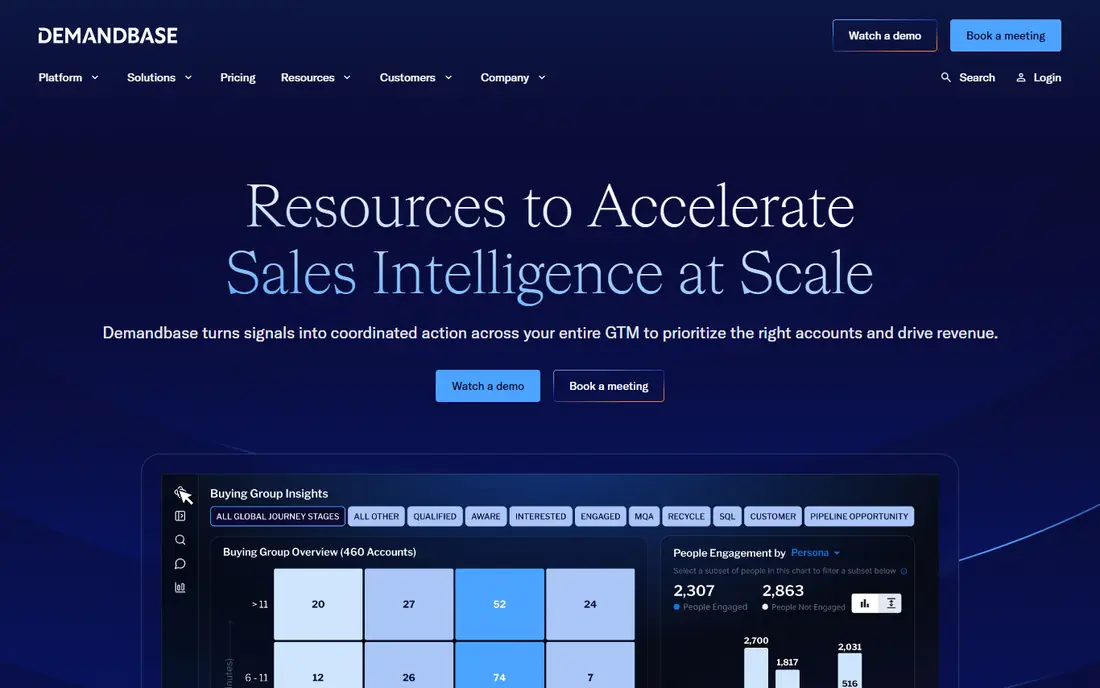
Demandbase is a mature account-based marketing platform combining intent data, account identification, advertising, and sales intelligence in one suite. It suits B2B companies running ABM at scale, with workflows that align marketing and sales around target accounts. Integrations with Salesforce and major marketing tools keep account data flowing.
Enterprise pricing puts it beyond small teams, and implementation takes planning. For companies that want a full-featured ABM suite, Demandbase is our pick.
- Broad ABM suite
- Strong intent and advertising
- Good Salesforce integration
- Enterprise pricing
- Implementation takes planning
6sense
Ideal for: AI-driven ABM platform
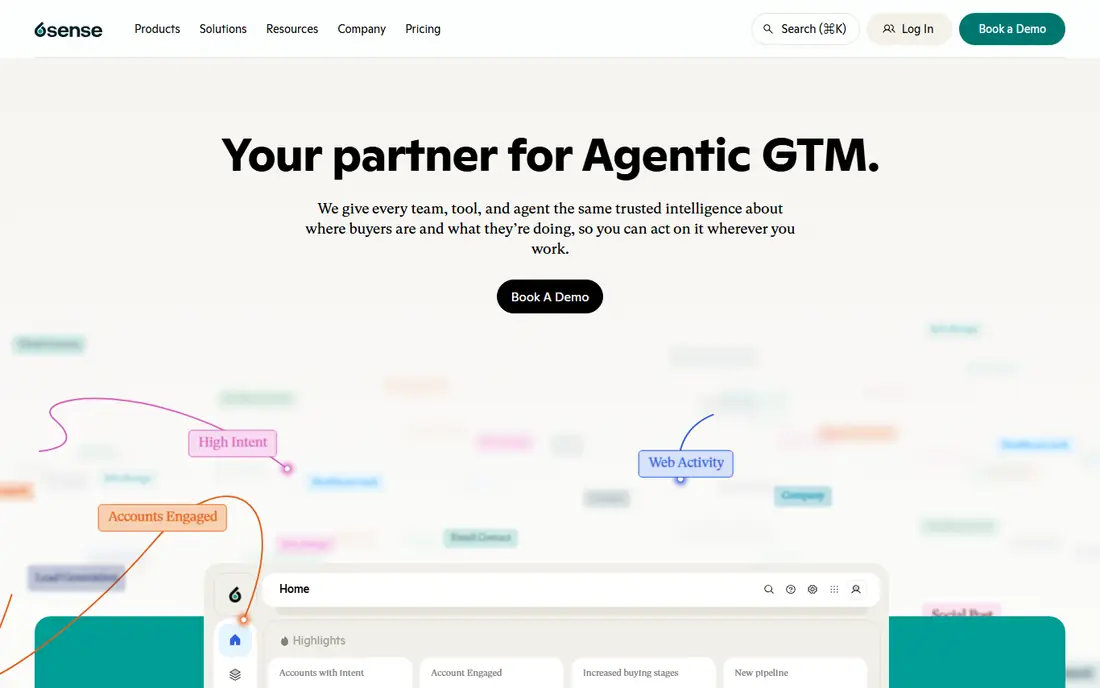
6sense uses AI to predict which accounts are in market, drawing on intent signals across the web to prioritize accounts and orchestrate campaigns. The platform covers advertising, sales intelligence, and analytics, with models that identify buying stages. That prediction strength suits companies with large addressable markets that need to focus on the accounts most likely to buy.
Enterprise pricing applies, and the learning curve is real. For teams that want AI-driven account prioritization, 6sense is a strong choice.
- Strong AI predictions
- Broad intent data
- Good orchestration
- Enterprise pricing
- Learning curve
Terminus
Ideal for: ABM advertising plus sales
Terminus combines account-based advertising with sales engagement tools, including email sequences and alerts that help sales teams act on account activity. Note that the Terminus site now presents the offering as DemandScience, the successor brand for this product line. Integrations with HubSpot and Salesforce keep marketing and sales aligned, and reporting shows account engagement clearly. The platform suits mid-size B2B teams running ABM without enterprise budgets.
Depth varies by module, and pricing suits mid-size and larger teams. For teams that want advertising plus sales engagement together, Terminus is a practical pick.
- ABM advertising plus sales engagement
- Good HubSpot and Salesforce links
- Clear reporting
- Depth varies by module
- Pricing suits mid-size and larger teams
Madison Logic
Ideal for: ABM advertising and content
Madison Logic offers account-based advertising and content syndication, helping B2B marketers reach target accounts with display ads and gated content across publisher networks. Intent signals guide targeting, and the platform suits companies that want to drive engagement with specific accounts through content. Campaign reporting shows account-level reach and engagement.
The enterprise focus means pricing suits larger teams, and the suite is narrower than Demandbase or 6sense. For teams that prioritize ABM advertising and content, Madison Logic is a reliable pick.
- Strong ABM advertising
- Content syndication
- Good intent signals
- Enterprise focus
- Narrower suite than Demandbase or 6sense
Jabmo
Ideal for: Focused ABM advertising
Jabmo focuses on account-based advertising for B2B companies, with targeting built around account lists and intent signals, plus creative services for campaigns. The site now presents Jabmo as an Expandi brand. The platform has strength in manufacturing, life sciences, and other complex B2B sectors. Campaigns run across display and social channels with account-level reporting.
The platform is smaller than the leaders, with fewer orchestration features. For teams that want focused ABM advertising execution, Jabmo is a good fit.
- Focused ABM advertising
- Good account targeting
- Strong for manufacturing and life sciences
- Smaller platform
- Fewer orchestration features
Metadata
Ideal for: Campaign execution ABM
Metadata automates B2B campaign execution across paid social and display, using AI to test audiences, creative, and channels against target accounts. The platform suits demand generation teams that run many campaigns and want automation to handle targeting and optimization. Experimentation features help teams learn what works quickly.
The advertising focus means less intent depth than 6sense, and the platform suits teams comfortable with paid channels. For teams that want automated campaign execution, Metadata is a strong choice.
- Automated campaign execution
- Good paid social and display
- Clear experimentation
- Advertising focus
- Less intent depth than 6sense
HubSpot
Ideal for: ABM inside CRM suite
HubSpot includes account-based marketing tools inside its CRM and marketing suite, with target account lists, ABM dashboards, and advertising integrations that teams already using HubSpot can adopt quickly. The advantage is unified data: marketing, sales, and service share one CRM, so account engagement is visible everywhere. Setup is easier than standalone ABM platforms.
ABM depth is less than pure platforms like Demandbase or 6sense, and advanced features need higher tiers. For teams already on HubSpot, its ABM tools are a good fit.
- ABM tools inside CRM and marketing suite
- Easy adoption
- Strong reporting
- ABM depth less than pure ABM platforms
- Advanced features need higher tiers
Bombora
Ideal for: Buyer intent data
Bombora provides buyer intent data through a cooperative of B2B publishers, showing which companies are researching topics relevant to your products. The data powers targeting in ABM platforms, CRMs, and advertising tools, making it a foundation layer rather than a full suite. Integrations cover major marketing and sales platforms.
Bombora is a data product, not a full ABM suite, so teams need other tools for campaign execution. For teams that want intent data to sharpen targeting everywhere, Bombora is a strong choice.
- Leading buyer intent data
- Broad data cooperative
- Integrates with many platforms
- Data product, not a full ABM suite
- Needs other tools for execution
How we picked these
We compared official feature pages, pricing, intent data sources, and public reviews for each platform, and we checked that each product is actively offered in October 2026. We favored tools with real account-based targeting, advertising, or intent capabilities, not generic ad platforms, and we kept a mix of full suites, advertising specialists, and intent data providers. We left out tools with no working signup or trial and tools that have shut down.
How to choose an ABM platform
ABM succeeds when sales and marketing agree on accounts, so start with alignment, not software.
Define target accounts together
Build your target account list with sales, not for sales, using fit criteria like industry, size, and technology, plus intent signals that show buying activity. A list everyone agrees on beats a larger list nobody trusts. Review the list quarterly, since accounts change, merge, and shift priorities.
Match channels to account behavior
Different accounts respond to different channels, from display ads and content syndication to sales outreach and events. Test which channels reach your accounts, and measure engagement at the account level rather than the lead level. A platform that reports account engagement clearly helps you shift spend to what works.
Measure pipeline, not clicks
ABM should be judged on pipeline and revenue from target accounts, not click rates or impressions. Set up reporting that ties campaigns to opportunities and closed deals, and give the program time, since enterprise deals take months. A tool with clean Salesforce or HubSpot integration makes this measurement far easier.
Sales alignment deserves ongoing attention, since ABM fails when marketing runs campaigns that sales ignores. Set up shared dashboards, account alerts, and regular reviews where both teams discuss target account progress together. Agree on what counts as meaningful engagement and when sales should follow up, so hot accounts get attention while they are still active. A platform with good sales alerts and CRM integration makes this alignment far easier to sustain.
Data quality underpins everything in ABM, since targeting depends on accurate account records. Clean duplicate accounts, standardize company names, and keep firmographic data current before launching campaigns, or your ads will reach the wrong companies. Check how each platform handles account matching and data enrichment, and whether it deduplicates leads against accounts automatically. Good data hygiene is unglamorous work, but it decides whether ABM feels precise or wasteful.
Pilot the platform with a small set of accounts before rolling it out widely, so you can test targeting accuracy, ad quality, and sales follow-up on a manageable scale. Measure engagement and pipeline from the pilot accounts against a control group, and adjust messaging and channels based on what you learn. A careful pilot builds internal confidence and gives you real numbers to justify the wider rollout.
Frequently asked questions
What is RollWorks?
RollWorks is an account-based marketing platform for targeting, advertising, and engaging key accounts. The tools here offer similar ABM capabilities with different emphasis on suite breadth, advertising, intent data, and CRM integration.
Which RollWorks alternative is best for full ABM suites?
Demandbase and 6sense suit full ABM suites best, since they combine intent data, advertising, orchestration, and sales intelligence. Terminus also suits teams that want advertising plus sales engagement in one platform.
Which alternative is best for teams already using HubSpot?
HubSpot itself suits teams already using it, since its ABM tools live inside the CRM and marketing suite with shared data. Terminus also integrates well with HubSpot for teams that want a dedicated ABM layer.
Which alternative is best for intent data alone?
Bombora suits intent data alone best, since its publisher cooperative provides broad buyer intent signals that feed targeting across many platforms. 6sense and Demandbase also offer strong intent data inside their suites.
Can small teams do ABM with these tools?
Yes, though enterprise suites may be costly for small teams. HubSpot, Terminus, and Metadata suit smaller teams better, while Bombora intent data can sharpen targeting even with modest campaign budgets.