RunPod Alternatives in 2026: 8 Tools Compared

- 1
 Lambda LabsHigh-performance GPU cloudVisit
- 2
 Vast.aiLow-cost GPU marketplaceVisit
- 3
 PaperspaceManaged GPU notebooksVisit
- 4
 ModalServerless GPU computeVisit
- 5
 ReplicateModel hosting and APIsVisit
- Lambda Labs and CoreWeave suit teams that need high-performance GPU clusters at scale.
- Vast.ai and TensorDock suit users who want low-cost, marketplace-style GPU rentals.
- Paperspace and Modal suit developers who want managed notebooks and serverless GPU.
- Replicate and SaladCloud cover model hosting and distributed GPU use cases.
Quick comparison
| Product | Ideal for | Price from | Free version | |
|---|---|---|---|---|
| Lambda Labs | High-performance GPU cloud | See website | Free trial | Visit |
| Vast.ai | Low-cost GPU marketplace | See website | No | Visit |
| Paperspace | Managed GPU notebooks | See website | Free trial | Visit |
| Modal | Serverless GPU compute | See website | Yes | Visit |
| Replicate | Model hosting and APIs | See website | Free trial | Visit |
 TensorDock | Marketplace GPU rentals | See website | No | Visit |
 CoreWeave | Enterprise GPU clusters | See website | No | Visit |
 SaladCloud | Distributed GPU compute | See website | Free trial | Visit |
The best RunPod alternatives
We compared official feature pages, pricing pages, and app-store listings for GPU cloud platforms available in October 2026. RunPod offers GPU rentals for AI training and inference, and the tools below cover similar cloud, marketplace, and serverless needs.
Lambda Labs
Ideal for: High-performance GPU cloud
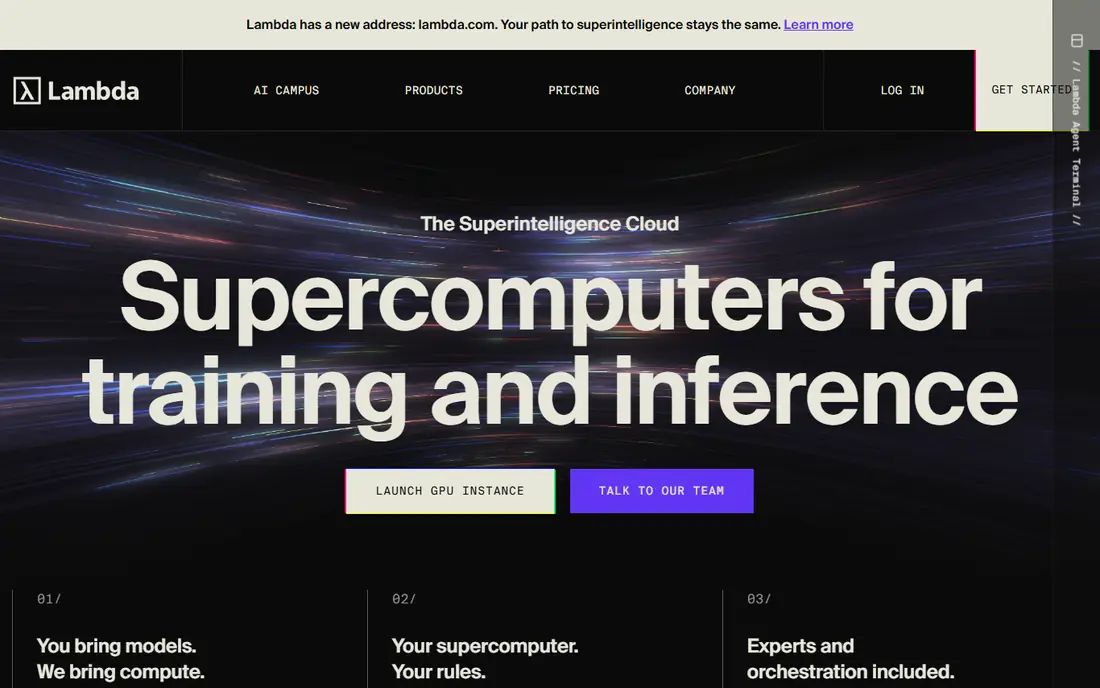
Lambda Labs, often called Lambda, is a GPU cloud built for AI training and inference, with on-demand instances, reserved capacity, and clusters. Its platform supports PyTorch, TensorFlow, and other frameworks, with fast networking and storage for large models. A cloud console and API manage instances and clusters.
Pricing is quote-based for large clusters, and availability varies by region and GPU type. For a team that needs reliable, high-performance GPUs for training, Lambda is a leading RunPod alternative.
- High-performance GPU instances
- On-demand and reserved options
- Strong AI focus
- Pricing is quote-based for clusters
- Availability varies by region
Vast.ai
Ideal for: Low-cost GPU marketplace
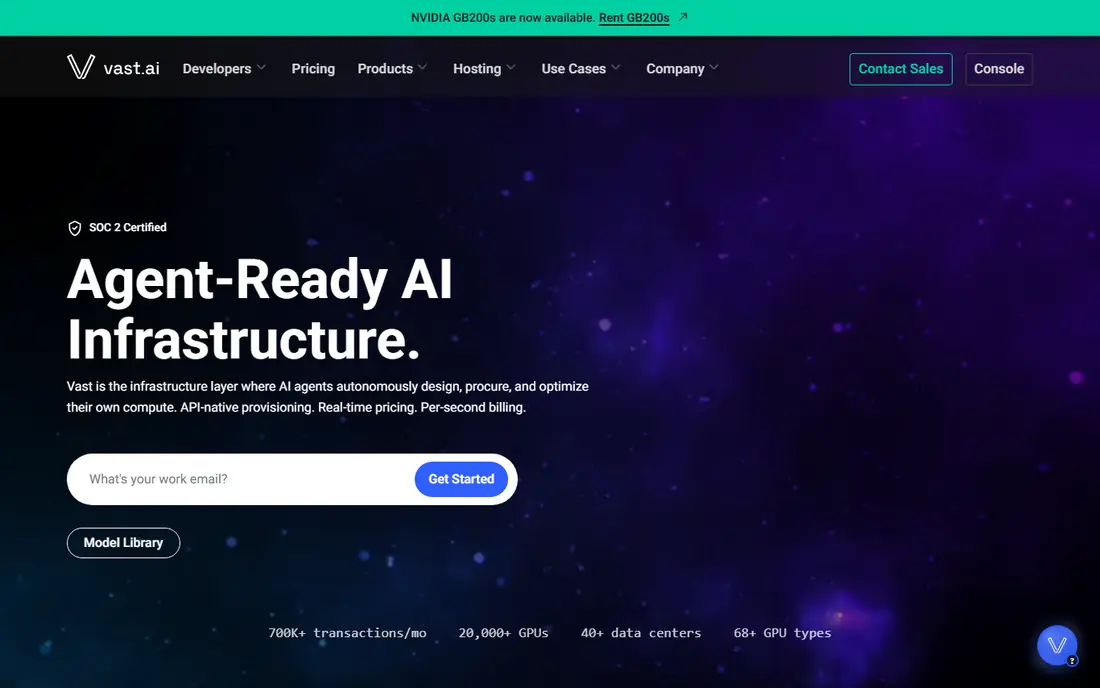
Vast.ai is a marketplace where GPU hosts rent out hardware at competitive prices, with many GPU types and flexible terms from hourly to long-term. Users can filter by price, performance, and location, and the platform supports Docker images and Jupyter access. Its marketplace model often beats fixed cloud pricing.
Host reliability varies, since hosts are independent, and support is community-focused. For a user who wants the lowest price and is willing to manage host differences, Vast.ai is a strong choice.
- Low-cost marketplace pricing
- Many GPU types
- Flexible rental terms
- Host reliability varies
- Support is community-focused
Paperspace
Ideal for: Managed GPU notebooks
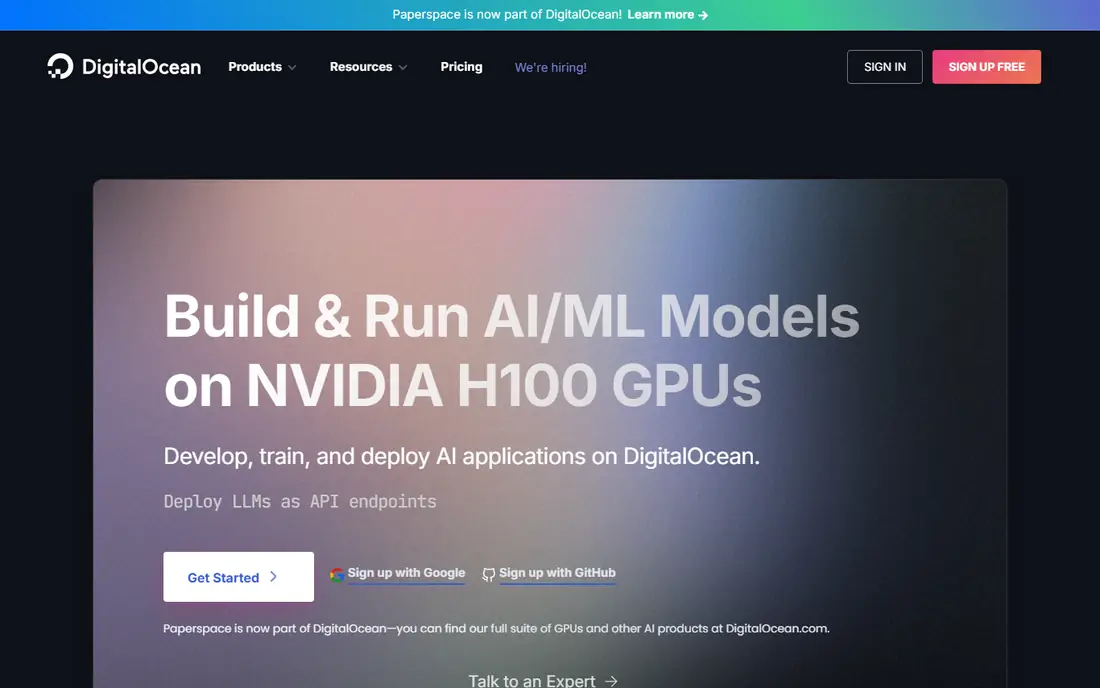
Paperspace, part of DigitalOcean, offers GPU notebooks, jobs, and deployments through its Gradient platform. Users can start a notebook in minutes, run training jobs, and deploy models as APIs, with team collaboration and storage. Its interface suits data scientists who want managed infrastructure.
Pricing can grow with sustained use, and some features depend on DigitalOcean's platform. For a team that wants managed notebooks and jobs without managing servers, Paperspace is a practical choice.
- Managed notebooks and jobs
- Gradient platform
- Good for teams
- Pricing can grow with use
- Part of DigitalOcean
Modal
Ideal for: Serverless GPU compute
Modal is a serverless compute platform for Python that runs functions, jobs, and web endpoints on GPUs and CPUs, with fast cold starts and automatic scaling. Developers define infrastructure in code, and Modal handles provisioning, scaling, and billing per second. A free tier covers basic use with monthly credits.
Modal is Python-focused, so other languages need workarounds, and complex workflows need coding skill. For a Python developer who wants serverless GPU without managing servers, Modal is an excellent choice.
- Serverless GPU with fast cold starts
- Python-first
- Generous free tier
- Python-focused
- Complex workflows need coding skill
Replicate
Ideal for: Model hosting and APIs
Replicate lets developers run and host machine learning models through an API, with a large public library of image, video, audio, and language models. Users can run a model with one API call, deploy their own model with Cog, and pay per use. It suits apps that need model inference without managing GPUs.
Replicate offers less control than raw GPU rentals, and pricing varies by model and hardware. For a developer who wants to add AI to an app quickly, Replicate's API and library are hard to match.
- Host and run models via API
- Large public model library
- Pay-per-use pricing
- Less control than raw GPU rentals
- Pricing varies by model
TensorDock
Ideal for: Marketplace GPU rentals
TensorDock is a GPU marketplace offering competitive rentals from hosts around the world, with many GPU types and simple deployment through Docker and Jupyter. Users can filter by price and performance, and the platform supports hourly billing. Its pricing often undercuts fixed cloud providers.
Host reliability varies, as with any marketplace, and TensorDock is a smaller brand than Vast.ai. For a user who wants low-cost GPU rentals with simple setup, TensorDock is worth comparing with Vast.ai.
- Competitive marketplace pricing
- Many GPU options
- Simple deployment
- Host reliability varies
- Smaller brand than Vast.ai
CoreWeave
Ideal for: Enterprise GPU clusters
CoreWeave is a specialized GPU cloud for large-scale AI workloads, offering clusters with high-performance networking, storage, and managed Kubernetes. Its clients include large AI labs and enterprises running training and inference at scale. It supports NVIDIA GPUs and optimized infrastructure for demanding workloads.
Pricing is quote-based and the platform targets large teams, so individuals will find it less accessible. For an enterprise that needs GPU clusters at scale, CoreWeave is a leading choice.
- Large-scale GPU infrastructure
- High-performance networking
- Enterprise clients
- Pricing is quote-based
- Aimed at large teams, not individuals
SaladCloud
Ideal for: Distributed GPU compute
SaladCloud, from Salad, offers distributed GPU compute through a network of consumer and data center GPUs, with container deployment and competitive pricing. Developers can deploy containers and scale workloads across the network, with a focus on inference and batch jobs. A free trial covers evaluation.
As a newer platform, availability varies by region and GPU type. For a team that wants distributed GPU compute at competitive prices, SaladCloud is an interesting alternative to traditional clouds.
- Distributed GPU network
- Container deployment
- Competitive pricing
- Newer platform
- Availability varies by region
How we picked these
We compared official feature pages, pricing pages, and app-store listings for GPU cloud platforms available in October 2026. We favored tools with current products, GPU rental or serverless options, and a range of prices, from marketplaces to enterprise clusters. We also compared total job cost, availability, and checkpoint support, since a cheap hourly rate means little if jobs fail or cannot resume. We did not include our own product in this list.
How to choose a RunPod alternative
Start with your workload. Training points to Lambda Labs or CoreWeave for performance, while inference points to Modal, Replicate, or SaladCloud for serverless and API use. Budget-focused users should compare Vast.ai and TensorDock marketplaces, while notebook users should try Paperspace.
Then test with a real job. Check GPU availability in your region, cold start times, storage speed, and total cost at your expected hours. GPU pricing varies fast, so a small test job gives a better cost picture than a pricing page alone.
GPU pricing changes fast, so compare total job cost, not just hourly rates. A cheap hourly rate on a slow GPU can cost more per job than a faster, pricier one, and storage, networking, and idle time add to the bill. Run a benchmark job on each candidate platform with your real model and data, and measure wall-clock time plus total charges. Also check GPU availability in your region at the times you work, since marketplace supply fluctuates and on-demand capacity can vanish during peak demand. For training, confirm checkpoint saving and resume support, since a job that cannot resume after an interruption wastes hours. For inference, check cold start times and autoscaling behavior under load. Finally, keep your work portable: containerize jobs and store data in a standard format, so moving between GPU providers stays possible when prices or availability change.
Support and documentation quality vary widely across GPU platforms, so test them during a trial. Try deploying a job from the docs alone, without help from sales, and note where the docs are thin or outdated. Check community activity, such as forums and example repositories, since a strong community answers questions faster than a small support team. Also confirm billing transparency: invoices should show GPU hours, storage, and network charges clearly, so a surprise bill can be traced to a specific job. Set spending alerts and hard caps where the platform supports them, especially for team accounts, since a runaway training job can burn a budget overnight. A platform with clear billing and good docs saves money in ways that hourly rates alone do not show.
Frequently asked questions
What is the best RunPod alternative?
Lambda Labs suits teams that need high-performance GPUs, while Vast.ai suits budget users who want marketplace pricing. Modal suits Python developers who want serverless GPU, and Replicate suits apps that need model APIs.
Is Vast.ai cheaper than RunPod?
Vast.ai marketplace pricing is often lower than fixed cloud pricing, but host reliability and availability vary. Compare total cost for your GPU type, hours, and region, since prices change with supply.
Can I run AI models without managing GPUs?
Yes. Modal offers serverless GPU for Python, while Replicate offers model APIs that handle infrastructure for you. Paperspace offers managed notebooks and deployments for teams that want less server work.
What is the difference between Lambda Labs and CoreWeave?
Both offer high-performance GPU clouds, but Lambda Labs suits a broader range of teams with on-demand instances, while CoreWeave focuses on large-scale enterprise clusters with high-performance networking. Pricing for both is quote-based at larger scales.
Do these platforms support PyTorch and TensorFlow?
Yes. Most GPU clouds support common frameworks through Docker images, notebooks, or prebuilt environments. Check the platform's image library and CUDA support for your specific framework version before committing.
How much GPU memory do I need for AI training?
It depends on model size, batch size, and precision. As a rough guide, a small fine-tuning job may run on 16 GB, while training a large model from scratch can need 40 GB or more per GPU, often across several GPUs. Check your framework's memory estimates, start with a small run, and watch actual usage before booking large capacity. Mixed precision and gradient checkpointing can cut memory needs significantly, so test those options before paying for bigger GPUs.