Best SageMaker Alternatives in 2026: 8 Platforms Compared

- 1
 Google Vertex AIGoogle Cloud ML platformVisit
- 2
 Azure Machine LearningAzure ML platformVisit
- 3
 DatabricksLakehouse ML and dataVisit
- 4
 DataRobotAutoML for business teamsVisit
- 5
 H2O.aiOpen source AutoMLVisit
- Google Vertex AI and Azure Machine Learning are the closest cloud alternatives to SageMaker, especially for teams already on Google Cloud or Azure.
- Databricks leads for teams that combine data engineering and ML on a lakehouse, while DataRobot and H2O.ai suit teams that want AutoML.
- Paperspace, Domino, and Valohai suit smaller teams, data science workflows, and MLOps-focused pipelines respectively.
- ML pricing is usually usage-based for compute plus platform fees, so compare total training and deployment costs, not just platform subscriptions.
Quick comparison
| Product | Ideal for | Price from | Free version | |
|---|---|---|---|---|
| Google Vertex AI | Google Cloud ML platform | See website | Free trial | Visit |
| Azure Machine Learning | Azure ML platform | See website | Free trial | Visit |
| Databricks | Lakehouse ML and data | See website | Free trial | Visit |
| DataRobot | AutoML for business teams | See website | Free trial | Visit |
| H2O.ai | Open source AutoML | See website | Free trial | Visit |
 Paperspace | GPU cloud for ML teams | See website | Free trial | Visit |
 Domino Data Lab | Enterprise data science | See website | Free trial | Visit |
 Valohai | MLOps pipeline platform | See website | Free trial | Visit |
The best sagemaker alternatives
Amazon SageMaker is a managed machine learning platform for building, training, tuning, and deploying models on AWS. Alternatives offer similar managed ML, AutoML, or MLOps capabilities on other clouds or as independent platforms, and the right choice often follows your cloud and data stack. We compared official feature pages, pricing pages, documentation, and public reviews, focusing on training, deployment, AutoML, MLOps, and integrations.
Google Vertex AI
Ideal for: Google Cloud ML platform
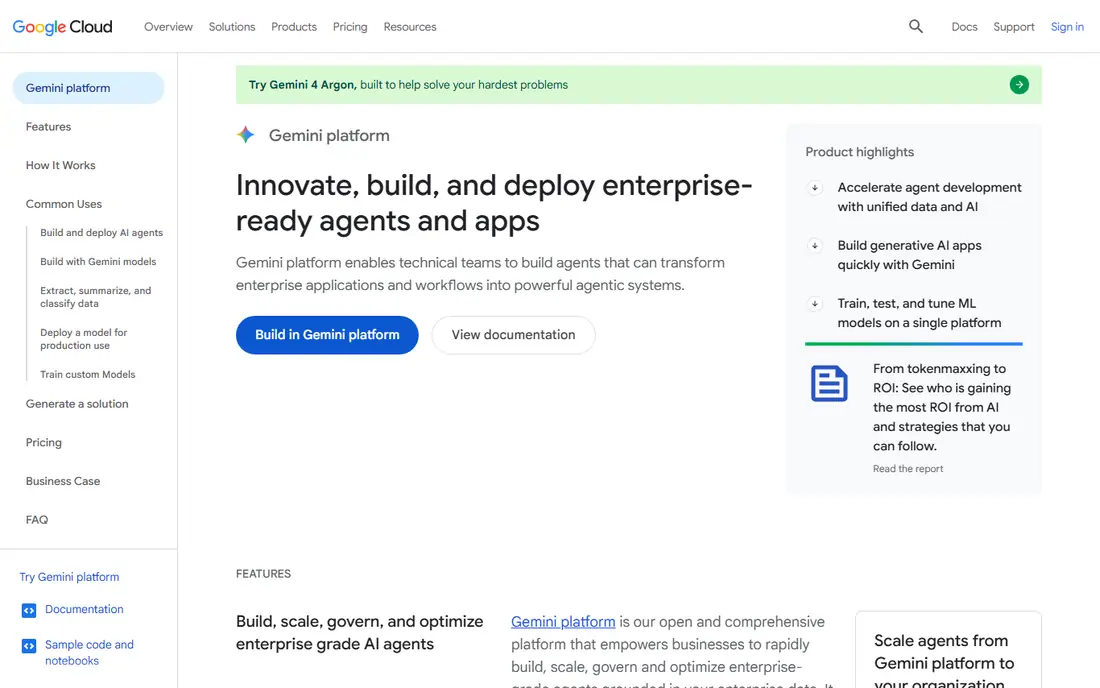
Google Vertex AI is Google Cloud's managed ML platform, covering data preparation, AutoML, custom training, tuning, deployment, and monitoring in one system. Its integration with BigQuery, Cloud Storage, and Google's foundation models suits teams already on Google Cloud, and its MLOps tools cover pipelines, registries, and monitoring. For Google Cloud teams, Vertex AI is the direct SageMaker parallel.
Pricing is usage-based across compute, storage, and API use, so total costs need modeling for training and serving workloads. Teams outside Google Cloud should compare Azure or Databricks. For Google Cloud ML, Vertex AI is our pick.
- Full managed ML on Google Cloud
- AutoML and custom training
- Strong MLOps tools
- Best value inside Google Cloud
- Pricing is usage-based and complex
Azure Machine Learning
Ideal for: Azure ML platform

Azure Machine Learning is Microsoft's managed ML platform, with AutoML, visual designer, notebooks, pipelines, and deployment, integrated with Azure data services and Microsoft 365 identity. That Azure fit suits enterprises already standardized on Microsoft, since data, security, and identity stay connected. Its enterprise controls and compliance support are strengths for regulated sectors.
Pricing is usage-based and complex at scale, and value is highest inside Azure. For Azure-based ML teams, Azure Machine Learning is the natural SageMaker alternative.
- Full managed ML on Azure
- AutoML and designer tools
- Strong enterprise integration
- Best value inside Azure
- Pricing complexity for large workloads
Databricks
Ideal for: Lakehouse ML and data
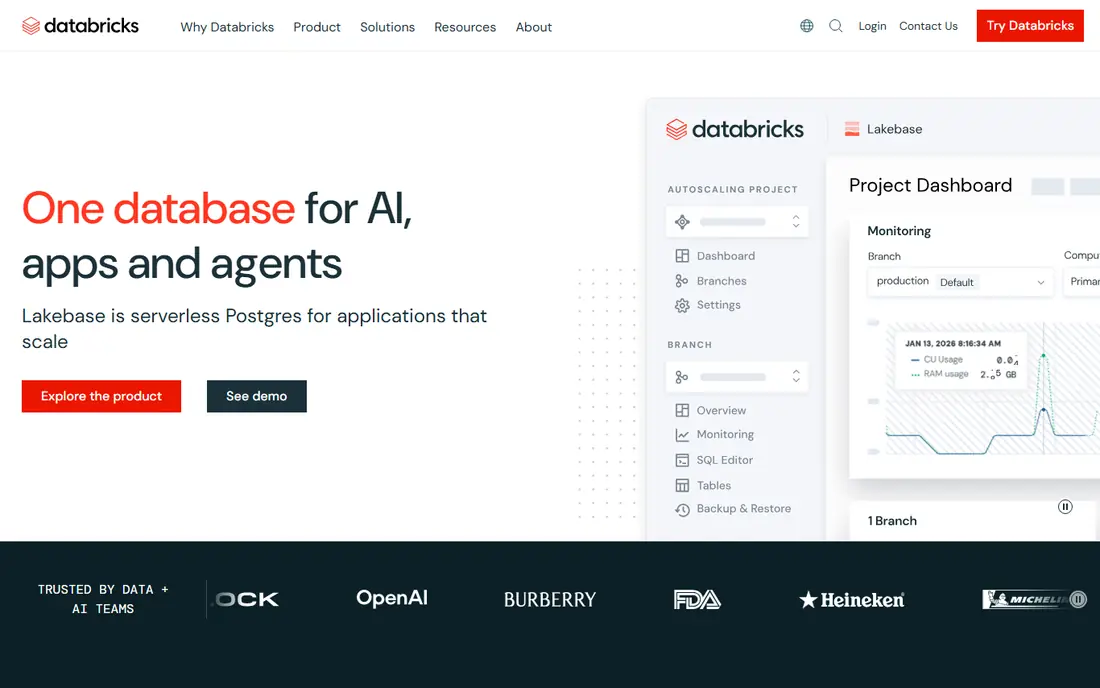
Databricks combines data engineering, analytics, and ML on a lakehouse platform, with notebooks, MLflow for experiment tracking and model registry, and tools for feature engineering and serving. That unity suits teams whose ML work starts with large, messy data, since data preparation and modeling happen in one place. Its scale and collaboration features suit large data teams.
Pricing is usage-based, combining Databricks units with cloud compute, and new teams face a learning curve. For data-heavy ML teams, Databricks is a leading SageMaker alternative.
- Unified data and ML on lakehouse
- Strong notebooks and MLflow
- Good for large data teams
- Pricing is usage-based
- Platform learning curve for new teams
DataRobot
Ideal for: AutoML for business teams
DataRobot is an AutoML platform that builds, compares, and deploys models for tabular, time-series, and text data, with explainability tools that show which features drive predictions. That business focus suits teams that need accurate models quickly without deep ML expertise, including finance, retail, and insurance use cases. Deployment and monitoring are built in.
Pricing is enterprise, and custom deep learning research is less central than in SageMaker or Vertex AI. For business AutoML, DataRobot is a strong choice.
- Strong AutoML for tabular and time-series data
- Explainability tools
- Business-friendly workflows
- Enterprise pricing
- Less suited to custom deep learning research
H2O.ai
Ideal for: Open source AutoML
H2O.ai offers open source AutoML through H2O-3, plus enterprise platforms such as H2O AI Cloud for model building, deployment, and monitoring. Its open source roots appeal to teams that want to start free and scale to enterprise support, and its tabular AutoML is well regarded. That path suits data science teams that value openness and control.
Product range and interfaces vary across open source and enterprise offerings, so buyers should check which product fits their workflow. For open source AutoML, H2O.ai is a leading option.
- Open source AutoML with H2O-3
- Enterprise platform options
- Good for tabular data
- Interface and platform range vary by product
- Enterprise features need paid plans
Paperspace
Ideal for: GPU cloud for ML teams
Paperspace, part of DigitalOcean, offers GPU cloud infrastructure with notebooks, training jobs, and deployment tools for ML teams that need accessible compute without AWS complexity. Its simplicity and pricing transparency appeal to smaller teams, startups, and researchers who want GPUs quickly. That focus makes it easy to start training without a large platform project.
MLOps depth and managed services are lighter than SageMaker, Vertex AI, or Databricks, so larger teams may need additional tooling. For accessible GPU ML, Paperspace is a practical choice.
- Accessible GPU cloud
- Notebooks and training jobs
- Good for smaller ML teams
- Smaller platform range than SageMaker
- MLOps depth is lighter
Domino Data Lab
Ideal for: Enterprise data science
Domino Data Lab is an enterprise data science platform covering notebooks, experiments, model management, deployment, and governance, with collaboration tools for data science teams. Its governance and reproducibility features suit regulated enterprises that need audit trails for models, data, and code. That enterprise focus distinguishes it from simpler notebook platforms.
Pricing is enterprise, and implementation for large teams takes effort. For enterprise data science with governance needs, Domino is a strong SageMaker alternative.
- Enterprise data science platform
- Collaboration and governance
- Strong MLOps support
- Enterprise pricing
- Implementation effort for large teams
Valohai
Ideal for: MLOps pipeline platform
Valohai is an MLOps platform for running ML pipelines across clouds, with experiment tracking, versioning, and deployment tools that work with teams' existing code and frameworks. That cloud-agnostic approach suits teams that do not want to lock into one cloud, or that run workloads across AWS, Google Cloud, and Azure. Its pipeline focus keeps ML work reproducible and traceable.
Valohai is smaller than the cloud giants, and it is pipeline-focused rather than a full AutoML platform, so teams needing AutoML should pair it with DataRobot or H2O. For MLOps pipelines, Valohai is a capable and flexible choice.
- MLOps pipelines across clouds
- Experiment tracking
- Good for teams with existing code
- Smaller vendor than cloud giants
- Platform is pipeline-focused, not full AutoML
How we picked these
We compared official feature pages, pricing pages, documentation, and public reviews for platforms that build, train, and deploy ML models as alternatives to SageMaker. We covered cloud ML platforms, lakehouse ML, AutoML, GPU clouds, and MLOps tools, since SageMaker spans those areas, and we noted where a tool covers only part of the ML lifecycle. Pricing is usually usage-based, so we marked most as plan-based.
What to check before you choose a SageMaker alternative
Start with your cloud and data location. Teams on Google Cloud should shortlist Vertex AI, Azure teams should shortlist Azure Machine Learning, and data-heavy teams should consider Databricks, since moving data across clouds adds cost and latency. Check data residency and compliance needs early, especially for regulated ML use.
Next, test the full lifecycle, not just training: data preparation, experiment tracking, deployment, monitoring, and retraining all matter, and gaps in any stage create manual work. Confirm framework support for your models, GPU availability, and cost controls, since ML compute can surprise budgets. A small pilot with a real model, from training to serving, will reveal more than a feature comparison.
Also consider experiment tracking and model governance from the start, since production ML needs reproducibility long after training finishes. Check how each platform versions data, code, and models together, and whether experiment results are searchable by team members who did not run them. A platform with weak tracking will make debugging a bad model deployment far harder, especially when the original training data or code has changed since the model was built.
Frequently asked questions
What is the best SageMaker alternative?
Vertex AI suits Google Cloud teams, Azure Machine Learning suits Azure teams, and Databricks suits data-heavy ML teams. DataRobot and H2O.ai suit AutoML needs, while Paperspace suits smaller teams that need accessible GPUs.
Can I use SageMaker alternatives without AWS?
Yes, Vertex AI, Azure Machine Learning, Databricks, DataRobot, H2O.ai, Paperspace, Domino, and Valohai all run outside AWS, with Valohai also supporting multi-cloud pipelines. Choose based on your cloud, data location, and team skills.
How much do SageMaker alternatives cost?
Most platforms charge usage-based fees for compute, storage, and platform use, plus any subscription tiers, so total cost depends on training volume, model size, and serving traffic. Model costs with a real workload before committing, and set budget alerts.
What is AutoML?
AutoML automates model selection, feature engineering, and tuning, letting teams build accurate models without manually trying many algorithms. DataRobot, H2O.ai, Vertex AI, and Azure Machine Learning all offer AutoML, though custom deep learning still needs manual work.
Do I need MLOps tools with a SageMaker alternative?
Yes, for production ML, MLOps tools for experiment tracking, versioning, deployment, and monitoring matter as much as training. Platforms such as Vertex AI, Azure ML, Databricks, and Valohai include MLOps features, while simpler GPU clouds may need additional tooling.