If you need standards-based, AI-native TPCRM, Black Kite is the first tool to look at here. Listed starting prices: UpGuard from $1,750 a month, billed annually. RiskRecon fits threat intelligence-led external risk; OneTrust fits privacy, consent and AI governance. The full list of 5 tools follows, with prices and free plan facts.
This Ainotely guide covers 5 options for SecurityScorecard. Each profile lists a starting price, free plan details, strengths and drawbacks, so you can drop poor fits quickly.
Key takeaways
Top of the list is Black Kite, which targets standards-based, AI-native TPCRM.
UpGuard has the lowest monthly starting price in this list: $1,750 per month, billed annually.
Neither Black Kite nor UpGuard, nor any of the other 3 tools, has a permanent free plan; trials and quotes are the norm.
UpGuard is the one to check for unified cyber risk posture management.
A fair warning about RiskRecon: less emphasis on workforce risk.
Black Kite is aimed squarely at standards-based, AI-native TPCRM. Black Kite centers on external cyber risk instead of broader privacy or workforce risk.
More specifically, check how standards-based data and impact modeling align with your reporting needs. In daily use, teams building a modern TPCRM stack with continuous monitoring should evaluate it. Black Kite shows no starting price here, so confirm the cost on the vendor site. As for free access: Not stated.
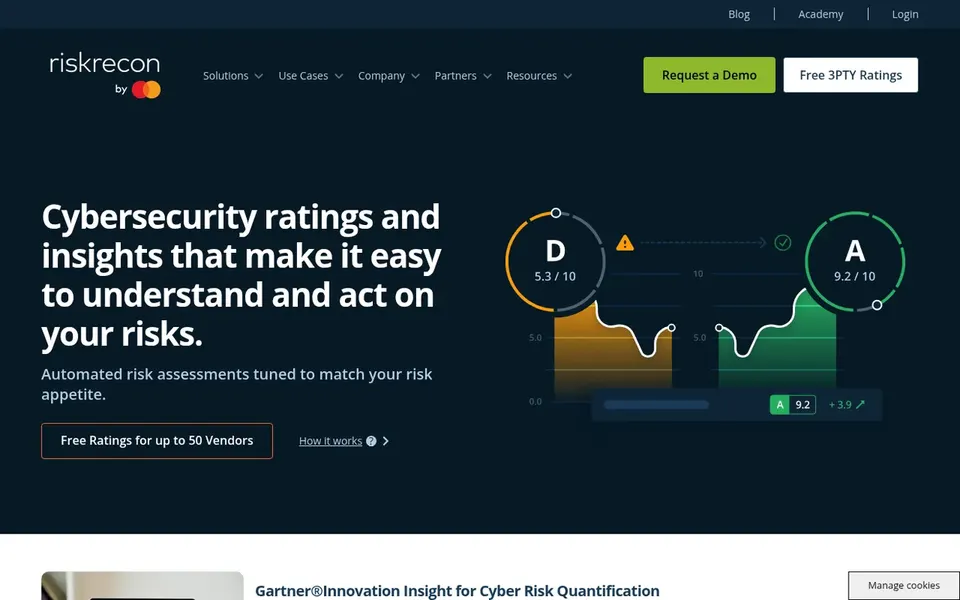
RiskRecon was built for threat intelligence-led third-party risk. Teams needing a single tool for internal and external posture may have to pair it with another option. Organizations already using threat intelligence in vendor reviews may find the approach familiar.
Limits to weigh: May need integration for full workflows.
RiskRecon concentrates on external cyber risk and does not position itself as a wide workforce or attack surface system. Beyond that, evaluate whether its intelligence-driven model matches your assessment workflow. This comparison lists no price for RiskRecon; ask the vendor. Free access: Not stated.
In short, OneTrust is for privacy, consent and AI governance. OneTrust helps businesses manage privacy, consent and AI governance whereas automating compliance and reducing risk. Beyond that, OneTrust is not positioned primarily as an external cyber risk rating system.
So teams seeking deep vendor security scoring may need a specialized tool. Beyond that, evaluate whether its governance scope complements or replaces your current vendor risk process. Beyond that, teams with overlapping privacy and vendor risk needs may value the consolidated approach. Check the vendor site for OneTrust pricing; none is listed in this comparison. As for free access: Not stated.
Honest limits: May need module selection. Where it shines: Automates compliance and cuts risk.
Think of Panorays for business-context external assessments. Panorays is an external cyber risk management system that helps organizations assess, monitor and fix external cyber risk based on business context.
Where it is weaker: Primarily external focused.
Beyond that, confirm how context is configured and maintained before committing. Pricing for Panorays is not stated here, so ask the vendor for current figures. Free options: Free trial.
UpGuard is a good fit for unified cyber risk posture management. Since UpGuard spans multiple risk domains, teams with a very narrow external assessment need may find the scope broader than required. Beyond that, confirm module fit and workflow details on the vendor site before deciding.
What works well: Wide posture management scope.
Watch-outs: May be wide for narrow vendor-only needs.
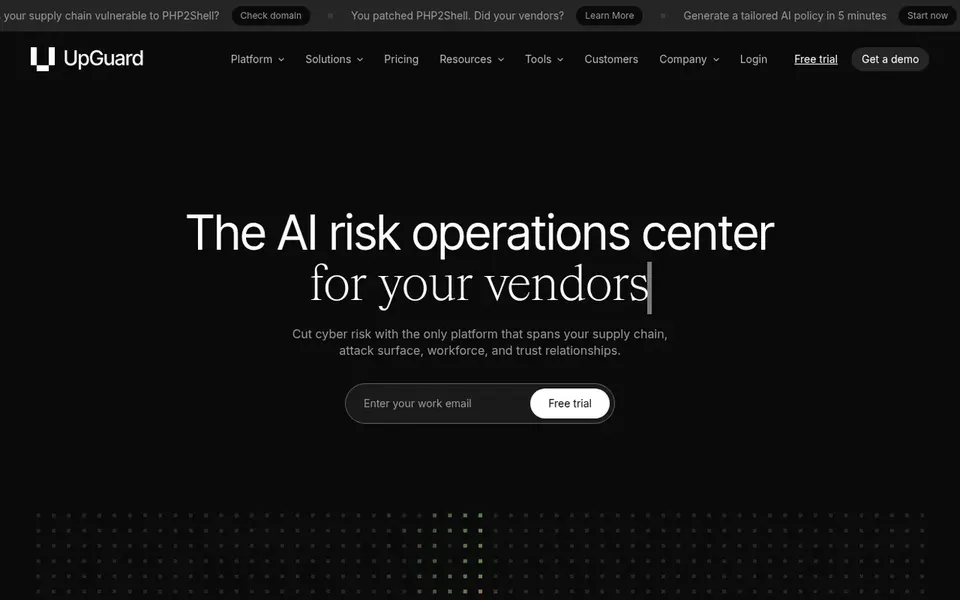
More specifically, UpGuard presents itself as a cyber risk posture management system that brings together risk across the vendor supply chain, attack surface and human workforce. Teams seeking consolidated reporting across vendors and their own exposed assets should consider it. Price to start with UpGuard: $1,750 per month, billed annually. Free access: Free trial.
Confirm the entry price on the vendor page. For Black Kite, RiskRecon, OneTrust and Panorays that means a quote rather than a fixed price.
Use real work to test the free trial from Panorays and UpGuard, rather than a demo project.
Before choosing Black Kite, weigh its main limit: AI-native focus may need data readiness.
Check whether the features you need in UpGuard sit on the entry plan or only on higher tiers.
Find out what support Panorays includes on your plan, and whether onboarding help costs extra.
How we picked
Pricing pages, product documentation and feature lists were the main sources, and every entry carries at least one honest drawback. Treat prices as a snapshot: vendors change plans often, so check the vendor site for the figure that applies today. The sequence is a judgement call: typical use case first, then pricing transparency, then free access. Use the profiles to check fit. That approach shaped the order of the 5 SecurityScorecard alternatives tools listed here.
Every price and plan detail on this page comes from the vendors’ own websites. We did not run hands-on tests unless the text says so, and we do not publish star ratings or review scores. See how we score and our disclosure.
Keep your shortlist in one place
Paste prices, trial dates and notes from this guide into Ainotely, our AI note app. It files them into a topic and pulls out tasks like “cancel trial by Friday”. Free 7-day trial, no card needed.
Is Black Kite the right pick for everyone comparing SecurityScorecard?
No single tool suits every team. Black Kite comes first because it fits standards-based, AI-native TPCRM, while RiskRecon suits threat intelligence-led third-party risk and OneTrust suits privacy, consent and AI governance. Match the tool to your own size, budget and workflow before deciding.
Does any tool for SecurityScorecard here have a free plan?
A permanent free plan is not offered by Black Kite, UpGuard or the other tools here. Panorays, UpGuard offer a trial. Plan a short evaluation period instead.
Can I try these tools before paying?
Often, yes. Panorays and UpGuard offer a free trial. Use your own data and a real task during the test, and check what the free tier or trial limits before you rely on it.
How are the tools for SecurityScorecard ordered?
The order follows typical fit for SecurityScorecard, with Black Kite first and UpGuard last, then price clarity and free access. It is editorial judgement, not a score, so another team could rank the tools differently.
Can OneTrust replace a dedicated external risk tool?
It may complement a dedicated vendor risk tool but is not positioned as a direct replacement for security rating systems. Assess whether its governance scope meets your vendor risk requirements.