SmartDraw Alternatives in 2026: 8 Tools Compared

- 1
 Lucidchartteams needing collaborative diagrammingVisit
- 2
 Miroteams wanting visual whiteboards and diagramsVisit
- 3
 diagrams.netfree diagramming for individuals and teamsVisit
- 4
 Microsoft VisioMicrosoft 365 teams needing formal diagramsVisit
- 5
 Createlyteams wanting guided diagram templatesVisit
- Our pick for most readers is Lucidchart, because it fits teams needing collaborative diagramming and keeps its core pitch easy to understand.
- Prices in this category vary widely, so check the vendor pricing page and confirm what is included before you pay.
- A free plan or free trial is worth testing with your own data, since a demo with sample data can hide daily friction.
- The right choice depends on team size, budget, and how much setup help you need, not on the longest feature list.
- Read the privacy and support terms for smartdraw alternatives tools carefully, especially if you will store customer or financial data in them.
Quick comparison
| Product | Ideal for | Price from | Free version | |
|---|---|---|---|---|
| Lucidchart | teams needing collaborative diagramming | Free | Yes | Visit |
| Miro | teams wanting visual whiteboards and diagrams | Free | Yes | Visit |
| diagrams.net | free diagramming for individuals and teams | Free | Yes | Visit |
| Microsoft Visio | Microsoft 365 teams needing formal diagrams | See website | Free trial | Visit |
| Creately | teams wanting guided diagram templates | Free | Yes | Visit |
 EdrawMax | users wanting many diagram types in one app | See website | Free trial | Visit |
 Gliffy | teams diagramming inside Confluence and Jira | Free | Yes | Visit |
 Whimsical | teams wanting fast flowcharts and wireframes | Free | Yes | Visit |
The best SmartDraw alternatives
We compared official feature pages, pricing pages, app store listings, privacy policies, and public reviews to put this list together for readers looking for smartdraw alternatives. Each option below is a real product that works in October 2026, with a clear note on who it suits and where it falls short.
Lucidchart
Ideal for: teams needing collaborative diagramming

Lucidchart suits teams that need collaborative diagramming in the browser. Flowcharts, org charts, and system diagrams can be built together, with comments and sharing. That focus matters most in the first weeks, when a team either settles into a tool or quietly stops opening it.
Its strength is collaboration. Teams can edit and comment on diagrams together, which suits remote work. It also matters for teams that need to show results to a manager or a client without extra reporting work.
The drawback is free limits. The free plan caps diagrams and objects, so heavy users need a paid plan. It is worth weighing against the strengths above, especially if you plan to use the tool for years.
- Flowcharts and org charts
- Real-time collaboration
- Integrations
- Free plan limits diagrams
- Advanced features need paid plans
Miro
Ideal for: teams wanting visual whiteboards and diagrams

Miro suits teams that want visual whiteboards where diagrams sit beside sticky notes and workshops. Its infinite canvas and templates support brainstorming and planning. We gave extra weight to tools that explain their limits plainly instead of hiding them behind a sales call.
Its strength is workshop fit. Diagrams grow from live sessions, not just from a single author. We checked this against the vendor's own feature page and public reviews, not just marketing copy.
The drawback is precision. Formal diagramming is lighter than in specialist tools, and the free plan limits boards. Teams with strict requirements should test this exact point before signing a contract.
- Infinite canvas
- Templates
- Real-time collaboration
- Diagram precision is lighter than specialist tools
- Free plan limits boards
diagrams.net
Ideal for: free diagramming for individuals and teams
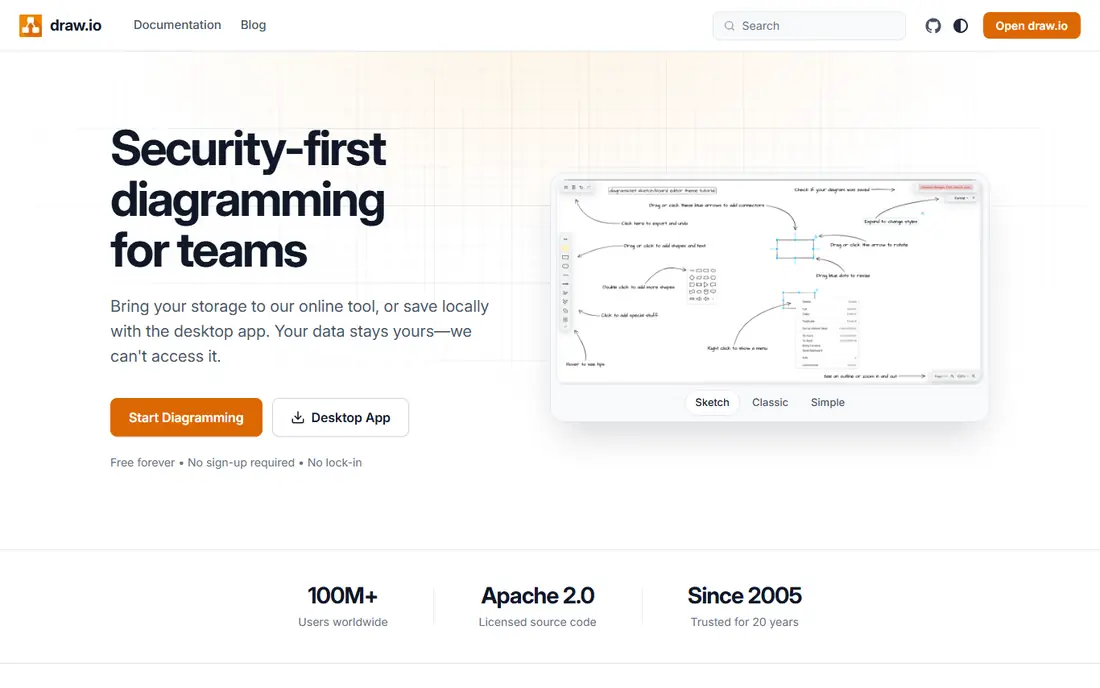
diagrams.net, formerly draw.io, suits anyone who wants free diagramming without a subscription. It builds flowcharts, UML, and network diagrams, with storage in cloud drives or locally. The best fit is often the tool your team will actually use every day, not the one with the longest list of features.
Its strength is free access. Full diagramming costs nothing, which suits students, small teams, and occasional users. Look for this in the trial, and check how it behaves with your own data rather than sample data.
The drawback is support. Help is community-led, and template depth is thinner than in paid rivals. If this point is a deal breaker for you, the next options on this list handle it differently.
- Free diagramming
- Flowcharts and UML
- Offline and cloud storage
- No built-in team templates library depth
- Support is community-led
Microsoft Visio
Ideal for: Microsoft 365 teams needing formal diagrams
Microsoft Visio suits teams on Microsoft 365 that need formal diagrams with deep templates. Its flowchart, network, and floor plan tools are long-established. Setup effort, daily friction, and the clarity of the pricing page shaped how we weighed that fit.
Its strength is template depth. Formal diagram types are well covered, with Microsoft integration. That strength shows up in daily work, not just in a demo, which is why we ranked it highly.
The drawback is platform focus. The full desktop app is Windows-focused, and pricing depends on plan. That drawback may not matter for a small team, but it can grow into a real problem as usage grows.
- Formal diagramming
- Templates
- Microsoft 365 integration
- Windows-focused desktop app
- Pricing needs a plan check
Creately
Ideal for: teams wanting guided diagram templates
Creately suits teams that want guided templates for flowcharts, org charts, and mind maps. Its canvas and collaboration tools help teams build diagrams together. A short trial with real data tells you more than a feature list, so plan one before you commit.
Its strength is template guidance. Starting from a template is faster than building a complex diagram from a blank page. This kind of strength tends to save time week after week, which adds up faster than a small price difference.
The drawback is free limits. The free plan caps diagrams and collaboration, so active teams need a paid plan. Ask about it on a sales call or in the trial, and get the answer in writing if it affects your budget.
- Diagram templates
- Collaboration
- Multiple diagram types
- Free plan limits
- Advanced features need paid plans
EdrawMax
Ideal for: users wanting many diagram types in one app
EdrawMax suits users who want many diagram types in one app, from flowcharts to floor plans. Its template library is large, and desktop and online versions are available. That focus matters most in the first weeks, when a team either settles into a tool or quietly stops opening it.
Its strength is breadth. One app covers diagram types that would need several tools elsewhere. It also matters for teams that need to show results to a manager or a client without extra reporting work.
The drawback is learning curve. The wide feature set takes time to learn, and pricing needs a plan check. It is worth weighing against the strengths above, especially if you plan to use the tool for years.
- Many diagram types
- Templates
- Desktop and online versions
- Pricing needs a plan check
- Interface takes learning
Gliffy
Ideal for: teams diagramming inside Confluence and Jira
Gliffy suits teams that diagram inside Confluence and Jira. Its tools let users build and edit diagrams without leaving Atlassian pages. We gave extra weight to tools that explain their limits plainly instead of hiding them behind a sales call.
Its strength is Atlassian fit. Diagrams live where teams already document work, which keeps them current. We checked this against the vendor's own feature page and public reviews, not just marketing copy.
The drawback is standalone scope. Outside Atlassian, its value is thinner than dedicated diagramming platforms. Teams with strict requirements should test this exact point before signing a contract.
- Diagramming inside Atlassian tools
- Flowcharts
- Collaboration
- Best value inside Atlassian
- Standalone use is thinner
Whimsical
Ideal for: teams wanting fast flowcharts and wireframes
Whimsical suits teams that want fast, clean flowcharts, wireframes, and mind maps. Its minimal interface helps users build a diagram in minutes. The best fit is often the tool your team will actually use every day, not the one with the longest list of features.
Its strength is speed. The simple canvas removes friction for quick diagrams and early ideas. Look for this in the trial, and check how it behaves with your own data rather than sample data.
The drawback is depth. Advanced diagram types are lighter than in specialist tools, and the free plan limits boards. If this point is a deal breaker for you, the next options on this list handle it differently.
- Fast flowcharts
- Wireframes and mind maps
- Collaboration
- Free plan limits
- Advanced diagram types are lighter
How we picked these
We started from the main keyword for this article and checked each candidate against official feature pages, pricing pages, app store listings, privacy policies, and public reviews. We kept only products that exist and work in October 2026 and that truly fit smartdraw alternatives, and we left out options that did not fit even when they looked popular in a general search.
We did not claim hands-on testing that did not happen. Where a price or a free tier could not be confirmed from the vendor's own site, we wrote See website rather than guessing a number. That approach keeps the list honest, and it means you should still confirm current pricing before you buy.
How to choose a SmartDraw alternative
Start by writing down the one job this tool must do well for you. For smartdraw alternatives, that job might be daily use by a small team, reporting for a manager, or handling a larger volume without constant manual work. A tool that does that one job well is usually a better buy than a tool that does many jobs in a shallow way.
Next, run a short trial with real data and the people who will use the tool every day. Watch how long setup takes, how clear the billing is, and how fast support answers a real question. If the trial feels confusing, that confusion rarely disappears after you pay, so take it as a useful warning.
Finally, check the terms that matter after the first month: renewal pricing, data export, cancellation, and what happens to your data if you leave. A tool with a clear export path and plain renewal terms is easier to live with, even if a rival looks slightly cheaper on the first invoice.
Frequently asked questions
What is the best option for smartdraw alternatives?
For most readers, Lucidchart is a strong starting point because it fits teams needing collaborative diagramming. The best choice still depends on your budget and team size, so compare the top three on this list in a trial before you decide.
Is there a free option for smartdraw alternatives?
Some options on this list offer a free plan, and others offer a free trial, as shown in the comparison table. Free plans usually cover basic use, while paid plans add reporting, integrations, and support, so check the limits before you rely on a free tier.
How much do smartdraw alternatives tools cost?
Pricing varies widely in this category, and some vendors only quote after a sales call. Where we could confirm a starting price, we listed it in the table, and where we could not, we wrote See website so you can check the vendor page directly.
Can I switch tools later if I pick the wrong one?
In most cases, yes, but switching takes more work than people expect. Before you commit, check how to export your data, whether integrations carry over, and how long a migration would take for your team.
How should I test a tool before buying?
Use a short trial with real data, invite the people who will use it daily, and test support with a genuine question. Keep notes on setup time, billing clarity, and any feature that was promised but hard to find in the product itself.