Best SuiteDash Alternatives in 2026: 7 Apps Compared

- HoneyBook is our pick for most creative and service businesses that want booking, contracts, and payments in one place.
- Dubsado suits owners who want deep control over forms, workflows, and the exact wording of every client step.
- Plutio is the budget-friendly all-in-one option, with a free starting tier and a very flexible workspace.
- 17hats and Accelo sit at opposite ends of the market, with 17hats aimed at solo owners and Accelo built for larger professional services firms.
- Before you switch, check how each tool handles client portals, payment processing fees, and moving your existing client data.
Quick comparison
| Product | Ideal for | Price from | Free version | |
|---|---|---|---|---|
 HoneyBook | Creative and service businesses | $29 per month | Free trial | Visit |
 Dubsado | Custom workflows and forms | See website | Free trial | Visit |
 17hats | Solo business owners | $60 per month | See website | Visit |
 Accelo | Professional services firms | See website | See website | Visit |
 Plutio | Flexible all-in-one workspaces | Free | Yes | Visit |
 Clientjoy | Small agencies on a budget | See website | See website | Visit |
 Hello Bonsai | Freelancers and small studios | See website | Free trial | Visit |
The best SuiteDash alternatives
SuiteDash packs a client portal, CRM, invoicing, and project tools into one system, so a good replacement needs to cover most of that ground without forcing you to buy five more tools. We compared official feature pages, pricing pages, app store listings, and public reviews to find options that truly match that brief.
HoneyBook
Ideal for: Creative and service businesses
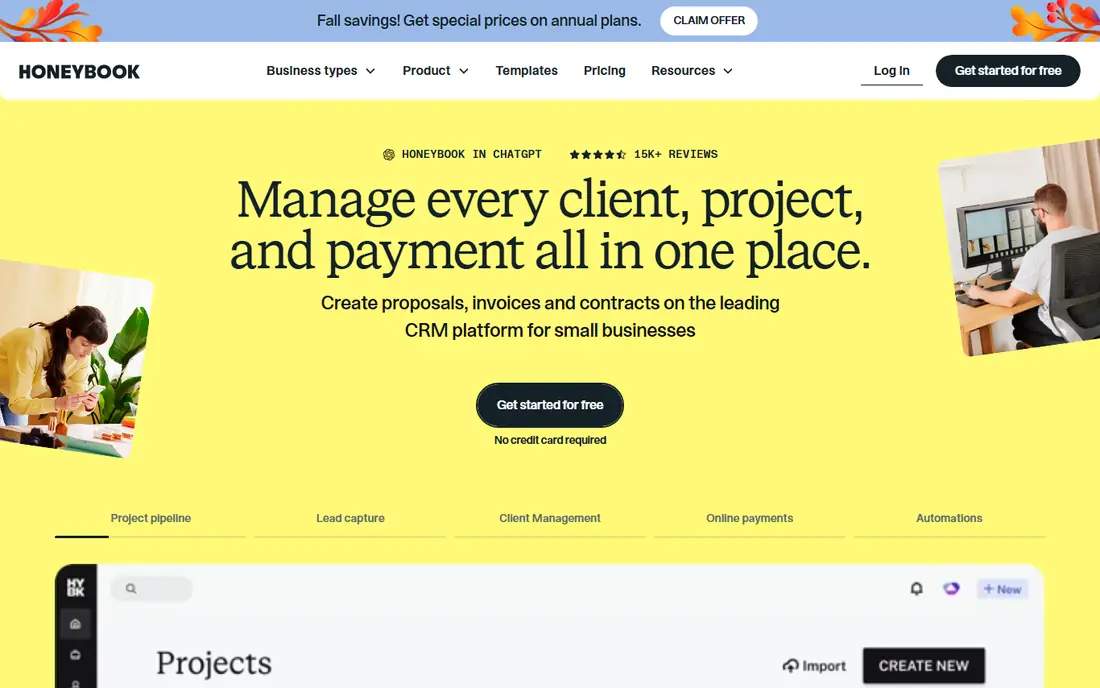
HoneyBook is the closest match for photographers, designers, coaches, and event professionals who live on bookings. Leads come in through a form, turn into a proposal, then move to a contract and an invoice without leaving the platform. The client portal gives each client one place to see messages, files, and payments, which cuts down on the email chasing that eats up a solo owner's week.
The trade-off is price and depth. HoneyBook starts at 29 dollars per month when billed yearly, and the richer automation and reporting features sit on higher tiers. It is also less of a fit for firms that need detailed project accounting or resource planning. For most small service businesses, though, the booking flow alone justifies the switch, and the free trial makes it easy to test with a real inquiry before paying.
- Strong booking to payment flow
- Polished client portal
- Built-in AI drafting help
- Monthly cost rises with higher tiers
- Some advanced reporting sits on pricier plans
Dubsado
Ideal for: Custom workflows and forms
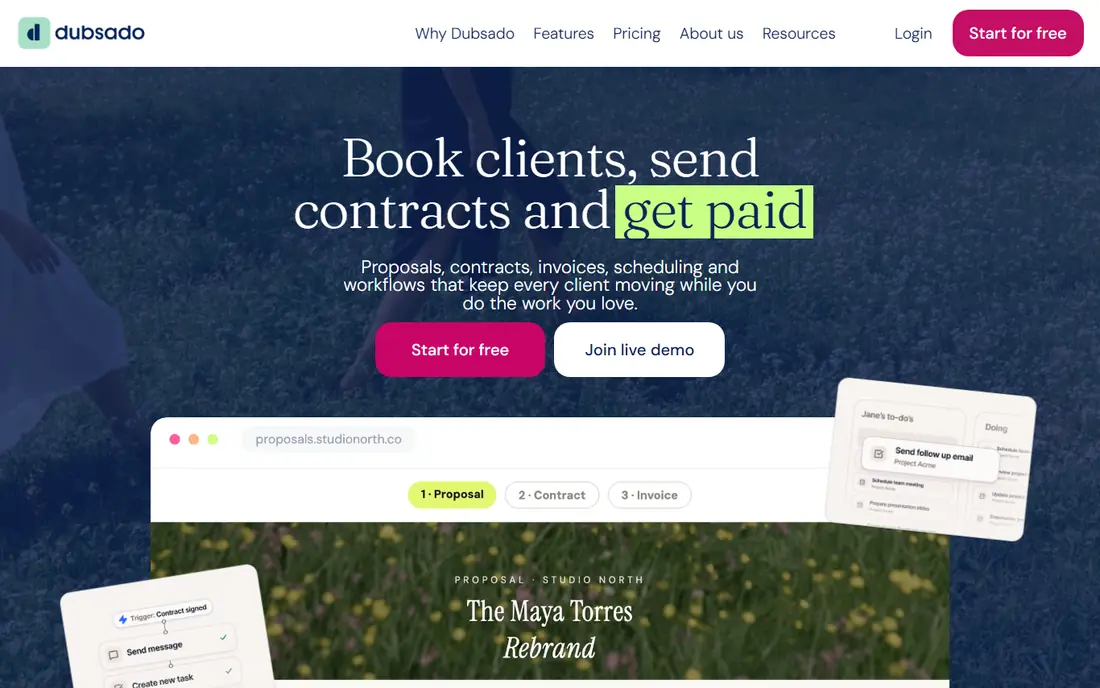
Dubsado appeals to owners who want every step of the client journey to sound like them. You can shape lead capture forms, questionnaires, proposals, contracts, and invoices around your own process, then tie them together with automations that trigger on approvals or payments. The client portal keeps each project in one branded home, which matters when your clients judge you on polish.
That flexibility comes with a learning curve. Building a full workflow from scratch takes an afternoon of focused work, and owners who want a ready-made setup may prefer HoneyBook. Once the system is built, however, Dubsado runs quietly in the background, and its payment reminders and scheduling tools save steady hours each month.
- Very flexible workflows and forms
- Strong branding control
- Payment plans and reminders built in
- Setup takes real time
- The range of options can feel heavy at first
17hats
Ideal for: Solo business owners
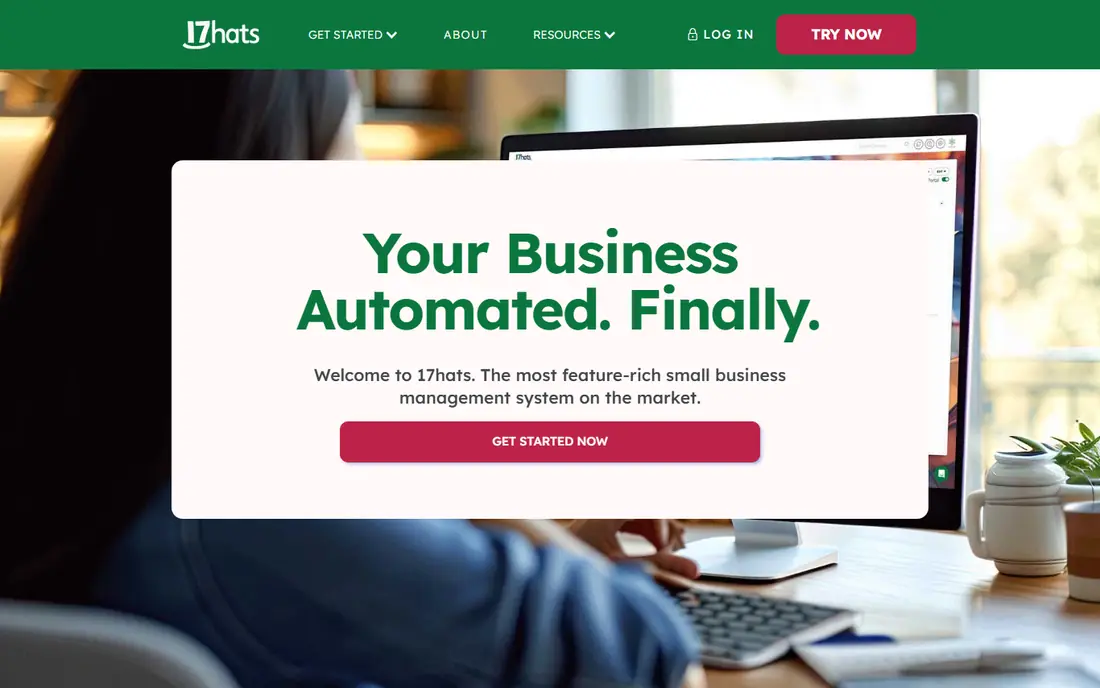
17hats takes a different approach from most rivals: one all-inclusive plan instead of a ladder of tiers. That plan covers pipelines, contracts, invoices, questionnaires, online booking, SMS texting, and automated workflows. For a solo owner who hates guessing which tier holds the feature they need, that simplicity is a genuine selling point.
The catch is the entry price and the look of the product. At 60 dollars per month on monthly billing, 17hats costs more than the starter tiers of HoneyBook and Plutio, and there is no free tier to try before buying. The interface also feels less modern than newer tools. Still, owners who use most of the feature set tend to find the single-plan model good value, since nothing important hides behind an upgrade.
- All features in a single plan
- Built-in SMS and booking
- Simple flat pricing structure
- No free tier
- Interface feels dated next to newer rivals
Accelo
Ideal for: Professional services firms
Accelo is the pick when your problem is not just winning clients but running profitable engagements. It connects project management, resourcing, time tracking, and financials, then uses AI signals to flag risks such as scope creep or slipping margins before they hurt. For agencies, consultancies, and engineering firms, that view of profitability is the main reason to move.
Smaller businesses should think twice. Accelo is built and priced for firms with teams and complex work, and it needs more setup than a simple client portal tool. Solo owners will find HoneyBook or Dubsado faster to adopt. If you run a growing firm and your current tool cannot tell you which clients make money, Accelo is worth a demo.
- Deep project, resource, and financial tracking
- AI risk flags
- Built for larger teams
- Priced for firms, not solo owners
- More setup and training than simpler tools
Plutio
Ideal for: Flexible all-in-one workspaces
Plutio stands out by letting you turn features on and off to build the workspace you actually use. Projects, tasks, time tracking, files, discussions, proposals, invoices, forms, schedulers, and client portals all live in one app, and you can reshape menus, layouts, and colors to match your brand. A free tier with no credit card required makes it the easiest option here to try without spending.
The honest catch is depth. Because Plutio covers so much ground, individual areas such as accounting or automation are not as deep as specialist tools. Teams with very specific needs may still need a second app. For freelancers and small teams who want one login and a low bill, though, Plutio is hard to beat.
- Free starting tier
- Highly customizable workspaces
- Projects, invoices, forms, and portals in one app
- Breadth can mean less depth in each area
- Smaller support team than big rivals
Clientjoy
Ideal for: Small agencies on a budget
Clientjoy is an all-in-one CRM aimed squarely at freelancers, agencies, and small service firms. It covers the sales pipeline, client management, appointments, proposals, contracts, invoices, payments, email sequences, and a white-labeled client portal. That breadth makes it a fair SuiteDash substitute for teams that want one tool and a short learning curve.
The main risk is scale and support. Clientjoy is a smaller vendor than HoneyBook or Accelo, so its integration catalog and public help material are thinner. Check its current pricing page before buying, since its plans have changed over time and have included a one-time payment option. If the feature list fits your workflow and the price fits your budget, it is a solid value pick.
- Covers pipeline, portal, proposals, and invoicing
- One-time pricing option has been offered
- Simple to learn
- Smaller vendor with less public documentation
- Fewer third-party integrations than big rivals
Hello Bonsai
Ideal for: Freelancers and small studios
Hello Bonsai, often just called Bonsai, is built for freelancers and small studios rather than large firms. Its strength is the core money workflow: send a polished proposal, turn it into a contract, invoice the client, and get paid, all with templates that look professional from day one. Onboarding is quick, and the product stays out of your way.
Compared with SuiteDash, Bonsai is narrower. It does not try to be a full project and portal system for a large agency, and its accounting side is lighter than a dedicated bookkeeping tool. For a solo freelancer who mainly needs to look professional and get paid on time, that focus is a plus rather than a gap. Pair it with your existing project tool if you need deeper delivery tracking.
- Clean proposals, contracts, and invoicing
- Built for freelancers
- Easy onboarding
- Less of a full agency portal than SuiteDash
- Accounting features are lighter than dedicated tools
How we picked these
We compared official feature pages, pricing pages, app store listings, privacy and support pages, and public reviews for each product, and we checked that every homepage listed here loads and belongs to the product named. We favored tools that cover at least three of the four SuiteDash pillars: client portal, CRM or pipeline, contracts and invoicing, and payments or projects. We left out tools that only handle one slice, such as pure invoicing apps, and we did not include SuiteDash itself, since this list is about replacements.
What to check before you switch
Start with your client portal, because that is what your clients will notice first. Open a test portal in each finalist and check whether clients can see messages, files, invoices, and payments in one place without a separate login for each item. A portal that looks good in a demo but confuses real clients will cost you more time than it saves.
Next, map your money flow. List the steps from inquiry to paid invoice, then confirm each tool supports your payment methods, payment plans, late reminders, and any processing fees. Ask how your data moves out, too. Export a sample of clients, projects, and invoices before you commit, and confirm that contracts and templates can be rebuilt without losing your wording.
Finally, count the seats and the real monthly cost. A low starter price can rise fast once you add team members or the tier that holds automations and reporting. Run one real project end to end during the trial, with a real client if possible, and only then move the rest of your book across.
Frequently asked questions
What is the best SuiteDash alternative for most small businesses?
HoneyBook is our pick for most small service businesses, since it covers lead capture, proposals, contracts, invoices, payments, and a client portal in one polished flow. Dubsado is the better choice when you want deeper control over forms and workflows. Plutio wins on price, since it offers a free starting tier.
Can I move my clients and projects from SuiteDash to another tool?
In most cases, yes, but the effort varies. Client lists usually export cleanly, while workflows, forms, and templates often need to be rebuilt by hand. Export your data first, rebuild one workflow in the new tool, and test it with a real project before moving everything.
Do SuiteDash alternatives include a client portal?
Most of the tools on this list do, including HoneyBook, Dubsado, Plutio, and Clientjoy. The details differ, so check whether clients can view messages, files, and payments in one place. A portal that only shows invoices is not a full replacement for SuiteDash.
Is there a free SuiteDash alternative?
Plutio offers a free starting tier, which makes it the closest free option here. Other tools offer free trials rather than permanent free plans. Check each pricing page, since free tiers often limit projects, clients, or features.
Which alternative is best for a larger agency or firm?
Accelo is the strongest pick for larger professional services firms, thanks to its project, resource, and financial tracking. Smaller agencies that mainly need portals and invoicing will usually be happier with HoneyBook or Dubsado. Match the tool to your team size, not just your feature wish list.