Best Telnyx Alternatives in 2026: 8 Options Compared

- Our pick for most people is Twilio, because it covers voice, sms and video apis with the fewest trade-offs in this group.
- There is no strong free tier across this whole group, so check the trial terms on the official site before you commit to a paid plan.
- Vonage is the best second look when Twilio does not fit, since it serves voice and messaging apis rather than the same audience.
- Prices and plan limits change often, so confirm the current terms on each vendor site and read the fine print on limits, renewals and cancellation before you pay.
Quick comparison
| Product | Ideal for | Price from | Free version | |
|---|---|---|---|---|
 Twilio | Voice, SMS and video APIs | See website | Free trial | Visit |
 Vonage | Voice and messaging APIs | See website | Free trial | Visit |
 Plivo | Affordable voice and SMS APIs | See website | Free trial | Visit |
 Bandwidth | Carrier-grade voice APIs | See website | No | Visit |
 Bird | Omnichannel messaging APIs | See website | Free trial | Visit |
 Sinch | Global messaging and voice | See website | Free trial | Visit |
 RingCentral | Business phone and APIs | See website | Free trial | Visit |
 8x8 | Cloud phone and contact centre | See website | Free trial | Visit |
The best telnyx alternatives
We compared official feature pages, pricing pages, app store listings, privacy policies and public reviews to build this list for telnyx alternatives. Every option below exists and works today, and each one earns its place for a different kind of reader. Read the shortlist with your own situation in mind. A cheaper option that you actually use beats a powerful one that sits untouched, and a plan that looks cheap on the monthly line can cost more once add-ons and limits are counted.
Twilio
Ideal for: Voice, SMS and video APIs

Twilio is the largest and most documented communications API platform, covering voice, SMS, video and email with global carrier reach. Developers find SDKs and guides for almost every stack. Pricing can be hard to model across products, and faster support sits on paid tiers. For readers focused on voice, sms and video apis, the appeal is huge global coverage. That strength matters in daily use, because it is the part you will notice every week, not a feature you open once and forget. Compare it against the rest of the list on that one point first, then look at price, platform support and how the company handles your data. The catch is pricing can be complex. support tiers cost extra If that trade-off is acceptable for how you work, this is a solid choice, and a short trial will tell you more than any review can.
- Huge global coverage
- Mature docs and SDKs
- Many communication products
- Pricing can be complex
- Support tiers cost extra
Vonage
Ideal for: Voice and messaging APIs
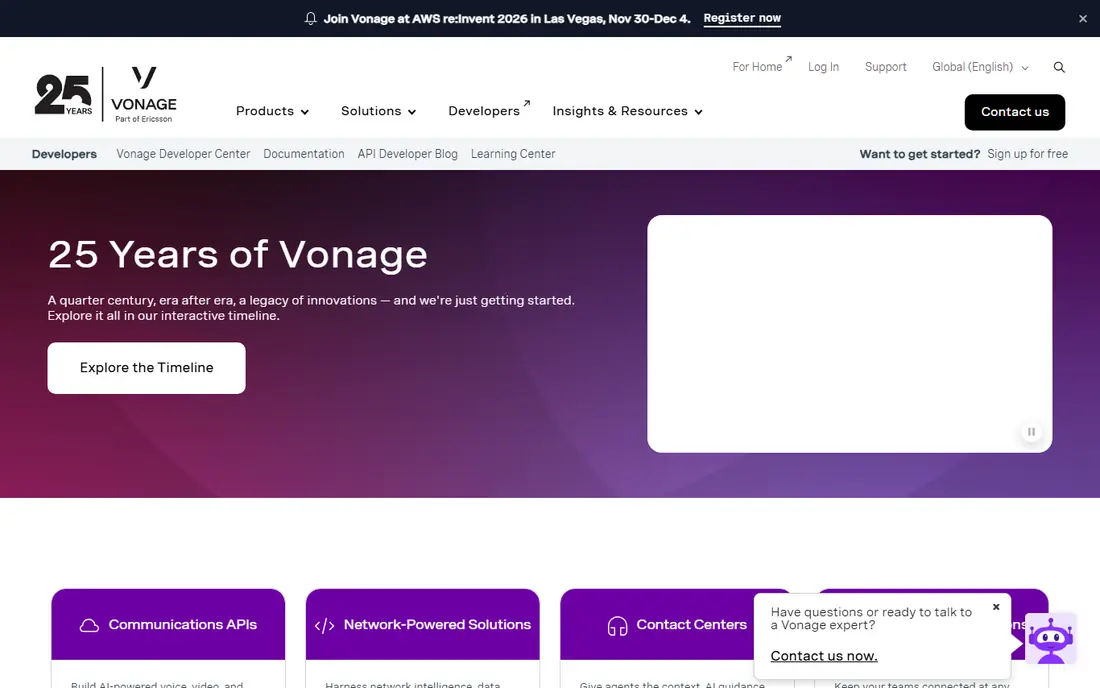
Vonage pairs communications APIs with business phone and contact centre products, which suits companies that want one vendor for both. Global numbers and video APIs cover most use cases. The product range can feel fragmented, so check that the API you need is the one being quoted. For readers focused on voice and messaging apis, the appeal is voice, SMS and video APIs. That strength matters in daily use, because it is the part you will notice every week, not a feature you open once and forget. Compare it against the rest of the list on that one point first, then look at price, platform support and how the company handles your data. The honest weakness is product range can feel fragmented. pricing varies by product Try it on a real task before you pay, and check whether the entry plan covers the feature you actually need.
- Voice, SMS and video APIs
- Business phone options
- Global numbers
- Product range can feel fragmented
- Pricing varies by product
Plivo
Ideal for: Affordable voice and SMS APIs
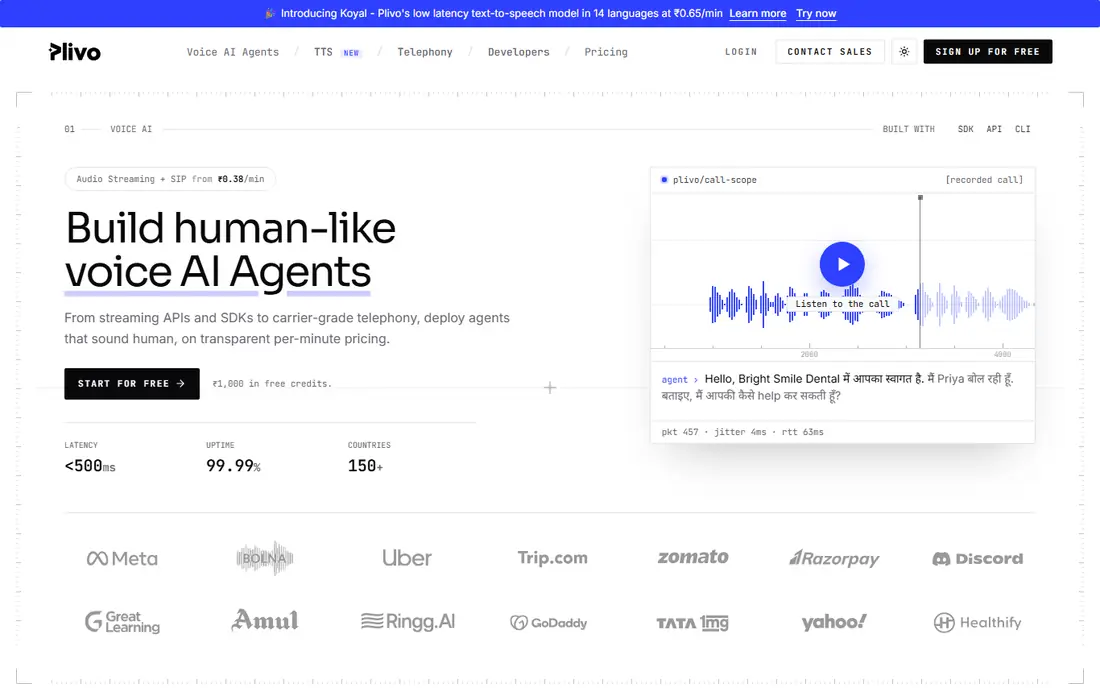
Plivo is the value-led rival, with competitive pay-as-you-go pricing for voice and SMS and APIs that developers find straightforward. It suits startups and mid-sized teams that need core communications without enterprise extras. The ecosystem is smaller, and add-on products are fewer than on the biggest platforms. For readers focused on affordable voice and sms apis, the appeal is competitive pay-as-you-go pricing. That strength matters in daily use, because it is the part you will notice every week, not a feature you open once and forget. Compare it against the rest of the list on that one point first, then look at price, platform support and how the company handles your data. Watch out for smaller ecosystem than Twilio. fewer add-on products If you can live with that limit, the rest of the package is easy to recommend for its audience.
- Competitive pay-as-you-go pricing
- Global voice and SMS
- Simple APIs
- Smaller ecosystem than Twilio
- Fewer add-on products
Bandwidth
Ideal for: Carrier-grade voice APIs
Bandwidth runs its own network infrastructure, which appeals to enterprises that want carrier-grade voice quality and number porting expertise. It is built for scale and reliability rather than quick hobby experiments. Smaller teams may find the sales-led process heavier than a self-serve API signup. For readers focused on carrier-grade voice apis, the appeal is own network infrastructure. That strength matters in daily use, because it is the part you will notice every week, not a feature you open once and forget. Compare it against the rest of the list on that one point first, then look at price, platform support and how the company handles your data. The catch is enterprise focus. less friendly for small hobby projects If that trade-off is acceptable for how you work, this is a solid choice, and a short trial will tell you more than any review can.
- Own network infrastructure
- Number porting expertise
- Enterprise scale
- Enterprise focus
- Less friendly for small hobby projects
Bird
Ideal for: Omnichannel messaging APIs
Bird, formerly MessageBird, brings SMS, WhatsApp, voice and email into one omnichannel platform with contact tools on top. It suits teams that manage customer conversations across channels. The rebrand means some older documentation still says MessageBird, and enterprise pricing needs a quote. For readers focused on omnichannel messaging apis, the appeal is sMS, WhatsApp and email in one platform. That strength matters in daily use, because it is the part you will notice every week, not a feature you open once and forget. Compare it against the rest of the list on that one point first, then look at price, platform support and how the company handles your data. The honest weakness is formerly MessageBird, so older docs can confuse. enterprise pricing Try it on a real task before you pay, and check whether the entry plan covers the feature you actually need.
- SMS, WhatsApp and email in one platform
- CRM-style contact tools
- Formerly MessageBird, so older docs can confuse
- Enterprise pricing
Sinch
Ideal for: Global messaging and voice
Sinch offers global messaging, voice and verification APIs used by large enterprises, with strong reach in Europe and beyond. Verification products for logins and two-factor codes are a useful extra. Larger-volume pricing is usually quoted, so small teams should test the self-serve route first. For readers focused on global messaging and voice, the appeal is global SMS and voice reach. That strength matters in daily use, because it is the part you will notice every week, not a feature you open once and forget. Compare it against the rest of the list on that one point first, then look at price, platform support and how the company handles your data. Watch out for pricing is quoted for larger volumes. self-serve depth varies If you can live with that limit, the rest of the package is easy to recommend for its audience.
- Global SMS and voice reach
- Verification APIs
- Enterprise customers
- Pricing is quoted for larger volumes
- Self-serve depth varies
RingCentral
Ideal for: Business phone and APIs
RingCentral suits companies that want a complete business phone system with APIs on top, rather than building everything from raw voice primitives. Video, messaging and phone come together in one subscription. Pure API builders may find it more product than they need, and per-user pricing adds up. For readers focused on business phone and apis, the appeal is full business phone system plus APIs. That strength matters in daily use, because it is the part you will notice every week, not a feature you open once and forget. Compare it against the rest of the list on that one point first, then look at price, platform support and how the company handles your data. The catch is more of a phone system than a raw API platform. per-user pricing If that trade-off is acceptable for how you work, this is a solid choice, and a short trial will tell you more than any review can.
- Full business phone system plus APIs
- Video and messaging
- Reliable uptime
- More of a phone system than a raw API platform
- Per-user pricing
8x8
Ideal for: Cloud phone and contact centre
8x8 combines cloud phone, video meetings and contact centre tools in one platform with global coverage. It suits mid-sized businesses that want communications and support in a single contract. The interface feels dated in places, and tier differences need a careful read before you sign. For readers focused on cloud phone and contact centre, the appeal is voice, video and contact centre in one. That strength matters in daily use, because it is the part you will notice every week, not a feature you open once and forget. Compare it against the rest of the list on that one point first, then look at price, platform support and how the company handles your data. The honest weakness is interface can feel dated. pricing tiers need careful comparison Try it on a real task before you pay, and check whether the entry plan covers the feature you actually need.
- Voice, video and contact centre in one
- Global coverage
- Integrations
- Interface can feel dated
- Pricing tiers need careful comparison
How we picked these
We started from the topic itself and kept only products that exist and work today and truly fit it. For each one we checked the official homepage, the pricing page and the free tier, and we read app store listings, privacy policies and public reviews where they were relevant. Products with a homepage we could not verify were left out, and prices we could not verify are shown as See website rather than guessed. We favored a mix of well-known leaders and strong smaller options, and we weighed entry price, free tier, platform coverage and honest weaknesses. No product here paid for its place, and we did not claim hands-on testing we did not do. What follows is a comparison of published facts, so you can check any claim on the vendor site before you buy.
Picking a voice and messaging API that stays reliable
Start by naming the job you need done, then match it to one entry plan, not to a whole product family. Check which devices are supported, whether your data can be exported, and what happens when you cancel. An option that locks your work inside its own format costs more to leave later, even when the monthly price looks low. Next, test the free tier or trial on a real task from your own week, and watch for the limit that bites first. That limit is usually a seat count, a usage cap or a feature held back for a higher tier. Plivo and Bandwidth are worth comparing side by side here, because they serve different audiences at different prices, and the cheaper one is not always the weaker one for your case. Finally, read the renewal and cancellation terms before you enter payment details, and set a reminder to review the subscription after the first month. Many buyers keep paying for a tool they stopped opening, and a short review each quarter keeps the stack honest. If two options feel close, pick the one with clearer pricing and simpler cancellation.
Frequently asked questions
What is the best telnyx alternatives?
For most readers it is Twilio, because it covers voice, sms and video apis with a clear published feature set and broad support. Vonage is the best alternative when you need voice and messaging apis instead. Try the free tier or trial of both before you decide, since daily feel matters as much as the feature list.
Is there a free telnyx alternatives?
None of the options here offers a strong permanent free tier, though several offer trials. Check each vendor site for the current trial length and what it includes, and avoid paying annually until you have tested the entry plan.
How much should I expect to pay?
Entry prices in this list run from free up to the higher tiers shown in the comparison table, and the real cost depends on seats, usage and add-ons. Twilio starts at see website, which is a fair benchmark for the group. Always confirm the current price on the official site, since vendors change plans during the year.
Can I switch to a different option later?
In most cases yes, but the effort depends on how much data you have stored and whether it exports cleanly. Before you commit, check export options and whether a trial lets you import your existing work. Keeping a backup outside the tool makes any future switch far easier.
What matters most in a CPaaS provider?
Coverage, call quality, number porting, pricing transparency and support response time matter more than a long feature list. Test with real numbers in your target countries before you commit a production workload.