Top 6 TestProject Alternatives to Shortlist in 2026

- 1
 PlaywrightCross-browser automation in multiple languagesVisit
- 2
 Tricentis TestimAI-assisted web test automationVisit
- 3
 KatalonTeams that want one product for web, mobile, API, and desktopVisit
- 4
 Tricentis ToscaEnterprises with large, complicated test suitesVisit
- 5
 mablCloud-native teams that want low maintenanceVisit
- Top of the list is Playwright, which targets cross-browser automation in multiple languages.
- Pricing across the list, from Playwright to BrowserStack, is by quote only.
- BrowserStack is the one to check for testing on real devices and browsers in the cloud.
- 2 of 6 tools offer a free plan: Playwright, Katalon.
Direct answer
Playwright is the first pick on this list for cross-browser automation in several languages. If your case is different, Tricentis Testim suits AI-assisted web test automation and Katalon suits teams that want one platform for web, mobile, API, and desktop. Details, prices and limits for the rest of the 6 tools are below.
Quick comparison
| Product | Ideal for | Price from | Free version | |
|---|---|---|---|---|
| Playwright | Cross-browser automation in multiple languages | See website | Yes | Visit |
| Tricentis Testim | AI-assisted web test automation | See website | Free trial | Visit |
| Katalon | Teams that want one product for web, mobile, API, and desktop | See website | Yes | Visit |
| Tricentis Tosca | Enterprises with large, complicated test suites | See website | No | Visit |
| mabl | Cloud-native teams that want low maintenance | See website | Free trial | Visit |
 BrowserStack | Testing on real devices and browsers in the cloud | See website | Free trial | Visit |
The full TestProject list
Choosing TestProject usually comes down to price, fit and limits. This Ainotely guide sets 6 tools side by side on those three points, with the facts kept short and checkable.
Playwright
Ideal for: Cross-browser automation in multiple languages
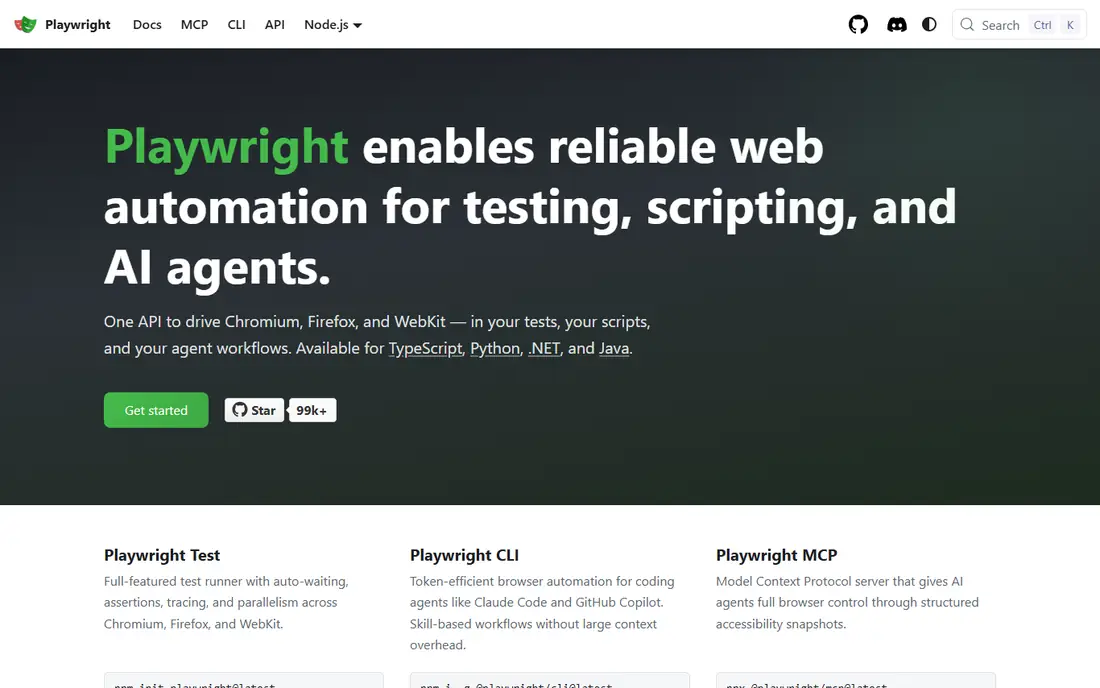
Playwright serves cross-browser automation in multiple languages. It supports JavaScript, Python, Java, and.NET, and it comes with auto-waiting, network interception, and tracing that makes failures simple to diagnose. There is a code generator that records actions into code, but the workflow is still code-first.
Where it falls short: Needs engineering time.
Tests run quick in parallel, and the tool manages modern web apps well. For a non-coding QA team, Katalon or mabl will be simpler. Since Playwright is code-only, it needs engineers to write and maintain tests. This comparison lists no price for Playwright; ask the vendor. Playwright includes a free tier.
- All major browsers
- Free and open source
- Code-only, no recorder-first workflow
Tricentis Testim
Ideal for: AI-assisted web test automation
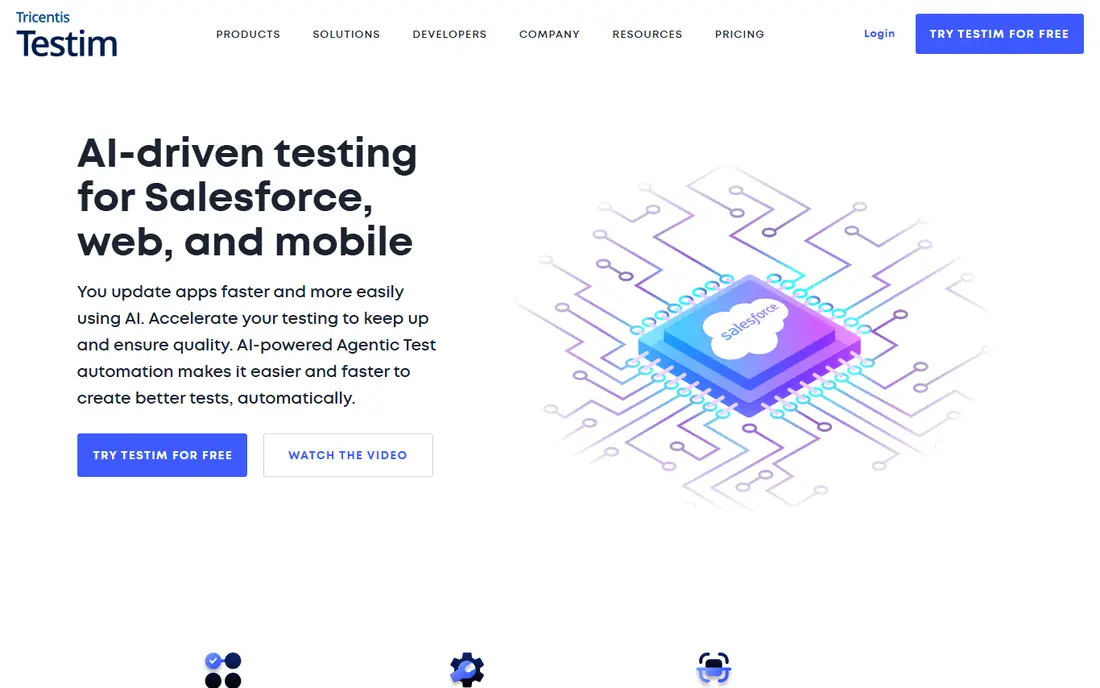
In short, Tricentis Testim is for AI-assisted web test automation. When an application changes, Testim adapts locators rather than failing every test, which cuts the maintenance burden that kills numerous automation efforts.
In practice, Testim, also from Tricentis, concentrates on web test automation with AI-assisted authoring and self-healing tests. Tricentis Testim does not show a starting price in this comparison, so check the vendor site for current pricing. Free options: Free trial.
Where it falls short: Web-focused.
- Quick authoring
- AI self-healing tests
- Pricing can be high for small teams
Katalon
Ideal for: Teams that want one product for web, mobile, API, and desktop
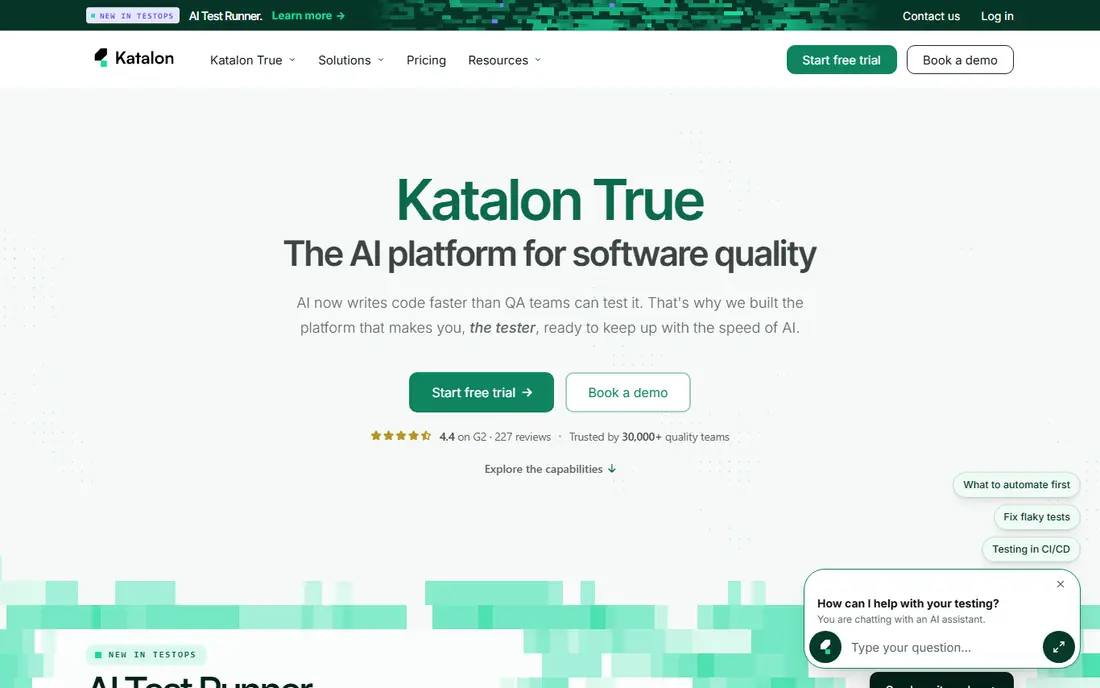
Katalon targets teams that want one product for web, mobile, API, and desktop. A free version lets a small team start without a purchase order.
Where it falls short: premium plans climb with team size.
Testers without deep coding skills can record tests, while engineers can drop into Groovy scripting when a test needs custom logic. Check the vendor site for Katalon pricing; none is listed in this comparison. A free plan is available with Katalon.
- Broad coverage
- Free version available
- Heavyweight for tiny projects
Tricentis Tosca
Ideal for: Enterprises with large, complicated test suites
Tricentis Tosca serves enterprises with large, complicated test suites. It uses model-based testing, where testers build a model of the application and produce test cases from it, which cuts maintenance when the application changes. That approach pays off for large suites that would otherwise break on every release.
Where it falls short: Steep ramp-up time for new teams.
In practice, the cost is the central barrier, and the ramp-up time is real: a team should budget training time. Tosca connects with SAP, Salesforce, and other enterprise systems, and it supports API, mobile, and end-to-end testing. Check the vendor site for Tricentis Tosca pricing; none is listed in this comparison. Tricentis Tosca has no free tier.
- Capable enterprise integrations
- Long track record
- Enterprise pricing
mabl
Ideal for: Cloud-native teams that want low maintenance
Where mabl fits: cloud-native teams that want low maintenance. A team can start with recorded tests and add JavaScript steps where needed, which fits mixed teams of testers and developers.
In practice, setup with CI tools is fast, and the cloud runner removes the have to maintain test infrastructure. mabl also tracks performance trends. So a team can spot a slow page before users complain. No starting price is listed for mabl here; confirm pricing on the vendor site. Trial and free access: Free trial.
Trade-offs to know: Less control than code frameworks.
- Simple CI setup
- Auto-healing tests
- Pricing is quote-based for bigger use
BrowserStack
Ideal for: Testing on real devices and browsers in the cloud
Pick BrowserStack if this describes you: testing on real devices and browsers in the cloud. BrowserStack is not a test authoring tool but a cloud system for running tests on real devices and browsers.
For everyday use, the device cloud is large, including current and older phones, tablets, and desktop browsers, and the platform connects with CI pipelines. In practice, pricing is usage-based, so costs scale with test volume. BrowserStack does not show a starting price in this comparison, so check the vendor site for current pricing. Free access: Free trial.
Downsides: Not a test authoring tool on its own.
- No local infrastructure
- Connects with frameworks
- Usage-based pricing
How the list was put together
Pricing pages, product documentation and feature lists were the main sources, and every entry carries at least one honest drawback. Figures are shown as the vendors publish them. Billing terms, seat minimums and add-ons can change the real cost. Tools are placed by general fit for TestProject, with price clarity and free access as tie-breakers. A different team can reasonably rank them differently.
Before you commit
- Request quotes from Playwright, BrowserStack and the others; the list shows no fixed prices.
- Look at free plan limits closely: Playwright and Katalon have one, and the caps decide whether it is usable for real work.
- Run a trial of Tricentis Testim, mabl and BrowserStack with real work before paying for a year; your own workflow is the best test.
- Before choosing Playwright, weigh its main limit: code-only, no recorder-first workflow.
- Check whether BrowserStack bills monthly or annually, and what cancelling early costs.
- Check how data leaves Tricentis Tosca: formats, limits and whether exports are available on every plan.
Frequently asked questions
Is Playwright the right pick for everyone comparing TestProject?
No single tool suits every team. Playwright comes first because it fits cross-browser automation in several languages, while Tricentis Testim suits AI-assisted web test automation and Katalon suits teams that want one platform for web, mobile, API, and desktop. Match the tool to your own size, budget and workflow before deciding.
Do these tools publish their prices?
No. None of the tools, from Playwright to BrowserStack, shows a fixed starting price here, so budget time for quotes.
Which options for TestProject have a free plan?
On this list, Playwright and Katalon include a free plan. Caps on seats, usage or features are common, so test the free plan against your real workload. Several others offer a trial instead.
Can I try these tools before paying?
Often, yes. Playwright and Katalon have a free plan and Tricentis Testim, mabl and BrowserStack offer a free trial. Use your own data and a real task during the test, and check what the free tier or trial limits before you rely on it.