Best Timely Alternatives in 2026: 8 Options Compared

- 1
 Toggl TrackSimple time tracking for individuals and teamsVisit
- 2
 ClockifyFree time tracking with generous limitsVisit
- 3
 HarvestTime tracking plus invoicing for servicesVisit
- 4
 Time DoctorProductivity monitoring for remote teamsVisit
- 5
 HubstaffTime tracking with GPS and payrollVisit
- Our pick for most people is Toggl Track, because it balances price, features and ease of use for the widest group of readers.
- Free plans are real here, but the limits matter: check what Clockify and Harvest actually include before you commit.
- Prices in this guide come from vendor pricing pages and current comparisons checked in October 2026, and they can change, so confirm the plan on the vendor site before you buy.
- The best choice depends on your budget, your experience level and how much support you want, not on which brand is most famous.
Quick comparison
| Product | Ideal for | Price from | Free version | |
|---|---|---|---|---|
| Toggl Track | Simple time tracking for individuals and teams | See website | Yes | Visit |
| Clockify | Free time tracking with generous limits | See website | Yes | Visit |
| Harvest | Time tracking plus invoicing for services | See website | Free trial | Visit |
| Time Doctor | Productivity monitoring for remote teams | See website | Free trial | Visit |
| Hubstaff | Time tracking with GPS and payroll | See website | Free trial | Visit |
 RescueTime | Automatic time tracking for individuals | See website | Free trial | Visit |
 Everhour | Time tracking inside project tools | See website | Free trial | Visit |
 TrackingTime | Simple team time tracking with reports | See website | Yes | Visit |
The best Timely Alternatives in 2026
We compared official feature pages, pricing pages, app store listings, privacy policies and public reviews to build this list for timely alternatives. Every option below exists and works today, and each one earns its place for a different kind of reader.
Toggl Track
Ideal for: Simple time tracking for individuals and teams
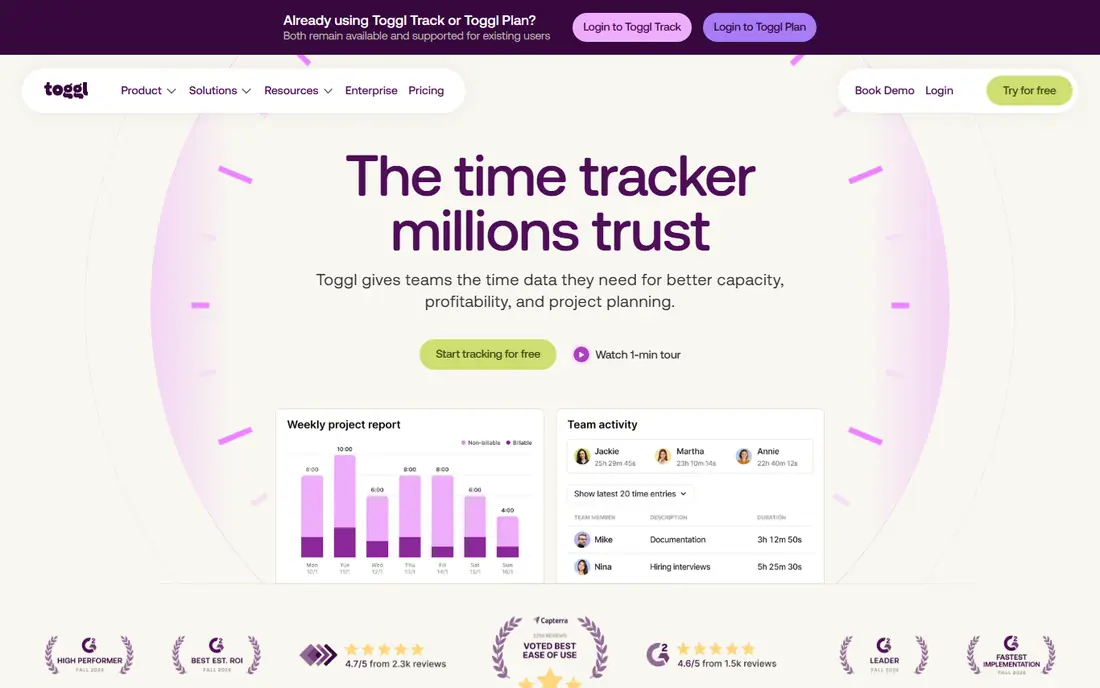
Here is the short version. Toggl Track is the simplest serious time tracker, with a timer, projects and reports that most teams learn in an afternoon. It fits readers who want simple time tracking for individuals and teams, and its published feature set matches that promise rather than trying to cover every possible use case at once. The price picture is see website, with a free plan status of yes. Teams that want automatic activity capture should look at Timely-style tools or RescueTime instead, since Toggl is manual by design. Before you sign up, check the current plan limits on the official site, because caps on users, usage or features are where most buyers get surprised after the first month.
- Simple timer
- Reports
- Integrations
- Free tier for small teams
- Automatic tracking is limited
- Advanced features need paid plans
Clockify
Ideal for: Free time tracking with generous limits
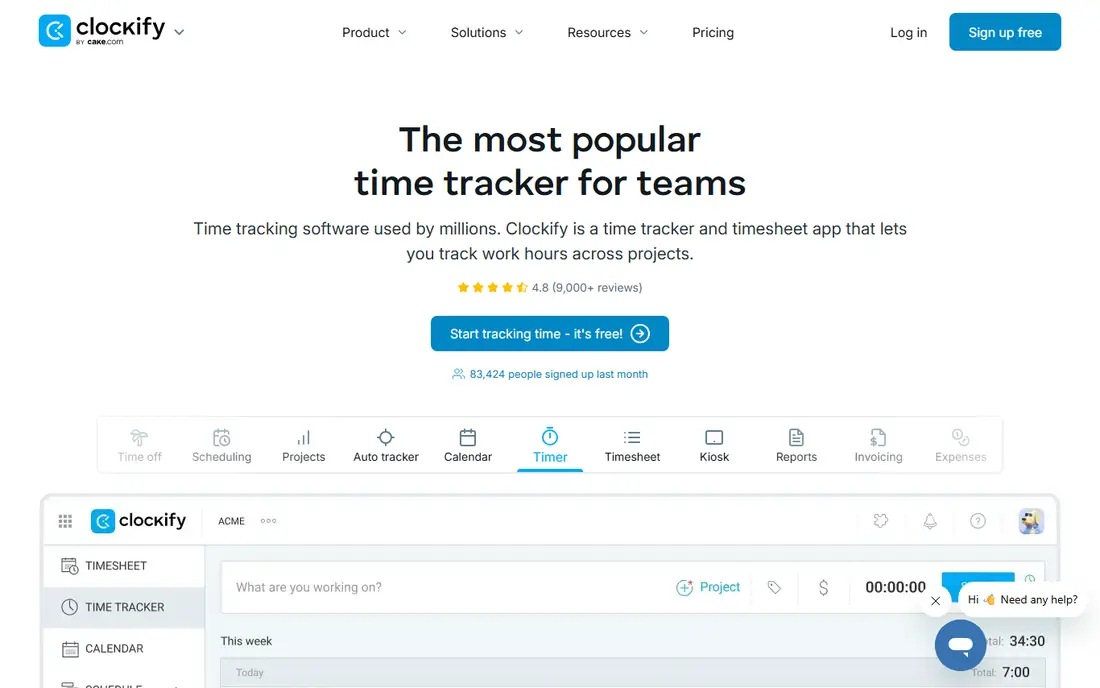
Start here if you want the safe default. Clockify gives teams a free time tracker with unlimited users, which makes it a strong budget pick for small businesses. It fits readers who want free time tracking with generous limits, and its published feature set matches that promise rather than trying to cover every possible use case at once. The price picture is see website, with a free plan status of yes. The interface is plainer than rivals, and some reporting and admin features wait on paid plans. Before you sign up, check the current plan limits on the official site, because caps on users, usage or features are where most buyers get surprised after the first month.
- Free tier with unlimited users
- Timer and timesheets
- Reports
- Interface is plainer than Toggl
- Some advanced features need paid plans
Harvest
Ideal for: Time tracking plus invoicing for services
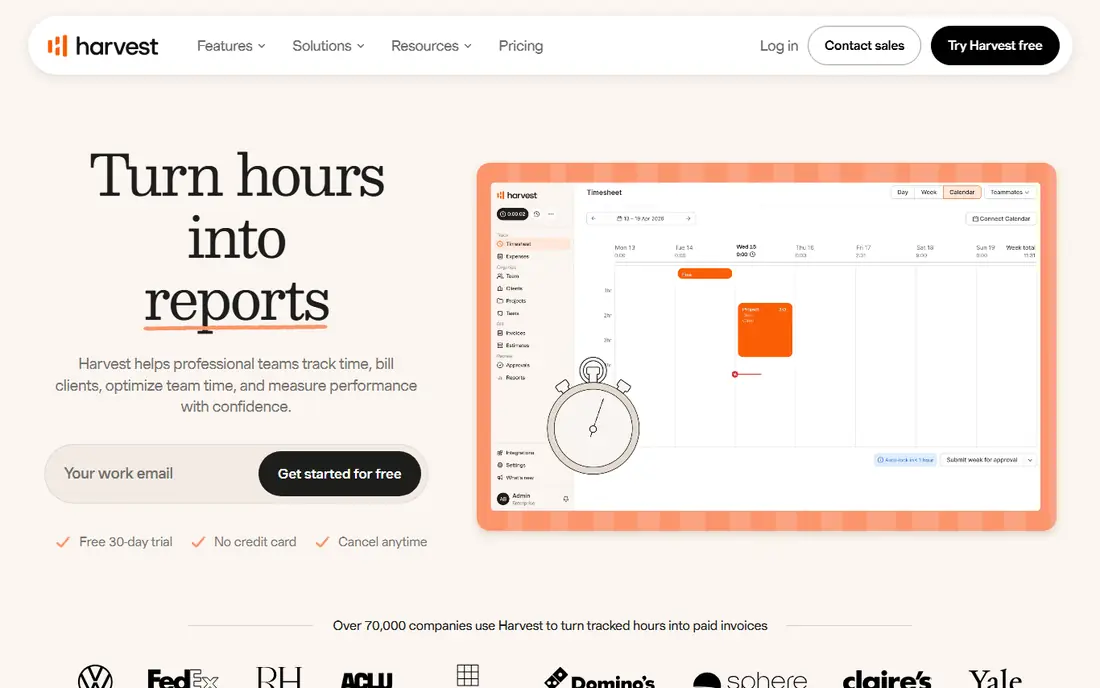
This one suits a specific kind of reader. Harvest suits service businesses that bill by the hour, because tracked time flows directly into invoices and client reports. It fits readers who want time tracking plus invoicing for services, and its published feature set matches that promise rather than trying to cover every possible use case at once. The price picture is see website, with a free plan status of free trial. The free tier is very limited, so most teams should budget for the paid plan from the start. Before you sign up, check the current plan limits on the official site, because caps on users, usage or features are where most buyers get surprised after the first month.
- Time tracking
- Invoicing
- Expense tracking
- Client reports
- Free tier is limited to one seat and two projects
- Pricing is per user
Time Doctor
Ideal for: Productivity monitoring for remote teams
Consider this if the top picks do not fit. Time Doctor suits remote teams that want time tracking plus activity and screenshot evidence for client billing. It fits readers who want productivity monitoring for remote teams, and its published feature set matches that promise rather than trying to cover every possible use case at once. The price picture is see website, with a free plan status of free trial. Screenshot monitoring is sensitive, so agree a clear policy with staff before you switch it on, and check local labour rules. Before you sign up, check the current plan limits on the official site, because caps on users, usage or features are where most buyers get surprised after the first month.
- Time tracking
- Screenshots and activity
- Payroll integrations
- Monitoring features raise privacy questions
- Pricing is per user
Hubstaff
Ideal for: Time tracking with GPS and payroll
A strong option for a narrower need. Hubstaff suits field and remote teams that need time, GPS and payroll in one tool. It fits readers who want time tracking with gps and payroll, and its published feature set matches that promise rather than trying to cover every possible use case at once. The price picture is see website, with a free plan status of free trial. The breadth means the interface is busy, and monitoring features need a clear staff policy first. Before you sign up, check the current plan limits on the official site, because caps on users, usage or features are where most buyers get surprised after the first month.
- Time tracking
- GPS for field teams
- Payroll and invoicing
- Monitoring features need clear staff policies
- Interface is busy
RescueTime
Ideal for: Automatic time tracking for individuals
Worth a close look before you decide. RescueTime automatically records where your time goes, which suits individuals who forget to start a timer. It fits readers who want automatic time tracking for individuals, and its published feature set matches that promise rather than trying to cover every possible use case at once. The price picture is see website, with a free plan status of free trial. Teams that need client billing and project timesheets will find its team features lighter than rivals. Before you sign up, check the current plan limits on the official site, because caps on users, usage or features are where most buyers get surprised after the first month.
- Automatic activity tracking
- Focus tools
- Detailed reports
- Team features are lighter than Toggl or Harvest
- No manual timer focus
Everhour
Ideal for: Time tracking inside project tools
This belongs on the shortlist for a reason. Everhour suits teams that already live in Asana, Trello or ClickUp, because time tracking sits inside the project tool. It fits readers who want time tracking inside project tools, and its published feature set matches that promise rather than trying to cover every possible use case at once. The price picture is see website, with a free plan status of free trial. Standalone users may find it thinner than Toggl or Harvest, so judge it on your project stack. Before you sign up, check the current plan limits on the official site, because caps on users, usage or features are where most buyers get surprised after the first month.
- Integrations with Asana, Trello and ClickUp
- Budgets
- Invoicing
- Needs a project tool to shine
- Standalone use is thinner
TrackingTime
Ideal for: Simple team time tracking with reports
Do not overlook this one. TrackingTime gives small teams a simple tracker with a free tier, team timesheets and project reports. It fits readers who want simple team time tracking with reports, and its published feature set matches that promise rather than trying to cover every possible use case at once. The price picture is see website, with a free plan status of yes. Teams that need deep integrations or invoicing should check those features during the trial. Before you sign up, check the current plan limits on the official site, because caps on users, usage or features are where most buyers get surprised after the first month.
- Free tier
- Team timesheets
- Project reports
- Simple interface
- Advanced integrations are fewer than Toggl
- Reporting is simpler
How we picked these
We started from official feature pages and pricing pages, then checked app store listings, privacy policies and public reviews to confirm each product still works and still fits the topic. Products that could not be verified, or that only partly matched the topic, were left out, even when they were well known. We favoured a mix of established leaders and strong smaller options, and we weighted price transparency, a usable free tier or trial, and honest limits more heavily than marketing claims. No product on this list paid for its place, and our pick for most people is the one we would suggest to a friend with ordinary needs and an ordinary budget.
How to pick a time tracker that people will actually use
Start with whether you need manual timers, automatic tracking or both, because that choice splits the list quickly. Manual timers suit billing and project work, while automatic tracking suits personal productivity and focus. Next, check invoicing and payroll needs: a tracker that feeds invoices saves real admin time for service businesses. Then check privacy: screenshot and activity monitoring change the relationship with staff, so agree a policy before you enable those features. Trial the top two for a full week of real work, and watch whether timers get started, since a tracker nobody starts is just a subscription. Also check reports, budgets and integrations with your project and payroll tools. A tracker that cannot show time by client, project or task will not help with billing or planning. Confirm mobile and desktop apps, offline support and export options, so time data remains yours if you switch tools later.
Frequently asked questions
What is the best Timely alternative?
Toggl Track suits simple manual tracking, Clockify suits free team tracking, Harvest suits billing, and RescueTime suits automatic personal tracking. The right pick depends on whether you bill, manage a team or track yourself.
Is there a free Timely alternative?
Yes, Clockify and Toggl Track offer free tiers, and TrackingTime offers a free tier for small teams. Free tiers usually limit projects, reports or users.
What is the difference between manual and automatic time tracking?
Manual tracking uses a timer you start and stop for each task, while automatic tracking records app and website use without a timer. Manual suits billing, while automatic suits personal productivity.
Do time trackers monitor employees?
Some tools offer screenshots, activity levels and GPS, while others track only timers. Check the privacy features and agree a policy with staff before enabling monitoring.
Can time tracking data feed invoices?
Yes, Harvest, Hubstaff and Everhour link tracked time to invoices, while Toggl and Clockify export data for invoicing tools. Check the invoicing flow if billing is a main need.