8 Top AI Supply Chain Software Platforms

- 1
 FourKitesCompanies that want AI agents to run supply chain operationsVisit
- 2
 project44Shippers that need decision intelligence across transport and inventoryVisit
- 3
 o9 SolutionsLarge companies that need integrated business planning on one platformVisit
- 4
 Blue YonderCompanies that want one AI platform across planning and executionVisit
- 5
 KinaxisComplex manufacturers that need fast, connected planning decisionsVisit
- FourKites and project44 lead on real-time visibility with AI agents that act on delays, documents, and carrier issues.
- o9 Solutions, Blue Yonder, and Kinaxis focus on planning, with AI forecasts, scenarios, and synchronized decisions.
- Oracle SCM suits companies already running Oracle, since AI planning and execution sit inside one suite.
- Coupa connects spend and supply chain decisions, while e2open covers planning, trade, logistics, and channel in one network.
- Every tool here is enterprise software priced by quote, so judge them on a pilot with your own data, not on demos alone.
Quick comparison
| Product | Ideal for | Price from | Free version | |
|---|---|---|---|---|
| FourKites | Companies that want AI agents to run supply chain operations | See website | No | Visit |
| project44 | Shippers that need decision intelligence across transport and inventory | See website | No | Visit |
| o9 Solutions | Large companies that need integrated business planning on one platform | See website | No | Visit |
| Blue Yonder | Companies that want one AI platform across planning and execution | See website | No | Visit |
| Kinaxis | Complex manufacturers that need fast, connected planning decisions | See website | No | Visit |
 Oracle SCM | Companies already running Oracle that want AI across the supply chain | See website | No | Visit |
 Coupa | Companies that want spend intelligence tied to supply chain decisions | See website | No | Visit |
 e2open | Companies that need one connected network for planning, trade, and logistics | See website | No | Visit |
The top AI supply chain software
FourKites
Ideal for: Companies that want AI agents to run supply chain operations
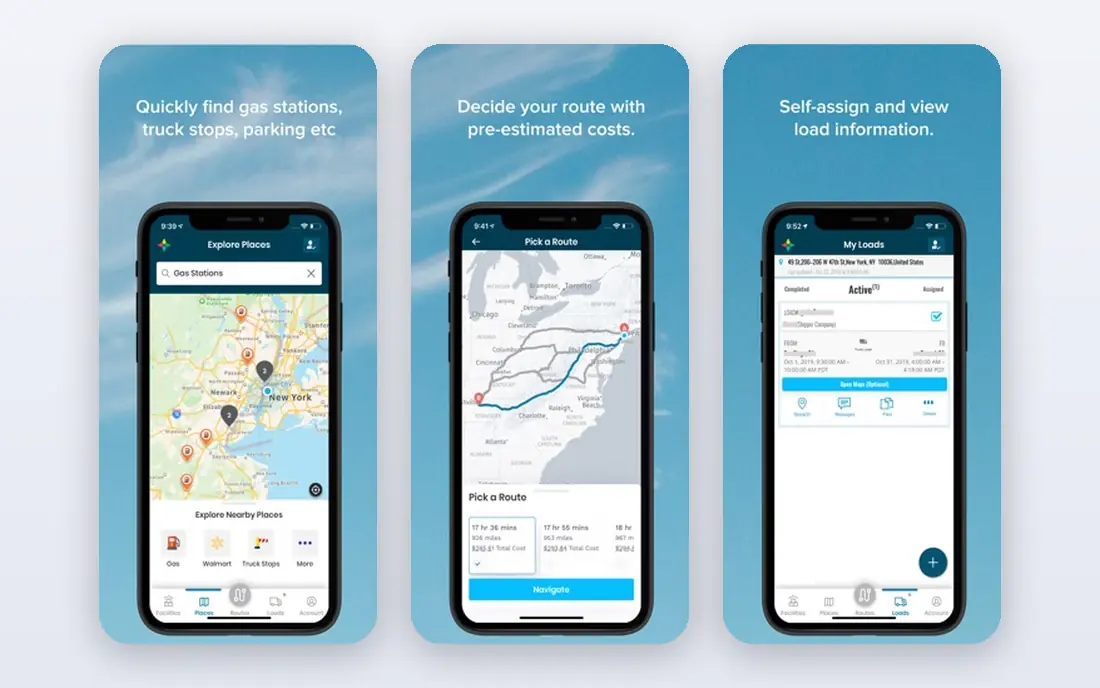
FourKites now positions itself as AI-powered supply chain orchestration, with agents that contact carriers, reschedule appointments, notify customers, process documents, and file disputes. Its network covers carriers, facilities, and lanes worldwide, with customs, weather, maritime, and geopolitical signals feeding its intelligence layer.
FourKites suits large shippers that want work done, not just dashboards watched. Its outcome-based pitch means you should define the outcomes you will measure, such as detention costs or on-time delivery, before signing.
- AI agents for carriers, suppliers, customers, and facilities, large shipment network, real-time visibility, outcome-based positioning
- No free plan, enterprise pricing, implementation needs data work
project44
Ideal for: Shippers that need decision intelligence across transport and inventory
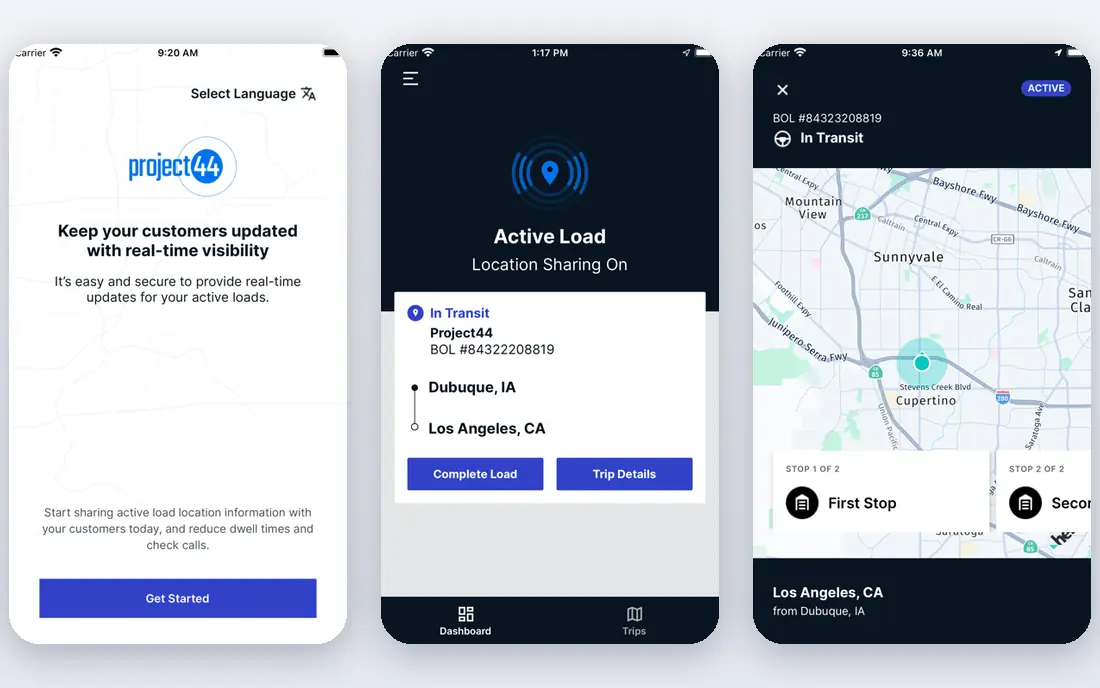
project44 calls itself a decision intelligence platform that orchestrates AI agents to detect, decide, and act in real time. Its data network processes huge volumes of logistics events and risk signals daily, and its product families cover intelligent transport management, shipment and inventory visibility, yard management, and ecommerce logistics.
project44 suits complex global supply chains where exceptions are constant. Its AI assistant, MO, helps teams query movement data in plain language. Scope the rollout carefully, since the platform covers many functions at once.
- Large logistics data network, AI agents for exceptions, intelligent transport management, yard and ecommerce logistics
- No free plan, enterprise pricing, broad platform needs careful scoping
o9 Solutions
Ideal for: Large companies that need integrated business planning on one platform
o9 Solutions offers the o9 Digital Brain, an AI-powered enterprise planning platform that connects finance, marketing, sales, and supply chain data on one live model. Its knowledge graph AI supports forecasts, scenario analysis, and synchronized decisions across functions, and its newer APEX model adds self-learning improvement to operating models.
o9 suits large companies replacing fragmented planning tools with one platform. Implementation is a transformation project, not a quick install, so expect a longer timeline and change management effort.
- Digital Brain planning platform, knowledge graph AI, integrated business planning, scenario analysis
- No free plan, enterprise pricing and implementation, best for large organizations
Blue Yonder
Ideal for: Companies that want one AI platform across planning and execution
Blue Yonder describes itself as the AI company for supply chain, with one platform covering planning, execution, and partner collaboration. Its AI models deliver billions of predictions daily, and its common data cloud connects inventory, plans, and partner actions across tiers, from raw materials to the final customer.
Blue Yonder serves more than 3,000 customers across industries from grocery to automotive. It suits companies that want planning and execution on one platform, rolled out in phases by function.
- End-to-end platform, AI predictions at scale, common data cloud, multi-tier partner network
- No free plan, enterprise pricing, broad suite needs phased rollout
Kinaxis
Ideal for: Complex manufacturers that need fast, connected planning decisions
Kinaxis offers Maestro, an AI-powered platform for supply chain planning and decision-making that synchronizes signals, plans, and decisions in real time. Its composable AI lets teams build agents and workflows from building blocks, and its solutions cover demand, supply, inventory, scheduling, and sales and operations planning.
Kinaxis is a leader in supply chain planning analyst rankings and suits manufacturers with complex, multi-tier supply chains. Its Planning One option gives mid-market teams a lower-risk entry point.
- Maestro planning platform, agentic AI and scenario analysis, concurrent planning, mid-market Planning One option
- No free plan, enterprise pricing, planning focus rather than transport execution
Oracle SCM
Ideal for: Companies already running Oracle that want AI across the supply chain
Oracle Fusion Cloud Supply Chain and Manufacturing is a complete suite covering product management, planning, procurement, manufacturing, inventory, order orchestration, and logistics, with built-in AI and agentic applications throughout. Its AI agents monitor production signals, plan scenarios, and execute work with minimal human intervention.
Oracle SCM suits companies already running Oracle Fusion applications, since the value grows when planning, execution, and finance share one system. Standalone buyers should weigh integration effort against the suite's breadth.
- Complete suite from design to delivery, built-in AI and agentic apps, strong logistics and manufacturing depth, enterprise governance
- No free plan, enterprise pricing and implementation, best inside an Oracle estate
Coupa
Ideal for: Companies that want spend intelligence tied to supply chain decisions
Coupa is an agentic spend management platform whose supply chain optimization tools use machine learning and generative AI to model networks, test scenarios, and cut costs. Its business network connects buyers and suppliers, and its spend intelligence spans finance, procurement, and supply chain.
Coupa suits companies where sourcing, spend, and supply chain decisions must move together. If you only need transport visibility, a focused tool like FourKites or project44 fits better, but for spend-linked supply decisions, Coupa is strong.
- Agentic spend management, supply chain optimization with machine learning, large buyer and supplier network, finance and procurement depth
- No free plan, enterprise pricing, supply chain is one part of a wider platform
e2open
Ideal for: Companies that need one connected network for planning, trade, and logistics
e2open offers a connected supply chain platform with suites for channel, planning, global trade, logistics, and supply, all on one cloud-native network of manufacturing, logistics, and distribution partners. Its planning tools use field-proven AI, and its trade suite draws on deep trade content for screening, compliance, and duty filing.
e2open suits global companies that need visibility and collaboration across many tiers and partners. Like other suites here, it rewards a phased rollout by function rather than a big-bang deployment.
- Connected platform across planning, supply, trade, logistics, and channel, large partner network, AI in planning, trade content depth
- No free plan, enterprise pricing, broad suite needs phased adoption
How we picked these
We compared official feature pages, pricing pages, and public reviews for AI supply chain software live in October 2026. We favored platforms with real AI capabilities, such as agents, forecasts, or scenario engines, rather than dashboards with an AI label, and we covered visibility, planning, and execution so readers can compare across functions. We kept only platforms whose official homepages we could load and confirm. Pricing is listed as "See website" throughout because every tool here is enterprise software priced by quote. We did not claim hands-on testing in live supply chains, and we treated vendor savings and performance claims as claims, not verified results.
What to look for in AI supply chain software
Start with the problem that hurts most. Late shipments need visibility and exception agents, while forecast misses need planning and scenario tools. A platform that excels at one may be weak at the other, so map your top three pain points before you shortlist.
Next, check data and integration depth. AI supply chain tools are only as good as the order, shipment, inventory, and supplier data they receive. Ask which enterprise resource planning, warehouse, transport, and supplier systems each tool connects to, how long integration takes, and who owns data quality during rollout.
Then run a pilot on your own data. Ask each vendor to show results on a real lane, product family, or planning cycle, and define success measures in advance, such as forecast accuracy, detention costs, or on-time delivery. Finally, confirm the commercial model, including implementation costs, per-user or per-shipment fees, and what happens to your data if you leave.
Frequently asked questions
What is the best AI supply chain software?
FourKites and project44 lead for real-time visibility and exception handling, while o9 Solutions, Blue Yonder, and Kinaxis lead for planning. Oracle SCM suits Oracle customers, and Coupa and e2open suit spend-linked and network-wide needs. The best pick depends on whether your biggest pain is visibility, planning, or execution.
What does agentic AI mean in supply chain software?
Agentic AI means software agents that do work, not just show data. FourKites agents contact carriers and process documents, project44 agents resolve exceptions, and Oracle agents monitor production and plan actions. Human review still matters for high-stakes decisions.
How much does AI supply chain software cost?
All tools on this list are enterprise software priced by quote, based on shipment volume, users, modules, and implementation scope. Expect implementation costs on top of subscription fees, and ask for a total first-year figure before comparing vendors.
Can small businesses use these tools?
Most tools here target mid-market and enterprise companies. Kinaxis offers a Planning One option for growing teams, and smaller shippers may start with a focused visibility tool before adopting a full planning suite.
How long does implementation take?
Timelines vary from weeks for a focused visibility rollout to many months for a full planning transformation. Data quality, integration count, and change management drive the timeline more than software installation alone.
Do these tools replace my ERP or transport system?
Usually not. Most AI supply chain platforms sit alongside enterprise resource planning and transport systems, reading their data and adding intelligence and automation. Oracle SCM is the exception when bought as part of a full Oracle suite.