Top Best Cell Carrier Services in 2026: 8 Services Compared

- The big three carriers, Verizon, AT&T, and T-Mobile, offer the widest coverage, while MVNOs like Mint Mobile and Visible offer lower prices on the same networks.
- Coverage matters more than speed claims: check each carrier's coverage where you live, work, and travel before choosing.
- Mint Mobile and Visible suit budget-conscious users, while Google Fi suits frequent travelers and US Mobile suits users who want flexible plans.
- Watch for plan details like data deprioritization, hotspot limits, and international roaming, since those change the real value of a plan.
- Our pick for most people is T-Mobile for coverage and value, with Mint Mobile as the budget pick.
Quick comparison
| Product | Ideal for | Price from | Free version | |
|---|---|---|---|---|
 Verizon | Widest coverage | See website | No | Visit |
 AT&T | Reliable national coverage | See website | No | Visit |
 T-Mobile | Coverage plus value | See website | No | Visit |
 Mint Mobile | Budget prepaid plans | See website | Free trial | Visit |
 Visible | Simple unlimited plans | See website | No | Visit |
 Google Fi | Flexible and travel-friendly | See website | No | Visit |
 Cricket Wireless | AT&T network value | See website | No | Visit |
 US Mobile | Flexible custom plans | See website | Free trial | Visit |
The best cell carrier services
Choosing a cell carrier means balancing coverage, price, data, and perks, and the right choice depends heavily on where you use your phone. The carriers below were compared on network coverage, plan value, data policies, and customer experience.
Verizon
Ideal for: Widest coverage
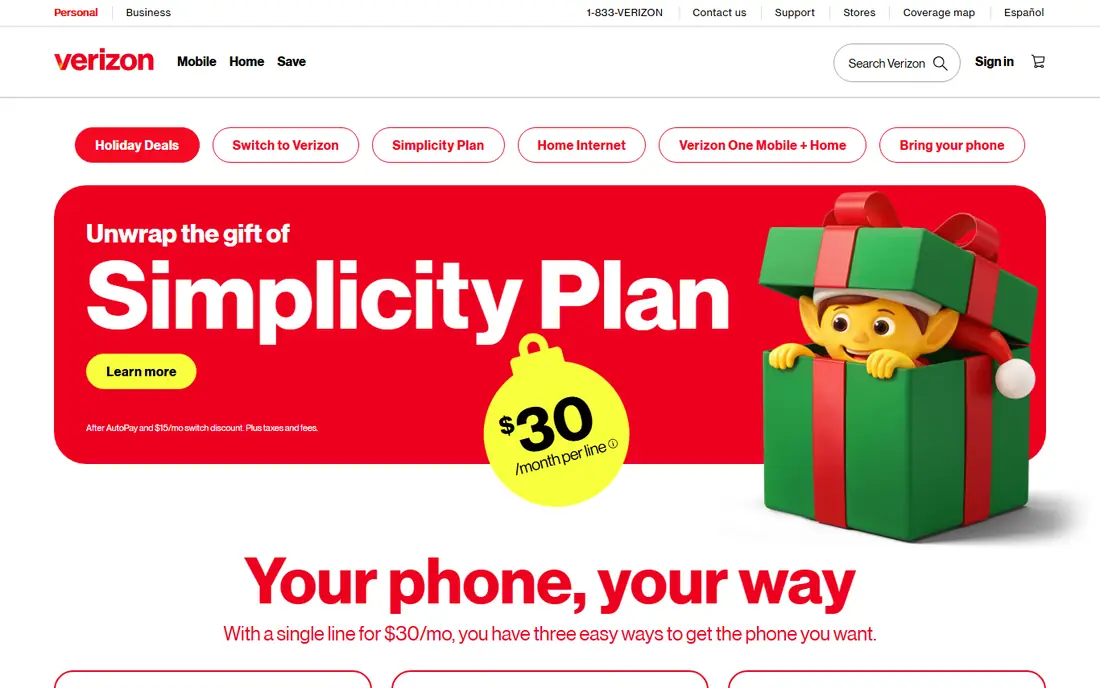
Verizon is widely regarded as having the broadest coverage in the United States, including rural areas where other carriers thin out. Its network reliability is a key reason many businesses and rural users choose it, and its 5G rollout covers a large share of the population. For a user whose priority is signal almost everywhere, Verizon is the safest choice.
Pricing is higher than T-Mobile and far higher than MVNOs, and its cheapest plans limit premium data and perks. For coverage-first users who can afford it, Verizon remains the leading carrier.
- Widest overall coverage in the US
- Strong network reliability
- Good rural coverage
- Higher prices than rivals
- Premium plans cost more for full features
AT&T
Ideal for: Reliable national coverage
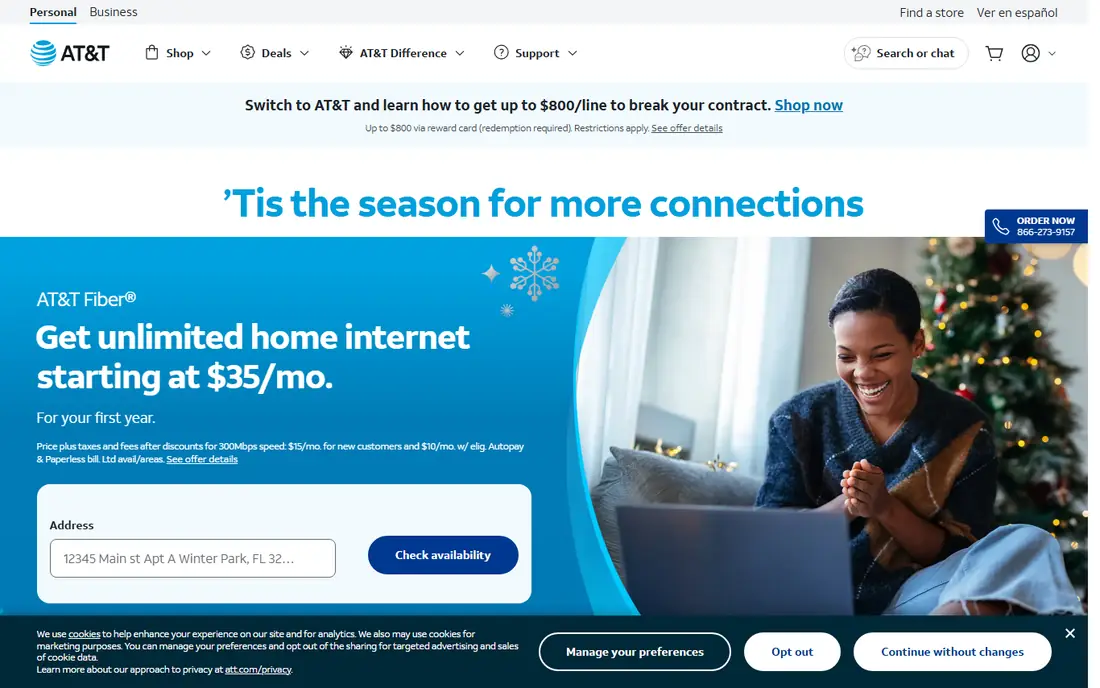
AT&T offers reliable national coverage with a strong network and a broad plan range for individuals, families, and businesses. Its FirstNet service for first responders is a distinctive strength, and its bundling with home internet and TV appeals to households that want one provider. For a dependable national carrier with business options, AT&T is a solid choice.
Prices sit in the mid-to-high range, and plan details, fees, and device promotions need careful reading to understand the real monthly cost. For users who value a stable, nationwide network, AT&T delivers.
- Strong national coverage
- Good for business and family plans
- FirstNet for first responders
- Prices are mid-to-high
- Plan details and fees need careful reading
T-Mobile
Ideal for: Coverage plus value
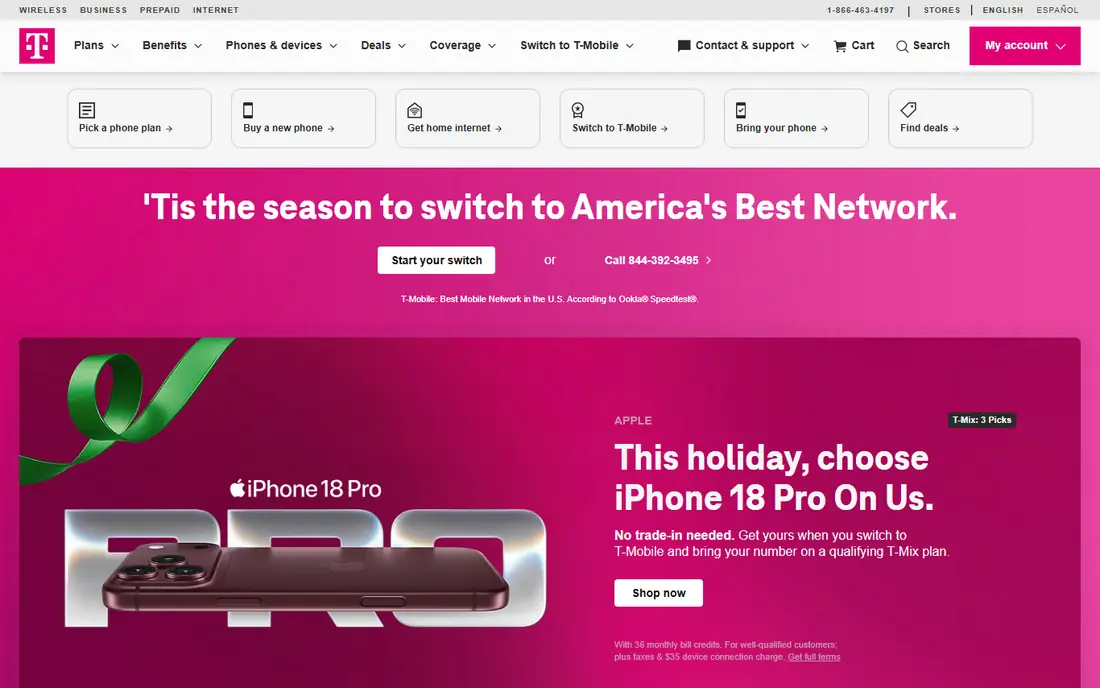
T-Mobile has grown into a strong all-round carrier, with extensive 5G coverage, competitive pricing, and perks like international roaming and streaming bundles on higher plans. Its merger with Sprint expanded its spectrum and coverage, and its pricing undercuts Verizon and AT&T on comparable plans. For a balance of coverage, speed, and value, T-Mobile is hard to beat.
Rural coverage still trails Verizon in some areas, so users outside cities should check local coverage first. Plan names and perks also change often, which can confuse comparisons. For most urban and suburban users, T-Mobile offers the best overall value.
- Strong 5G coverage
- Competitive pricing
- Good international roaming perks
- Rural coverage still trails Verizon in some areas
- Plan names change often
Mint Mobile
Ideal for: Budget prepaid plans
Mint Mobile offers some of the lowest prices in US mobile, running on T-Mobile's network with prepaid plans that reward multi-month payment. Its plans suit light to moderate data users who want a low bill without a contract, and its setup, including eSIM, is straightforward. For a budget user happy to prepay, Mint is excellent value.
The best prices require paying for several months upfront, and Mint data can be deprioritized behind T-Mobile customers during congestion. For users who prioritize price and can prepay, Mint Mobile is the top budget choice.
- Very low prices on T-Mobile network
- Simple prepaid plans
- Good for light to moderate users
- Multi-month prepayment for best prices
- Data deprioritization in congestion
Visible
Ideal for: Simple unlimited plans
Visible, owned by Verizon, offers simple unlimited plans on Verizon's network with taxes and fees included in the advertised price. Its app-based management is easy, and its simplicity appeals to users tired of complex carrier plans. For Verizon coverage at a much lower price, Visible is a compelling option.
Data can be deprioritized during congestion, and its plan tiers and perks are fewer than Verizon's own plans. For a user who wants Verizon coverage and simple unlimited data cheaply, Visible is a strong pick.
- Simple unlimited plans on Verizon network
- No hidden fees
- Easy app-based management
- Data deprioritization possible
- Fewer plan tiers and perks than big carriers
Google Fi
Ideal for: Flexible and travel-friendly
Google Fi offers flexible plans that charge for data used, plus unlimited options, with international roaming in many countries at reasonable rates. That travel friendliness is its main advantage: a Fi user abroad gets data without buying local SIMs or paying huge roaming fees. Its network switching across partner carriers also helps coverage.
Full features work best on Pixel and supported phones, and users on other devices may get less network switching. For frequent travelers and flexible data users, Google Fi is a distinctive and practical carrier.
- Flexible data pricing
- Good international roaming
- Works across T-Mobile and US Cellular networks
- Best on Pixel and supported phones
- Full features vary by device
Cricket Wireless
Ideal for: AT&T network value
Cricket Wireless, owned by AT&T, offers affordable prepaid plans on AT&T's network, with simple pricing and no annual contract. Its plans suit families and budget users who want AT&T coverage without AT&T prices, and its retail stores help users who prefer in-person support. For AT&T coverage at a lower price, Cricket is a solid value.
Some plans cap data speeds, and premium perks are fewer than on AT&T's own plans. For a prepaid user who wants reliable AT&T coverage cheaply, Cricket is a good choice.
- AT&T network coverage
- Affordable prepaid plans
- Simple pricing
- Data speeds may be capped on some plans
- Fewer premium perks
US Mobile
Ideal for: Flexible custom plans
US Mobile lets users build custom plans, choosing data amounts and network, with options on major US networks. That flexibility suits households where members use very different amounts of data, since each line can be tailored rather than forced into one plan. Its pricing is competitive, and its customer service is well regarded.
As a smaller brand, its recognition is lower, and customizing plans takes a little learning. For users who want a plan fitted to actual use rather than a one-size bundle, US Mobile is an excellent flexible option.
- Customizable plans
- Choice of networks
- Good value for varied data needs
- Smaller brand
- Plan customization takes a little learning
How we picked these
We compared official carrier pages, coverage information, and plan documentation for major US carriers and MVNOs, focusing on coverage, plan value, data policies, and customer experience. We favored carriers with real nationwide or strong regional service and included both major carriers and budget MVNOs.
What to check before you switch
Check coverage where you actually use your phone, using each carrier's coverage map and, ideally, a trial or a friend's phone on that network. Also check data policies: deprioritization, hotspot allowances, video quality limits, and international roaming all affect real-world value. Confirm device compatibility and whether your phone is free of carrier locks, since a locked phone cannot switch carriers.
Compare total monthly cost, including taxes and fees, not just the advertised plan price, and check promotion terms for new lines or device deals. Finally, test the carrier with a short-term or trial plan before porting your main number.
One more factor worth weighing is how the option you choose will feel after the first month, not just on day one. A tool or service that looks strong in a demo can become a burden if setup is fiddly, support is slow, or everyday tasks take more clicks than they should. That is why we suggest using a trial with your real workload, your real data, and the people who will actually use it every day. Watch for friction in the first week, since that friction rarely disappears on its own. Also consider what happens when your needs change: can you upgrade, downgrade, or leave without losing your work? A flexible option that grows with you is usually worth more than a slightly cheaper one that locks you into a plan you will outgrow. Finally, talk to at least one current user if you can, since a short honest conversation often reveals more than a polished sales page.
Frequently asked questions
Which cell carrier has the best coverage?
Verizon generally has the widest coverage in the US, especially in rural areas, followed closely by AT&T and T-Mobile. Check coverage maps for your specific locations, since local coverage varies.
Are MVNOs like Mint Mobile as good as major carriers?
They use the same major networks, so coverage is similar, but data may be deprioritized during congestion and perks are fewer. For most users, the savings outweigh those trade-offs.
Which carrier is cheapest?
Mint Mobile and Visible are among the cheapest for most users, thanks to prepaid and simplified unlimited plans. US Mobile is also competitive for customized low-data plans.
Can I keep my phone number when switching carriers?
Yes, in most cases you can port your number to a new carrier. Keep your old account active until the port completes, and have your account number and transfer PIN ready.
Which carrier is best for international travel?
Google Fi and T-Mobile are strongest for international roaming, with data in many countries included or affordably priced on higher plans. Check roaming rates for your destinations before traveling.
What is the first step when choosing top best cell carrier services?
Start by writing down what you need the product or service to do, how many people will use it, and what budget you can sustain for a year. That short brief makes comparisons far easier, since you can test each option against the same requirements instead of being swayed by the longest feature list. Then run a trial of your top two or three choices with real tasks, and pick the one your team actually enjoys using, since adoption matters as much as features.