Top 8 Marketing Management Software for 2026

- 1
 HubSpot Marketing Hubsmall to midsize teams that want CRM plus marketing in one placeVisit
- 2
 Salesforce Marketing Cloudlarge teams already running SalesforceVisit
- 3
 ActiveCampaignteams that live in email automationVisit
- 4
 Mailchimpsmall teams that need email firstVisit
- 5
 Adobe Marketo EngageB2B teams running account-based marketingVisit
- HubSpot and Mailchimp offer genuine free tiers, while ActiveCampaign starts at $15 a month billed annually and is the cheapest premium entry point here.
- Salesforce Marketing Cloud starts at $1,500 per org per month billed annually, so it suits large teams already on Salesforce rather than small teams.
- Marketo Engage, Braze, Iterable, and Oracle Eloqua publish no prices, so every one of them needs a sales quote before you can budget.
- Watch the limits that raise cost later: email send caps, contact bands, onboarding fees, and add-on charges for SMS and WhatsApp.
- The best pick depends on team size more than on feature lists, so use the decision table below before you shortlist.
Quick comparison
| Product | Ideal for | Price from | Free version | |
|---|---|---|---|---|
| HubSpot Marketing Hub | small to midsize teams that want CRM plus marketing in one place | $20 per seat/month (billed annually) | Yes | Visit |
| Salesforce Marketing Cloud | large teams already running Salesforce | $1,500 per org/month (billed annually) | No | Visit |
| ActiveCampaign | teams that live in email automation | $15/month (billed annually) | Free trial (14 days) | Visit |
| Mailchimp | small teams that need email first | $13/month | Yes | Visit |
| Adobe Marketo Engage | B2B teams running account-based marketing | quote only | No | Visit |
 Braze | cross-channel messaging at scale | quote only | No | Visit |
 Iterable | high-volume lifecycle messaging | quote only | No | Visit |
 Oracle Eloqua | large B2B teams on Oracle CX | quote only | No | Visit |
The best marketing management software
HubSpot Marketing Hub
Ideal for: small to midsize teams that want CRM plus marketing in one place
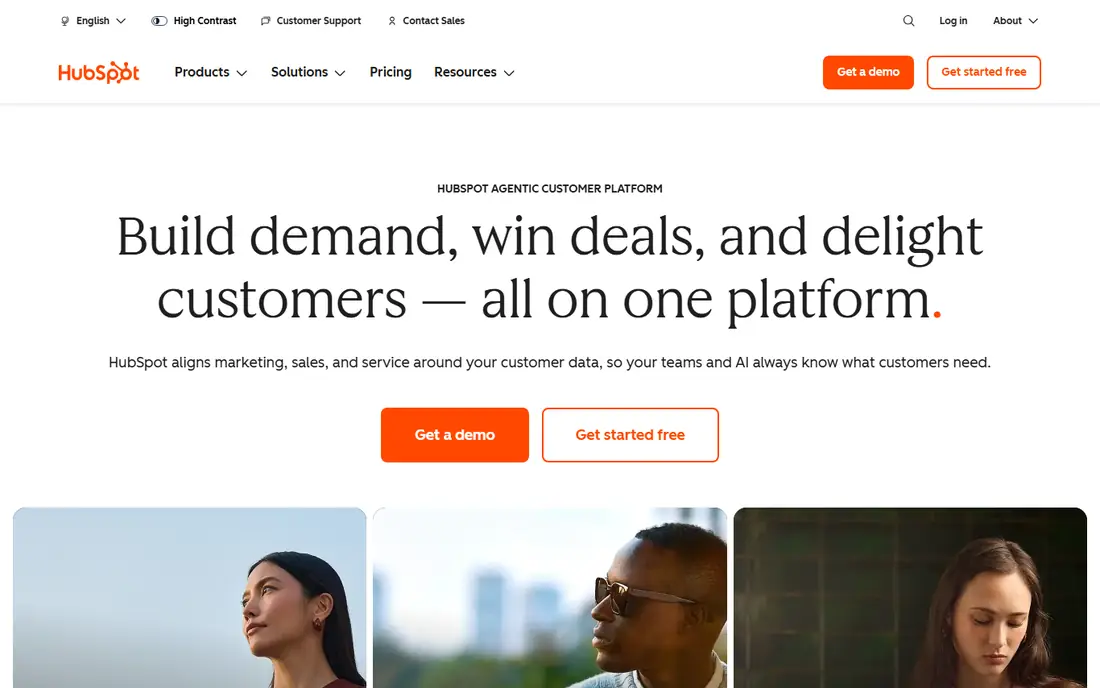
HubSpot Marketing Hub sits on top of the HubSpot CRM, so contacts, deals, and campaigns live in one record instead of five separate tools. The free tier covers email marketing, forms, live chat, and landing pages for up to two users, which makes it a practical starting point for a small team. Starter begins at $20 per seat per month when billed annually, and higher tiers add automation, A/B testing, and custom reporting as the team grows.
The trade-off is cost growth. Contact tiers and send limits rise with each plan, and the free plan allows only one automated action and 2,000 sends a month with HubSpot branding. Teams that outgrow Starter often move to Professional at $800 a month billed annually, plus a $3,000 one-time onboarding fee, so the total cost of ownership deserves a close look before you commit to a contract.
- Genuine free tier with CRM, email, forms, and live chat
- All-in-one platform for email, landing pages, automation, SEO, social, and reporting
- Free plan allows only 1 automated action and 2,000 sends a month with HubSpot branding
- Contact tier cannot be downgraded until the contract renews
Salesforce Marketing Cloud
Ideal for: large teams already running Salesforce
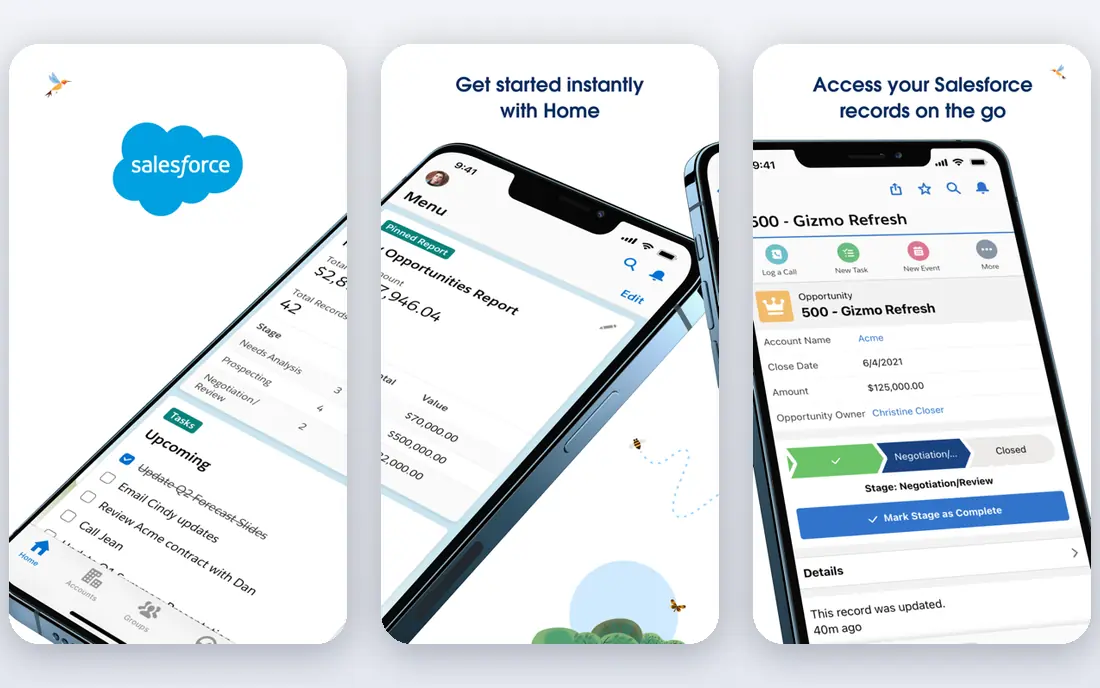
Salesforce Marketing Cloud, now sold as Marketing Cloud Next, is built for large teams that already run Salesforce Sales Cloud or Service Cloud. Growth Edition starts at $1,500 per org per month billed annually, and Advanced Edition is $3,250. Journeys can span email, SMS, WhatsApp, and RCS, and Agentforce adds agentic campaign creation on the higher editions, which suits teams that already live inside Salesforce.
The platform assumes an annual commitment, and most subscriptions are charged annually in advance. Extra email sends, SMS, WhatsApp, and additional business units are charged on top of the edition price, so the headline figure is a floor rather than a ceiling. Smaller teams will find the entry price high, and the value shows up mainly when the whole Salesforce platform is already in place.
- Built natively on the Salesforce platform with unified data and workflows
- Multi-channel journeys across email, SMS, WhatsApp, and RCS with Agentforce campaign creation
- Most subscriptions are charged annually in advance and packaging needs a sales representative
- SMS, WhatsApp, extra email sends, and extra business units cost extra
ActiveCampaign
Ideal for: teams that live in email automation
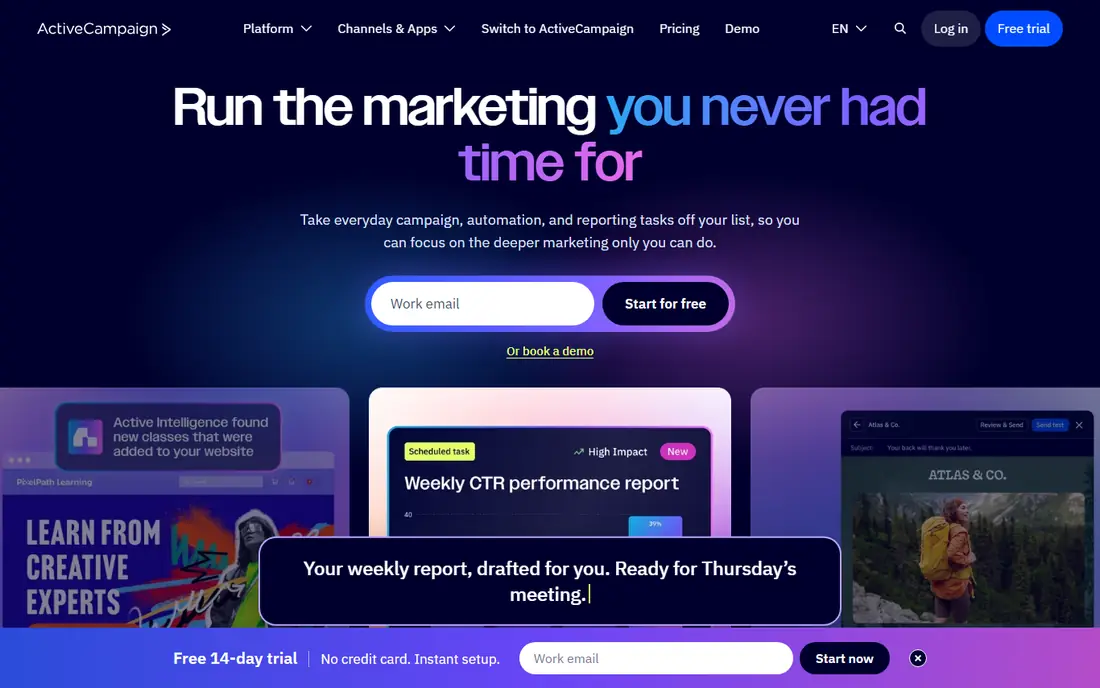
ActiveCampaign is a strong fit for teams that live in email automation. Starter starts at $15 a month billed annually at 1,000 contacts, and the visual automation builder ships with more than 950 ready-made recipes. The Plus plan at $49 adds landing pages, predictive sending, and unlimited automation steps, which is where most growing teams land once their first automations start to pay off.
The limits to watch are the automation cap on Starter, which allows only five actions per automation, and the way price climbs with each contact band. Starter at 1,000 contacts is $15, but the same plan costs about $149 at 10,000 contacts. SMS, WhatsApp, transactional email, and extra users are charged as add-ons, so list growth should be part of the budget math from the start.
- More than 950 ready-made automation recipes with a visual automation builder
- Unlimited automation steps, predictive sending, and landing pages from the Plus plan
- Starter caps each automation at 5 actions, so real automation work needs Plus or higher
- Price rises steeply with contact band, and SMS, WhatsApp, transactional email, and extra users are add-ons
Mailchimp
Ideal for: small teams that need email first
Mailchimp remains the easiest entry point for small teams that need email first and everything else second. The free plan covers up to 250 contacts and 500 sends a month, and Essentials starts from $13 a month at 500 contacts. Standard, from $20 a month, adds predictive segmentation, advanced automation, and multivariate testing, which covers most small-team needs without a large contract.
The free plan is small, with one seat, Mailchimp branding, and email support for the first 30 days only. SMS and MMS are add-ons to premium plans only, and Premium starts from $350 a month, which puts it out of reach for most small teams. Mailchimp works best when email is the core channel and the contact list stays modest.
- Free plan for under 250 contacts with core email tools
- More than 300 integrations and 130 pre-built email templates, plus predictive segmentation on Standard and Premium
- Free plan is capped at 250 contacts and 500 sends a month, with email support only for the first 30 days
- SMS and MMS are add-ons to premium plans only, and Mailchimp branding stays on the free plan
Adobe Marketo Engage
Ideal for: B2B teams running account-based marketing
Adobe Marketo Engage is built for B2B teams that run complex nurture programs and account-based marketing. It offers omnichannel campaign orchestration across email and nurture journeys, with AI features and predictive audiences in the higher packages. Native CRM integrations connect it to Salesforce and Microsoft Dynamics, and journey analytics track how accounts move through the funnel over time.
Adobe publishes no list price, so every deal starts with a sales quote. Pricing is sold as a yearly or multi-year licence based on database size, which means the bill can rise as the database grows even for contacts that are never emailed. There is no free tier and no self-serve trial, so evaluation runs through a demo and a sales process rather than a quick signup.
- Omnichannel campaign orchestration with AI features and predictive audiences in higher packages
- Native CRM integrations and account-based marketing with journey analytics
- No published price, so budgeting requires a sales quote
- Price scales with database size, so the bill rises as the database grows even for contacts never emailed
Braze
Ideal for: cross-channel messaging at scale
Braze is a customer engagement platform for teams that message across email, push, in-app, SMS, and WhatsApp from one system. It processes customer data in real time and includes warehouse ingestion in every edition. There are no per-seat fees, so adding team members does not raise the bill, which suits large marketing and product teams that share one platform.
Braze publishes no price list and states on its own pricing page that packages are customised. Pricing is value-based on three dimensions: platform edition, monthly active users, and Flexible Credits for channels, messaging volume, and AI use. Predictive AI needs the Pro edition, and BrazeAI Decisioning Studio sits outside the edition inclusions, so the quote process matters more than any headline figure.
- No per-seat fees, so adding team members does not raise the bill
- Real-time stream processing with all channels and warehouse ingestion included in every edition
- No published price or tier list, so costing requires a sales conversation
- Predictive AI requires the Pro edition and BrazeAI Decisioning Studio sits outside the edition inclusions
Iterable
Ideal for: high-volume lifecycle messaging
Iterable is a cross-channel platform that runs email, SMS, push, and in-app journeys on one system with warehouse-native data. Its real-time AI decisioning, called Nova, adapts journeys to behaviour and context as it happens, which appeals to teams that send high-volume lifecycle messages and want one platform fee instead of many point tools.
Iterable publishes no pricing figures and states that there is no free tier or self-serve signup. Every evaluation starts with a demo, and the platform is sold as one integrated platform fee. Several capabilities are charged as add-ons through a representative, including WhatsApp per-message pricing and Iterable Catalog, so the quote needs a careful read before signing.
- Real-time AI decisioning that adapts journeys to behaviour and context as it happens
- Cross-channel journeys across email, SMS, push, and in-app on one platform with warehouse-native data
- No published pricing, tiers, or cost drivers, so quotes cannot be checked against anything public
- Several capabilities are add-ons priced through a representative, such as WhatsApp per-message pricing and Iterable Catalog
Oracle Eloqua
Ideal for: large B2B teams on Oracle CX
Oracle Eloqua is the enterprise option for large B2B teams that handle massive data volumes on Oracle Cloud Infrastructure. It ships with more than 500 prebuilt integrations and native integration with the Oracle CX suite, plus real-time lead scoring across multiple models and more than 70 prebuilt reports with closed-loop revenue attribution for teams that need to tie campaigns to revenue.
Oracle publishes no self-serve price list for Eloqua, and there is no free tier or low-cost entry point. The platform is built for large teams, and smaller organisations will find the sales-led buying process and the enterprise feature set more than they need. It earns its place when Oracle CX is already the system of record and scale is the main requirement.
- More than 500 prebuilt integrations and native integration with the Oracle CX suite
- Real-time lead scoring across multiple models, more than 70 prebuilt reports, and closed-loop revenue attribution
- Quote-only enterprise pricing with no public entry price
- Built for large B2B teams on Oracle Cloud Infrastructure, with no free tier or low-cost entry point for small teams
How we chose
We opened each vendor pricing page or product page on 13 November 2026 and recorded the starting price shown there, or quote only where the vendor publishes no price. Salesforce Marketing Cloud at $1,500 per org per month billed annually was read directly from the vendor page. HubSpot, ActiveCampaign, and Mailchimp prices were corroborated against the vendors own pages and sources citing them, because the headline figures did not render in the text fetch of those pages on the day. Marketo Engage, Braze, Iterable, and Oracle Eloqua publish no prices, so they are listed as quote only. We compared starting price, free tier, automation limits, channel coverage, and integration depth, and we did not claim hands-on testing.
What to check before you buy
Use this decision table by team size, then run the checklist below it.
| Team size | Best starting point | Budget signal |
|---|---|---|
| Solo or under 10 people | Mailchimp free, HubSpot free, ActiveCampaign Starter | $0 to $15 a month |
| 10 to 50 people | HubSpot Starter, ActiveCampaign Plus, Mailchimp Standard | $15 to $800 a month |
| 50 to 500 people | HubSpot Professional, Marketo Select, Braze | $800 a month and up, plus onboarding |
| 500 people or more | Salesforce Marketing Cloud, Marketo Prime, Eloqua, Iterable | $1,500 a month and up, quote only for most |
Checklist with real numbers: confirm the email send cap on your plan, since HubSpot free allows 2,000 sends a month and Mailchimp free allows 500. Confirm how price moves with contacts, since ActiveCampaign Starter rises from $15 at 1,000 contacts to about $149 at 10,000. Confirm onboarding fees, since HubSpot Professional adds $3,000 one time and Enterprise adds $7,000. Confirm whether SMS and WhatsApp are included or charged as add-ons, since Mailchimp, ActiveCampaign, Braze, and Iterable all charge extra for at least one of them. Confirm the contract length, since Salesforce charges most subscriptions annually in advance and Marketo sells yearly or multi-year licences.
Frequently asked questions
What is the cheapest marketing management software on this list?
Mailchimp free covers up to 250 contacts and 500 sends a month, and HubSpot free covers up to 2 users with email, forms, and live chat. Among premium plans, ActiveCampaign Starter at $15 a month billed annually is the cheapest entry point. The cheapest option for you depends on list size, since free plans cap contacts and sends tightly.
Which tool is best for a small team?
HubSpot free or Mailchimp free are the best starting points for a team under 10 people, because both cost nothing and cover email, forms, and basic reporting. ActiveCampaign Starter at $15 a month is the best next step once automation matters, since it adds a visual builder and more than 950 recipes. Pick the free tier first and upgrade only when a limit blocks real work.
Why do four tools on this list show quote only?
Marketo Engage, Braze, Iterable, and Oracle Eloqua publish no list prices, so each one needs a sales quote. Marketo prices by database size, Braze by monthly active users and Flexible Credits, Iterable as one integrated platform fee, and Eloqua as an enterprise contract. Ask each vendor for the full cost, including add-ons, onboarding, and any minimum term.
Is Salesforce Marketing Cloud worth $1,500 a month?
It is worth the price when your team already runs Salesforce Sales Cloud or Service Cloud and needs multi-channel journeys on the same platform. Growth Edition at $1,500 per org per month billed annually covers email, SMS, WhatsApp, and RCS journeys with Agentforce. It is not worth it for a small team, since the entry price, annual billing, and extra charges for sends and business units add up fast.
Can I switch marketing platforms later without losing data?
You can move contacts, lists, and campaign history in most cases, but automations, templates, and reports rarely transfer cleanly. Export contacts and suppression lists before you cancel, and keep a copy of your automation logic as a written record. Plan for a migration window of several weeks, and test the new platform with a small segment before you move the whole list.
Sources
- https://www.hubspot.com/pricing/marketing
- https://www.salesforce.com/marketing/pricing/
- https://www.activecampaign.com/pricing
- https://mailchimp.com/pricing/
- https://business.adobe.com/products/marketo.html
- https://www.braze.com/resources/articles/braze-pricing
- https://iterable.com/pricing/
- https://www.oracle.com/cx/marketing/automation/