Top Payment Processing Software in 2026: 8 Tools Compared

- Stripe is the best all-round payment processor for online businesses, with developer tools, global coverage, and many payment methods.
- Square suits small businesses that sell in person, with free point-of-sale software and simple flat-rate pricing.
- PayPal suits businesses that want a trusted checkout button customers already recognize, plus invoicing and seller tools.
- Adyen suits large enterprises with global payments, while Helcim, Stax, and Payment Depot suit businesses that want interchange-plus pricing.
- This is not financial advice. Payment fees depend on your sales volume, card mix, and contract terms, so compare real quotes for your business before choosing.
Quick comparison
| Product | Ideal for | Price from | Free version | |
|---|---|---|---|---|
 Stripe | Online payments and developers | See website | Yes | Visit |
 Square | In-person small business sales | See website | Yes | Visit |
 PayPal | Trusted checkout and invoicing | See website | Yes | Visit |
 Adyen | Global enterprise payments | See website | No | Visit |
 Authorize.net | Payment gateway for merchants | See website | Free trial | Visit |
 Helcim | Transparent interchange pricing | See website | Yes | Visit |
 Stax | Subscription-based processing | See website | Free trial | Visit |
 Payment Depot | Wholesale interchange pricing | See website | Free trial | Visit |
The best payment processing software
We compared official feature pages, pricing pages, documentation, and public reviews for the tools below. Our pick for most businesses is Stripe, because it handles online payments, subscriptions, marketplaces, and global methods in one developer-friendly platform.
Stripe
Ideal for: Online payments and developers
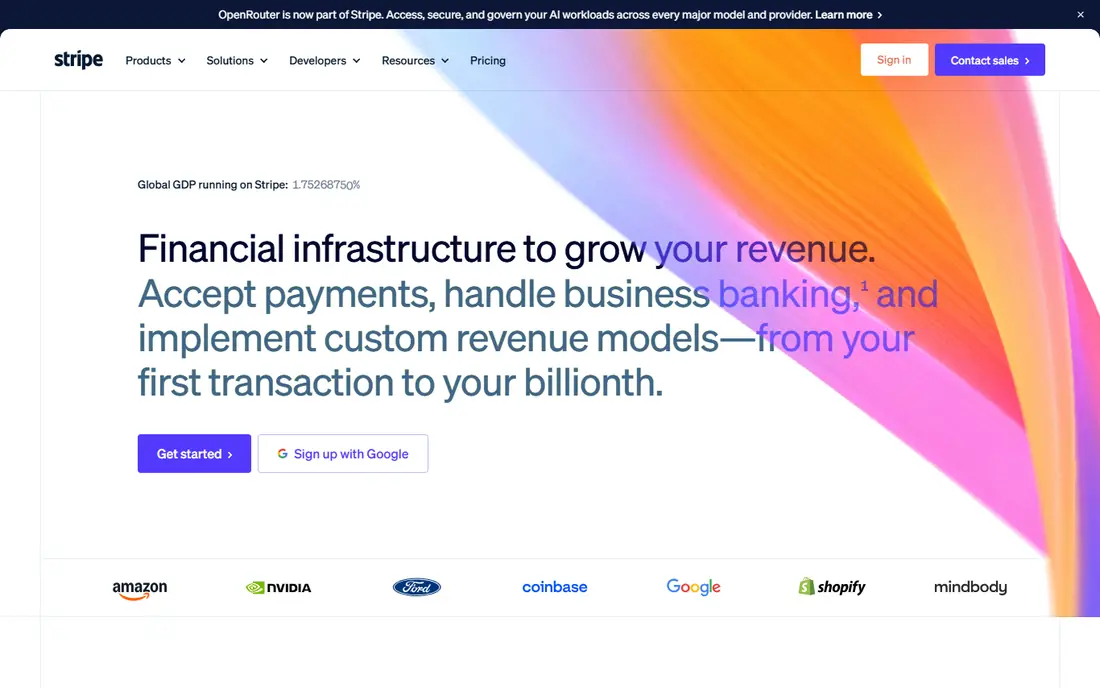
Stripe is the standard for online payments. Its APIs and hosted checkout handle cards, wallets, bank payments, and local methods in many countries, while Billing covers subscriptions, invoicing covers one-off charges, and Connect covers marketplaces. Documentation is among the best in the industry.
There is no monthly fee to start, since Stripe charges per transaction, but high-volume businesses may negotiate better rates elsewhere. For online-first businesses that want flexibility and developer control, Stripe is our pick.
- Powerful APIs and checkout tools
- Supports many payment methods and currencies
- Subscriptions, invoicing, and marketplace tools
- No free in-person point-of-sale hardware
- Pricing is pay-as-you-go, which adds up at scale
- Support is mainly online
Square
Ideal for: In-person small business sales

Square made card payments easy for small businesses. The free point-of-sale app runs on a phone or tablet, card readers are affordable, and inventory, staff, invoicing, and online store tools sit in the same system. Flat-rate pricing means no monthly fee and no surprise rate tables.
At high volume, flat rates can cost more than interchange-plus pricing, and Square's risk controls sometimes freeze accounts during reviews. For cafes, shops, salons, and market stalls that sell in person, Square is the simplest complete choice.
- Free point-of-sale app with hardware options
- Simple flat-rate pricing
- Inventory, invoicing, and online store tools
- Flat-rate pricing can cost more at high volume
- Account holds can frustrate some sellers
- Online features trail Stripe
PayPal
Ideal for: Trusted checkout and invoicing

PayPal is the checkout button many customers already trust. Shoppers can pay with a balance, card, or bank without sharing card details with the seller, and businesses get invoicing, subscriptions, and seller protection tools. Setup is fast, with no code needed for basic checkout.
Fees are higher than interchange-plus processors for many businesses, and account reviews can freeze funds while disputes are resolved. For businesses that want instant trust at checkout and simple invoicing, PayPal remains a strong choice, often alongside Stripe or Square.
- Checkout button customers trust worldwide
- Invoicing, subscriptions, and seller protection
- Easy setup with no code
- Transaction fees are higher than some rivals
- Account holds and disputes can be slow
- Advanced customization needs developer work
Adyen
Ideal for: Global enterprise payments
Adyen serves large global businesses with one platform for online, in-store, and mobile payments across many countries and methods. Local payment options, risk management, and detailed reporting help enterprises grow internationally without stitching together regional processors.
Setup is enterprise-oriented, pricing is handled by quote, and smaller businesses will find simpler tools faster to start. For large companies with global ambitions, Adyen is one of the most capable processors available.
- Single platform for global online, in-person, and mobile payments
- Many local payment methods
- Detailed data and risk tools
- Enterprise focus with higher setup effort
- Pricing is quote-based
- Smaller businesses may find it heavy
Authorize.net
Ideal for: Payment gateway for merchants
Authorize.net is a payment gateway that connects your website or store to a merchant account, handling card authorization, recurring billing, and fraud screening. It works with many processors and shopping carts, which makes it a flexible choice for businesses that already have a merchant account.
Costs include gateway fees on top of processing fees, and the interface feels older than Stripe or Square. For businesses that want a proven gateway with wide compatibility, Authorize.net remains a reliable option.
- Long-running gateway with broad processor support
- Recurring billing and fraud tools
- Works with many shopping carts
- Gateway fees add to processor fees
- Interface feels dated
- Setup needs a merchant account or partner
Helcim
Ideal for: Transparent interchange pricing
Helcim offers interchange-plus pricing, where you pay the card network cost plus a fixed markup, with clear breakdowns so you can see what each sale costs. It covers in-person, online, and invoicing payments, with no monthly fee on some plans and no long-term contracts.
The brand is smaller and the feature range narrower than the biggest rivals, and effective rates still depend on your card mix. For businesses that want transparent pricing without monthly fees, Helcim is an attractive alternative.
- Interchange-plus pricing with no monthly fee on some plans
- In-person and online tools
- Clear rate breakdowns
- Smaller brand than Stripe or Square
- Hardware and feature range is narrower
- Volume affects effective rates
Stax
Ideal for: Subscription-based processing
Stax charges a flat monthly subscription and passes through interchange costs, rather than adding a percentage markup to every sale. That model saves money for businesses with steady or high volume, and the platform includes invoicing, payment links, and recurring billing.
Low-volume sellers may pay more than with a free, pay-as-you-go processor, since the monthly fee applies regardless of sales. For growing businesses with consistent volume, Stax is a smart way to cut processing costs.
- Flat monthly subscription instead of percentage markups
- Interchange-plus costs
- Invoicing and payment links included
- Monthly fee means low-volume sellers pay more
- Setup is more involved
- Pricing depends on plan tier
Payment Depot
Ideal for: Wholesale interchange pricing
Payment Depot sells wholesale payment processing: members pay a monthly fee and get interchange-plus rates with no percentage markup on transactions. That structure suits businesses with moderate to high volume that want to keep more of every sale.
The monthly fee means very small sellers may do better with a free processor, and support is smaller than Stripe or Square. For established businesses that process regularly, Payment Depot can lower costs noticeably over flat-rate pricing.
- Wholesale interchange-plus pricing with a monthly membership
- No markup on transactions
- Works online and in person
- Monthly membership fee
- Smaller support team than giants
- Best value at moderate to high volume
How we picked these
We compared official feature pages, pricing pages, documentation, and public reviews for each processor, and we favored products still operating in October 2026 that process real card payments for US businesses. We left out processors that serve only one country or only one platform, and wallets with no merchant tools. Note that homepage checks for this article were limited by a browser rate-limit error during our work, so readers should confirm current fees on each vendor site before signing up.
Comparing payment fees honestly
Do not compare headline rates alone. Flat-rate processors charge one percentage for most cards, while interchange-plus processors pass through network costs plus a markup, which can be cheaper or dearer depending on your card mix. Ask for a statement analysis using your real sales data before switching.
Also check the full cost: monthly fees, gateway fees, hardware costs, chargeback fees, and early termination fees all matter. A processor with a low rate but high monthly fees can cost more than a flat-rate tool for a small business. Finally, test the checkout and payout experience, since slow payouts or frozen funds hurt more than a small rate difference.
Testing checkout before launch prevents lost sales. Run test transactions for each payment method you plan to accept, including cards, digital wallets, and bank payments, and confirm that receipts, order confirmations, and refunds all work as expected. Check the checkout experience on a phone too, since most customers now buy on mobile, and a checkout form that is awkward on a small screen will cost orders. Keep the number of steps low, show costs clearly before payment, and offer guest checkout where possible, since forced account creation is a common reason carts are abandoned.
Reconciliation is the weekly habit that keeps payment data honest. Match processor payouts against your orders, investigate shortfalls promptly, and keep a simple record of fees by month, so you can spot a rate change or an unexpected charge early. If you sell internationally, check how currency conversion and cross-border fees affect your margins, and consider pricing in local currencies for your main markets. A processor that reports clearly and pays predictably is easier to manage than one with a slightly lower rate and confusing statements.
Frequently asked questions
What is the best payment processing software?
Stripe is our pick for most online businesses, with powerful tools and global coverage. Square suits in-person small businesses, while PayPal suits businesses that want a trusted checkout button.
Is Stripe or Square better?
Stripe is better for online sales, subscriptions, and developer control, while Square is better for in-person sales with point-of-sale hardware. Many businesses use both: Stripe online and Square in store.
What is interchange-plus pricing?
Interchange-plus pricing passes through the card network interchange cost plus a fixed markup, so you see exactly what each sale costs. It often beats flat-rate pricing at higher volumes but varies with your card mix.
Do payment processors charge monthly fees?
Some do and some do not. Stripe, Square, and PayPal have no monthly fee for basic use and charge per transaction, while Stax and Payment Depot charge a monthly fee in exchange for lower per-sale markups.
How long do payouts take?
Payout timing varies by processor and account history, typically from same-day to a few business days. New accounts may face longer holds at first, so check payout terms before you rely on fast access to funds.