7 SaaS Software Sales Compensation Plans Ranked for 2026

- 1
 VisdumMid-market SaaS businessesVisit
- 2
 XactlyLarge enterprises with complicated plansVisit
- 3
 Salesforce SpiffBusinesses already running SalesforceVisit
- 4
 QuotaPathSmall and mid-sized SaaS teams that want published pricingVisit
- 5
 CaptivateIQFinance-led teams with custom plansVisit
- Visdum is the opening pick, best for mid-market SaaS businesses.
- The main caution on Xactly: highest usual contract values on this list.
- Starting prices begin at $35 per user/month with QuotaPath.
- Visdum, Performio and the 5 others all need a premium plan or a trial, since no free plan is listed.
- Performio is the one to check for mid-market teams whose plans change commonly.
Direct answer
If you need mid-market SaaS firms, Visdum is the first tool to look at here. Xactly fits large enterprises with complicated plans; Salesforce Spiff fits businesses already running Salesforce. Prices, free plans and limits for all 7 tools follow.
Quick comparison
| Product | Ideal for | Price from | Free version | |
|---|---|---|---|---|
| Visdum | Mid-market SaaS businesses | See website | No | Visit |
| Xactly | Large enterprises with complicated plans | See website | No | Visit |
| Salesforce Spiff | Businesses already running Salesforce | $75 per user/month (billed yearly), plus connector fees | No | Visit |
| QuotaPath | Small and mid-sized SaaS teams that want published pricing | $35 per user/month (Growth, billed yearly), plus a per month platform fee | Free trial | Visit |
| CaptivateIQ | Finance-led teams with custom plans | See website | No | Visit |
 Varicent | Enterprise incentive and planning programs | See website | No | Visit |
 Performio | Mid-market teams whose plans change frequently | See website | No | Visit |
SaaS Software Sales Compensation Plans compared in detail
Short on time? The summary and table above give the quick view of 7 SaaS software sales compensation plans, and the profiles that follow give the detail behind each entry.
Visdum
Ideal for: Mid-market SaaS businesses
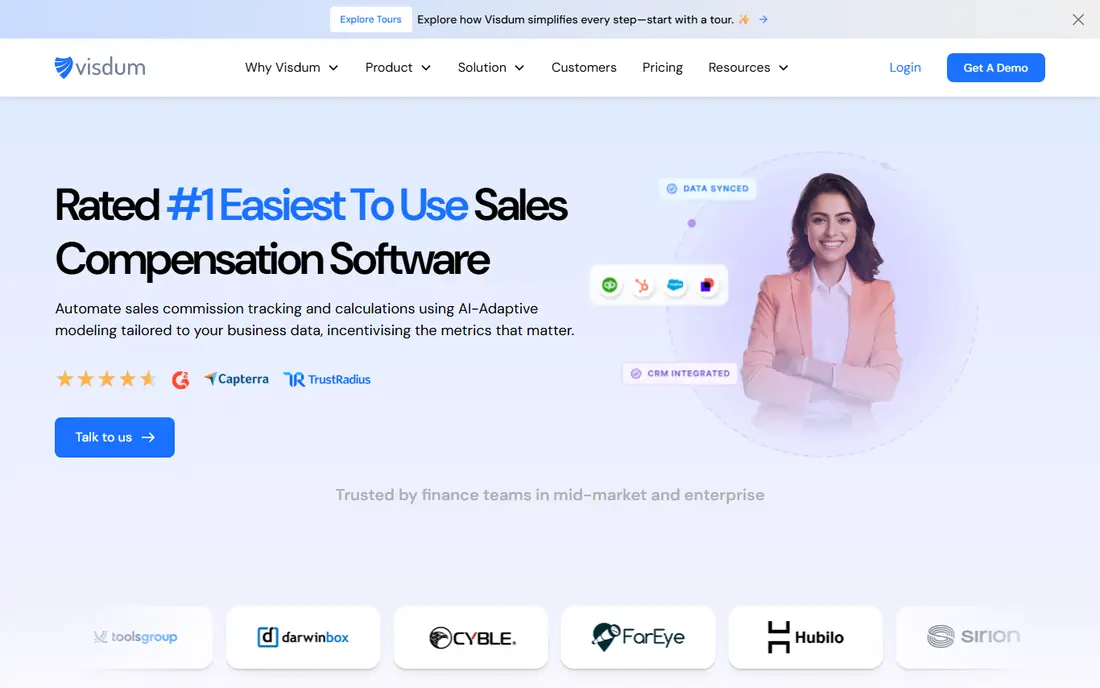
Think of Visdum for mid-market SaaS businesses. Visdum describes itself as sales commission software for mid-market companies, with a focus on SaaS. Its no-code plan builder is meant for RevOps and finance teams that want to design and automate plans without engineering help.
It lists a HubSpot marketplace integration, which is handy if you do not run Salesforce. As a younger and smaller vendor, Visdum gives you less public track record than Xactly or Spiff. That can be fine if you value responsive support and a SaaS-specific product, but check customer references in your CRM and billing stack. Pricing is not public, so request a quote and ask what the setup fee bundles. This comparison lists no price for Visdum; ask the vendor. Visdum has no permanent free option.
Points against: Smaller vendor than the enterprise names.
- Payees-only billing
- No-code plan setup
- Pricing not published
Xactly
Ideal for: Large enterprises with complicated plans
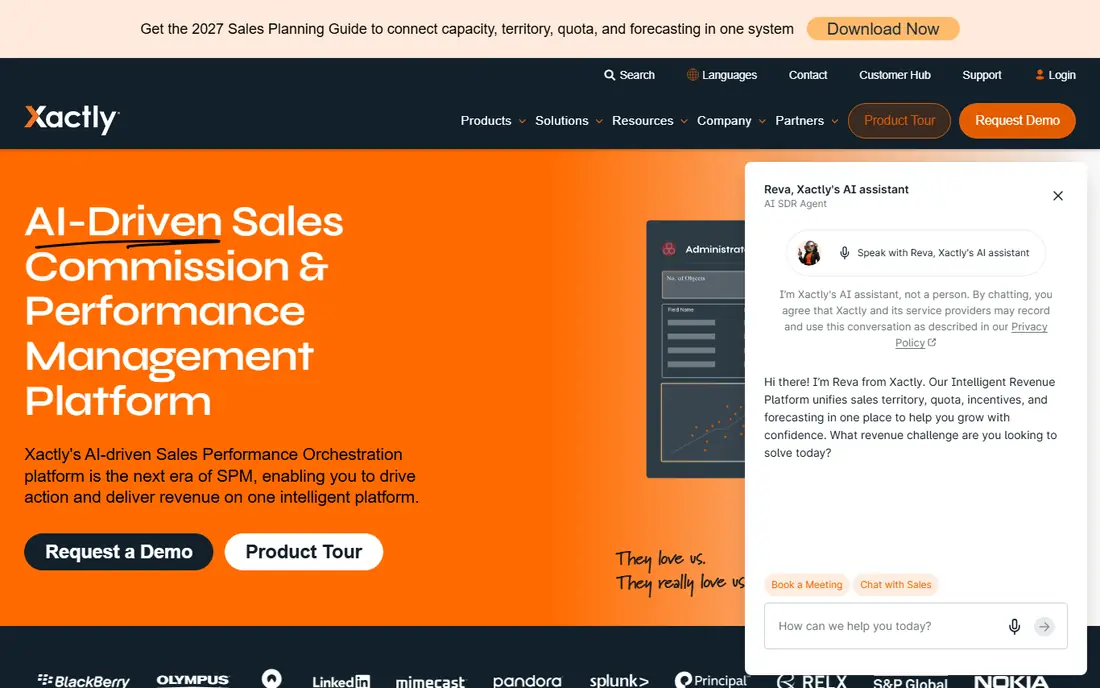
Xactly is designed for large enterprises with complicated plans. Xactly is the long-standing enterprise name in sales performance management. Its Incent product includes commission calculation, and the wider product brings quota and territory planning, which matters if your SaaS company is large enough to run annual planning cycles across regions.
More specifically, Xactly makes sense for large or public SaaS businesses with a dedicated compensation team. As for the details, an AWS Marketplace listing cited by QuotaPath presents a 12-month contract for 500 users at $250,000, and Vendr's median contract is close to $80,000 a year. More specifically, Xactly does not post prices on its own site. Beyond that, cost is the primary barrier. Check the vendor site for Xactly pricing; none is listed in this comparison. There is no free plan with Xactly.
Honest limits: Highest usual contract values on this list.
- Quota and territory planning
- Long track record with large sales organizations
- Implementation is quoted separately
Salesforce Spiff
Ideal for: Businesses already running Salesforce
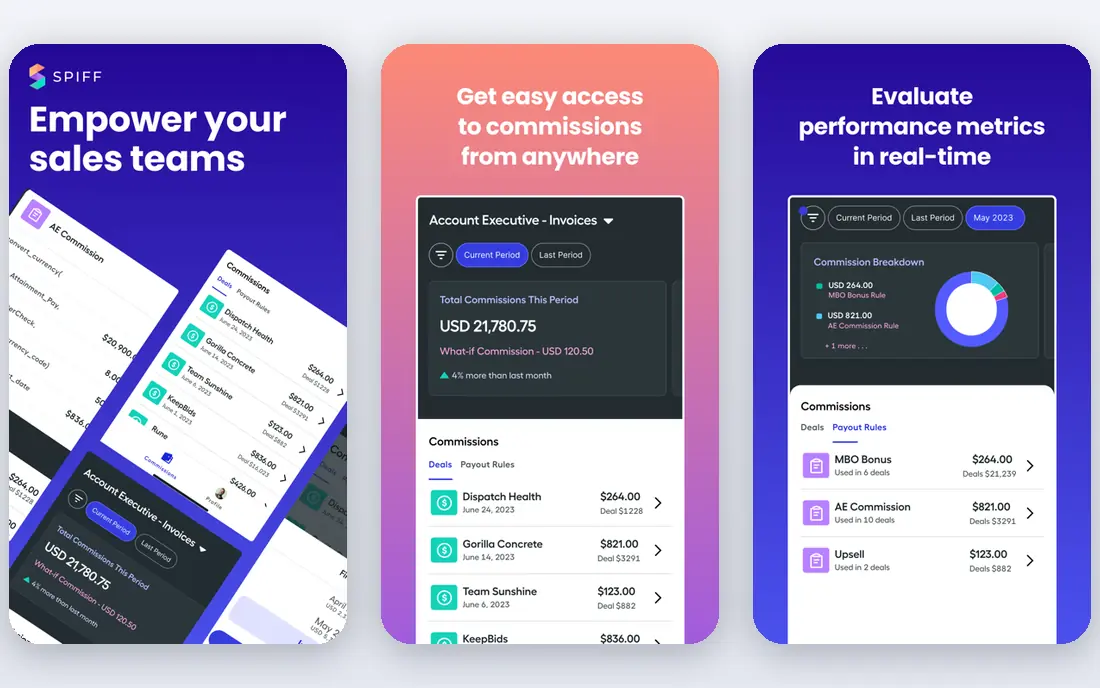
Salesforce Spiff is designed for businesses already running Salesforce. A SaaS company that pulls billing data from a subscription system and headcount from an HR system could pay for two or three links on top of the seat price. As for the details, small teams on HubSpot or another CRM will probably find it more than they need.
The pricing page lists connectors to outside systems at $250 per connector a month. That connector line is where bills grow. Salesforce Spiff starts at: $75 per user/month. Salesforce Spiff has no free plan.
The main drawbacks: Implementation and premium support cost additional.
- Tight fit with Salesforce data
- Capable rep-facing statements
- $250 a month for each connector outside Salesforce
QuotaPath
Ideal for: Small and mid-sized SaaS teams that want published pricing
QuotaPath targets small and mid-sized SaaS teams that want published pricing. The main limit is scale. If you run multiple currencies, layered splits or plans that change by region every quarter, you will want to test the modeling limits on a demo before you sign.
Where it is weaker: System fee on top of the per-user rate.
More specifically, admins are billed at the same rate as reps, so count your approvers. On top of that, note also that the pricing comparison I relied on for fees comes from QuotaPath itself, so treat the cost framing as the vendor's view. Reps see their own earnings against quota, which cuts down on the "can you check my number" messages that fill a finance inbox. QuotaPath pricing: $35 per user/month. Free options: Free trial.
- Quick to roll out for straightforward and mid-complexity plans
- Rep dashboards and CRM-connected tracking
- Less depth than enterprise ICM suites for very complicated plans
CaptivateIQ
Ideal for: Finance-led teams with custom plans
CaptivateIQ is built with finance-led teams with custom plans in mind. Pricing is quote-based. The vendor's pricing page explains the model but not the amounts, and Vendr's buyer data (reported in QuotaPath's comparison) displays a median contract in the mid-$30,000s a year.
Upsides: Manages unusual payout rules.
Downsides: No published pricing.
Its plan builder lets you model commission rules with a familiar feel, which helps when your SaaS plan has odd pieces for example pay on multi-year deals, bonus pools or different rules for expansion and new logo revenue. Expect a one-time setup fee and annual renewal raises, so ask for a written cap on raises in the order form. Pricing for CaptivateIQ is not stated here, so ask the vendor for current figures. CaptivateIQ has no permanent free option.
- Spreadsheet-like plan logic
- Adaptable
- Admins and payees both count as seats
Varicent
Ideal for: Enterprise incentive and planning programs
Varicent was built for enterprise incentive and planning programs. Varicent sells an enterprise suite for incentive compensation and sales planning, and it describes itself for large-company outcomes. Do not read that as a promise of a low price for a complicated rollout.
Downsides: More system than small teams need.
For everyday use, the product is pitched at organizations that run multiple plans across business units and want planning and payouts tied together. Varicent is best when comp is run by a dedicated team and you need audit-ready processes. On top of that, a 20-rep startup would likely be better served by a lighter product. This comparison lists no price for Varicent; ask the vendor. Varicent does not include a free plan.
- Incentive compensation plus planning
- Suited to multi-team programs
- Pricing not published
Performio
Ideal for: Mid-market teams whose plans change frequently
Where Performio fits: mid-market teams whose plans change commonly. Performio positions itself as commission software that adapts when plans change, with a structured plan builder and adaptable data handling. Its reporting lets admins add new columns and reports without a services engagement.
More specifically, seat counts bundle commissionable employees plus admin seats, and Vendr reports usual renewal proposals in the range of 5% to 15% (via QuotaPath's comparison). From a buyer's view, ask for a renewal cap before you sign. Pricing for Performio is not stated here, so ask the vendor for current figures. Performio has no free plan.
Points against: Quote-only pricing.
- Reporting you can extend with new columns
- No-code plan builder
- Admin seats count and renewal raises can be steep
How the list was put together
Pricing pages, product documentation and feature lists were the main sources, and every entry carries at least one honest drawback. Where a vendor does not publish a price, the entry says quote. Where a price depends on seats or billing term, the entry says so. We ordered the tools by general fit, then by how clearly pricing is shown, then by free access. A buyer with unusual needs may reorder them.
Questions to settle before buying
- Ask Visdum, Xactly, CaptivateIQ and others for a written quote, since no starting price is shown.
- Use real work to test the free trial from QuotaPath, rather than a demo project.
- Read the limits listed for Visdum first: pricing not published.
- Get the contract term, renewal terms and any onboarding fees from Performio in writing.
- Read the plan comparison for CaptivateIQ carefully; key features often start on a higher tier.
Frequently asked questions
What is the cheapest option for SaaS software sales compensation plans in this list?
On published monthly entry prices, QuotaPath is the lowest here at $35 per user/month. Entry price is only part of the cost, because seats, add-ons and billing terms can change the total.
How are the tools for SaaS software sales compensation plans ordered?
The order follows typical fit for SaaS software sales compensation plans, with Visdum first and Performio last, then price clarity and free access. It is editorial judgement, not a score, so another team could rank the tools differently.
When should a SaaS company move off spreadsheets?
Usual triggers are splits, clawbacks, multi-year deals, multiple plans by role, or a finance team that spends days each month closing commissions.
Is Visdum the right pick for everyone comparing SaaS software sales compensation plans?
No single tool suits every team. Visdum comes first because it fits mid-market SaaS companies, while Xactly suits large enterprises with complex plans and Salesforce Spiff suits companies already running Salesforce. Match the tool to your own size, budget and workflow before deciding.
Does any tool for SaaS software sales compensation plans here have a free plan?
No tool in this list, Visdum and Performio included, has a permanent free plan. QuotaPath offer a trial. Trials and quotes are the usual route, so plan a short evaluation period.