Top SEO Software Reviews in 2026: 7 Tools Compared

- 1
 AhrefsComplete SEO suiteVisit
- 2
 SemrushComplete SEO suiteVisit
- 3
 SE RankingValue for agenciesVisit
- 4
 SurferContent optimizationVisit
- 5
 Screaming FrogTechnical crawlingVisit
- Ahrefs and Semrush are the most complete suites, covering research, audits, rank tracking, and backlinks.
- SE Ranking offers a strong lower-cost alternative for agencies and small teams.
- Surfer and Clearscope specialize in content optimization, while Screaming Frog is the go-to crawler.
- Mangools suits beginners and small sites that need keyword research without a large bill.
Quick comparison
| Product | Ideal for | Price from | Free version | |
|---|---|---|---|---|
| Ahrefs | Complete SEO suite | See website | No | Visit |
| Semrush | Complete SEO suite | See website | Free trial | Visit |
| SE Ranking | Value for agencies | $103.20 per month | Free trial | Visit |
| Surfer | Content optimization | See website | Free trial | Visit |
| Screaming Frog | Technical crawling | See website | Yes | Visit |
 Clearscope | Content grading | See website | No | Visit |
 Mangools | Beginner keyword research | See website | Free trial | Visit |
The best SEO software reviews
We compared official feature pages, pricing pages, and app-store listings for SEO tools available in October 2026. The list covers full suites, content tools, and a dedicated crawler, since different teams need different strengths.
Ahrefs
Ideal for: Complete SEO suite
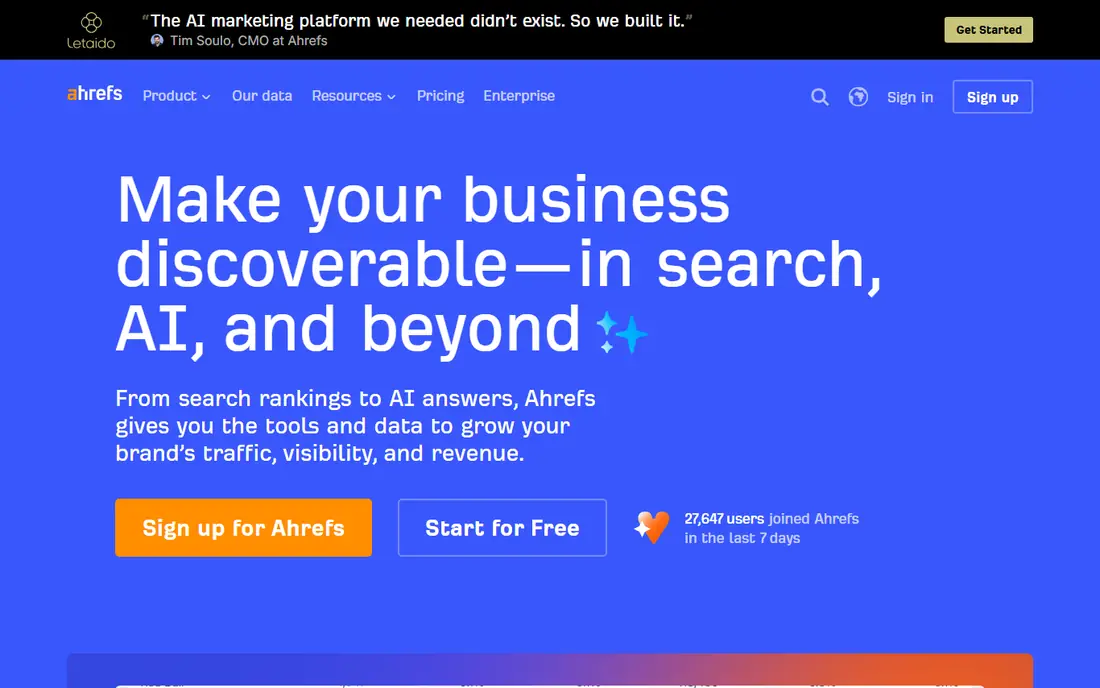
Ahrefs is an all-in-one SEO platform covering site audit, keyword research, rank tracking, competitor analysis, and backlink research. Its crawler data and keyword database are among the largest in the field, and its site explorer shows which pages and links drive a competitor's traffic. Reports are clear enough for a client meeting without extra editing.
The cost is the main barrier. Ahrefs has no free tier beyond its free webmaster tools, and paid plans are aimed at professionals and agencies. For a serious SEO team, the depth justifies the price; for a single small site, a cheaper tool may cover the same basics.
- Huge backlink and keyword databases
- Strong site audit
- Rank tracker included
- No free tier
- Pricing can be steep for a single small site
Semrush
Ideal for: Complete SEO suite
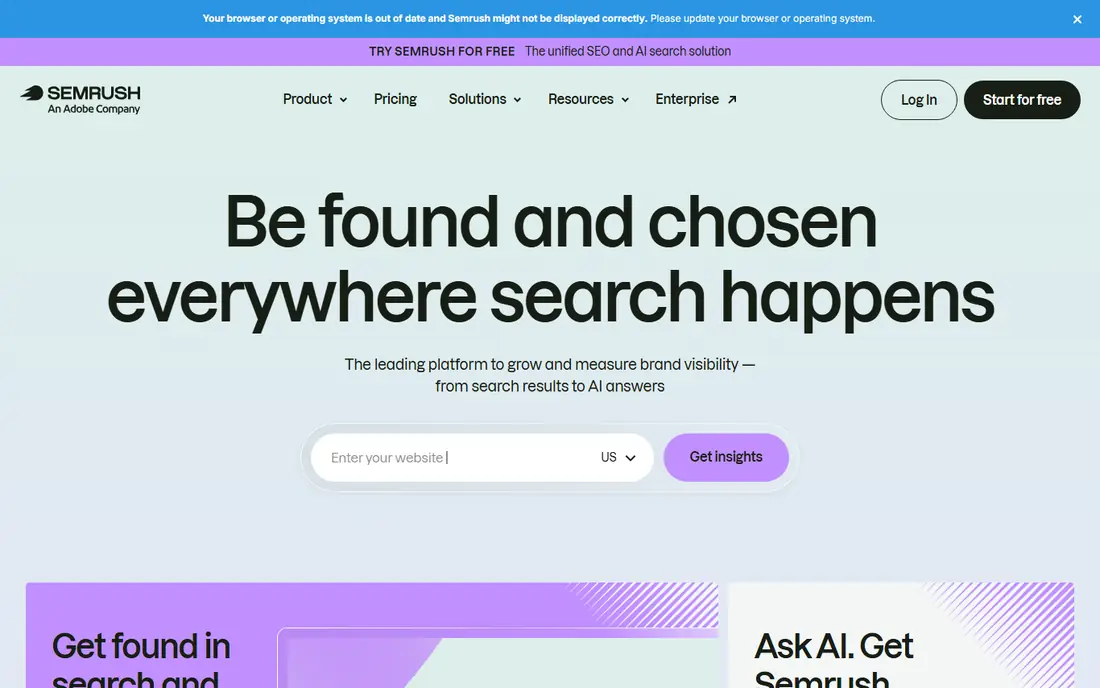
Semrush is a marketing platform that covers SEO, content, advertising, social, and local search. Its SEO toolkit includes keyword research, site audit, position tracking, backlink analytics, and an on-page checker, plus advertising and social data that Ahrefs does not match. That breadth suits agencies that manage several channels at once.
Breadth also brings complexity. New users can find the interface busy, and some features sit on higher plans. For a team that wants one platform for SEO plus paid and social work, Semrush is the most complete option on this list.
- Very broad toolkit beyond SEO
- Strong competitor data
- Local and social tools included
- Interface can overwhelm beginners
- Full features need higher plans
SE Ranking
Ideal for: Value for agencies
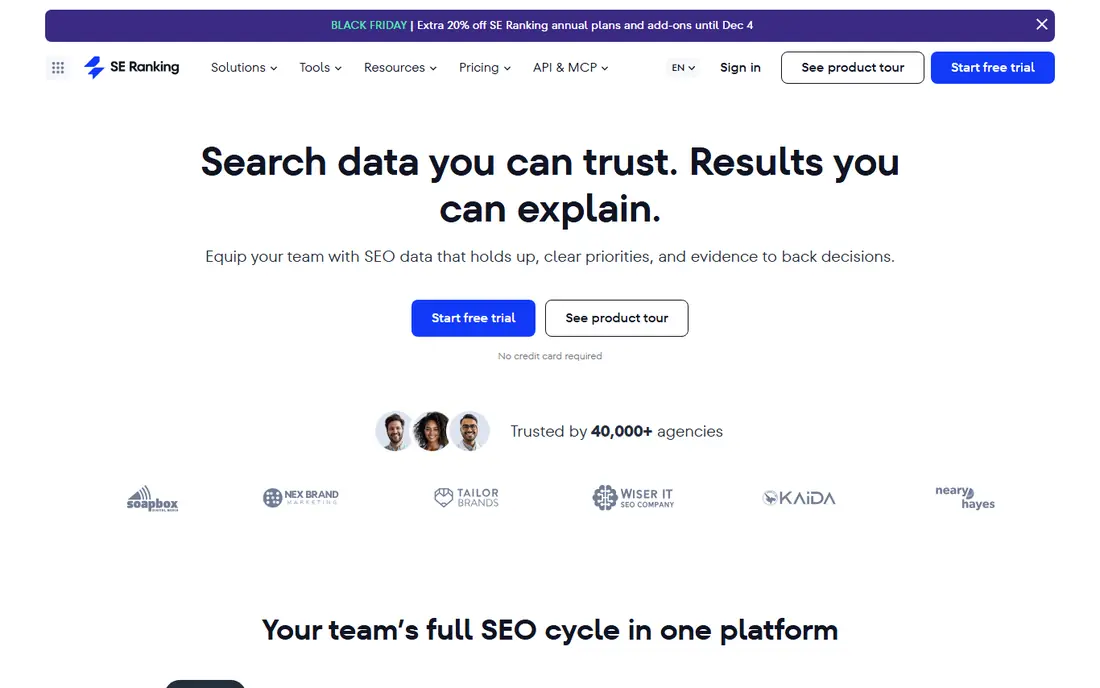
SE Ranking is a cloud SEO platform with keyword rank tracking, site audit, backlink monitoring, competitor research, and reporting. Its Core plan starts at $103.20 per month, with white-label reports and client seats that suit agencies. Higher plans add unlimited rank tracking and more data.
The database is smaller than the two leaders, so very niche keyword data can be thinner. For agencies and small teams that need solid rank tracking and reporting at a lower cost, SE Ranking is a strong value pick.
- Core plan from $103.20 per month
- White-label reports
- Unlimited rank tracking on higher plans
- Smaller database than Ahrefs or Semrush
- AI features need higher plans
Surfer
Ideal for: Content optimization
Surfer helps writers optimize content for search. Its content editor scores a draft against top-ranking pages for the same keyword, suggesting terms, structure, and length based on live SERP data. The SERP analyzer shows what top pages have in common, and AI tools can draft outlines and paragraphs inside the editor.
Surfer is not a full suite: it lacks deep backlink research and rank tracking on its own. It works best alongside a suite such as Ahrefs or Semrush, or as the main tool for a content-focused team that already has rank data elsewhere.
- Data-backed content editor
- SERP analysis
- AI writing help
- Not a full SEO suite
- Credits limit heavy use
Screaming Frog
Ideal for: Technical crawling
Screaming Frog SEO Spider is a desktop crawler that audits a site for broken links, redirects, duplicate content, missing metadata, and hundreds of other issues. It exports data for spreadsheets, integrates with Google Analytics and Search Console, and runs audits faster than many cloud tools for a single site.
Being desktop software means reports are not automatically shared in the cloud, and the interface assumes some SEO knowledge. For technical audits, though, Screaming Frog remains the tool most SEOs reach for first, and the free version covers sites up to 500 URLs.
- Deep technical audits
- Fast desktop crawler
- Free version covers 500 URLs
- Desktop app, not cloud
- Learning curve for beginners
Clearscope
Ideal for: Content grading
Clearscope grades content against top-ranking pages and suggests terms to include, helping writers cover a topic fully. The editor is simple: paste a draft, see a grade, and work through suggested terms with relevance scores. It also offers inventory reports to find thin content across a site.
Pricing is higher per report than Surfer, and Clearscope has no rank tracking or site audit of its own. For an editorial team that values a clear, writer-friendly grade and term guidance, Clearscope's simplicity is the draw.
- Clear content grades
- Strong term suggestions
- Simple editor for writers
- Higher cost per report
- No rank tracking or audit tools
Mangools
Ideal for: Beginner keyword research
Mangools bundles five tools: KWFinder for keyword research, SERPChecker, SERPWatcher for rank tracking, LinkMiner for backlinks, and SiteProfiler for site metrics. The interface is clean and beginner-friendly, which makes it a good first paid SEO tool for a small site or freelancer.
The database and audit depth are smaller than the leaders, so advanced users may outgrow it. For a beginner who wants keyword research and rank tracking without a steep learning curve or a large bill, Mangools is an easy recommendation.
- Easy to learn
- KWFinder keyword tool
- SERP checker and rank tracker included
- Smaller database
- Fewer advanced audit features
How we picked these
We compared official feature pages, pricing pages, and app-store listings for SEO tools available in October 2026. We favored tools with current data, clear reporting, and a proven track record, and we included full suites, content tools, and a crawler. We also compared data freshness, report limits, and trial results on real sites, since an SEO tool is only useful if its data covers your niche and its reports get read. We did not include our own product in this list.
How to choose SEO software
Start with your main job. If you run audits, track rankings, and research competitors, a suite such as Ahrefs, Semrush, or SE Ranking fits. If you mainly write content, Surfer or Clearscope adds more value. If you need deep technical checks, Screaming Frog belongs in your toolkit regardless of which suite you use.
Then weigh budget against data depth. Cheaper tools cover the basics well, but larger databases and fresher backlink data matter for competitive niches. Use free trials on a real project, compare the data for your own site and keywords, and pick the tool whose reports your team will actually read and act on.
Before paying for an SEO suite, decide which reports your team will actually open each week. Rank tracking matters most for agencies with client reporting, while site audits matter most for teams fixing technical problems, and content scores matter most for editorial teams. A suite that covers everything can still be the wrong buy if its reports go unread. Check data freshness too: backlink and keyword databases update on different schedules, and a stale database can mislead a competitive analysis. Also compare limits that affect daily work, such as tracked keywords, crawl credits, and seats, since overage charges add up fast. Run trials side by side on your own site and two competitors, and compare the same keywords and pages across tools. If one tool's data looks thin for your niche, that gap will frustrate you every week, no matter how good the interface looks.
Frequently asked questions
Which SEO tool is best overall?
Ahrefs and Semrush are the most complete suites, with the largest databases and the widest feature sets. Ahrefs leads on backlink data, while Semrush leads on breadth across paid, social, and local tools. SE Ranking is the best value alternative for agencies.
Is there a good free SEO tool?
Google Search Console is free and essential for every site. Screaming Frog's free version covers audits up to 500 URLs, and Ahrefs Free offers site audits for verified sites. For paid research, most tools offer free trials.
What is the difference between Ahrefs and Semrush?
Both cover research, audits, and tracking, but Ahrefs is deeper on backlinks and keyword data, while Semrush covers more channels, including advertising, social, and local search. Many agencies use one as a primary tool and the other for checks.
Do I need both a suite and a content tool?
Not always. Suites include basic content editors, but dedicated tools such as Surfer and Clearscope give deeper term guidance and clearer grades. A content-heavy team benefits from one, while a technical team may not need it.
How much does SEO software cost?
Full suites typically start around $100 to $150 per month, with higher plans for agencies. Content tools and smaller suites cost less, while enterprise plans run higher. Start with a free trial and a plan that matches your site count and keyword volume.
How accurate is keyword search volume data?
Search volume figures are estimates, not exact counts, and they vary between tools because each provider models volume from its own clickstream and search data. Treat volume as a guide for relative demand: a keyword listed at 10,000 monthly searches is clearly bigger than one at 100, but the true number may differ by a wide margin. For decisions, combine volume with ranking difficulty, intent, and your own Search Console data, which shows real impressions and clicks for pages you already rank for.