7 Top Software for AI Visibility Opportunities Compared (2026)

- 1
 ProfoundLarge brands with enterprise budgetsVisit
- 2
 WritesonicContent teams that want tracking and writing in one toolVisit
- 3
 Semrush AI Visibility ToolkitTeams already using Semrush for SEOVisit
- 4
 Scrunch AIB2B teams that want persona-based trackingVisit
- 5
 Otterly.AISmall companies starting with a low budgetVisit
- The list opens with Profound, aimed at large brands with enterprise budgets.
- The lowest published monthly entry price here is $29 per month, from Otterly.AI.
- Semrush AI Visibility Toolkit comes with a trade-off: low number of custom tracked prompts on the entry plan.
- AthenaHQ suits teams that want action-oriented recommendations.
Direct answer
Start with Profound if you need large brands with enterprise budgets. For a different need, Writesonic covers content teams that want tracking and writing in one tool and Semrush AI Visibility Toolkit covers teams already using Semrush for SEO. The remaining 4 options are covered below with prices and limits.
Quick comparison
| Product | Ideal for | Price from | Free version | |
|---|---|---|---|---|
| Profound | Large brands with enterprise budgets | See website | Free trial | Visit |
| Writesonic | Content teams that want tracking and writing in one tool | See website | Not stated | Visit |
| Semrush AI Visibility Toolkit | Teams already using Semrush for SEO | See website | No | Visit |
| Scrunch AI | B2B teams that want persona-based tracking | See website | Free trial (7 days) | Visit |
| Otterly.AI | Small companies starting with a low budget | $29 a month (Lite, 15 prompts) | Not stated | Visit |
 Peec AI | Marketing teams that want clean, straightforward tracking | See website | Free trial | Visit |
 AthenaHQ | Teams that want action-oriented recommendations | See website | No | Visit |
The best software for AI visibility opportunities
Ainotely put together this guide to software for AI visibility opportunities for readers who want a clear shortlist without reading every vendor page. It compares 7 tools on starting price, free plans, who each one suits and where each one falls short.
Profound
Ideal for: Large brands with enterprise budgets
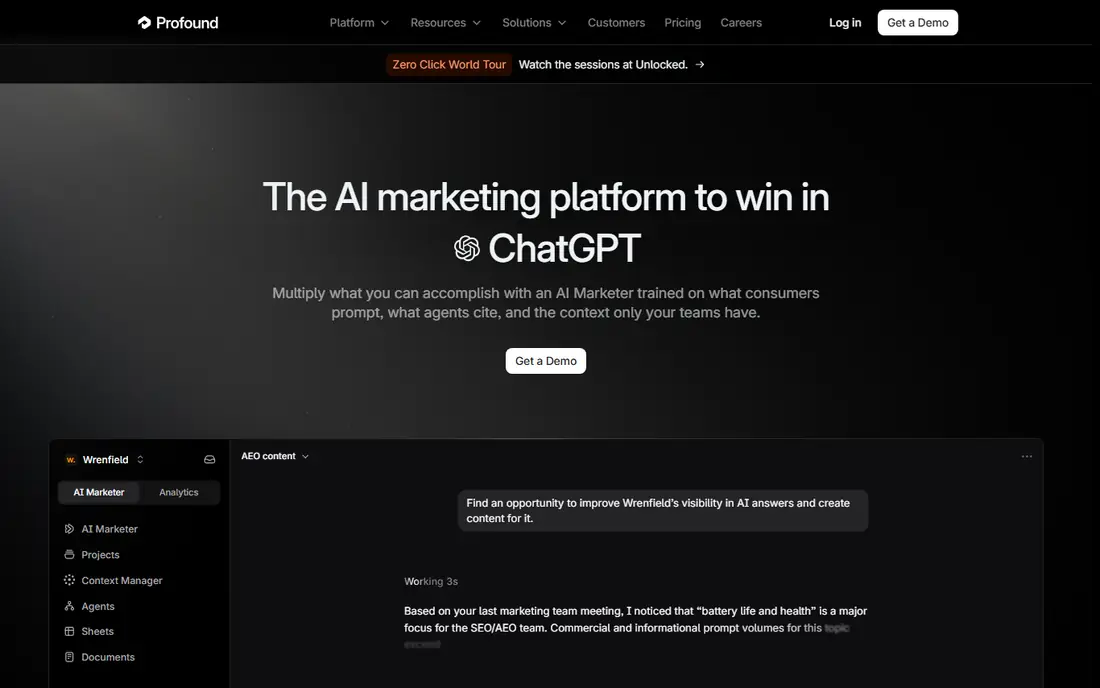
Profound targets large brands with enterprise budgets. Profound is the name most frequently mentioned for enterprise AI visibility, and it targets big brands and agencies with complicated needs.
The pricing story has changed. Profound shows no starting price here, so confirm the cost on the vendor site. Free access: Free trial.
Where it falls short: No public price list.
- Solid brand recognition in the category
- Tracks plenty of answer engines
- Small teams are poorly served
Writesonic
Ideal for: Content teams that want tracking and writing in one tool
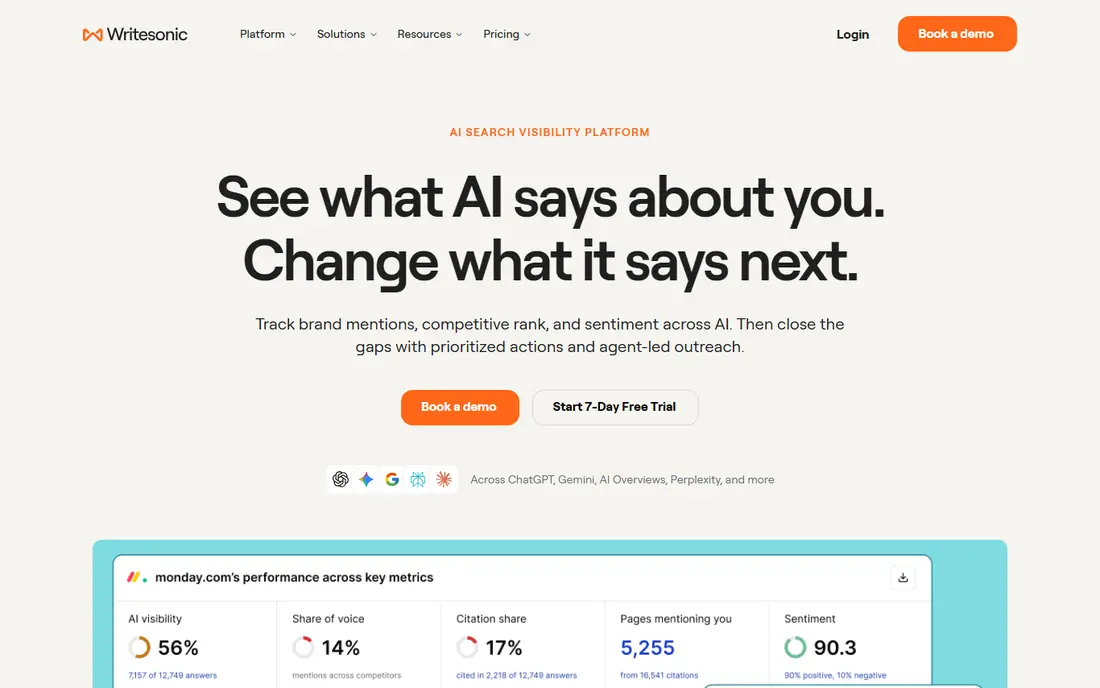
Writesonic targets content teams that want tracking and writing in one tool. Writesonic began as an AI writing product and later added AI search tracking. That origin shapes it.
The tradeoff is focus. A specialist tracker generally provides more prompts and engines for the money, whereas Writesonic hands you a smaller tracker and a writing tool. Writesonic shows no starting price here, so confirm the cost on the vendor site. Free options: Not stated.
Limits to weigh: Tracking is not on the cheapest plans.
- Higher plans add sentiment and prompt research
- Recommendations tied to content creation
- Prompt limits are modest
Semrush AI Visibility Toolkit
Ideal for: Teams already using Semrush for SEO
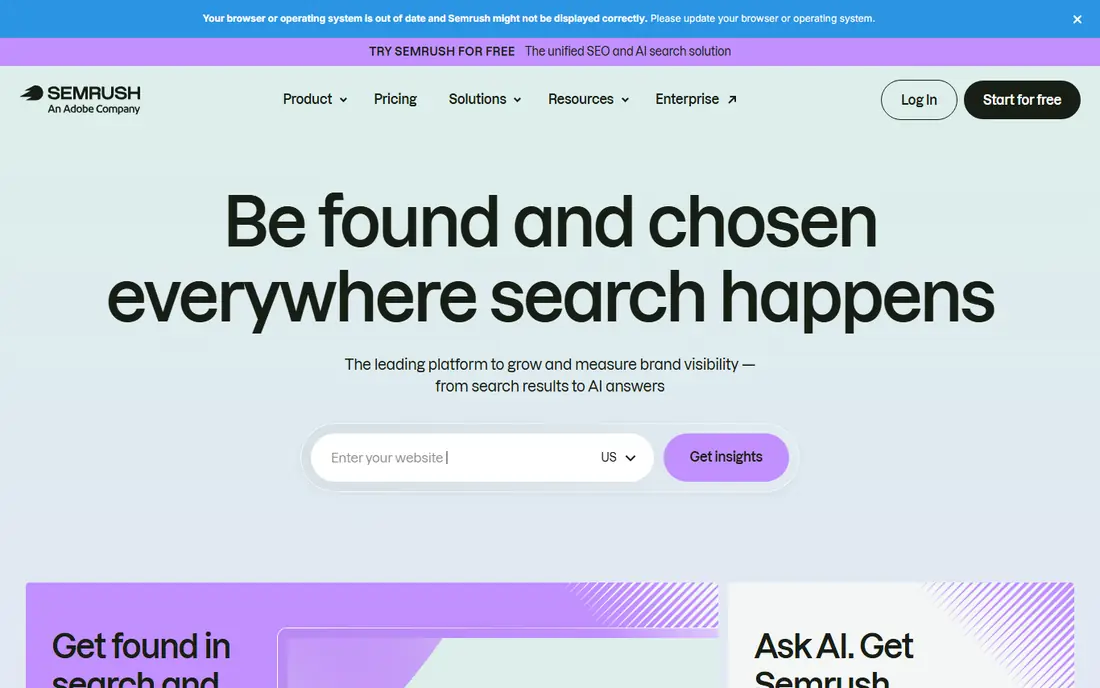
Semrush AI Visibility Toolkit is a good fit for teams already using Semrush for SEO. Reviews report that the standalone toolkit tracks only about 25 of your own prompts daily, with more sold as premium extras. More specifically, Semrush says its database holds more than 317 million AI prompts and answers.
Downsides: Claude and Copilot coverage is restricted.
So you can see which questions already trigger brand mentions in your category before you pick prompts to track. That is handy for spotting gaps where competitors display up and you do not. From a buyer's view, the standout feature is research. Treat it as a research tool with a small tracker attached, and check the current plan details on the Semrush site. Also, you add your domain, and the toolkit displays how commonly your brand appears in answers from engines for example ChatGPT, Google AI Mode and Gemini. Semrush AI Visibility Toolkit shows no starting price here, so confirm the cost on the vendor site. Semrush AI Visibility Toolkit has no permanent free option.
- Suits into an existing Semrush workflow
- Huge prompt database for research
- Low number of custom tracked prompts on the entry plan
Scrunch AI
Ideal for: B2B teams that want persona-based tracking
Pick Scrunch AI if this describes you: B2B teams that want persona-based tracking. Scrunch AI is the pick for B2B marketers who think in buyer personas. Rather than tracking one flat list of prompts, you can group them by persona, which helps when a CFO and an IT lead ask AI engines very different questions about the same product.
Honest limits: Page audits are capped on lower plans.
The weakness is entry cost. Worth adding: the same comparison lists Starter and Growth plans with multiple hundred custom prompts plus industry prompts, a custom Enterprise level, and per-seat fees beyond the included seats. That page is written by a rival vendor, so treat the numbers as a hint and verify them with Scrunch. Scrunch AI shows no starting price here, so confirm the cost on the vendor site. As for free access: Free trial (7 days).
- Enterprise security choices
- Large industry prompt sets
- No very cheap entry plan
Otterly.AI
Ideal for: Small companies starting with a low budget
Think of Otterly.AI for small firms starting with a low budget. Annual billing takes roughly 15 percent off, based on a review that checked the live page. More specifically, watch the extras.
A review of its pricing found that some engines cost additional on each level, so full coverage costs more than $29 or $189. On top of that, unlimited team members also mean an agency or a small marketing team will not pay per seat. Otterly.AI cost at the entry level: $29 per month. Free plan details: Not stated.
What to check first: Claude.
- Low entry price
- Unlimited team members
- Gemini and Google AI Mode are premium extras
Peec AI
Ideal for: Marketing teams that want clean, straightforward tracking
Peec AI serves marketing teams that want clean, straightforward tracking. Peec AI is a tracker that gets praised for being simple to read. More specifically, for a marketing manager who needs to present a weekly number to a boss, that clarity counts.
Also, Peec displays you where you are weak and which domains get cited, but it leaves the content and outreach work to you. Beyond that, the honest limit is depth of advice. More specifically, one comparison reports a 7-day free trial, so confirm that on the Peec site. This comparison lists no price for Peec AI; ask the vendor. Trial and free access: Free trial.
Watch-outs: History starts only when you register.
- Daily prompt runs across engines
- Unlimited seats and countries on plans per reviews
- Additional AI engines can cost more
AthenaHQ
Ideal for: Teams that want action-oriented recommendations
Pick AthenaHQ if this describes you: teams that want action-oriented recommendations. AthenaHQ aims to tell you what to do next, not only where you stand. The same review reports no free-forever level, only a discounted first month.
Where it is weaker: Credit-based pricing is hard to predict.
Usage runs on credits. One pricing review says the self-serve plan comes with a set credit allowance, three seats and one country, and that the real monthly bill relies on how numerous credits you burn. AthenaHQ does not show a starting price in this comparison, so check the vendor site for current pricing. There is no free plan with AthenaHQ.
- Recommendations built into the product
- Numerous systems covered
- No permanent free level
Our selection method
Each tool was reviewed on what its vendor publishes: price, plan limits, core features and stated drawbacks. We did not run hands-on tests. Seat minimums, billing terms and add-ons can move the real cost, so the starting prices here are a guide and not a quote. The order reflects how well each tool fits the most common buying scenario for software for AI visibility opportunities, then price clarity, then free plan access. It is a starting point, not a verdict.
Things to verify first
- Get a written quote from Profound, Writesonic, Semrush AI Visibility Toolkit and others; the list shows no starting price for them.
- Run a trial of Profound, Scrunch AI and Peec AI with real work before paying for a year; your own workflow is the best test.
- Before choosing Profound, weigh its main limit: no public price list.
- Confirm that Otterly.AI connects to the apps your team already uses, on the plan you would actually buy.
- Ask Semrush AI Visibility Toolkit how an export works before you move any records in; an easy exit lowers the risk.
Frequently asked questions
How are the tools for software for AI visibility opportunities ordered?
The order follows typical fit for software for AI visibility opportunities, with Profound first and AthenaHQ last, then price clarity and free access. It is editorial judgement, not a score, so another team could rank the tools differently.
Does any tool for software for AI visibility opportunities here have a free plan?
A permanent free plan is not offered by Profound, AthenaHQ or the other tools here. Profound, Scrunch AI, Peec AI offer a trial. Plan a short evaluation period instead.
What is the cheapest option for software for AI visibility opportunities in this list?
On published monthly entry prices, Otterly.AI is the lowest here at $29 per month. Entry price is only part of the cost, because seats, add-ons and billing terms can change the total.
How plenty of prompts should I track?
Start with 15 to 30 that reflect real buying questions, then expand once you see which ones produce handy gaps. Beyond that, tracking hundreds of prompts early largely layers on noise and cost.
What is AI visibility software?
It tracks whether and how your brand appears in answers from AI engines like ChatGPT, Perplexity, Gemini and Google AI Overviews. The better ones also point to pages or sources you could target.
Is Profound the right pick for everyone comparing software for AI visibility opportunities?
No single tool suits every team. Profound comes first because it fits large brands with enterprise budgets, while Writesonic suits content teams that want tracking and writing in one tool and Semrush AI Visibility Toolkit suits teams already using Semrush for SEO. Match the tool to your own size, budget and workflow before deciding.