Honeywell Forge Asset Performance Management comes first here, mainly for industrial asset performance monitoring. Listed starting prices: Fiix Asset Management from $45 per user a month. AspenTech Mtell is better for Predictive maintenance for process assets, and IBM Maximo Application Suite is better for wide asset management with AI insights. All 6 tools are compared below on price, free plan and limits.
Ainotely put together this guide to software for asset utilization analytics for readers who want a clear shortlist without reading every vendor page. It compares 6 tools on starting price, free plans, who each one suits and where each one falls short.
Key takeaways
Honeywell Forge Asset Performance Management is the opening pick, best for industrial asset performance monitoring.
Fiix Asset Management is the lowest-priced starter here at $45 per user per month.
ServiceNow Asset Management suits IT asset lifecycle and cost control.
Only Fiix Asset Management offers a free plan among these 6 tools.
Honeywell Forge Asset Performance Management was built for industrial asset performance monitoring. Honeywell Forge Asset Performance Management is part of Honeywell's industrial software portfolio, pitched at monitoring asset performance and supporting reliability decisions in plants and facilities.
For pure IT asset lifecycle tracking, a dedicated ITAM system is typically a better match. Honeywell Forge Asset Performance Management does not show a starting price in this comparison, so check the vendor site for current pricing. As for free access: Not stated.
The main drawbacks: Can need significant integration effort.
Best for: Predictive maintenance for process assets
Where AspenTech Mtell fits: Predictive maintenance for process assets. AspenTech Mtell is widely known as predictive maintenance software pitched at industrial and process operations, using asset data to flag early signs of equipment problems. For everyday use, the focus is on predictive insight instead of broad asset administration.
Its specialized scope means it is not a general asset register or IT asset tool. Success relies on clean historical and sensor data, so teams without that foundation may have to start with more straightforward monitoring first. AspenTech Mtell does not show a starting price in this comparison, so check the vendor site for current pricing. Trial and free access: Not stated.
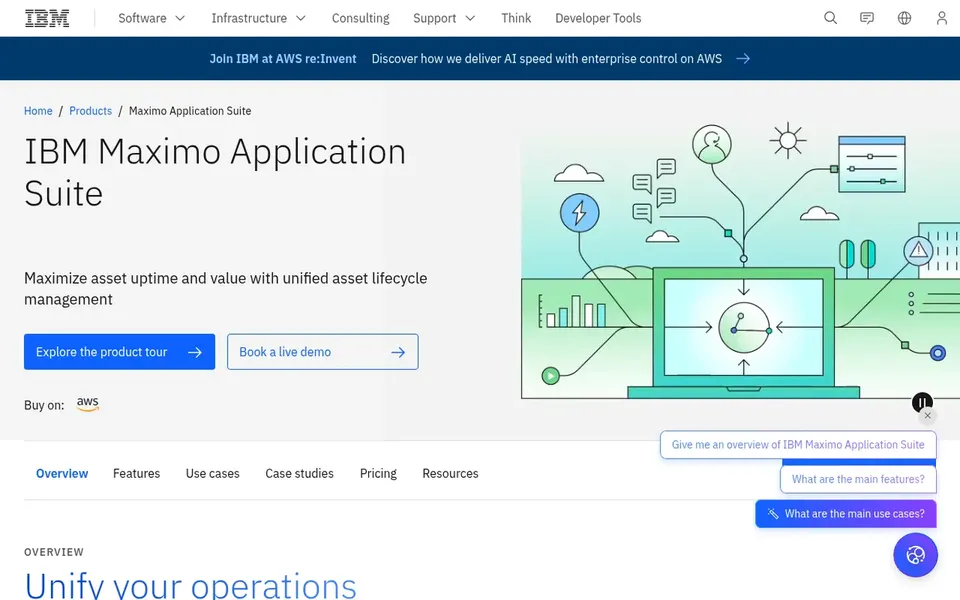
IBM Maximo Application Suite serves wide asset management with AI insights. IBM Maximo Application Suite is an asset management product that helps organizations handle, maintain and optimize assets using AI insights. It aims to cut downtime, control costs and boost reliability across asset-intensive operations.
The main drawbacks: Enterprise-scale setup can be complicated.
Teams wanting only straightforward work order tracking may find it heavier than needed and could look to a lighter CMMS instead. In daily use, since it is made for enterprise asset estates, deployment and configuration can demand dedicated admin and data effort. IBM Maximo Application Suite shows no starting price here, so confirm the cost on the vendor site. Trial and free access: Not stated.
Best for: Reliability and operational risk reduction
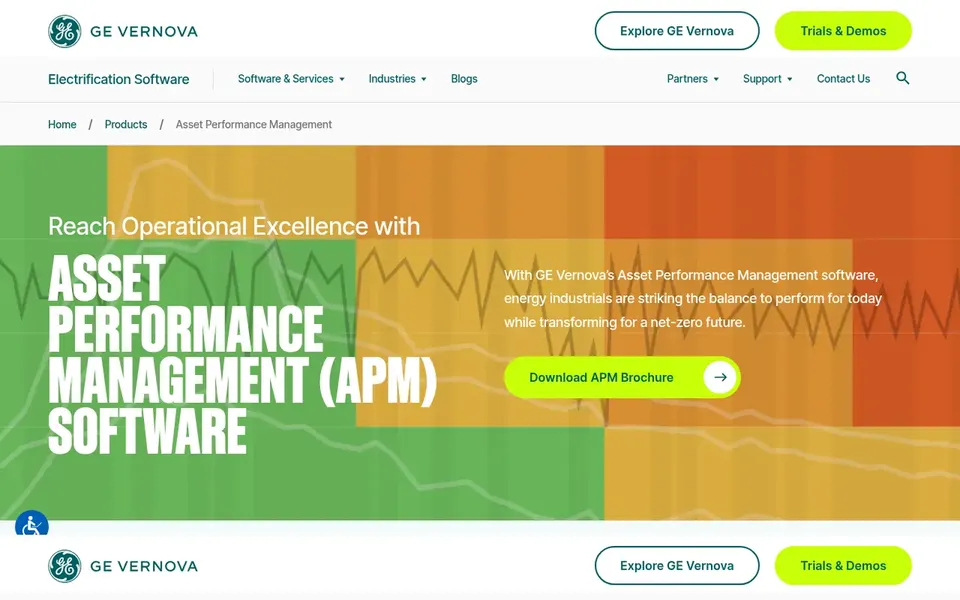
Where GE Vernova Asset Performance Management fits: reliability and operational risk reduction. It fits industrial and utility teams managing critical equipment where reliability straight affects utilization and output.
It is oriented toward heavy industrial assets, so IT or office equipment fleets are a weaker fit. GE Vernova Asset Performance Management shows no starting price here, so confirm the cost on the vendor site. On free options: Not stated.
The main drawbacks: Requires integration with existing systems.
Fiix Asset Management was built for cloud CMMS with maintenance analytics. Fiix is a cloud-based CMMS that helps teams plan, track and optimize maintenance with integrations, reports and embedded AI tools.
The emphasis is on daily maintenance execution and reporting instead of advanced predictive modeling. Fiix Asset Management starts at: $45 per user per month. Fiix Asset Management offers a free plan.
Where it falls short: Better suited to maintenance than IT assets.
Think of ServiceNow Asset Management for IT asset lifecycle and cost control. ServiceNow Asset Management helps take control of IT assets by automating the end-to-end lifecycle for software, hardware and cloud assets, with the goal of optimizing costs whereas reducing risk.
On top of that, utilization insight here means smarter IT spending and risk management. It is not aimed at plant machinery or production equipment analytics, so industrial reliability teams need a different platform. ServiceNow Asset Management does not show a starting price in this comparison, so check the vendor site for current pricing. Trial and free access: Not stated.
Limits to weigh: Value relies on disciplined asset data.
Ask Honeywell Forge Asset Performance Management, AspenTech Mtell, IBM Maximo Application Suite and others for a written quote, since no starting price is shown.
Test the free plan from Fiix Asset Management against your real workload before relying on it.
Before choosing Honeywell Forge Asset Performance Management, weigh its main limit: best value inside Honeywell environments.
Price Fiix Asset Management for your actual team size; headline prices rarely include add-ons or overage.
Run a one or two week pilot of ServiceNow Asset Management with the people who will use it every day.
How we picked
Each tool was reviewed on what its vendor publishes: price, plan limits, core features and stated drawbacks. We did not run hands-on tests. Treat prices as a snapshot: vendors change plans often, so check the vendor site for the figure that applies today. Position on the page reflects fit for a typical buyer first, with price clarity and free access breaking ties. Treat it as a guide, not a ruling. The same method was used for each of the 6 software for asset utilization analytics picks on this page.
Every price and plan detail on this page comes from the vendors’ own websites. We did not run hands-on tests unless the text says so, and we do not publish star ratings or review scores. See how we score and our disclosure.
Keep your shortlist in one place
Paste prices, trial dates and notes from this guide into Ainotely, our AI note app. It files them into a topic and pulls out tasks like “cancel trial by Friday”. Free 7-day trial, no card needed.
Is Honeywell Forge Asset Performance Management the right pick for everyone comparing software for asset utilization analytics?
No single tool suits every team. Honeywell Forge Asset Performance Management comes first because it fits industrial asset performance monitoring, while AspenTech Mtell suits Predictive maintenance for process assets and IBM Maximo Application Suite suits broad asset management with AI insights. Match the tool to your own size, budget and workflow before deciding.
What is asset utilization analytics used for?
It presents how much value assets deliver relative to their cost and availability, highlighting idle equipment, recurring failures and underused IT resources. Teams use it to prioritize maintenance, retire or redeploy assets, and control spending.
Do these tools publish their prices?
Not all of them. Honeywell Forge Asset Performance Management, AspenTech Mtell, IBM Maximo Application Suite and others publish no starting price, so expect a quote request for those. The rest, Fiix Asset Management included, show a starting price, though seats and billing terms still change the final cost.
What is the cheapest option for software for asset utilization analytics in this list?
On published monthly entry prices, Fiix Asset Management is the lowest here at $45 per user per month. Entry price is only part of the cost, because seats, add-ons and billing terms can change the total.
How are the software for asset utilization analytics ordered?
The order follows typical fit for software for asset utilization analytics, with Honeywell Forge Asset Performance Management first and ServiceNow Asset Management last, then price clarity and free access. It is editorial judgement, not a score, so another team could rank the tools differently.