Twilio Alternatives in 2026: 8 Messaging APIs Compared

- Telnyx lists one of the lowest published US SMS base rates in this group, while Plivo is close to a drop-in API swap for many Twilio projects.
- Bandwidth and Sinch suit larger teams that need direct carrier connections and broad international reach.
- Bird and Infobip add email, WhatsApp and other channels next to SMS, which helps teams that want one inbox for several channels.
- Carrier fees, number rental and registration costs sit on top of base message rates, so compare total monthly cost, not only the headline rate.
Quick comparison
| Product | Ideal for | Price from | Free version | |
|---|---|---|---|---|
 Vonage | Teams needing voice, video and SMS together | See website | No | Visit |
 Plivo | Developer teams moving from Twilio | See website | Free trial | Visit |
 Bandwidth | US enterprises wanting a direct carrier network | See website | No | Visit |
 Sinch | Global teams needing broad international reach | See website | No | Visit |
 Telnyx | High-volume senders watching unit cost | See website | Free trial | Visit |
 Infobip | Enterprises needing omnichannel and compliance help | See website | No | Visit |
 Bird | Marketing teams wanting campaigns without heavy code | See website | Free trial | Visit |
 ClickSend | Small teams sending low-volume SMS | See website | Free trial | Visit |
The best twilio alternatives
We compared the leading twilio alternatives on fit, features and value, and the eight picks below cover different budgets and needs.
Vonage
Ideal for: Teams needing voice, video and SMS together
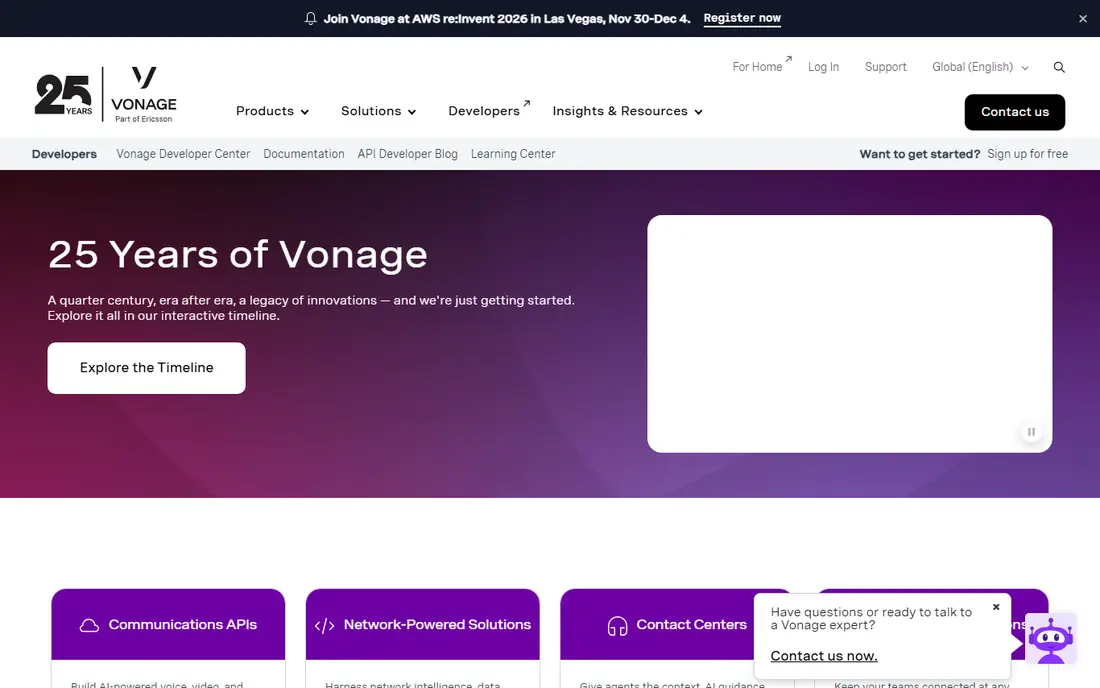
Vonage fits teams that already use voice or video and want messaging from the same vendor. Its breadth across voice, video, verification and messaging keeps several channels under one account and one set of credentials. In daily use, voice, video and messaging APIs in one platform stands out as the practical reason to consider it, especially for readers whose main need matches its best use. The main catch is that pricing is often quote-based, which makes a quick side-by-side comparison harder than with providers that publish a full rate list. Pricing varies by plan, so we list it as See website rather than guessing a figure that may not match your plan. Before you commit, check the current plan details on the official site, including limits, trial terms and what happens when you cancel. For most readers in this group, this is worth a short trial before you commit, especially if the free tier or trial covers your main use.
- Voice, video and messaging APIs in one platform
- Large global carrier reach
- Verification and number insight tools
- Pricing is often quote-based, so comparison takes longer
- Enterprise focus can feel heavy for small teams
Plivo
Ideal for: Developer teams moving from Twilio
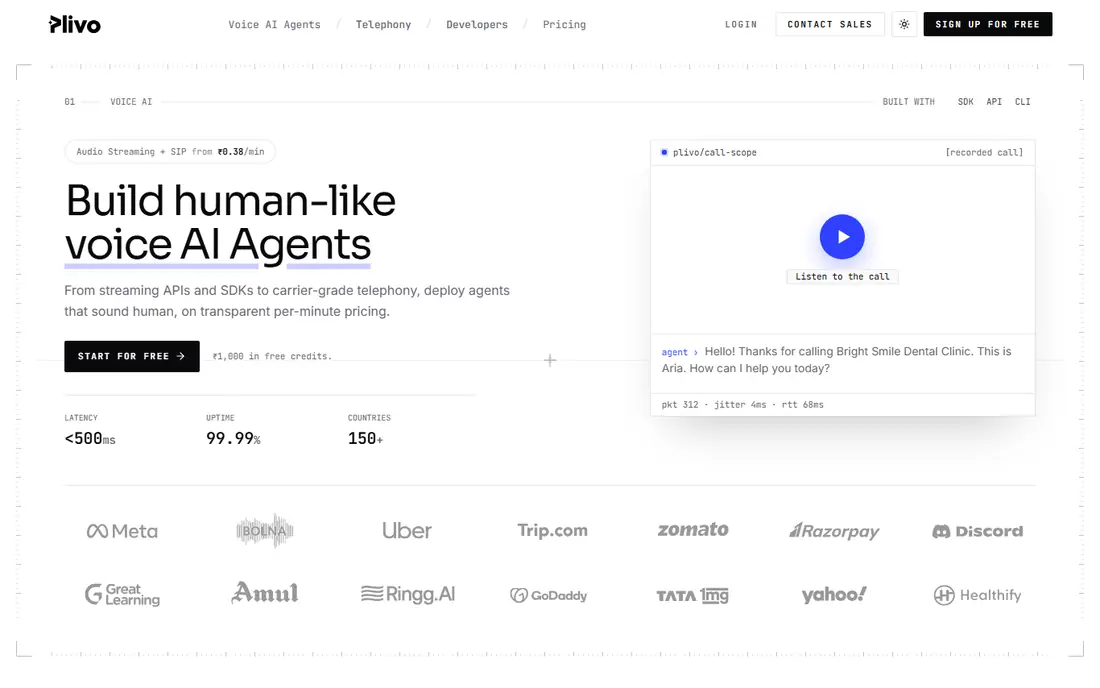
Plivo fits developer teams that want a Twilio-style API at a lower base SMS rate. Its API design and documentation make a migration feel familiar, and published rates help you estimate a monthly bill before you commit. In daily use, aPI style close to Twilio for many projects stands out as the practical reason to consider it, especially for readers whose main need matches its best use. The catch is that carrier fees still apply, and some niche features may need extra work or a different tool. Pricing varies by plan, so we list it as See website rather than guessing a figure that may not match your plan. Before you commit, check the current plan details on the official site, including limits, trial terms and what happens when you cancel. Try it with a real task from your own work before you pay, since a demo rarely shows the limits you will meet daily.
- API style close to Twilio for many projects
- Published SMS pricing
- Voice and SIP trunking options
- Some advanced channels are thinner than larger rivals
- Support tiers vary by account
Bandwidth
Ideal for: US enterprises wanting a direct carrier network
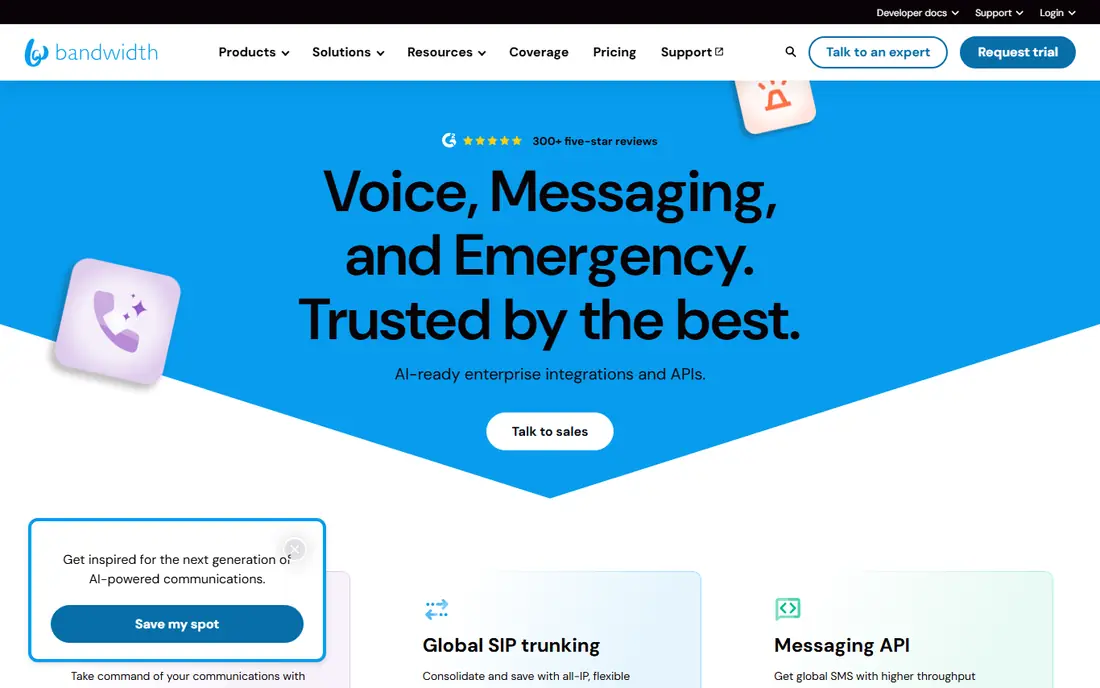
Bandwidth fits larger US senders that want control over the carrier relationship rather than a reseller layer. Owning its network gives it direct control over routing and quality, which matters for high-volume voice and messaging work. In daily use, owns and operates its own US network stands out as the practical reason to consider it, especially for readers whose main need matches its best use. The catch is that it is built for enterprise buyers, so small teams may face a longer setup process than with self-serve rivals. Pricing varies by plan, so we list it as See website rather than guessing a figure that may not match your plan. Before you commit, check the current plan details on the official site, including limits, trial terms and what happens when you cancel. If this matches your main need, put it near the top of your shortlist and compare its total cost, not only its headline price.
- Owns and operates its own US network
- Strong emergency calling support
- Voice and messaging APIs
- Onboarding can feel enterprise-heavy
- Smaller teams may find the sales process slow
Sinch
Ideal for: Global teams needing broad international reach
Sinch fits global teams that send to many countries and want several channels from one provider. Its international carrier connections and channel range suit companies with customers in many regions. In daily use, broad international SMS coverage stands out as the practical reason to consider it, especially for readers whose main need matches its best use. The catch is that the broad product set takes time to learn, and pricing for larger contracts usually comes through sales. Pricing varies by plan, so we list it as See website rather than guessing a figure that may not match your plan. Before you commit, check the current plan details on the official site, including limits, trial terms and what happens when you cancel. Shortlist it if your budget and workflow match, and test the exact feature you will use most before you decide.
- Broad international SMS coverage
- RCS, WhatsApp and voice options
- Enterprise messaging tools
- Pricing is often quote-based for larger deals
- The product range can feel complex at first
Telnyx
Ideal for: High-volume senders watching unit cost
Telnyx fits cost-sensitive teams that send at volume and are comfortable managing their own setup. Its published rates and own network make it a frequent pick for teams that compare unit cost first. In daily use, low published US SMS base rate stands out as the practical reason to consider it, especially for readers whose main need matches its best use. The catch is a smaller ecosystem of ready-made integrations, so your team may build more of the surrounding workflow itself. Pricing varies by plan, so we list it as See website rather than guessing a figure that may not match your plan. Before you commit, check the current plan details on the official site, including limits, trial terms and what happens when you cancel. For most readers in this group, this is worth a short trial before you commit, especially if the free tier or trial covers your main use.
- Low published US SMS base rate
- Own network and number inventory
- Voice, fax and wireless options
- Smaller partner ecosystem than Twilio
- Some features need more manual setup
Infobip
Ideal for: Enterprises needing omnichannel and compliance help
Infobip fits enterprises that need several channels plus help with local rules in many markets. Its omnichannel platform and regional coverage suit large companies with complex compliance needs. In daily use, sMS, email, WhatsApp and voice in one platform stands out as the practical reason to consider it, especially for readers whose main need matches its best use. The catch is that getting a firm price usually means a sales conversation, which slows a quick comparison. Pricing varies by plan, so we list it as See website rather than guessing a figure that may not match your plan. Before you commit, check the current plan details on the official site, including limits, trial terms and what happens when you cancel. Try it with a real task from your own work before you pay, since a demo rarely shows the limits you will meet daily.
- SMS, email, WhatsApp and voice in one platform
- Strong presence in Europe and other regions
- Compliance tooling
- Enterprise sales cycle can be slow
- Pricing varies by destination and volume
Bird
Ideal for: Marketing teams wanting campaigns without heavy code
Bird fits marketing and support teams that want to build campaigns visually rather than only through code. Its flow builder and shared inbox help non-developers run campaigns and answer customers in one place. In daily use, campaign builders and an omnichannel inbox stands out as the practical reason to consider it, especially for readers whose main need matches its best use. The catch is that platform fees plus message fees need careful reading, or the total monthly cost may surprise you. Pricing varies by plan, so we list it as See website rather than guessing a figure that may not match your plan. Before you commit, check the current plan details on the official site, including limits, trial terms and what happens when you cancel. If this matches your main need, put it near the top of your shortlist and compare its total cost, not only its headline price.
- Campaign builders and an omnichannel inbox
- WhatsApp, SMS and email in one place
- Automation flows
- Two-layer billing can make forecasting harder
- Setup can feel complex for simple SMS use
ClickSend
Ideal for: Small teams sending low-volume SMS
ClickSend fits small teams that send in bursts and do not want a monthly commitment. Prepaid credit and a plain dashboard make it easy to start, pause and resume without a contract. In daily use, prepaid credit with no monthly plan stands out as the practical reason to consider it, especially for readers whose main need matches its best use. The catch is unit cost: at high volume, developer-first APIs are usually cheaper per message. Pricing varies by plan, so we list it as See website rather than guessing a figure that may not match your plan. Before you commit, check the current plan details on the official site, including limits, trial terms and what happens when you cancel. Shortlist it if your budget and workflow match, and test the exact feature you will use most before you decide.
- Prepaid credit with no monthly plan
- Simple dashboard for bulk SMS
- Email and voice options
- Per-message rates are higher than developer APIs at volume
- Advanced API features are thinner
How we picked these
We compared official feature pages, pricing pages, app store listings, privacy policies and public reviews for each option in this list. We checked whether each product still exists and works today, whether its homepage loads, and whether its price and free tier could be confirmed from the vendor. Where a price could not be confirmed, we wrote See website rather than guessing.
We favoured products that fit the topic closely, served different budgets and use cases, and had clear strengths and honest weaknesses. We did not claim hands-on testing we did not do, and we left out products that did not fit the topic, even when they were popular in a nearby category.
How to pick a Twilio alternative without a surprise bill
Start with your main channel and your main countries, then check whether the provider publishes rates for those destinations. A low US rate means little if most of your messages go elsewhere. Ask for a sample invoice or run a small test campaign before you move a large list.
Check registration and compliance steps early, especially for US 10DLC messaging. Some providers guide you through campaign registration, while others leave more of the work to your team. Delays here are a common reason a migration takes longer than planned.
Test deliverability, webhooks and support response on a small scale. Send to several carriers, check how failures are reported, and open a support ticket to see how fast you get a useful answer. Those checks tell you more than a feature page alone.
Frequently asked questions
What is the best Twilio alternative for SMS?
For most developer teams, Telnyx and Plivo are strong starting points because they publish clear SMS pricing and offer APIs that feel familiar to Twilio users. Bandwidth suits larger US senders that want a direct carrier relationship. If you need marketing campaigns without code, look at Bird or ClickSend instead.
Are Twilio alternatives cheaper than Twilio?
Some are cheaper on base message rates, but carrier fees and number costs apply on almost every platform, so the saving is smaller than the headline rate suggests. Compare a full month of your own traffic, including registration fees, before you judge the saving.
Can I move my Twilio code to another provider?
Plivo and Telnyx are often described as close to Twilio in API style, which can cut migration work, but some endpoints and features still differ. Budget time to test message sending, status callbacks and number management before you switch production traffic.
Do I need 10DLC registration in the US?
Yes, for most application-to-person SMS sent from US long codes, carriers require brand and campaign registration. Your provider should explain the steps and the fees, and you should complete registration before you send at scale.
What about voice and WhatsApp?
Vonage, Sinch, Bird and Infobip cover voice or WhatsApp next to SMS, which helps if you want one vendor for several channels. Check each channel separately, since pricing and coverage vary by channel and country.