Best Twitter Alternatives in 2026: 7 Apps Compared

- Threads is the closest to Twitter in size and feel, and Meta has reported audience figures in the hundreds of millions of monthly users.
- Bluesky is the most Twitter-like in layout, but Similarweb data reported by TechCrunch put its mobile app at 10.4 million monthly users in June 2026, down 27.2% year over year.
- Mastodon is free, open source and chronological, with no ads or algorithm, but you choose a server when you sign up.
- Reddit, Tumblr, Substack and LinkedIn do not copy Twitter, but each is stronger for one kind of conversation: topics, fandoms, newsletters or work.
- All seven apps are free to use, so the real cost is moving your audience, not paying a subscription.
Quick comparison
| Product | Ideal for | Price from | Free version | |
|---|---|---|---|---|
 Bluesky | The closest feel to old Twitter | Free | Yes | Visit |
 Threads | Reach and a large audience | Free | Yes | Visit |
 Mastodon | Ad-free, chronological, decentralized posting | Free | Yes | Visit |
 Reddit | Topic-based discussion | Free | Yes | Visit |
 Tumblr | Art, fandoms and creative communities | Free | Yes | Visit |
 Substack | Writers and newsletter readers | Free | Yes | Visit |
 LinkedIn | Professional networking and career news | Free | Yes | Visit |
The best Twitter alternatives
People leave Twitter (now X) for different reasons: ads, moderation, ownership or just boredom. These seven apps cover short-post feeds, open networks and communities built around one interest.
Bluesky
Ideal for: The closest feel to old Twitter

Bluesky is the app most people mean when they say Twitter alternative. Its App Store description promises conversations without ads or engagement traps, a Following feed, a Discover feed, thousands of community-built feeds and Starter Packs that let you follow a curated list of people in one tap. It also offers moderation tools and content filters so you can hide topics and limit who can interact with you.
The company says it is building an open foundation for the social internet, so your identity can move between apps built on the same protocol. The honest catch is size. TechCrunch, citing Similarweb, reported that Bluesky's mobile app had 10.4 million monthly active users worldwide in June 2026, down 27.2% from a year earlier. Third-party analytics are estimates, so treat them as a rough guide.
Choose Bluesky if you want the old Twitter layout and a community around news, science or art. Check that the people you want to follow are still active there.
- Familiar following feed and short posts
- Thousands of community-built feeds and Starter Packs
- Moderation lists and content filters
- Smaller and less active than X or Threads
- App Store rating is 3.9 from about 13,800 ratings
Threads
Ideal for: Reach and a large audience

Threads is the biggest rival to X by audience. The App Store description says you can post text, images, polls and ghost posts, join communities, send one-to-one and group messages, and use Hidden Words to filter out posts and replies with words you choose. Meta's terms and privacy policy apply, along with Instagram's community guidelines.
Meta has publicly reported Threads audience figures in the hundreds of millions of monthly users. Exact numbers change with each announcement, so we are not quoting one. The App Store rating is 4.6 from about 2.3 million ratings.
Threads is the best pick if you want reach for a business or personal brand, or if your friends are already on Instagram. If you chose to leave Twitter because of big-company data practices, this one will not solve it.
- Very large audience
- Communities, polls and ghost posts
- Hidden Words filter and reply controls
- Run by Meta and covered by Meta's privacy policy
- Ties you to Meta's ecosystem
Mastodon
Ideal for: Ad-free, chronological, decentralized posting

Mastodon is the opposite of a single company platform. Its official site describes free, open-source decentralized social media, and the iOS listing says it offers a chronological feed with no algorithm, ads or clickbait, lists, word filters, polls and content warnings. You can sign up on the official server or pick a third-party server to host your data and moderate your experience.
Because it uses a shared protocol, accounts on different servers can talk to each other and to other fediverse platforms. The project says it started in 2016 and was incorporated as a German non-profit company in 2021, but lost its non-profit status when Germany removed software projects from eligibility. In 2025 the team began moving the project to a new foundation. The App Store rating is 4.5 from about 13,500 ratings.
Mastodon is the right choice if you dislike algorithms and want control over where your account lives. Expect to spend a few minutes choosing a server and finding people to follow.
- No ads, algorithm or clickbait per its App Store listing
- Free and open-source
- Switch servers and keep your followers
- Choosing a server is confusing for newcomers
- Smaller audience than Threads or X
Ideal for: Topic-based discussion

Reddit does not replace Twitter's follow-and-reply feed. It is a collection of communities called subreddits, where people post, comment and reply on topics from news to hobbies. Its App Store description says there are more than 100,000 subreddits.
The format rewards depth. A good thread can run for hours with detailed answers, which is hard to replicate in a short-post feed. The trade-off is that you follow topics, not personalities, so it is harder to build a personal following.
We would suggest Reddit for readers who used Twitter to follow conversations about a topic, such as sports, software or finance. Moderation rules differ from one community to another, and the app is rated 17+.
- More than 100,000 communities per its App Store listing
- Threaded comments that suit long discussion
- High App Store rating (4.8 from about 3.5 million ratings)
- Not a feed of friends or accounts
- Quality varies by community
Tumblr
Ideal for: Art, fandoms and creative communities
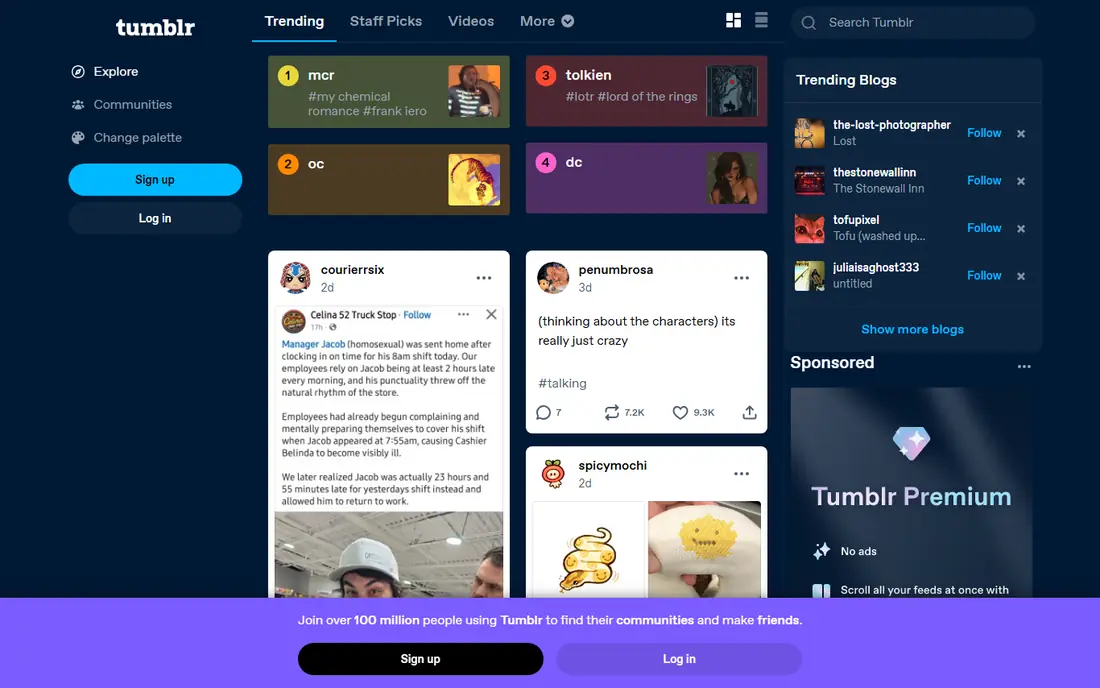
Tumblr is a blog-style network that still has a loyal creative crowd. The App Store description says you can post images, text, videos, GIFs and audio to your own dashboard, follow tags, reblog posts and join fandom communities. It specifically mentions art, fanfiction and fan communities.
It is also one of the few places where long and short posts mix easily. The App Store rating is 4.2 from about 375,000 ratings, which is lower than the other large apps here.
Pick Tumblr if you used Twitter for fandom, art or shared jokes rather than breaking news. It is a weak fit for tracking live events.
- Strong fandom, art and meme culture
- Reblogging, tags and a personal blog-style dashboard
- Supports text, images, video, GIFs and audio
- App Store rating is 4.2, lower than most rivals
- Not built around breaking news
Substack
Ideal for: Writers and newsletter readers
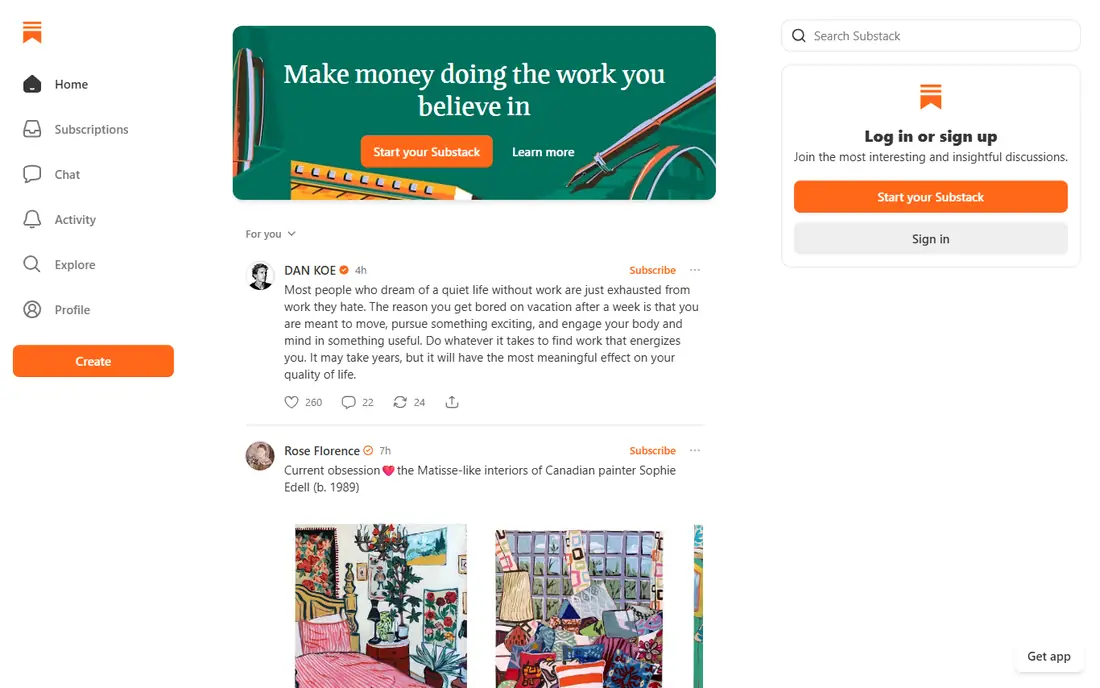
Substack began as a newsletter platform and now includes a feed of short Notes. The App Store description says you can subscribe to creators for free or upgrade to view original work, watch videos, listen to read-aloud articles, join livestreams and live group chats. Its website says you own your intellectual property, mailing list and subscriber payments.
Some of that is the company's marketing, but the model is clear: follow people whose work you value and get it in your inbox. The App Store rating is 4.9 from about 557,000 ratings, the highest of the group.
Substack works best for people who used Twitter to follow writers, journalists and analysts. It is less useful for casual chat with friends.
- Free to subscribe and read many writers
- Notes feed for short posts, plus video, podcasts and livestreams
- Writers own their mailing list
- Some work sits behind paid subscriptions
- Focus on creators, not general social chat
Ideal for: Professional networking and career news

LinkedIn is not trying to be Twitter, but many people use it the way they used Twitter for work. Its App Store description lists job search, job alerts, networking with business contacts, industry news, company information and articles. The App Store rating is 4.8 from about 645,000 ratings.
If you used Twitter for career updates or industry commentary, LinkedIn is where employers and clients already are. The style is more polished and less funny.
We would add it as a companion to another app on this list rather than a full replacement.
- Built for jobs, professional updates and industry news
- Large network of business contacts
- Free to join
- Tone is formal and career-focused
- Not suited to casual chat or breaking news
How we picked these
We looked at each app's official website and App Store listing in October 2026, and focused on audience size, moderation tools, ad and algorithm policies and how easily a newcomer can get started. We did not use the apps long term, so our descriptions reflect the vendors' own statements and public data rather than our own posting experience.
User numbers come from public statements or third-party analytics, which are estimates. Where a figure was unclear we describe a range instead of quoting a number. We left out apps that were small or whose official information we could not verify.
How to choose and stay safe
Decide what you want from a Twitter alternative. If it is audience, Threads is the largest. If it is control, Mastodon and Bluesky give you more say over what you see and who can reach you.
Moving your audience
Your followers will not move with you. Post your new handle on X and your website, and keep your old account for a while. Many people run two accounts during the transition. If you depend on social media for work, test your reach on a new app before you abandon the old one.
Moderation and privacy
Read the community guidelines and privacy policy for each app. Meta's apps share data under Meta's privacy policy, while Mastodon spreads moderation across independent servers, so rules vary by server. Use the filters, mute lists and blocking tools on day one.
Age ratings and safety
The App Store lists Bluesky, Mastodon, Reddit and Substack as 17+, and Threads and Tumblr as 12+. Parents should check ratings and settings before letting teens sign up. Avoid sharing your address, workplace details or financial information in public posts on any platform.
Frequently asked questions
What is the best Twitter alternative?
For reach, Threads is the strongest because of its large audience. For the Twitter feel, try Bluesky. For control and no ads, try Mastodon. The best choice depends on whether you care most about audience size or independence.
Is Bluesky better than Threads?
They solve different problems. Bluesky is open and more similar to old Twitter, but smaller. Threads is much larger but tied to Meta's ecosystem. Try both with a few accounts before you decide.
Are there free alternatives to Twitter?
Yes, all seven in this list are free to use. Some, like Substack, let writers charge for premium content, but basic use costs nothing.
Is Mastodon safe and private?
Mastodon is open source and has no ads, but your privacy depends partly on the server you choose, because its administrators handle moderation. Read the server's rules and privacy policy. Public posts are visible to anyone on the open web.
Where did people go after leaving Twitter?
Many went to Bluesky, Threads and Mastodon. Bluesky saw a surge after the November 2024 U.S. election, according to TechCrunch, but has since lost momentum. Others moved to communities such as Reddit or newsletters on Substack.
Sources
- https://bsky.app
- https://bsky.social/about
- https://apps.apple.com/us/app/bluesky-social/id6444370199
- https://daringfireball.net/linked/2026/08/21/bluesky-user-base-is-tiny
- https://www.threads.com
- https://apps.apple.com/us/app/threads/id6446901002
- https://www.sherwood.news/tech/meta-says-that-threads-now-has-more-than-350-million-monthly-active-users
- https://joinmastodon.org
- https://joinmastodon.org/about
- https://apps.apple.com/us/app/mastodon/id1571998974
- https://www.reddit.com
- https://apps.apple.com/us/app/reddit/id1064216828
- https://www.tumblr.com
- https://apps.apple.com/us/app/tumblr-social-media-art/id305343404
- https://substack.com
- https://apps.apple.com/us/app/substack/id1581650857
- https://www.linkedin.com