Best Vistasocial Alternatives in 2026: 8 Options Compared

- 1
 BufferSimple affordable schedulingVisit
- 2
 HootsuiteMany profiles and streamsVisit
- 3
 Sprout SocialAnalytics and engagementVisit
- 4
 LaterVisual planning for InstagramVisit
- 5
 SocialPilotAffordable team schedulingVisit
- Buffer suits small teams that want simple, affordable scheduling.
- Hootsuite fits teams managing many profiles and streams.
- Sprout Social leads for teams that need deep analytics and engagement.
- Later suits visual planners focused on Instagram and TikTok.
Quick comparison
| Product | Ideal for | Price from | Free version | |
|---|---|---|---|---|
| Buffer | Simple affordable scheduling | Free | Yes | Visit |
| Hootsuite | Many profiles and streams | See website | Free trial | Visit |
| Sprout Social | Analytics and engagement | See website | Free trial | Visit |
| Later | Visual planning for Instagram | Free | Yes | Visit |
| SocialPilot | Affordable team scheduling | See website | Free trial | Visit |
 Metricool | Analytics plus scheduling | Free | Yes | Visit |
 Planable | Content approval workflows | See website | Free trial | Visit |
 Sendible | Agency social management | See website | Free trial | Visit |
The best vistasocial alternatives
We worked through the options below in detail, comparing what each one does well, where it falls short, and who it suits best. Our pick for most people depends on your budget and your main job, so read the shortlist with your own use case in mind. The order below starts with the strongest all round options and then moves to more specialised picks.
Buffer
Ideal for: Simple affordable scheduling

For small teams and creators scheduling social posts, Buffer is a strong choice. Its simplicity gets posts scheduled in minutes, without a training course. When we compared official feature pages, the difference showed up in everyday use, not in marketing claims, since the tools that look similar on a homepage often behave very differently once you set them up for a real task.
Teams needing deep analytics or social listening should compare Sprout or Hootsuite. Try it with a real task from your own work before committing, since a short trial reveals friction that no feature list can show. That trade off is worth weighing against your main job, since the best tool on paper is not always the best tool for your team or your budget.
- Simple scheduling
- Good free tier
- Clean interface
- Analytics and engagement are lighter than Sprout
- Team features vary by plan
Hootsuite
Ideal for: Many profiles and streams

For teams managing many social profiles, Hootsuite is a strong choice. Its streams let teams watch many conversations and profiles in one view. We also checked what each vendor says about its own limits, because a tool that is honest about its weak spots is easier to plan around than one that hides them behind a long feature list.
Small teams may find the price and interface heavier than Buffer. Read the current pricing and terms on the vendor site before you buy, since plans and limits change, and the plan you read about last year may not be the plan on sale today. That trade off is worth weighing against your main job, since the best tool on paper is not always the best tool for your team or your budget.
- Multi profile management
- Streams
- Team workflows
- Pricing rises with users
- Interface feels busy
Sprout Social
Ideal for: Analytics and engagement
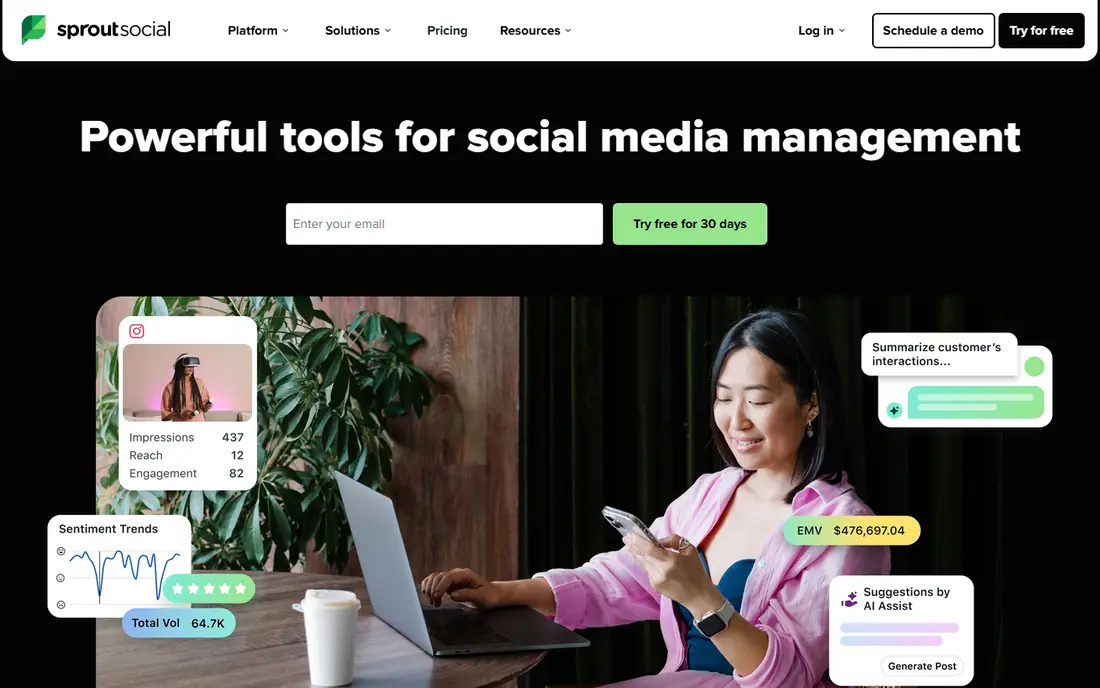
For teams that report on social performance seriously, Sprout Social is a strong choice. Its analytics and inbox help teams prove social results and reply faster. In practice, the deciding factor is often fit with tools you already use, so check integrations and export options before you fall for a feature you may rarely touch.
Budget conscious teams should compare Buffer or SocialPilot. Ask the vendor a direct question during the trial, since the speed and clarity of the answer tell you a lot about the support you will get later. That trade off is worth weighing against your main job, since the best tool on paper is not always the best tool for your team or your budget.
- Strong analytics
- Unified inbox
- Social listening
- Higher price
- Smaller teams may not need its depth
Later
Ideal for: Visual planning for Instagram
For creators and brands focused on visual social platforms, Later is a strong choice. Its visual planner suits Instagram first brands that plan feeds by look. Our comparison also weighed how easy each option is to learn, since a powerful tool that your team avoids is worth less than a simpler one that everyone actually uses every day.
Teams managing mainly LinkedIn or X should compare Hootsuite or Buffer. Check what happens to your data if you leave, since export options and data portability matter most at the moment you decide to switch. That trade off is worth weighing against your main job, since the best tool on paper is not always the best tool for your team or your budget.
- Visual planner
- Link in bio
- Good for Instagram and TikTok
- Features for other networks are lighter
- Analytics vary by plan
Metricool
Ideal for: Analytics plus scheduling
For teams that want analytics and scheduling together cheaply, Metricool is a strong choice. Its analytics give useful insight without enterprise pricing. Another factor we weighed is how the tool handles growth, since a choice that works for ten users or ten projects can strain badly at a hundred, and switching later costs far more time.
Large teams needing approval workflows should compare Hootsuite or Sprout. Start with the smallest plan that covers your needs, since upgrading later is easy, while paying for unused capacity from day one is money you will not get back. That trade off is worth weighing against your main job, since the best tool on paper is not always the best tool for your team or your budget.
- Analytics plus scheduling
- Competitor tracking
- Fair pricing
- Team workflows are lighter than Hootsuite
- Some features are newer
Planable
Ideal for: Content approval workflows
For agencies that need client approval before posting, Planable is a strong choice. Its approval flow lets clients comment and approve posts before they go live. We also looked at how clearly each vendor explains its pricing, since hidden limits on users, volume, or features are a common source of surprise bills after the first month.
Teams that only schedule their own posts may not need its approval strength. If your team will use it daily, involve them in the trial, since a tool chosen by one person and imposed on everyone else rarely gets adopted well. That trade off is worth weighing against your main job, since the best tool on paper is not always the best tool for your team or your budget.
- Approval workflows
- Visual planning
- Client collaboration
- Scheduling breadth is narrower than Hootsuite
- Pricing scales
Sendible
Ideal for: Agency social management
For agencies managing social for many clients, Sendible is a strong choice. Its client dashboards help agencies show results to each client clearly. Finally, we considered longevity, because a tool from a stable vendor with regular updates is a safer home for your work than a promising newcomer that may change direction.
Single brand teams may find Buffer or Later simpler. Keep a note of the renewal date and the cancellation steps when you subscribe, since that small habit prevents unwanted renewals and surprise charges. That trade off is worth weighing against your main job, since the best tool on paper is not always the best tool for your team or your budget.
- Agency focused
- Client dashboards
- Scheduling and reporting
- Pricing scales with profiles
- Interface takes learning
How we picked these
We compared official feature pages, pricing pages, app store listings, privacy policies, and public reviews for each option, and we only listed products that exist and work in October 2026 and truly fit the topic. Where we could not verify a current price from the vendor, we wrote See website rather than guessing. We did not claim hands-on testing we did not do, and we weighed honest weaknesses alongside strengths, since a roundup that only praises its picks does not help anyone decide. We also checked that each product homepage loads and belongs to the product named, and we dropped or replaced any product whose homepage failed that check. Prices and free tiers were taken from vendor pages where we could verify them, and marked See website where we could not, so readers should confirm current pricing before buying.
How to choose a social media tool
Start with profile count and team size, since pricing scales with both. Next, check which networks matter most, because some tools favour Instagram while others cover LinkedIn or X better. Test scheduling, approval, and reporting with real posts, and confirm analytics answer the questions your boss or clients actually ask. Finally, compare total cost at your real profile and user count, not the starter plan price.
Frequently asked questions
What is the closest alternative to Vista Social?
Buffer and SocialPilot are closest for affordable scheduling, while Metricool adds stronger analytics at a fair price. Sprout Social suits teams that need deeper reporting.
Can I schedule for all networks with one tool?
Most tools cover the major networks, but feature depth varies by network, especially for TikTok, LinkedIn, and Stories. Check your key networks on a trial before buying.
Do free plans work for a small brand?
Yes for basic scheduling, with Buffer, Later, and Metricool all offering free tiers. Paid plans matter for team workflows, analytics, and higher post volumes.
What is social listening?
Social listening tracks mentions and topics across social platforms, which helps brands spot trends and crises. Sprout Social and Hootsuite offer it, while budget tools cover it lightly or not at all.
SocialPilot
Ideal for: Affordable team scheduling
For small agencies and teams scheduling for clients, SocialPilot is a strong choice. Its team pricing makes client scheduling affordable for small agencies. We paid attention to support and documentation too, because the moment something breaks is when you discover whether a vendor actually helps or just points you at a help page.
Teams needing listening or deep analytics should compare Sprout. Talk to one or two existing users if you can, since their experience with support, reliability, and billing is often more useful than any review score. That trade off is worth weighing against your main job, since the best tool on paper is not always the best tool for your team or your budget.