6 Alternatives to vLLM, Compared on Price and Fit

- 1
 MLC LLMMobile, browser, and edge deploymentVisit
- 2
 Text Generation InferenceExisting Hugging Face deploymentsVisit
- 3
 llama.cppCPU and edge hardwareVisit
- 4
 LMDeployLong context on NVIDIA GPUsVisit
- 5
 Triton Inference ServerMulti-model serving fleetsVisit
- MLC LLM takes the first slot, best suited to mobile, browser, and edge deployment.
- SGLang fits production serving for agents.
- 6 out of 6 tools include a free plan, among them MLC LLM, Text Generation Inference, llama.cpp and LMDeploy.
- The main caution on MLC LLM: harder to set up.
Direct answer
If you need mobile, browser, and edge deployment, MLC LLM is the first tool to look at here. Text Generation Inference is the stronger choice for existing Hugging Face deployments, while llama.cpp suits CPU and edge hardware. All 6 tools are compared below on price, free plan and limits.
Quick comparison
| Product | Ideal for | Price from | Free version | |
|---|---|---|---|---|
| MLC LLM | Mobile, browser, and edge deployment | Free, open source | Yes | Visit |
| Text Generation Inference | Existing Hugging Face deployments | Free, open source | Yes | Visit |
| llama.cpp | CPU and edge hardware | Free, open source | Yes | Visit |
| LMDeploy | Long context on NVIDIA GPUs | Free, open source | Yes | Visit |
| Triton Inference Server | Multi-model serving fleets | Free, open source | Yes | Visit |
 SGLang | Production serving for agents | Free, open source | Yes | Visit |
vLLM compared in detail
This Ainotely guide covers 6 options for vLLM. Each profile lists a starting price, free plan details, strengths and drawbacks, so you can drop poor fits quickly.
MLC LLM
Ideal for: Mobile, browser, and edge deployment
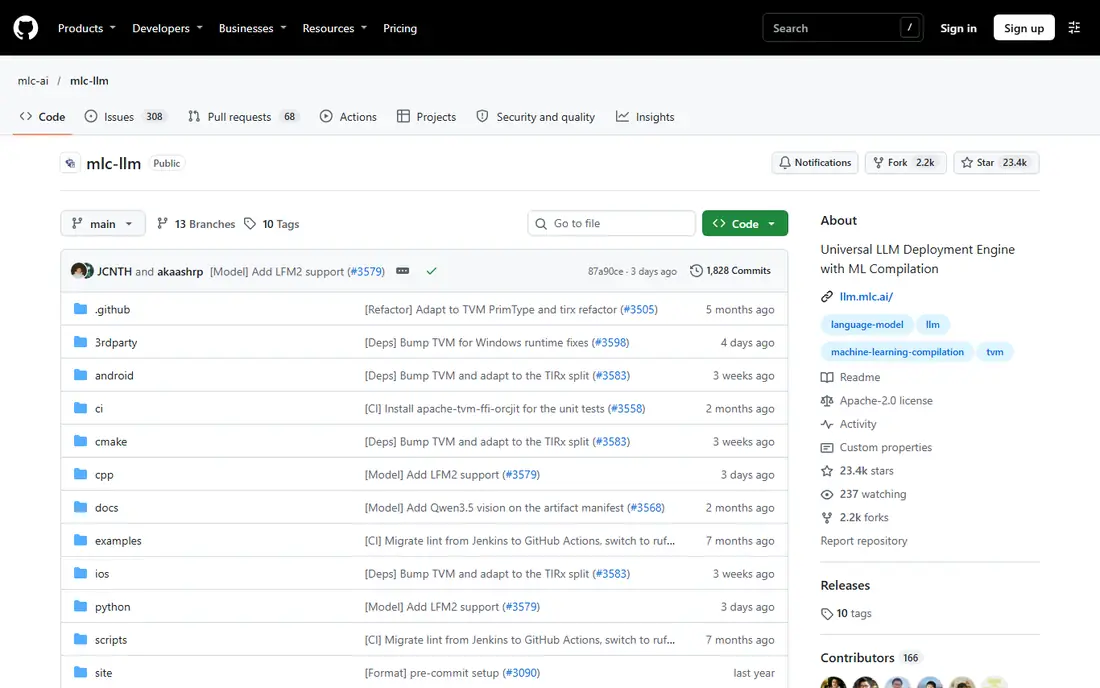
Where MLC LLM fits: mobile, browser, and edge deployment. That makes it the pick for apps that must run inference without a server, keeping user data on the device.
Trade-offs to know: Mobile model range is narrower.
On cost, MLC LLM starts like this: Free, open source. MLC LLM includes a free tier. What users get: WebGPU backends.
- Runs on phones, browsers, TVs
- Metal, Vulkan
- Performance varies by device
Text Generation Inference
Ideal for: Existing Hugging Face deployments
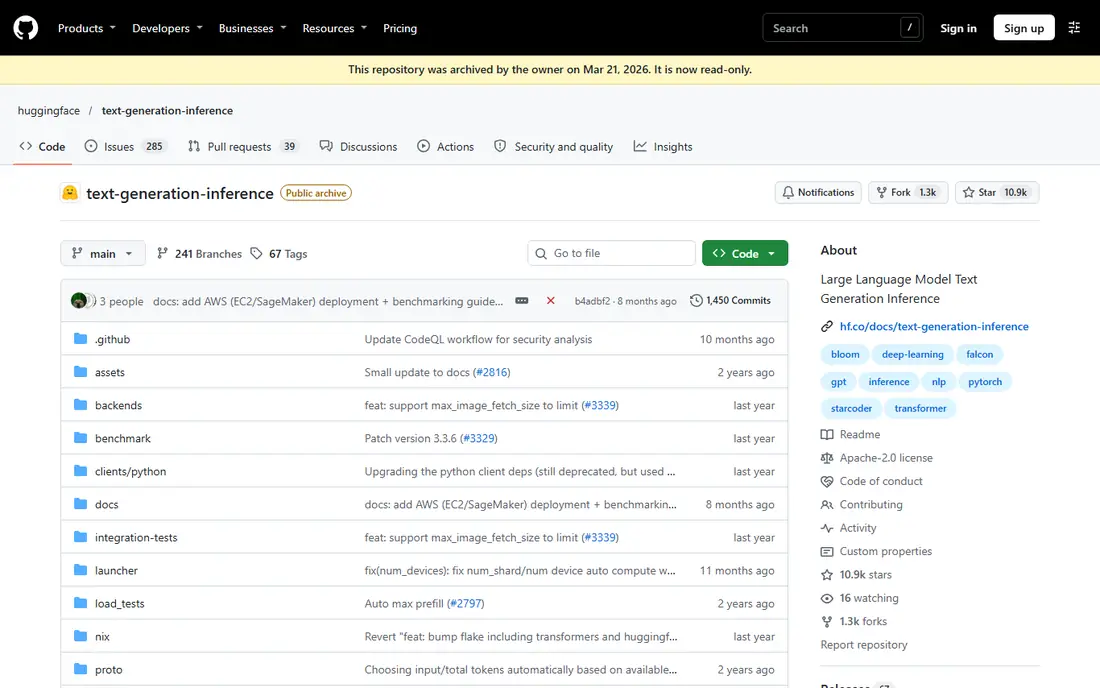
Choose Text Generation Inference for existing Hugging Face deployments. Text Generation Inference, known as TGI, was Hugging Face's production serving engine and remains quick to set up with an OpenAI-compatible API. It supports quantization formats like GPTQ and AWQ, and it links deeply with the Hugging Face model hub.
In practice, the key fact is its status. Teams already running TGI can keep it going with bug fixes. Starting cost for Text Generation Inference: Free, open source. Text Generation Inference has a free plan.
Drawbacks to consider: Migrate for new projects; No new features. Reasons to shortlist it: Deep Hugging Face ecosystem links.
- Simple setup
- OpenAI-compatible API
- In maintenance mode since late 2025
llama.cpp
Ideal for: CPU and edge hardware
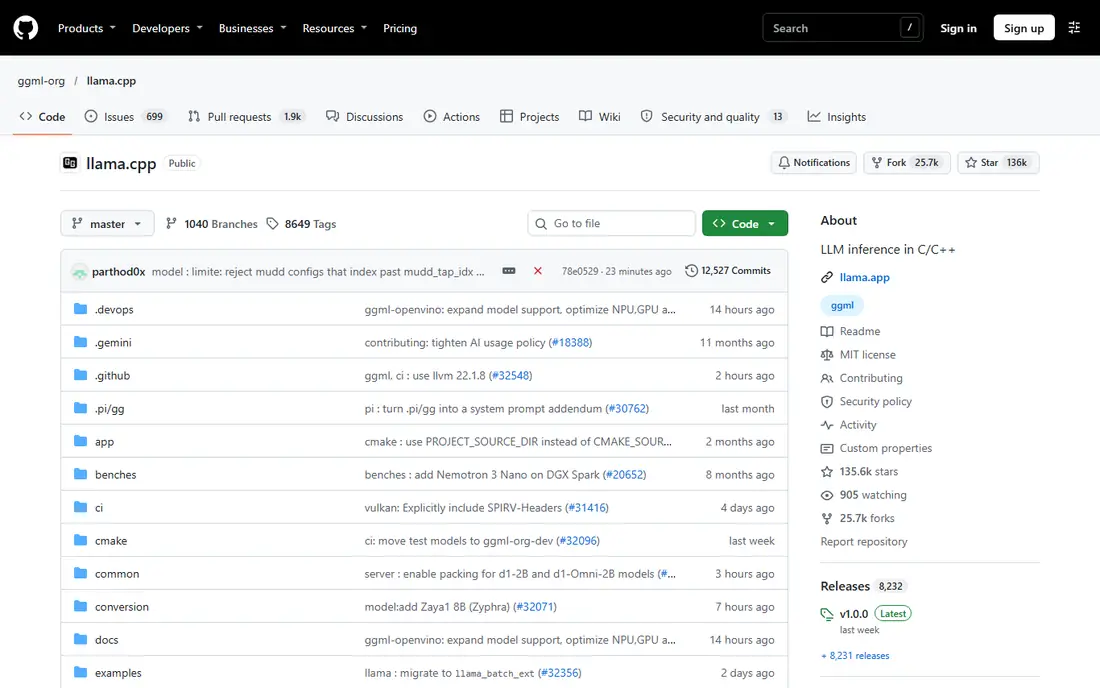
llama.cpp works best for CPU and edge hardware. llama.cpp is the portability champion.
Where llama.cpp stands out: Runs on almost any hardware.
The server mode is entry-level compared to SGLang or vLLM, and multi-user production needs additional work. On top of that, written in C++, it runs on NVIDIA, AMD, Metal, Vulkan, and plain CPUs, with GGUF quantization that squeezes large models onto modest hardware. Starting cost for llama.cpp: Free, open source. llama.cpp offers a free plan.
The main drawbacks: Single-user focus; Server mode is entry-level.
- Very good CPU support
- GGUF quantization range
- Setup needs command-line comfort
LMDeploy
Ideal for: Long context on NVIDIA GPUs
LMDeploy is designed for long context on NVIDIA GPUs. LMDeploy, from the InternLM team, targets quick serving on NVIDIA GPUs with low first-token latency and long context windows. It supports vision-language models and quantization formats for example AWQ and W4A16, and it supplies an OpenAI-compatible API with Prometheus metrics.
Where it falls short: NVIDIA focused.
For everyday use, teams serving long documents or multimodal models should test it. On top of that, hardware focus is the limit. For NVIDIA teams with long-context needs, LMDeploy is a solid second engine to benchmark. In daily use, LMDeploy centers on NVIDIA, with Huawei Ascend support, and its community is smaller than vLLM or SGLang. On cost, LMDeploy starts like this: Free, open source. Free access exists with LMDeploy.
- Vision model support
- Long context support
- Smaller community than vLLM
Triton Inference Server
Ideal for: Multi-model serving fleets
Where Triton Inference Server fits: multi-model serving fleets. Triton Inference Server, from NVIDIA, serves numerous model types, not only LLMs, inside one fleet. It supports several frameworks, dynamic batching, and model management tools that suit enterprise teams running dozens of models.
Main advantages: Serves numerous model types in one fleet.
For everyday use, teams serving only LLMs should pick SGLang or vLLM instead. More specifically, configuration is hard, and its LLM-specific features trail SGLang and vLLM. Worth adding: teams pick Triton when they already serve vision, speech, and recommendation models alongside LLMs and want one serving layer. On top of that, for a single LLM, Triton is overkill. Triton Inference Server cost at the entry level: Free, open source. Triton Inference Server offers a free plan.
The main drawbacks: Overkill for one model; LLM features trail dedicated engines.
- Solid enterprise tooling
- Multi-framework support
- Hard to configure
SGLang
Ideal for: Production serving for agents
SGLang is aimed squarely at production serving for agents. The cost is complexity.
Where it is weaker: Newer than vLLM in some shops.
Its RadixAttention cache reuses shared prompt prefixes, which pays off for agents and retrieval workflows where plenty of requests share a system prompt. It supports structured output, multi-LoRA serving, and Prometheus metrics, and it runs on NVIDIA, AMD, TPU, and Ascend hardware. Starting cost for SGLang: Free, open source. A free plan is available with SGLang.
- Solid structured output
- RadixAttention prefix caching
- Setup is heavier than Ollama
Our selection method
Ainotely looked at what each vendor publishes: pricing, plan limits, feature coverage for vLLM and stated drawbacks. No hands-on testing is claimed. Prices and plan limits come from vendor pages and can change, so confirm them on the vendor site before you buy. Order on the page follows fit for the typical buyer first, then price transparency and free access. Your own requirements should decide the final pick.
Things to verify first
- Confirm the entry price on the vendor page for MLC LLM and the others: seat counts and billing terms change the total.
- Look at free plan limits closely: MLC LLM, Text Generation Inference, llama.cpp and others have one, and the caps decide whether it is usable for real work.
- Read the limits listed for MLC LLM first: harder to set up.
- Confirm that MLC LLM connects to the apps your team already uses, on the plan you would actually buy.
- Read the plan comparison for Text Generation Inference carefully; key features often start on a higher tier.
Frequently asked questions
How are the tools for vLLM ordered?
MLC LLM sits first and SGLang last because the order follows typical fit for vLLM, then price clarity and free access. It is a judgement call, so read each profile for fit and limits.
Is Text Generation Inference dead?
Not dead, but in maintenance mode since late 2025, with only bug fixes accepted. Existing deployments keep working, but new projects should pick SGLang, vLLM, or llama.cpp instead, since TGI will not gain new features or model support.
Is MLC LLM the right pick for everyone comparing vLLM?
No single tool suits every team. MLC LLM comes first because it fits mobile, browser, and edge deployment, while Text Generation Inference suits existing Hugging Face deployments and llama.cpp suits CPU and edge hardware. Match the tool to your own size, budget and workflow before deciding.
Do these tools publish their prices?
Yes. Every tool from MLC LLM to SGLang shows a starting price, though seats, add-ons and billing terms still change the final cost.
Which options for vLLM have a free plan?
6 of the 6 tools have a free plan, including MLC LLM, Text Generation Inference, llama.cpp and LMDeploy. Free plans usually cap users, projects or features, so check the limits on the vendor page.