Best Web Scraping Companies With Best Reviews in 2026: 8 Companies Compared

- 1
 Bright DataLarge proxy network and managed scrapingVisit
- 2
 OxylabsEnterprise proxies and dataVisit
- 3
 ApifyReady-made and custom scrapersVisit
- 4
 ScrapingBeeSimple scraping APIVisit
- 5
 ScraperAPIEasy API for developersVisit
- Bright Data is our pick for most businesses because it pairs a huge proxy network with managed scraping tools.
- Oxylabs suits teams that want strong proxies, data products, and enterprise support.
- Apify suits developers who want ready-made scrapers and a platform to run custom actors.
-
Compliance, target-site terms, and data privacy rules matter as much as speed, so choose a vendor with clear ethical policies.
-
Data freshness guarantees and change monitoring matter more than raw request speed for ongoing scraping projects.
Quick comparison
| Product | Ideal for | Price from | Free version | |
|---|---|---|---|---|
| Bright Data | Large proxy network and managed scraping | See website | Free trial | Visit |
| Oxylabs | Enterprise proxies and data | See website | Free trial | Visit |
| Apify | Ready-made and custom scrapers | See website | Yes | Visit |
| ScrapingBee | Simple scraping API | See website | Free trial | Visit |
| ScraperAPI | Easy API for developers | See website | Free trial | Visit |
 Zyte | Managed scraping and data quality | See website | Free trial | Visit |
 Octoparse | No-code visual scraping | See website | Yes | Visit |
 ParseHub | No-code scraping for teams | See website | Free trial | Visit |
The best web scraping companies with best reviews
Web scraping collects public web data at scale, and the best vendors balance speed, reliability, and respect for target sites and privacy law. Always check a site's terms of service, robots rules, and applicable privacy laws before scraping, and never collect private personal data without a lawful basis. We compared official feature pages, pricing pages, and public reviews for the options below.
Bright Data
Ideal for: Large proxy network and managed scraping
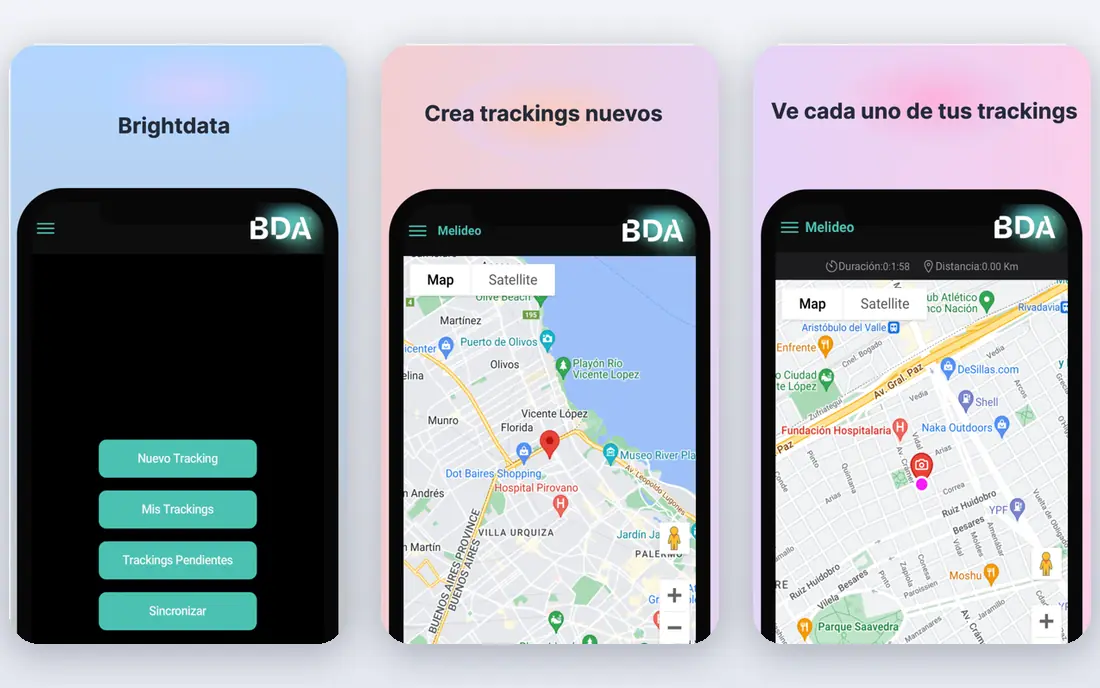
Bright Data offers one of the largest proxy networks, plus data collection products and managed scraping services. Businesses can gather search, retail, and public web data at scale, with tools for rotating IPs, handling blocks, and structuring output. Its compliance documentation and ethics policies are among the clearest in the field.
Pricing is premium, and pay-as-you-go usage needs monitoring to avoid surprise bills. Small projects may find simpler APIs cheaper. For businesses that need scale, reliability, and documented compliance practices, Bright Data is our top pick.
- Very large proxy network
- Managed data products
- Strong compliance and ethics policies
- Premium pricing
- Pay-as-you-go costs need monitoring
Oxylabs
Ideal for: Enterprise proxies and data
Oxylabs provides residential, datacenter, and mobile proxies, plus ready-made data products for retail, search, and public web sources. Enterprise support and service-level options suit teams with steady, high-volume needs. Data quality and proxy reliability earn strong reviews from business users.
Pricing leans enterprise, and smaller projects may find entry plans heavy. For a team that needs dependable proxies and support at scale, Oxylabs is a strong, well-reviewed choice.
- Strong residential and datacenter proxies
- Ready data products
- Enterprise support
- Enterprise pricing
- Smaller projects may find plans heavy
Apify
Ideal for: Ready-made and custom scrapers
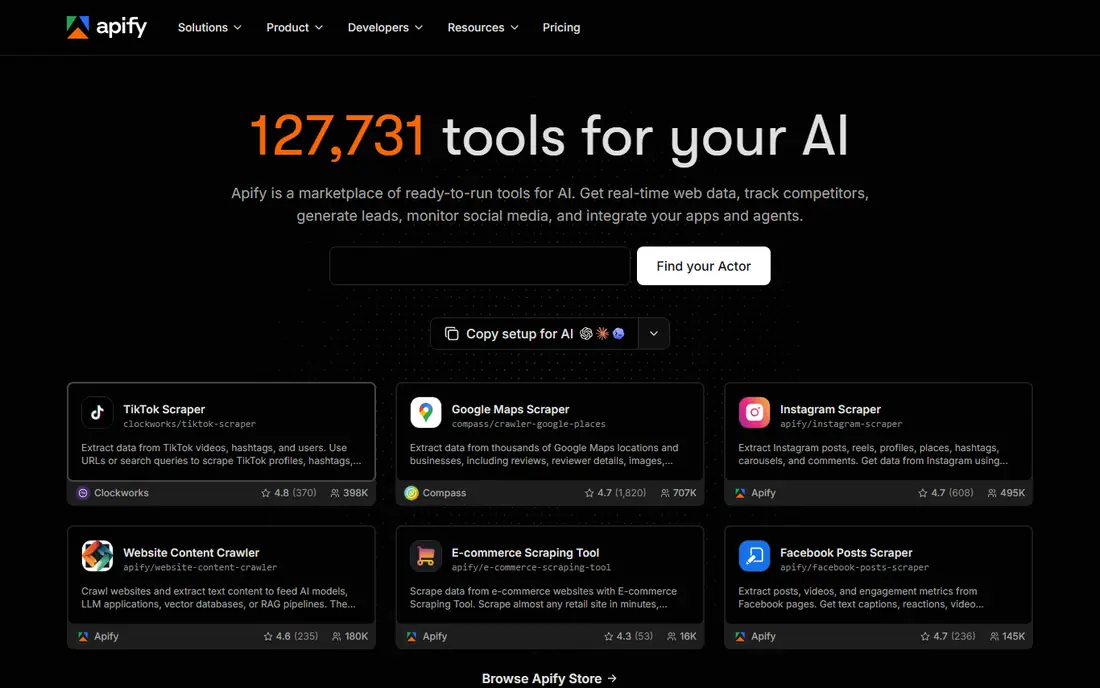
Apify runs a platform where developers can use ready-made scrapers, called actors, or build custom ones. The store covers Google results, social profiles, retail sites, and many other sources, and the platform handles scheduling, proxies, and data storage. A free tier lets teams test before paying.
Custom actor development takes learning, and usage costs grow with scale. For developers and data teams who want both ready scrapers and a platform for custom work, Apify is a flexible, well-liked pick.
- Large store of ready scrapers
- Platform for custom actors
- Free tier for testing
- Learning curve for custom actors
- Usage costs grow with scale
ScrapingBee
Ideal for: Simple scraping API
ScrapingBee offers a scraping API that handles proxies, JavaScript rendering, and blocks behind a simple request. Developers send a URL and receive rendered HTML or extracted data, which suits teams that want scraping without managing proxy pools. Credit-based pricing is easy to understand.
Managed data products and enterprise services are thinner than Bright Data or Zyte. Heavy users may need larger plans. For developers who want a simple, reliable scraping API, ScrapingBee is a practical choice.
- Simple API with JavaScript rendering
- Handles proxies and blocks
- Clear credit pricing
- Fewer managed data products
- Heavy users may need larger plans
ScraperAPI
Ideal for: Easy API for developers
ScraperAPI gives developers an API that rotates proxies, renders JavaScript, and returns structured data or HTML. Setup is fast, and the service suits price monitoring, search tracking, and research projects. Plan tiers scale with request volume.
Support and rate limits vary by plan, and data quality still depends on target-site structure and change frequency. For teams that want a quick API start without proxy management, ScraperAPI is a solid option.
- Easy API setup
- Proxy rotation and rendering
- Structured data options
- Support and limits vary by plan
- Data quality depends on target sites
Zyte
Ideal for: Managed scraping and data quality
Zyte, formerly Scrapinghub, offers managed data extraction and a scraping platform with a strong data-quality focus. Its team handles site changes, anti-bot challenges, and output validation for enterprise clients. That managed model suits businesses that need reliable data feeds without building a scraping team.
Managed pricing is premium, and self-serve options are narrower than Apify or ScrapingBee. For businesses that want a vendor to own data quality end to end, Zyte is a respected, experienced choice.
- Managed scraping services
- Data quality focus
- Enterprise experience
- Managed services carry premium pricing
- Self-serve options are narrower
Octoparse
Ideal for: No-code visual scraping
Octoparse is a no-code scraping tool with a visual builder: point at page elements, define fields, and run the extraction. Templates for popular sites speed up common jobs, and a free tier lets users test basic scraping. Non-developers can build useful scrapers without code.
The tool centers on a desktop app, and complex or heavily protected sites may need manual tuning. For analysts and small teams that want no-code scraping, Octoparse is an accessible, well-reviewed pick.
- Visual point-and-click builder
- Templates for popular sites
- Free tier
- Desktop app focus
- Complex sites may need manual tuning
ParseHub
Ideal for: No-code scraping for teams
ParseHub offers a visual scraping builder with advanced features for JavaScript sites, logins, and pagination. Teams can build projects, schedule runs, and export data to common formats. The tool suits researchers and analysts who need more than a simple template.
Advanced projects carry a learning curve, and pricing rises with volume. For teams that want no-code power with room to grow, ParseHub is a capable choice.
- Visual builder with advanced features
- Handles JavaScript sites
- Team plans
- Learning curve for advanced projects
- Pricing rises with volume
How we picked these
We compared official feature pages, pricing pages, and public reviews, and we kept only web scraping companies operating in October 2026 with real proxy, API, or extraction products. We favored vendors with clear compliance policies, reliable data delivery, and transparent pricing. We left out vendors promoting scraping of private data, credential theft, or bypassing lawful access controls.
We also compared trial quality, since a scraping vendor trial on your real targets reveals success rates and data quality that marketing pages cannot. Vendors with generous trials and honest failure reporting scored higher in our review.
What to check before you choose a scraping vendor
Start with legality and ethics. Confirm that your use respects target-site terms, privacy laws, and data protection rules, and prefer vendors with published compliance policies. Scraping public data still carries legal and reputational risk if done carelessly, so get legal advice for sensitive projects.
Next, test data quality on your real targets. Run a trial against the sites you actually need, and check completeness, freshness, and handling of blocks and layout changes. Finally, compare total cost at your volume, including proxies, rendering, and managed-service fees. A cheap API that fails often costs more than a reliable vendor.
Storage and pipeline design deserve planning before you scale. Decide where scraped data lands, how duplicates are handled, and how long raw data is kept, since messy storage turns a useful feed into a liability. A simple pipeline with validation checks and clear ownership beats a fast scraper feeding an unorganized database.
Questions to ask before you commit
Ask vendors how they handle JavaScript-heavy and login-protected public pages, since rendering and session handling vary widely. Confirm which page types the service supports, how sessions are managed, and what happens when a site requires interaction. A vendor that only handles static pages fails on modern sites.
Ask about data delivery formats and scheduling, including file types, API access, and delivery destinations. Confirm that outputs match your pipeline needs without manual reformatting, and that schedules cover your freshness requirements. Delivery friction wastes the time a good scraper saves.
Ask how the vendor responds to target-site complaints and takedown requests, since responsible vendors have clear processes. Confirm abuse handling, contact points, and whether the vendor notifies you when a target objects. A vendor without a complaint process exposes your business to avoidable disputes.
Frequently asked questions
What is the best web scraping company?
Bright Data is our pick for most businesses because of its large proxy network, managed products, and compliance documentation. Oxylabs suits enterprise teams, while Apify suits developers who want ready-made and custom scrapers.
Is web scraping legal?
It depends on what you scrape, how you access it, and your jurisdiction. Public data scraping can still breach site terms or privacy law, and scraping private, copyrighted, or personal data carries higher risk. Check terms of service and privacy law, and get legal advice for business use.
What is the difference between proxies and a scraping API?
Proxies route your requests through varied IP addresses to reduce blocks, while a scraping API handles proxies, rendering, and extraction behind one request. Developers who want control choose proxies, while teams who want simplicity choose an API or managed service.
Do I need coding skills to scrape websites?
Not always. Octoparse and ParseHub offer visual builders for no-code scraping. APIs and platforms such as Apify, ScrapingBee, and ScraperAPI suit developers, while managed services from Bright Data and Zyte suit teams that want data without building scrapers.
How much does web scraping cost?
Costs vary by volume, proxy type, rendering needs, and managed service level. Simple APIs charge per request or credit, while managed services carry higher monthly fees. Run a trial at your real volume to compare total cost before committing.
How do I handle websites that change their layout often?
Choose a vendor with change monitoring and quick selector updates, since layout changes break scrapers without warning. Managed services handle most fixes for you, while self-serve APIs leave repairs to your team. Budget maintenance time for high-change sites, and set alerts so broken feeds surface within hours, not weeks.