Best Agentic Customer Service Software in 2026: 7 Options Compared

- 1
 Intercom FinBusinesses that want an AI agent that acts, not just answersVisit
- 2
 Zendesk AI AgentsSupport teams already on Zendesk that want AI agentsVisit
- 3
 Salesforce AgentforceLarge Salesforce teams that want AI agentsVisit
- 4
 AdaCompanies that want dedicated AI agents at scaleVisit
- 5
 SierraBrands that want a premium AI agent experienceVisit
- Our pick for most people is Intercom Fin, because it balances price, features and support for everyday use.
- Zendesk AI Agents is the strongest alternative if you want a different balance of cost and features, so compare it directly with our top pick.
- Free plans or trials are available from several options here, including Salesforce Agentforce, but always check the limits before you rely on a free tier.
- The cheapest headline price is not always the cheapest total cost, since per-user fees, add-ons and usage limits change what you pay each month.
- Check availability, contract terms and support hours for your situation before you sign up, because those details vary more than the marketing suggests.
Quick comparison
| Product | Ideal for | Price from | Free version | |
|---|---|---|---|---|
| Intercom Fin | Businesses that want an AI agent that acts, not just answers | See website | Free trial | Visit |
| Zendesk AI Agents | Support teams already on Zendesk that want AI agents | See website | Free trial | Visit |
| Salesforce Agentforce | Large Salesforce teams that want AI agents | See website | Free trial | Visit |
| Ada | Companies that want dedicated AI agents at scale | See website | No | Visit |
| Sierra | Brands that want a premium AI agent experience | See website | No | Visit |
 Decagon | Companies that want AI agents for support at scale | See website | No | Visit |
 Tidio Lyro | Small businesses that want an affordable AI agent | See website | Yes | Visit |
The best agentic customer service software
We compared the options below on official feature pages, pricing pages, app store listings and public reviews, looking at price, features, support and ease of use. The right choice depends on your budget, your team size and the tasks you will do most often, so use the comparison table and the notes under each product to narrow the list to two or three finalists.
Intercom Fin
Ideal for: Businesses that want an AI agent that acts, not just answers
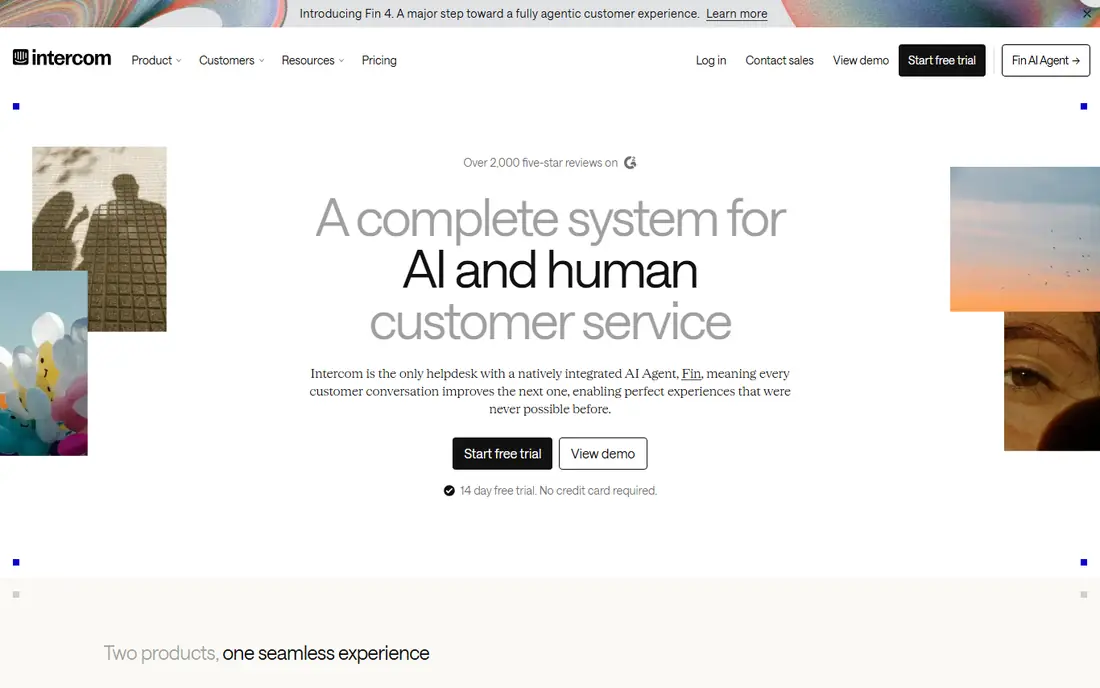
For most readers, this is a strong place to start. Intercom Fin is an agentic AI agent that does more than answer: it can resolve common requests, take actions in connected systems and hand harder cases to staff with context. It suits businesses with many repeat requests that follow clear steps. The catch is cost and content: per-resolution pricing grows with volume, and Fin performs best where help content and workflows are clear and current.
Before you commit, check the current pricing page and confirm what is included at the tier you actually need, since add-ons and per-user charges change the total. Support hours and setup help matter too, especially if you are moving from another provider and cannot afford downtime. Read the terms on cancellation and data export before you pay, so leaving later stays simple. For Intercom Fin, the main strength to weigh is fin ai agent resolves and acts on requests, while the main drawback to accept is per-resolution pricing can grow. If that trade-off suits you, it is worth a trial or a closer look at the current pricing page.
- Fin AI agent resolves and acts on requests
- Inbox and help center
- Reporting
- Per-resolution pricing can grow
- Needs good help content
Zendesk AI Agents
Ideal for: Support teams already on Zendesk that want AI agents
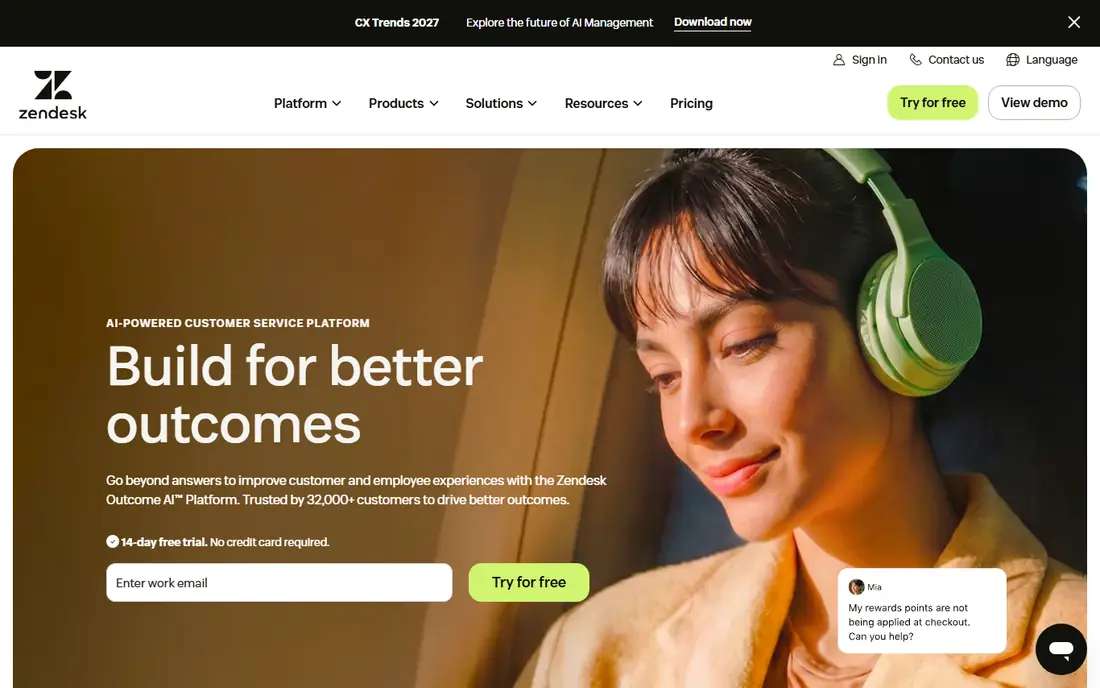
This one stands out for a specific kind of buyer. Zendesk AI Agents automate support across tickets and chat, taking defined actions and drafting work for agents. It suits teams already on Zendesk that want agentic automation inside a familiar helpdesk. The drawback is tiering: the strongest agent features sit on higher plans, and results depend on workflow design, so budget time for building and testing agent actions.
The practical test is whether it fits your daily routine without extra workarounds. Look at setup steps, admin controls and the help pages for the tasks you will do most often. If a free trial is offered, use it for a real task rather than a quick tour, and note where you get stuck. That short trial usually tells you more than a feature list. For Zendesk AI Agents, the main strength to weigh is ai agents that act across tickets and chat, while the main drawback to accept is higher tiers needed. If that trade-off suits you, it is worth a trial or a closer look at the current pricing page.
- AI agents that act across tickets and chat
- Copilot for staff
- Reporting
- Higher tiers needed
- Setup needs good workflows
Salesforce Agentforce
Ideal for: Large Salesforce teams that want AI agents
Put this on your shortlist if the details below match your situation. Salesforce Agentforce lets large teams deploy AI agents that act on customer records, cases and orders inside Salesforce. It suits enterprises that already run Salesforce and want agents tied to real business data. The catch is effort: Agentforce is powerful but complex, and smaller teams will find Intercom or Zendesk agents faster to launch.
Price alone rarely decides a good purchase, since limits on users, storage, calls or messages can push you to a higher tier quickly. Compare the total monthly cost for your real team size or usage, not the headline rate for one user. Also check contract length, renewal terms and whether support is included or billed separately. For Salesforce Agentforce, the main strength to weigh is agentforce ai agents act in salesforce, while the main drawback to accept is high cost and complexity. If that trade-off suits you, it is worth a trial or a closer look at the current pricing page.
- Agentforce AI agents act in Salesforce
- Deep CRM data
- Automation
- High cost and complexity
- Needs skilled admins
Ada
Ideal for: Companies that want dedicated AI agents at scale
This option earns its place through a clear, practical strength. Ada builds AI agents that resolve customer requests across channels, with no-code tools and multilingual support. It suits firms with high volumes of repeatable requests that want to measure automation rates. The drawback is fit and price: small teams will not see the return, and enterprise pricing means a demo tied to your actual request mix is essential.
A good next step is to list your must-have features and your deal-breakers before you compare plans. Then test the top two options side by side on the same task, such as setting up an account, inviting a colleague or completing a typical job. The option that feels plain and dependable in that test is usually the right one. For Ada, the main strength to weigh is purpose-built ai agents, while the main drawback to accept is enterprise pricing. If that trade-off suits you, it is worth a trial or a closer look at the current pricing page.
- Purpose-built AI agents
- No-code building
- Multilingual
- Measurable automation
- Enterprise pricing
- Overkill for small teams
Sierra
Ideal for: Brands that want a premium AI agent experience
Consider this one when the more famous names do not fit your budget or workflow. Sierra builds AI agents for customer service with a focus on brand voice and supervised agent behaviour, used by well-known consumer brands. It suits companies that care deeply about how an agent sounds and handles sensitive conversations. The catch is access: pricing is enterprise and details are limited publicly, so expect a sales-led evaluation rather than a self-serve trial.
Check recent user reviews and the provider's own status or help pages for signs of steady service and honest communication about outages. A provider that explains problems clearly and fixes them promptly is worth more than one with a longer feature list and slow support. Keep your own backup or exit plan, even with a provider you trust. For Sierra, the main strength to weigh is ai agents for customer service, while the main drawback to accept is enterprise pricing. If that trade-off suits you, it is worth a trial or a closer look at the current pricing page.
- AI agents for customer service
- Brand voice focus
- Supervision tools
- Enterprise pricing
- Limited public pricing detail
Decagon
Ideal for: Companies that want AI agents for support at scale
This is a sensible pick for buyers who want fewer surprises. Decagon offers AI agents that resolve customer support requests, with analytics and handoff to humans when needed. It suits companies with high support volumes that want agents handling a large share of conversations. The drawback is track record: as a newer vendor, its history is shorter than Zendesk or Intercom, so ask for references in your industry before committing.
Think about who else will use this service and how much training they will need. A tool that one person loves can fail if the rest of the team finds it confusing or if customers dislike the experience. Ask about onboarding help, documentation and whether you can adjust settings without calling support for every small change. For Decagon, the main strength to weigh is ai agents that resolve support requests, while the main drawback to accept is enterprise pricing. If that trade-off suits you, it is worth a trial or a closer look at the current pricing page.
- AI agents that resolve support requests
- Analytics
- Human handoff
- Enterprise pricing
- Newer vendor with a smaller track record
Tidio Lyro
Ideal for: Small businesses that want an affordable AI agent
Shortlist this one if you value the strength described below more than a lower price. Tidio Lyro gives small businesses an AI agent for chat that answers questions and can take simple actions, with live chat handoff when a human is needed. Setup is fast and a free tier lets a business test it. The drawback is depth: agent actions are simpler than enterprise platforms, so it fits small shops and websites rather than large support operations.
Watch for hidden effort as well as hidden cost: migration, setup, training and ongoing admin all take time. A slightly higher price can be good value if it saves hours each week or avoids mistakes. On the other hand, a cheap plan that needs constant workarounds often costs more in staff time than it saves in fees. For Tidio Lyro, the main strength to weigh is lyro ai agent for chat, while the main drawback to accept is scope is chat-first. If that trade-off suits you, it is worth a trial or a closer look at the current pricing page.
- Lyro AI agent for chat
- Live chat handoff
- Quick setup
- Scope is chat-first
- Agent actions are simpler than enterprise rivals
How we picked these
We started from the official website, pricing page and help documentation for each product, then checked app store listings and public reviews for signs of steady service and common complaints. We left out products that no longer work, that did not fit the topic, or that we could not verify from a real homepage. We did not claim hands-on testing we did not do, and we kept the focus on facts a buyer can check before paying.
We also weighed total cost rather than headline price alone, since per-user charges, usage limits and add-ons change the monthly bill. Support quality, setup effort and contract terms counted too, because a cheap service that is hard to leave or hard to get help with can cost more over time. The list mixes well-known providers with smaller options that serve a clear niche well.
How to choose the right option for you
Start by writing down the job you need done, how often you will use the service, and how many people will use it. That short list keeps you from paying for features you will never open, and it makes the comparison table above much easier to use. Then check the two or three finalists against that list, not against every feature on their websites.
Check the total cost
Add up per-user fees, add-ons, taxes and any setup charges for your real usage, and compare that total across providers. Ask whether the price is locked for a term or can change at renewal, and whether a free tier or trial covers the features you actually need. A plan that looks cheap for one user can become costly for a team, so run the numbers for your full group.
Test support and setup before you commit
Use a free trial for a real task, contact support with a genuine question, and read the help pages for setup and migration. Note how long answers take and whether the guidance is clear. If setup looks long or support looks thin, factor that time into your decision, especially if you are switching from a service you already rely on.
Plan your exit before you enter
Check how you can export your data, cancel your plan and move to another provider, and whether any contract or notice period applies. Services that make leaving simple tend to treat customers better while they stay. Keep a copy of your important data outside the service, and avoid long contracts until you are sure the service fits your daily work.
Frequently asked questions
What is the best option for what's the best agentic customer service software?
There is no single best option for everyone, because price, features and support matter differently for each buyer. Our top pick, Intercom Fin, suits most people, while Zendesk AI Agents is a strong alternative. Compare two or three finalists on total cost and on the tasks you will do most often, then use a trial where one is offered.
How much do these services usually cost?
Prices vary widely, and many providers charge per user or per unit of usage, so the headline rate is only part of the total. Check the pricing page for the tier you need, add any required add-ons, and watch for renewal or contract terms. Where we could not verify a current price, we wrote See website so you can check the live price before buying.
Is there a free option worth trying?
Several options on this list offer a free plan or a free trial, but free tiers usually limit features, users or usage. A free plan works well for light or occasional use and for testing whether a service fits you. For regular business use, expect to pay for a plan that removes those limits and includes support.
How do I switch from my current provider?
Start by exporting your data from the old service and checking what the new provider can import. Run both services in parallel for a short period if you can, so nothing is lost during the move. Tell your team or customers about any change that affects them, and keep the old account active until the new one is working well.
What should I check before I pay?
Check the total monthly cost for your real usage, the contract and cancellation terms, support hours and response times, and how you can export your data. Read recent reviews for common complaints, and confirm availability for your location or use case where that applies. A short trial on a real task usually answers the remaining questions.